 AI Summary
Using a Loan Against Mutual Funds (LAMF) for business capital can help business owners meet short-term funding needs without redeeming their investments and disrupting long-term wealth creation. By pledging mutual fund units as collateral, investors can access liquidity while keeping their portfolios invested and potentially continuing to earn returns. The article explains that LAMF can be a useful tool for managing temporary cash flow gaps, inventory purchases, or working capital requirements, especially when repayment visibility is clear. However, it also highlights important considerations such as market-linked risks, interest costs, repayment discipline, and restricted access to pledged investments. The key takeaway is that LAMF works best as a short-term funding bridge rather than a substitute for long-term business financing and should be evaluated carefully within the context of both business and personal financial goals.
Running a business often means dealing with uneven cash flows.
Some months feel stable. Others bring sudden demands — inventory purchases, vendor payments, or short-term opportunities. In these moments, many business owners turn to traditional options like working capital loans or overdrafts.
But what if you already have a mutual fund portfolio?
Selling investments to fund business needs can feel uncomfortable. It interrupts long-term compounding and may trigger taxes at the wrong time. That hesitation is valid, especially when the requirement is temporary.
This is where LAMF for business capital starts to become relevant. It offers a way to unlock liquidity without exiting your investments. Understanding how to use it thoughtfully can help you manage both business needs and long-term wealth without forcing a trade-off.
On this page
Before you read on
- LAMF allows you to access funds without redeeming investments
- It can be used as short-term business capital
- Interest costs and market risks must be considered
- Works best when repayment visibility is clear
- Not a substitute for long-term business financing
What is LAMF and how does it work for business needs?
A loan against mutual funds (LAMF) is a secured loan where you pledge your mutual fund units as collateral to borrow money.
When used for business capital:
- Your investments remain intact
- You receive funds based on portfolio value
- A lien is marked on pledged units
- You repay the loan with interest
From a business perspective, this acts like a temporary liquidity bridge rather than permanent capital.
This approach is especially useful when the need is short-term and predictable, such as managing working capital gaps.
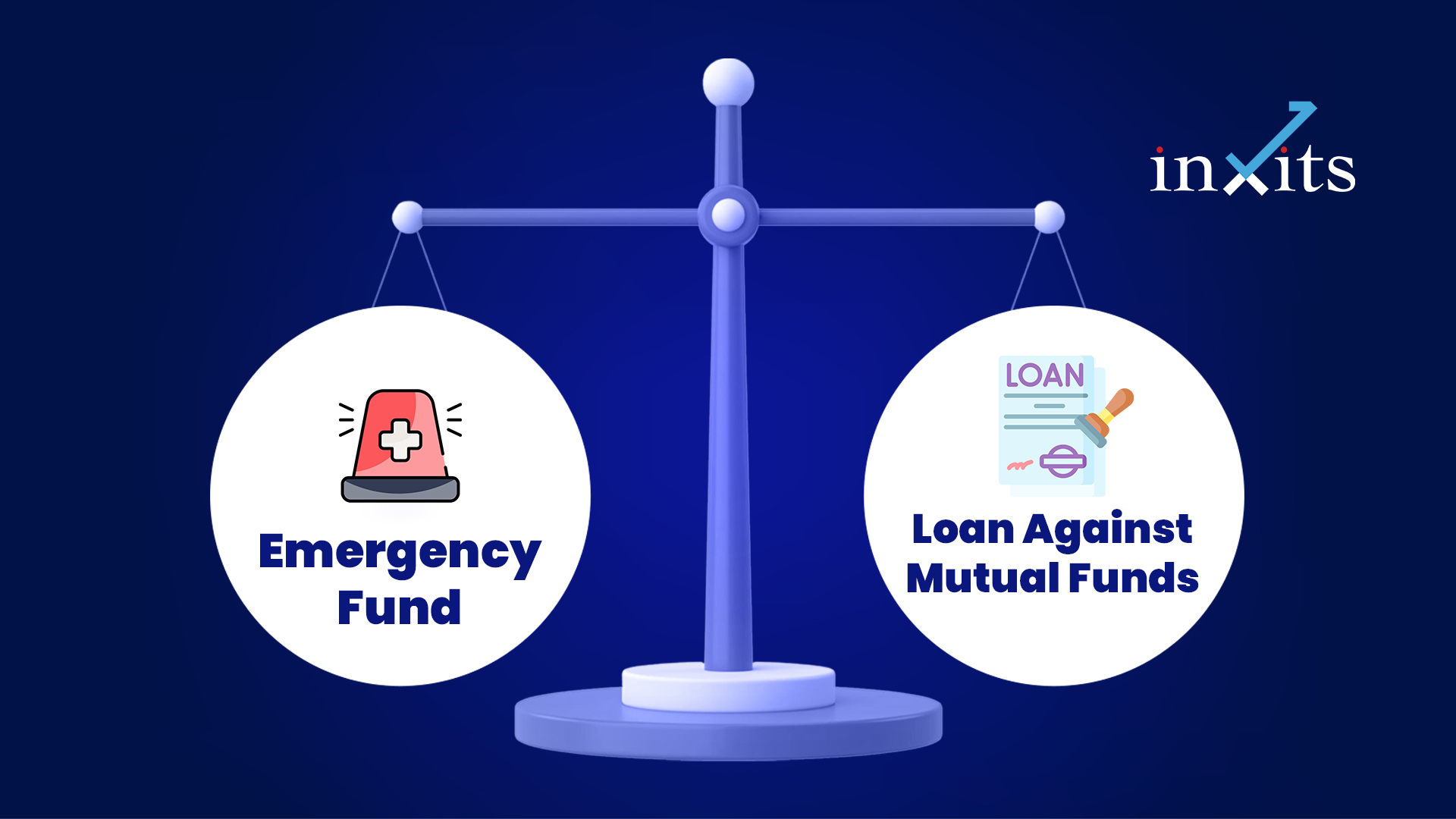
Why do business owners consider LAMF instead of selling investments?
Assumption vs Reality
What most investors assume:
“If I need business capital, I should either take a loan or sell investments.”
What actually happens:
Selling investments can interrupt compounding and trigger capital gains tax at an unfavourable time. Using a loan against mutual funds allows access to capital without disturbing long-term financial plans.
Why this matters:
Business cash needs are often temporary. Long-term investments are meant to stay invested. Mixing the two decisions without structure can impact both.
A real-life scenario: Using LAMF for working capital
Consider Karan, 40, who runs a small manufacturing business in Noida.
He has built a ₹15 lakh mutual fund portfolio over the years. During a peak season, he needs ₹5 lakh to purchase additional raw material.
His options:
- Take a traditional business loan
- Use internal cash reserves
- Sell mutual funds
- Use LAMF for business capital
He chooses LAMF.
Why?
- Faster access compared to business loans
- No need to disturb investments
- Plans to repay within 6 to 9 months after sales cycle
For Karan, this works as a short-term bridge aligned with his business cycle.
When does using LAMF for business capital make sense?
This approach may be considered when:
- The funding need is short-term, typically under 12 to 18 months
- You have an existing mutual fund portfolio
- Cash flow visibility exists for repayment
- You want to avoid selling investments prematurely
It may not be suitable when:
- The business requires long-term capital
- Cash flows are unpredictable
- You are already under financial stress
LAMF works best when used with clarity, not urgency.
How much funding can you get and what does it cost?
The loan amount depends on the type of mutual funds pledged.
| Type of Fund | Typical Loan Range | Nature |
| Equity Funds | Lower eligibility | Market-linked |
| Debt Funds | Higher eligibility | More stable |
Cost considerations
- Interest rates are generally lower than unsecured business loans
- Processing is relatively quick
- Some lenders offer overdraft-style usage
As per lender offerings in India during 2025–26, loan against mutual funds interest rates generally range between 9% and 13% p.a., depending on the lender, portfolio quality, and repayment structure.
Invest Smarter.
Grow Confidently.
Your AI-powered SEBI-registered investment advisor — with research you can trust and insights that grow with you.
Download inXits Free
However, cost is not just about interest. The duration of borrowing and repayment discipline matter equally.
What are the risks of using LAMF for business purposes?
This is where many business owners feel uncertain
Market risk
If the value of your mutual funds drops:
- You may need to add more collateral or repay part of the loan.
Cash flow pressure
Business income can fluctuate. If repayment is delayed, interest continues to accumulate.
Restricted flexibility
Pledged mutual funds cannot be redeemed or switched until the loan is cleared.
Understanding these risks helps you treat LAMF as a tool, not a default solution.
How to use LAMF effectively for business capital
A structured approach can make a meaningful difference.
1. Match loan tenure with business cycle
Ensure the repayment timeline aligns with expected cash inflows.
2. Avoid using full portfolio value
Keep a buffer to manage market fluctuations.
3. Track collateral value regularly
This helps you stay prepared for any margin requirements.
4. Treat it as temporary funding
LAMF is best used as a bridge, not as ongoing capital support.
This way, you maintain balance between business needs and investment discipline.
Where does LAMF fit among business funding options?
Compared to other options:
| Funding Option | Best Use Case |
| Internal cash | Immediate small needs |
| Business loan | Long-term expansion |
| Overdraft | Flexible working capital |
| LAMF | Short-term liquidity without selling assets |
Each option serves a different purpose. The key is choosing based on the nature of the need.
Note: Suitability depends on individual business profile, loan terms, and lender policies. Speak with an advisor before deciding.
Have a specific question about how to structure business funding without disrupting investments? You can discuss your LAMF options with an investment advisor — a conversation with a qualified advisor, no forms, no wait.
How inXits helps you evaluate LAMF for business capital
Using LAMF for business capital can feel complex without a clear framework. At inXits, advisors work with investors and business owners to align short-term funding needs with long-term investment strategies. If this decision feels unclear, a structured discussion with a personal CFO can help bring clarity based on your specific situation.
Conclusion
Using LAMF for business capital offers a way to manage short-term funding needs without selling long-term investments. It allows you to access liquidity while keeping your portfolio intact.
However, it comes with responsibilities, including repayment discipline and awareness of market risks. Like any financial tool, its effectiveness depends on how thoughtfully it is used.
If your business requires temporary capital and you have an existing investment portfolio, this approach may be worth evaluating. You can also review your loan against mutual funds options with an advisor to ensure it aligns with both your business and financial goals.
Disclaimer
Investments in securities markets are subject to market risks. Read all related documents carefully before investing.
inXits is a SEBI-registered investment adviser (Registration No. INA000020369). This article is for educational purposes only and does not constitute personalised investment advice.
Registration granted by SEBI, membership of BSE, and certification from NISM in no way guarantee performance of the intermediary or provide any assurance of returns to investors.
Explore Smarter Business Funding
Talk to a Personal CFO
Aditya Rajpurohit is a Mutual Fund Research Analyst at inXits with 5+ years of experience in equity and mutual fund analysis. He specialises in fund selection, portfolio construction, and long-term wealth creation strategies for retail and HNI investors.
FAQs
Can I use a loan against mutual funds for business capital?
Yes, LAMF can be used for short-term business funding needs without selling investments.
Is LAMF suitable for long-term business financing?
It is generally better suited for short-term needs rather than long-term capital.
How much loan can I get using mutual funds?
The amount depends on the type and value of funds, with higher eligibility for debt funds.
What are the risks of using LAMF for business?
Market fluctuations, repayment pressure, and restricted access to pledged funds are key risks.
Is LAMF cheaper than a business loan?
It may have lower interest rates compared to unsecured loans, but suitability depends on use case.
Can I continue earning returns on pledged mutual funds?
Yes, your investments remain invested while pledged.
What happens if I cannot repay the loan?
The lender may liquidate pledged units to recover dues.
How is LAMF regulated in India?
SEBI oversees mutual fund processes, while RBI regulates lending institutions.