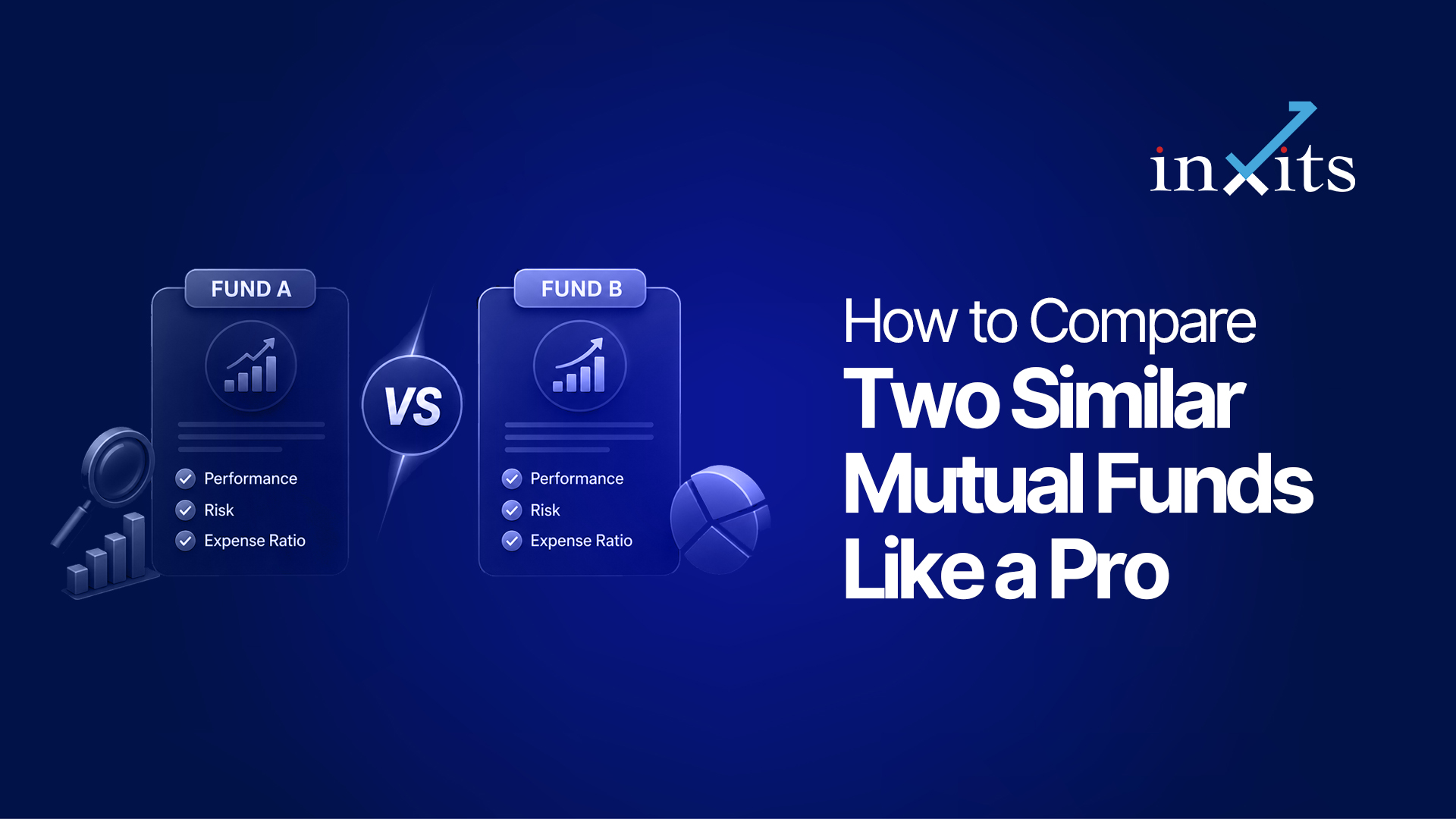
You have narrowed your shortlist to two mutual funds. Both belong to the same category. Both have similar historical returns. Both appear in online rankings. Yet one question remains: which one deserves your money?
Many investors feel confused at this stage. The difficult part is not finding mutual funds anymore. The difficult part is deciding between two funds that look almost identical on the surface.
A common mistake is choosing the fund with the highest recent return and ignoring everything else. However, a mutual fund is much more than a return number. Portfolio construction, risk management, investment style, costs, and consistency all influence the investor experience over time.
Understanding how to compare two mutual funds properly can help you make a more informed decision and avoid chasing short-term performance.
On this page
Compare Two Mutual Funds in India: Key Takeaways
Before comparing any two funds, keep these points in mind:
- Returns alone rarely tell the full story.
- Risk-adjusted performance matters more than absolute returns.
- Portfolio quality often reveals differences hidden behind similar returns.
- Expense ratios affect long-term outcomes.
- Consistency across market cycles deserves attention.
Why Comparing Returns Alone Can Be Misleading
Most investors begin with returns because they are easy to compare. Unfortunately, they are also easy to misinterpret.
Two large-cap funds both return 12% over five years. But Fund A fell 38% during the 2020 correction while Fund B fell 22%. Same return, very different journey, and Fund A’s investors were far more likely to panic-sell at the bottom.
A fund that experiences deeper declines during market corrections can create more emotional stress for investors, even if long-term returns appear similar.
Therefore, the first rule when you compare two mutual funds is simple: never stop at the returns table.
Which Return Period Should You Compare?
A single return period can create a distorted picture.
Instead, review:
- 1-year returns
- 3-year returns
- 5-year returns
- Performance across different market phases
Consistency often tells a more useful story than one exceptional year.
SEBI requires Asset Management Companies (AMCs) to disclose standardised returns for 1-year, 3-year, 5-year, and since-inception periods in fund communications. Investors should rely on these standardised disclosures rather than random marketing materials when comparing mutual funds.
Source: SEBI (Mutual Funds) Regulations, 1996 – Disclosure Norms
Should You Compare SIP and Lump Sum Returns Separately?
Yes.
Many investors invest through SIPs rather than lump sums. Therefore, examining both SIP returns and point-to-point returns can provide additional context regarding how the fund behaved during different market conditions.
What Factors Matter Most When You Compare Two Mutual Funds?
A structured framework helps remove emotion from the decision.
1. Portfolio Quality
The underlying portfolio is often more important than historical returns.
Review:
- Top holdings
- Sector allocation
- Concentration levels
- Market-cap allocation
For example, two flexi-cap funds may have similar returns. However, one fund may depend heavily on a few stocks while the other maintains broader diversification.
Investors looking to understand portfolio diversification can also review portfolio overlap in mutual funds before selecting multiple funds.
2. Expense Ratio
Every mutual fund charges expenses for managing the portfolio.
Although the difference between 0.30% and 1.00% may appear small, costs compound over long investment horizons.
A lower expense ratio does not automatically make a fund better. However, when two funds are otherwise similar, costs become an important comparison factor.
3. Fund Manager Approach
Different fund managers can generate similar returns through very different strategies.
Some managers prefer concentrated portfolios. Others focus on diversification. Some follow valuation-driven investing, while others prioritise growth opportunities.
Understanding how returns are generated matters as much as the returns themselves.
4. Portfolio Turnover
Portfolio turnover indicates how frequently securities are bought and sold.
Higher turnover may suggest:
- Tactical management
- Frequent repositioning
- Higher transaction activity
Lower turnover often indicates a longer-term investment approach.
Neither is automatically superior. The key is understanding whether the strategy aligns with the fund’s stated objective.
How Important Is Risk When Comparing Similar Funds?
Risk deserves equal attention alongside returns.
Many investors compare gains but ignore how much uncertainty was experienced to achieve those gains.
Invest Smarter.
Grow Confidently.
Your AI-powered SEBI-registered investment advisor — with research you can trust and insights that grow with you.
Download inXits Free
Key Risk Measures to Review
When comparing funds, consider:
| Metric | What It Indicates |
| Standard Deviation | Volatility level |
| Sharpe Ratio | Return generated per unit of risk |
| Downside Capture | Performance during market declines |
| Maximum Drawdown | Largest historical fall from peak |
A fund with slightly lower returns but substantially lower risk may suit certain investors better than a more volatile alternative.
What Happens During Market Corrections?
Market corrections often reveal differences that remain hidden during bull markets.
For example, two funds may deliver similar returns when markets rise. However, one fund may preserve capital better during difficult periods.
That difference can influence investor behaviour significantly. Many investors abandon a strategy after large declines, even when long-term prospects remain intact.
How Much Portfolio Overlap Is Too Much?
Investors often compare two mutual funds only to discover they own many of the same stocks.
A high overlap does not automatically make one fund unnecessary. However, excessive duplication can reduce diversification benefits.
How Can You Check Portfolio Overlap?
Review:
- Top 10 holdings
- Sector allocation
- Market-cap exposure
- Overall portfolio composition
If both funds hold nearly identical positions, owning both may not provide meaningful diversification.
Not sure whether your shortlisted funds genuinely diversify your portfolio or simply duplicate existing holdings? A SEBI registered mutual fund advisor can help evaluate overlap, concentration risk, and portfolio alignment with your financial goals.
What Should Matter More: Recent Performance or Long-Term Consistency?
Long-term consistency generally provides more useful information.
A fund that ranks first in one year may rank much lower the following year. Meanwhile, a fund that consistently remains in the upper range of its category often demonstrates a repeatable investment process.
Questions Worth Asking
Before making a final decision, ask:
- Has performance been consistent across market cycles?
- Does the fund follow a clearly defined strategy?
- Are portfolio changes aligned with stated objectives?
- Is risk proportionate to returns generated?
- Does the fund fit my overall asset allocation?
Investors frequently focus on selecting the perfect fund. In reality, maintaining a disciplined investment process often matters more than small differences between two high-quality options.
Key Facts on Mutual Fund Comparison
- Direct plans generally have lower expense ratios than regular plans.
- Portfolio disclosures are published periodically by Asset Management Companies (AMCs).
- Risk measures should be evaluated alongside returns, not separately.
- Mutual fund categories are defined by the Securities and Exchange Board of India (SEBI).
How inXits Helps Investors Evaluate Similar Mutual Funds
Selecting between two strong mutual funds can feel more difficult than choosing between a good fund and a poor one. The differences are often subtle and may not appear in basic return comparisons.
At inXits, advisors evaluate mutual funds through a broader lens that includes portfolio quality, diversification, suitability, cost structure, investment objectives, and overall portfolio fit. The goal is not simply identifying the fund with the highest historical return.
Many investors remain uncertain about whether a fund complements existing holdings, whether portfolio overlap is excessive, or whether the selected category aligns with long-term goals. These questions often have a greater impact than short-term performance rankings.
A discussion with a mutual fund advisor can help create a structured framework for comparing funds based on your objectives rather than market noise.
Conclusion
Learning how to compare two mutual funds effectively requires looking beyond recent returns. Historical performance can provide useful context, but it should never be the only factor guiding a decision.
Portfolio quality, risk management, expense ratios, investment strategy, and consistency across market cycles all deserve attention. A structured comparison process helps investors understand not only what a fund has delivered in the past but also how it achieved those results.
The goal is not finding a perfect mutual fund. Instead, it is identifying a fund that aligns with your financial objectives, risk tolerance, and overall portfolio structure. When you compare two mutual funds using a broader framework, the decision often becomes much clearer.
If you are unsure whether your shortlisted funds fit your overall investment plan, connecting with an investment advisor can provide an independent evaluation based on your goals and portfolio requirements.
Frequently Asked Questions
How do I compare two mutual funds properly?
To compare two mutual funds properly, evaluate returns, risk metrics, expense ratios, portfolio composition, fund manager strategy, and consistency across market cycles. Looking only at recent returns may lead to incomplete conclusions.
What is the most important factor when I compare two mutual funds?
There is no single factor. Returns, risk, portfolio quality, diversification, and costs should all be assessed together. The most suitable fund depends on the investor’s objectives and risk profile.
Should I choose the mutual fund with higher returns?
Not necessarily. A higher-return fund may have taken substantially greater risk. Understanding how returns were generated is often as important as the returns themselves.
How does expense ratio affect mutual fund performance?
The expense ratio represents annual management costs charged by the fund. Higher expenses reduce investor returns over time, particularly during long investment horizons.
Can two mutual funds have the same holdings?
Yes. Funds within the same category often share several holdings. Therefore, checking portfolio overlap helps determine whether owning both funds improves diversification.
Is portfolio overlap always bad?
No. Some overlap is common, especially within similar categories. Excessive overlap may reduce diversification benefits, but the overall portfolio structure should be considered before drawing conclusions.
How often should I compare my mutual funds?
Periodic reviews are generally sufficient. Frequent comparisons based on short-term performance may encourage unnecessary portfolio changes.
How does SEBI regulate mutual fund categories?
SEBI has established category definitions and investment guidelines for mutual funds in India. These rules help investors compare funds within similar categories more consistently.
Disclaimer
Investments in securities markets are subject to market risks. Read all related documents carefully before investing.
inXits is a SEBI-registered investment adviser (Registration No. INA000020369). This article is for educational purposes only and does not constitute personalised investment advice.
Registration granted by SEBI, membership of BSE, and certification from NISM in no way guarantee performance of the intermediary or provide any assurance of returns to investors.

Aditya Rajpurohit is a Mutual Fund Research Analyst at inXits with 5+ years of experience in equity and mutual fund analysis. He specialises in fund selection, portfolio construction, and long-term wealth creation strategies for retail and HNI investors.