 AI Summary
Flexible SIP vs Fixed SIP is not about which option is better, but which one suits an investor’s income pattern and financial situation. A Fixed SIP involves investing a fixed amount at regular intervals and is ideal for salaried individuals with stable income, as it promotes discipline and automation. A Flexible SIP, on the other hand, allows investors to increase or decrease their investment amount based on income and expenses, making it more suitable for freelancers, business owners, and those with irregular earnings. The key difference is that fixed SIP emphasizes consistency, while flexible SIP emphasizes adaptability. Investors should choose based on their income stability, ability to maintain regular investments, and financial goals. In many cases, combining both approaches can provide a balance between discipline and flexibility. Ultimately, the best SIP structure is the one that can be maintained consistently over the long term without creating financial stress.
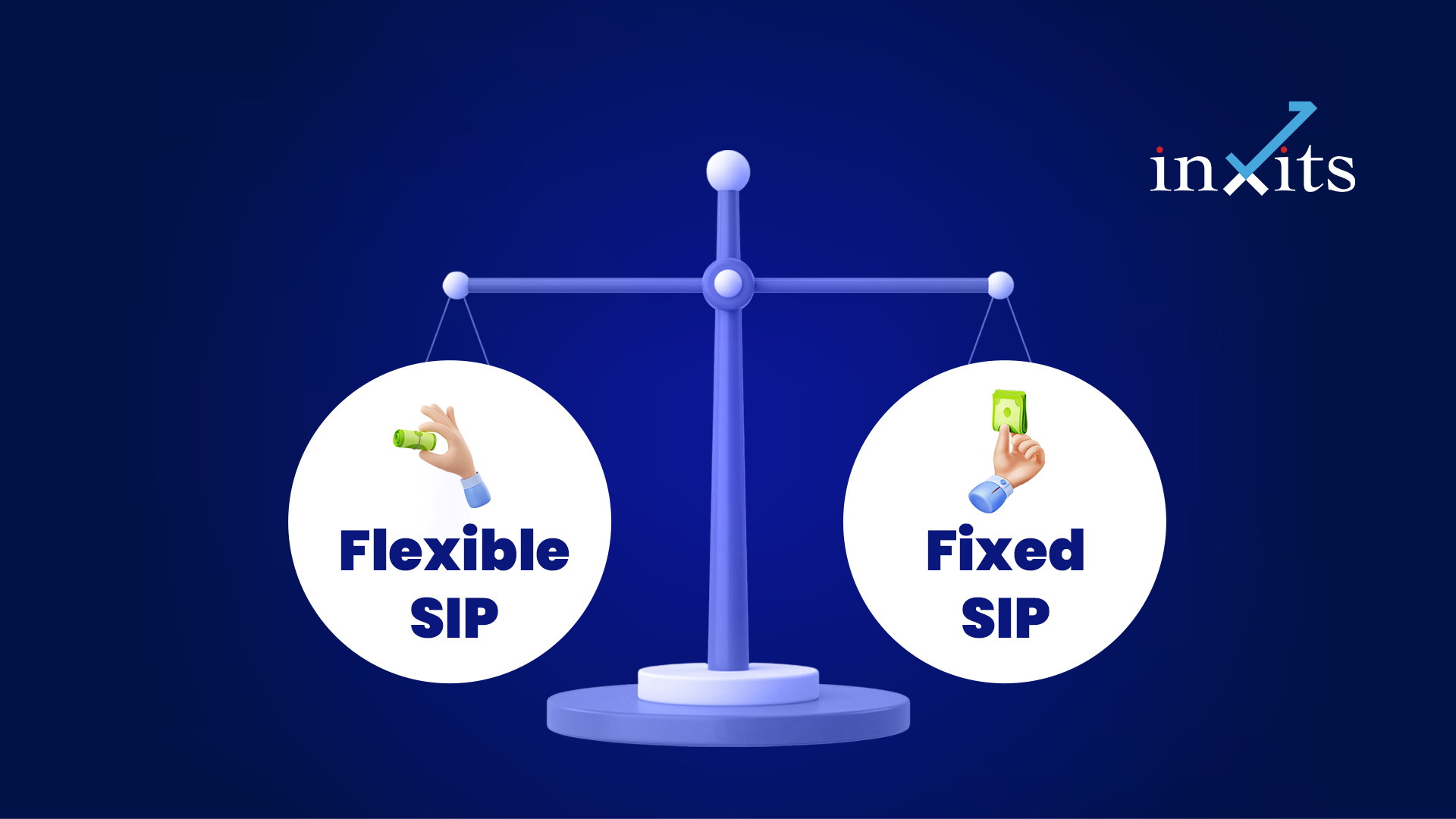
Not every investor earns the same way — and not every SIP structure fits every investor. The flexible SIP vs fixed SIP debate is really about one thing: does your investment approach match how your income actually works?
For salaried individuals, a fixed SIP brings discipline. For freelancers or business owners with variable income, a flexible SIP brings sustainability.
The right choice is not about which is better in theory — it is about which one you can realistically maintain.
That is where the confusion between flexible SIP and fixed SIP begins.
A fixed SIP works well in stable situations. A flexible SIP works better when life is less predictable. The same SIP approach does not suit everyone.
Choosing the right SIP structure early helps avoid missed payments, SIP discontinuation, and unnecessary financial stress later.
On this page
What this will help you understand
- The core difference between flexible and fixed SIP
- When each approach makes more sense
- How income pattern affects SIP choice
- A simple way to decide between the two
What is a Fixed SIP?
A fixed SIP (also called regular SIP) means investing a fixed amount at regular intervals.
- ₹5,000 every month
- Same date, same amount
- No changes unless manually updated
If you want to understand its base structure, exploring types of SIP helps put it into context.
Where it works best:
- Stable salary
- Predictable expenses
- Preference for automation
What is a Flexible SIP?
A flexible SIP allows you to change your investment amount based on your financial situation.
- Increase when income is high
- Decrease when expenses rise
- Adjust without stopping SIP
To understand this variation better, you can explore flexible SIP and how it works in practice.
Core Difference: Discipline vs Adaptability
At a basic level, the difference is simple.
| Factor | Fixed SIP | Flexible SIP |
| Investment amount | Fixed | Variable |
| Control | Low | High |
| Discipline | Automatic | Behaviour-driven |
| Suitability | Stable income | Variable income |
Real-Life Scenario: Why This Choice Matters
Let’s compare two investors.
Ramesh (Salaried Professional)
- Income: ₹60,000/month
- Chooses fixed SIP of ₹8,000
Works smoothly because income is predictable
Kunal (Freelancer)
- Income: ₹40,000–₹90,000/month
- Uses flexible SIP
Adjusts SIP between ₹3,000–₹8,000 depending on income
What we learn:
- The same SIP approach does not suit everyone
- Income pattern defines the strategy
The mistake most investors make is copying a SIP structure that works for someone else.
Ramesh’s ₹8,000 fixed SIP would have created problems for Kunal — in months where Kunal earned ₹40,000, that fixed commitment would eat 20% of his income, potentially leading to missed payments or SIP cancellations.
Kunal’s flexible approach let him invest ₹3,000 in lean months and ₹8,000 in good months, keeping the SIP alive without financial stress.
This is why choosing the right SIP structure matters more than simply choosing the “better” SIP type.
When Fixed SIP Makes More Sense
Fixed SIP works best when consistency is the priority.
It suits:
- Salaried individuals
- First-time investors
- People who prefer automation
- Long-term disciplined investors
If you are starting your journey, understanding what is SIP helps build a strong base.
When Flexible SIP Becomes Useful
Flexible SIP is more about adaptability.
It suits:
- Freelancers or business owners
- Individuals with irregular income
- Investors with variable expenses
- People needing short-term flexibility
In many cases, investors transition into this after understanding how SIP works in different situations.
Invest Smarter.
Grow Confidently.
Your AI-powered SEBI-registered investment advisor — with research you can trust and insights that grow with you.
Download inXits Free
Assumption vs Reality
| Assumption | Reality |
| Fixed SIP is always better | It depends on income stability |
| Flexible SIP lacks discipline | Discipline depends on behaviour |
| Variable investing reduces returns | Consistency matters more than format |
How to Choose Between Flexible SIP and Fixed SIP
Instead of overthinking, use this simple filter.
Step 1: Look at income pattern
- Stable → Fixed SIP
- Variable → Flexible SIP
Step 2: Evaluate discipline
- Need automation → Fixed SIP
- Comfortable managing → Flexible SIP
Step 3: Consider future income growth
If income is expected to grow steadily, combining approaches may work better.
For example, some investors use fixed SIP initially and later explore scaling options through step-up SIP.
Can You Combine Both?
Yes, and this is often practical.
Example:
- Fixed SIP → Long-term goals
- Flexible SIP → Short-term or variable income goals
This creates a balance between structure and flexibility.
To understand broader strategy building, you can explore multi SIP strategy.
Common Mistake to Avoid
Trying to follow a fixed SIP when your income is not stable.
Result:
- Missed payments
- Stopped SIP
- Inconsistency
Sometimes, flexibility helps maintain continuity better than strict discipline.
If you want to understand behavioural pitfalls, reading SIP mistakes that reduce returns can give more clarity.
Have a question about whether your SIP structure matches your income pattern? Not sure whether a flexible or fixed SIP suits your income pattern? A 15-minute conversation with a SEBI-registered adviser at inXits can give you a clear answer — no forms, no wait.
How inXits Helps You Choose the Right SIP Structure
Choosing between flexible and fixed SIP is not about picking a feature. It is about aligning investing with your life.
At inXits, advisors help investors:
- Match SIP structure with income pattern
- Balance discipline and flexibility
- Align investments with goals
This ensures your SIP works with your financial situation, not against it.
Conclusion
Flexible SIP and fixed SIP are not competing choices. They are tools designed for different situations.
Fixed SIP works when life is predictable. Flexible SIP works when it is not.
The right decision comes from understanding your income pattern, behaviour, and financial goals.
If your SIP feels difficult to maintain or too rigid, it may not be the investment that needs changing. It may be the structure.
A better-aligned SIP structure can improve consistency more than increasing the amount. If you want to rethink how your SIP fits your income and lifestyle, structure your SIP approach more effectively with the right guidance.
Disclaimer
Investments in securities markets are subject to market risks. Read all related documents carefully before investing.
inXits is a SEBI-registered investment adviser (Registration No. INA000020369). This article is for educational purposes only and does not constitute personalised investment advice.
Registration granted by SEBI, membership of BSE, and certification from NISM in no way guarantee performance of the intermediary or provide any assurance of returns to investors.
Want to learn more about Flexible SIP vs Fixed SIP?
Let's Connect
Himani Barot, CFP, is a Principal Officer at inXits with 4+ years of experience in portfolio management, investment advisory, and comprehensive financial planning. As a Certified Financial Planner, she helps clients navigate complex financial goals with structured, personalised strategies.
FAQs
What is the difference between flexible SIP and fixed SIP?
Fixed SIP has a constant investment amount, while flexible SIP allows changes.
Which is better: flexible SIP or fixed SIP?
It depends on income stability and investment behaviour.
Can I switch from fixed SIP to flexible SIP?
Yes, many platforms allow modification of SIP structure.
Is flexible SIP risky?
Risk depends on the mutual fund, not SIP type.
Who should use flexible SIP?
Investors with irregular or variable income.
Is fixed SIP suitable for beginners?
Yes, it is one of the simplest ways to start investing.