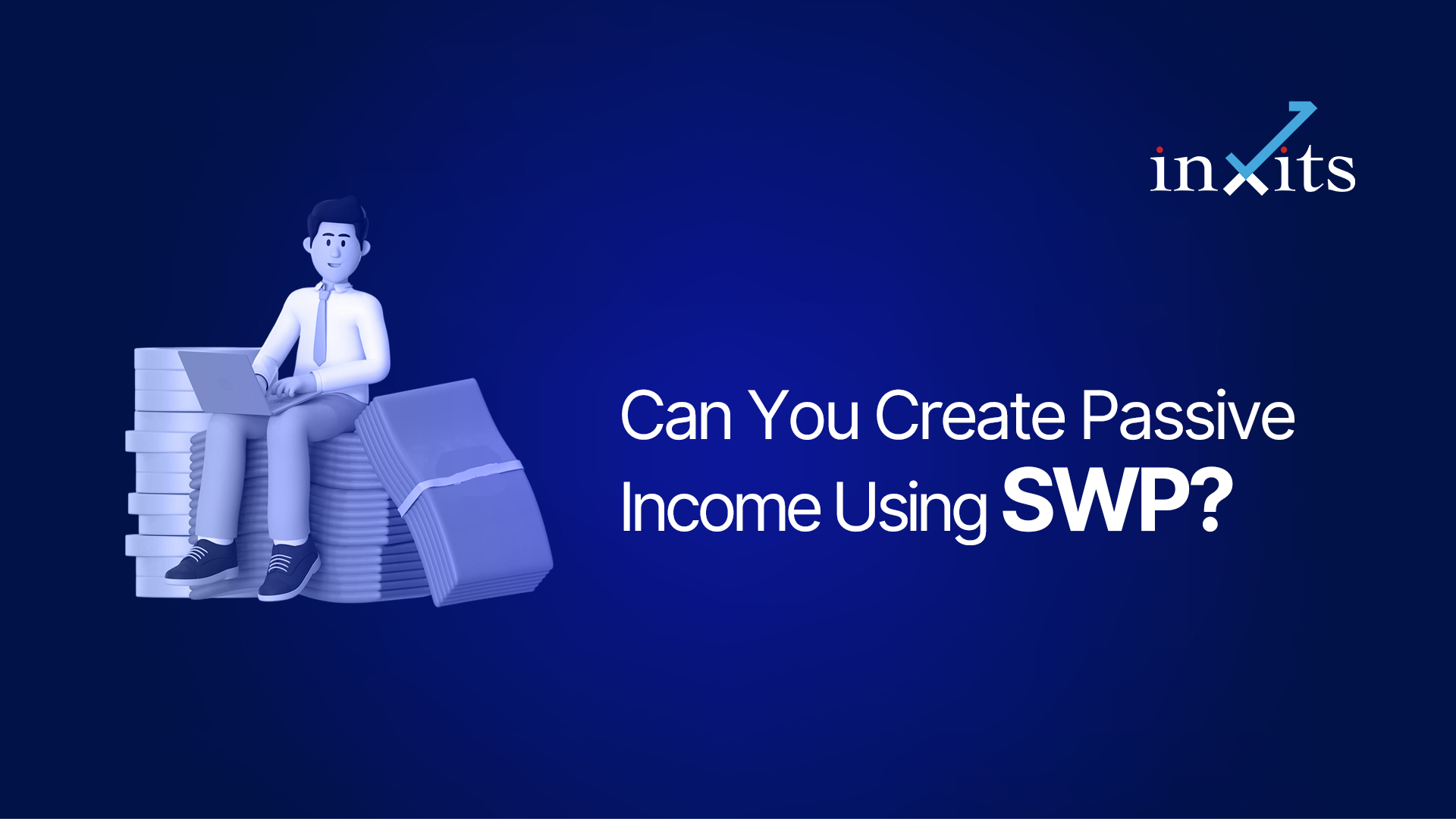
One of the most common questions investors ask is simple: “Can I generate a regular monthly income from my investments without touching my capital?”
The idea sounds appealing. You build a corpus over many years, retire from active work, and then receive a steady stream of income from your investments. Naturally, many investors come across the Systematic Withdrawal Plan (SWP) and wonder whether it can create passive income.
The short answer is yes, but with important conditions attached.
A Systematic Withdrawal Plan can provide regular cash flow from mutual fund investments. However, whether it creates sustainable passive income depends on factors such as withdrawal rate, market performance, investment horizon, and portfolio construction.
On this page
What is passive income using SWP?
A Systematic Withdrawal Plan (SWP) allows investors to withdraw a fixed amount from their mutual fund corpus at regular intervals – monthly, quarterly, or annually. Unlike a fixed deposit which pays interest, SWP works by redeeming units from the fund. Whether it creates truly passive income depends on whether portfolio returns are enough to sustain withdrawals without eroding the corpus.
Understanding these factors can help investors set realistic expectations and avoid common mistakes.
SWP in India: Key Takeaways
Before looking at the details, here are a few important points:
- SWP allows investors to withdraw a fixed amount periodically from mutual funds.
- It can help create a regular income stream.
- Capital may grow, remain stable, or decline depending on withdrawals and returns.
- SWP is commonly used during retirement.
- Sustainable withdrawal rates matter more than withdrawal frequency.
What Is an SWP and How Does It Work?
A Systematic Withdrawal Plan allows investors to withdraw a predetermined amount from a mutual fund at regular intervals.
The withdrawal frequency can be monthly, quarterly, half-yearly, or annual. Each withdrawal is funded through the redemption of mutual fund units.
An investor with ₹50 lakh withdrawing ₹25,000 monthly is withdrawing ₹3 lakh annually a 6% annual withdrawal rate. Whether the corpus survives depends on whether the portfolio earns more than 6% after tax each year.
The mutual fund does not pay interest like a bank deposit. Instead, units are redeemed to generate the required cash flow.
As a result, the value of the remaining investment depends on market performance and the amount being withdrawn.
Can SWP Really Create Passive Income?
Yes, SWP can create passive income if the withdrawal amount remains sustainable relative to the investment corpus.
Many retirees use SWPs as an alternative to relying solely on fixed deposits or traditional pension income. The structure provides flexibility because investors can modify, increase, reduce, or stop withdrawals based on their requirements.
However, SWP should not be viewed as a guaranteed income source.
The investment remains exposed to market fluctuations. During strong market periods, portfolio growth may comfortably support withdrawals. During prolonged weak periods, aggressive withdrawals may reduce the corpus more quickly.
Therefore, the objective should not be simply generating income today. The focus should be balancing current income needs with long-term portfolio sustainability.
What Determines Whether Your Capital Survives?
The survival of capital depends primarily on three factors:
1. Withdrawal Rate
The percentage withdrawn each year significantly affects sustainability.
A corpus of ₹1 crore withdrawing ₹4 lakh annually faces a different challenge compared to withdrawing ₹10 lakh annually.
Higher withdrawal rates increase the probability of capital erosion.
2. Investment Returns
Returns generated by the portfolio help replenish withdrawn amounts.
When portfolio returns exceed withdrawals over long periods, capital may remain stable or even grow. When withdrawals consistently exceed returns, capital gradually declines.
3. Time Horizon
Someone planning for 30 years of retirement faces different challenges than someone requiring income for the next 10 years.
Longer horizons generally require a more balanced approach between growth and income generation.
Key Facts on SWP
- SWP can be started and stopped at any time subject to scheme rules.
- Withdrawals occur through unit redemption.
- Capital gains taxation applies on redeemed units.
- The remaining corpus continues participating in market movements.
Many investors use a SIP calculator during the accumulation phase and later transition to an SWP strategy when income becomes the primary objective.
Is SWP Better Than Interest Income?
Many investors compare SWP with fixed deposits because both can generate regular cash flow.
The comparison is not straightforward because the structures are fundamentally different.
| Factor | SWP (Systematic Withdrawal Plan) | Fixed Deposit (FD) |
| Income Source | Redemption of mutual fund units | Interest payment |
| Market Exposure | Yes, returns vary with market performance | No, interest rate is fixed at the time of opening |
| Growth Potential | Available, equity component can continue to grow | Limited to the agreed interest rate |
| Income Stability | Variable, depends on fund performance and market conditions | Fixed and predictable throughout the tenure |
| Inflation Management | Potentially better over the long term due to market-linked growth | Often challenging during periods of low interest rates |
| Taxation | Equity: LTCG/STCG tax; Debt: taxed as per applicable rules | Interest taxed as per the investor’s income tax slab; TDS applicable above the prescribed threshold |
| Deposit Insurance | Not applicable | Up to ₹5 lakh per depositor per bank under DICGC |
(Source: Income Tax Act, 1961 | Finance Act 2024 )
An investor seeking complete certainty may prefer fixed-income solutions. Investors seeking a balance between income and long-term growth may evaluate SWP-based approaches.
Invest Smarter.
Grow Confidently.
Your AI-powered SEBI-registered investment advisor — with research you can trust and insights that grow with you.
Download inXits Free
Individuals comparing multiple income-generating options often review solutions offered by a fixed income advisor before deciding how much exposure should remain in market-linked investments.
What Happens If Markets Fall During SWP?
Market declines can affect the sustainability of withdrawals.
When markets fall, more units may need to be redeemed to generate the same withdrawal amount. Over extended periods, this may accelerate corpus depletion.
However, diversified portfolios and reasonable withdrawal rates can help reduce this risk.
This concern explains why many retirees maintain a mix of equity, debt, and cash allocations rather than relying entirely on one asset class.
Common Misconceptions About Passive Income Using SWP
What Most Investors Assume
SWP pays income while the capital remains untouched forever.
What Actually Happens
Every withdrawal involves redeeming units. The remaining corpus must generate sufficient returns to support future withdrawals.
Why This Matters
Understanding the mechanics helps investors set realistic withdrawal expectations and avoid overestimating sustainable income levels.
Consider a retiree in Pune with a ₹1.2 crore retirement corpus. If monthly withdrawals align with portfolio capacity, the corpus may support income for many years. If withdrawals become excessive, the portfolio may face pressure regardless of market performance.
Not sure whether your retirement corpus can support your desired monthly income? A retirement planning advisor at inXits can help estimate sustainable withdrawal levels based on your goals and timeline.
How inXits Helps Investors Build Sustainable Retirement Income
Many investors focus on one question: “How much income can I withdraw every month?” The more important question is whether that withdrawal level remains sustainable for the years ahead.
At inXits, advisors evaluate retirement goals, expected expenses, inflation assumptions, asset allocation, and withdrawal strategies before recommending an income framework. Rather than focusing solely on today’s income requirement, the process considers how the portfolio may support future financial needs.
Questions around SWP often involve balancing growth, liquidity, tax efficiency, and longevity risk. Those decisions become particularly important when retirement could last 20 to 30 years.
If you want clarity on how much your portfolio can realistically support, speaking with a financial advisor can help you evaluate different retirement income approaches in a structured manner.
Conclusion
Creating passive income using SWP is possible, and many investors use this approach to generate regular cash flow from accumulated investments.
However, SWP is not a magic solution that automatically protects capital while generating unlimited income. Sustainable withdrawals depend on portfolio returns, withdrawal rates, market conditions, and time horizon.
The most successful SWP strategies typically begin with a clear understanding of income requirements and long-term financial objectives. Rather than focusing only on monthly withdrawals, investors should evaluate how those withdrawals affect the future health of their portfolio.
For investors approaching retirement or already drawing income from investments, understanding passive income using SWP can be an important part of long-term financial planning. If you would like a personalised assessment of your retirement income strategy, a SEBI registered financial advisor can help evaluate whether your current approach aligns with your financial goals.
FAQ
What is passive income using SWP?
Passive income using SWP refers to receiving regular withdrawals from mutual fund investments through a Systematic Withdrawal Plan. Investors can choose monthly, quarterly, or annual withdrawals based on their financial requirements.
Can SWP provide monthly income after retirement?
Yes. Many retirees use SWPs to generate monthly cash flow from accumulated investments. The sustainability of the income depends on portfolio size, withdrawal rate, and investment performance.
Does SWP guarantee income?
No. SWP does not provide guaranteed income. Withdrawals come from the investment corpus, and market performance can influence how long the portfolio supports withdrawals.
Can I lose capital while using an SWP?
Yes. If withdrawals exceed portfolio growth over long periods, capital may decline. Sustainable withdrawal rates help reduce this risk.
Is SWP suitable for senior citizens?
SWP may be suitable for some senior citizens depending on income needs, risk tolerance, and overall financial situation. Individual circumstances should always be considered before implementing a withdrawal strategy.
What is the difference between SWP and dividend income?
Dividend income depends on distributions declared by companies or schemes. SWP provides investor-controlled withdrawals through unit redemption regardless of dividend declarations.
How much can I withdraw through an SWP?
There is no universal answer. The appropriate withdrawal amount depends on the corpus size, expected investment returns, inflation assumptions, and financial goals.
Is SWP regulated in India?
Yes. Mutual funds offering SWP facilities operate under regulations issued by the Securities and Exchange Board of India (SEBI).
Disclaimer
Investments in securities markets are subject to market risks. Read all related documents carefully before investing.
inXits is a SEBI-registered investment adviser (Registration No. INA000020369). This article is for educational purposes only and does not constitute personalised investment advice.
Registration granted by SEBI, membership of BSE, and certification from NISM in no way guarantee performance of the intermediary or provide any assurance of returns to investors.

Aditya Rajpurohit is a Mutual Fund Research Analyst at inXits with 5+ years of experience in equity and mutual fund analysis. He specialises in fund selection, portfolio construction, and long-term wealth creation strategies for retail and HNI investors.