Most investors start with one question: which fund should I invest in?
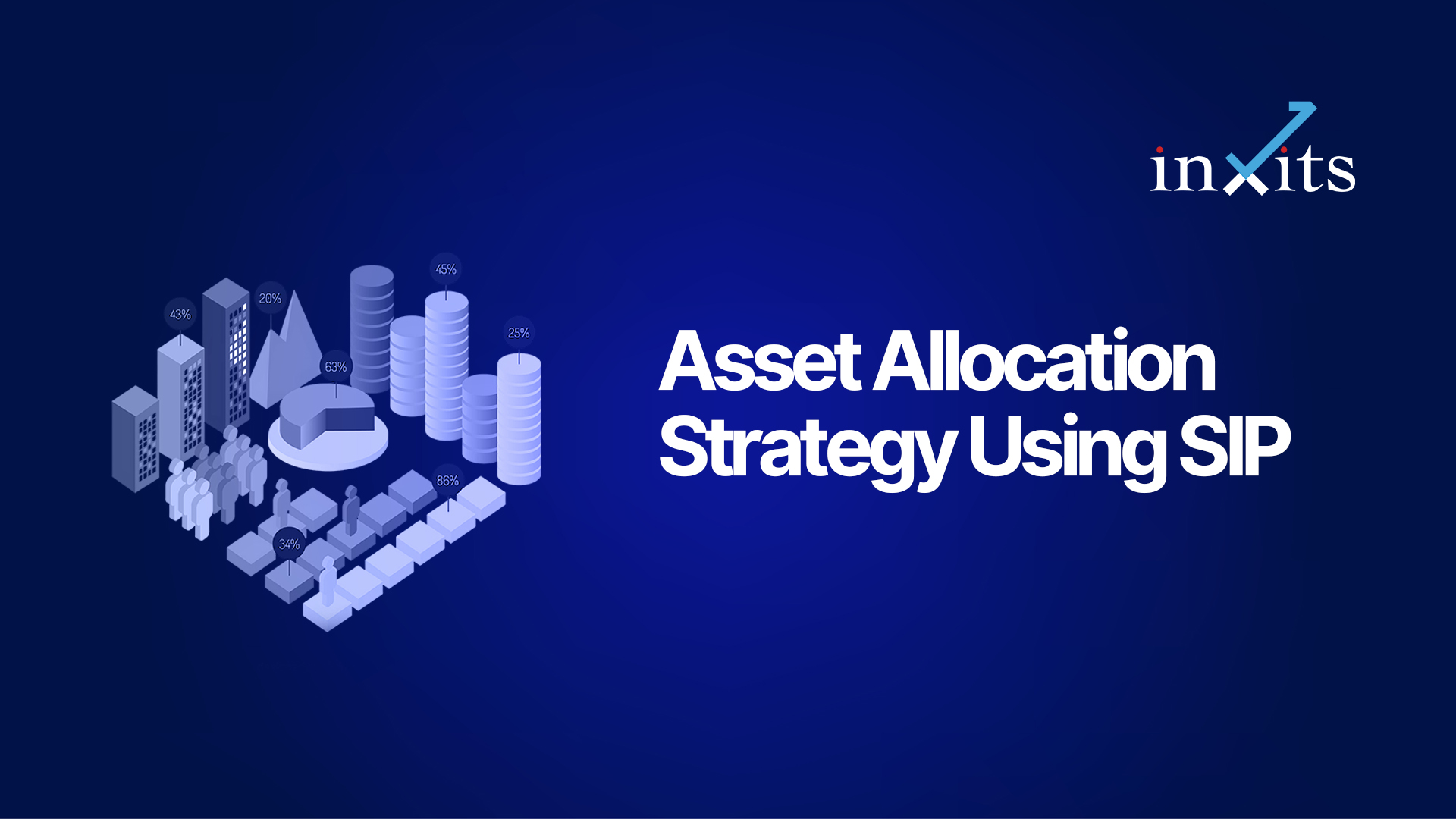
But the more powerful question — especially for long-term wealth creation — is how to build an SIP asset allocation strategy that divides investments across equity, debt, and hybrid funds.
Because returns are not just driven by fund selection — they are shaped by how your money is distributed across different asset types.
This is where asset allocation becomes critical.
And SIP makes it possible to build that allocation gradually, instead of trying to get everything right in one decision.
On this page
What This Article Covers
- What asset allocation means in SIP
- How to divide between equity, debt, and hybrid
- Practical allocation examples
- Mistakes to avoid
What is Asset Allocation in SIP?
Asset allocation means dividing your investments across different categories.
In SIP context, it means:
- Investing in equity funds (growth)
- Investing in debt funds (stability)
- Investing in hybrid funds (balance)
Instead of putting everything into one fund, you spread investments.
If you are still building your base, understanding what is SIP helps before applying allocation strategies.
Why Asset Allocation Matters More Than Fund Selection
Many investors spend time choosing funds but ignore allocation.
What actually drives outcomes:
- Risk distribution
- Market exposure
- Stability during volatility
Example:
- 100% equity → high growth, high volatility
- Mixed allocation → balanced experience
To understand how SIP behaves across different markets, it helps to revisit how SIP works over time.
The Three Core Asset Types
1. Equity (Growth Engine)
- Higher return potential
- Higher volatility
- Suitable for long-term goals
2. Debt (Stability Layer)
- Lower volatility
- More predictable returns
- Suitable for short-term goals
3. Hybrid (Balance Layer)
- Mix of equity and debt
- Moderate risk
- Useful for balanced allocation
To understand how these fit into overall planning, exploring mutual fund investing in India gives a broader view.
SIP Portfolio Allocation Models: Conservative, Balanced and Growth
Instead of guessing, use structured models.
Model 1: Conservative Allocation
| Asset Type | Allocation |
| Equity | 40% |
| Hybrid | 30% |
| Debt | 30% |
👉 Suitable for:
- Low risk tolerance
- Short to medium-term goals
Model 2: Balanced Allocation
| Asset Type | Allocation |
| Equity | 60% |
| Hybrid | 20% |
| Debt | 20% |
👉 Suitable for:
- Moderate risk investors
- Long-term goals
Model 3: Growth Allocation
| Asset Type | Allocation |
| Equity | 75% |
| Hybrid | 15% |
| Debt | 10% |
👉 Suitable for:
- Long-term investors
- Higher risk tolerance
Real-Life Scenario: How SIP Builds Allocation Over Time
Let’s take Neeraj, 32, working in Ahmedabad.
Monthly investment: ₹15,000
Instead of one SIP:
- ₹9,000 → Equity
- ₹3,000 → Hybrid
- ₹3,000 → Debt
What happens?
- Portfolio grows gradually
- Risk is spread
- No need for large one-time allocation
This is similar to a structured multi SIP approach, where each SIP has a role. You can explore multi SIP strategy to understand this better.
How Asset Allocation Changes Over Time
Allocation is not static.
Early stage (20s–30s):
- Higher equity exposure
Mid stage (30s–40s):
- Balanced allocation
Later stage (40s+):
- Higher debt allocation
This shift reduces risk as goals get closer.
For goal alignment, understanding goal-based SIP planning helps structure allocation better.
Should You Adjust SIP Amount Across Assets?
Yes, especially as income grows.
Invest Smarter.
Grow Confidently.
Your AI-powered SEBI-registered investment advisor — with research you can trust and insights that grow with you.
Download inXits Free
Example:
- Increase equity SIP for long-term goals
- Maintain or increase debt SIP for stability
Common Mistakes in SIP Asset Allocation
Avoid these:
- Investing only in equity
- Ignoring debt completely
- Overcomplicating allocation
- Not reviewing periodically
To understand behavioural gaps, reviewing SIP mistakes that reduce returns can help.
A Simple Framework to Start
Instead of overthinking, follow this:
- Define your goal timeline
- Choose allocation model
- Split SIP across categories
- Review annually
A Quick Self-Check
- Is your SIP spread across asset types?
- Are you overly dependent on one category?
- Does your allocation match your goals?
If not, your portfolio may need restructuring.
Have a question about how to divide your SIP across equity, debt, and hybrid funds based on your goals? Talk to a mutual fund advisor — a conversation with a qualified advisor, no forms, no wait.
How inXits Helps You Build Allocation Strategy
Asset allocation is where most investors feel unsure.
At inXits, advisors help investors:
- Build balanced portfolios using SIP
- Align allocation with goals and timelines
- Avoid overexposure to one asset class
This turns SIP into a structured portfolio rather than scattered investments.
Conclusion
Asset allocation is not about choosing the best fund. It is about choosing the right mix.
SIP makes it possible to build that mix gradually, without needing large capital upfront.
Equity drives growth. Debt provides stability. Hybrid balances both.
The key is not perfection. It is alignment.
If your current SIP is concentrated in one area or feels unbalanced, it may be worth reviewing how your investments are distributed. A structured allocation approach can improve clarity more than increasing investment amounts alone. If you want to organise your SIP into a balanced portfolio, build your asset allocation strategy with guidance for better long-term clarity.
In Summary
Asset allocation using SIP involves dividing investments across equity, debt, and hybrid funds. This helps balance risk and return while aligning with financial goals. Instead of relying on a single fund, a structured allocation approach creates a more stable and diversified portfolio over time.
FAQ
What is asset allocation in SIP?
It means dividing SIP investments across equity, debt, and hybrid funds.
Why is asset allocation important?
It helps manage risk and balance returns.
How much should I allocate to equity?
It depends on your risk tolerance and time horizon.
Can I invest only in equity SIP?
It is possible, but diversification may reduce risk.
How often should I review allocation?
Annual review or during major life changes is useful.
Is hybrid fund necessary in SIP?
Hybrid funds can help balance equity and debt exposure.
Disclaimer
Investments in securities markets are subject to market risks. Read all related documents carefully before investing.
inXits is a SEBI-registered investment adviser (Registration No. INA000020369). This article is for educational purposes only and does not constitute personalised investment advice.
Registration granted by SEBI, membership of BSE, and certification from NISM in no way guarantee performance of the intermediary or provide any assurance of returns to investors.

Aditya Rajpurohit is a Mutual Fund Research Analyst at inXits with 5+ years of experience in equity and mutual fund analysis. He specialises in fund selection, portfolio construction, and long-term wealth creation strategies for retail and HNI investors.