Many investors are attracted to bonds because they are often viewed as a relatively stable component of a diversified portfolio. However, not every bond carries the same level of risk. Two bonds offering similar interest rates may differ significantly in their ability to repay investors on time.
This is where understanding what are bond ratings becomes important. Bond ratings help investors assess the financial strength of the issuer and estimate the likelihood that interest and principal payments will be made as promised.
For someone new to fixed-incom investing, the different rating symbols can appear confusing. Yet learning their meaning is one of the first steps towards making informed investment decisions. This guide explains bond rating meaning, how credit ratings are assigned and why they matter before investing in bonds.
On this page
Key Takeaways: What Are Bond Ratings
Bond ratings help investors understand the issuer’s repayment ability.
- Bond ratings indicate the creditworthiness of the issuer.
- Higher-rated bonds generally carry lower credit risk.
- Lower-rated bonds may offer higher yields but involve greater risk.
- Credit ratings are opinions from SEBI-registered agencies, not guarantees of repayment or future performance.
- Investors should evaluate ratings alongside other financial factors.
What Are Bond Ratings?
Bond ratings are opinions issued by recognised credit rating agencies regarding an issuer’s ability to repay interest and principal according to the bond’s terms.
Simply put, bond ratings provide an assessment of bond creditworthiness.
These ratings help investors compare different debt instruments before investing.
Rather than guaranteeing repayment, a bond rating estimates the probability that the issuer will meet its financial obligations based on available information.
Credit ratings become particularly useful when comparing bonds issued by different companies or institutions.
Bond Rating Meaning Explained
Understanding bond rating meaning is easier when viewed as a measure of financial strength.
A higher rating generally indicates that the issuer is considered more capable of meeting its debt obligations.
A lower rating suggests greater uncertainty regarding timely repayment, which usually results in investors demanding higher interest rates as compensation for the additional risk.
Therefore, bond ratings help investors balance potential returns against credit risk.
Who Assigns Bond Ratings in India?
In India, SEBI recognises seven credit rating agencies – CRISIL, ICRA, CARE Ratings, India Ratings and Research, Brickwork Ratings, Acuité Ratings & Research, and Infomerics Ratings. All of them are registered with and regulated by SEBI under the Credit Rating Agencies Regulations, 1999. Each agency uses slightly different symbols but follows the same broad AAA to D rating scale. (source : SEBI | SEBI (Credit Rating Agencies) Regulations, 1999 )
In India, recognised credit rating agencies evaluate debt instruments based on detailed financial analysis.
These agencies examine factors such as:
- Financial performance
- Debt levels
- Cash flow generation
- Business stability
- Industry outlook
- Management quality
- Repayment history
After reviewing these factors, they assign ratings that help investors understand the issuer’s relative credit profile.
Although ratings provide useful information, they represent an independent opinion rather than a guarantee of future performance.
Common Bond Rating Categories
While rating symbols may differ slightly across agencies, they generally follow a similar structure.
| Rating Category | General Interpretation |
| AAA | Highest creditworthiness, lowest credit risk |
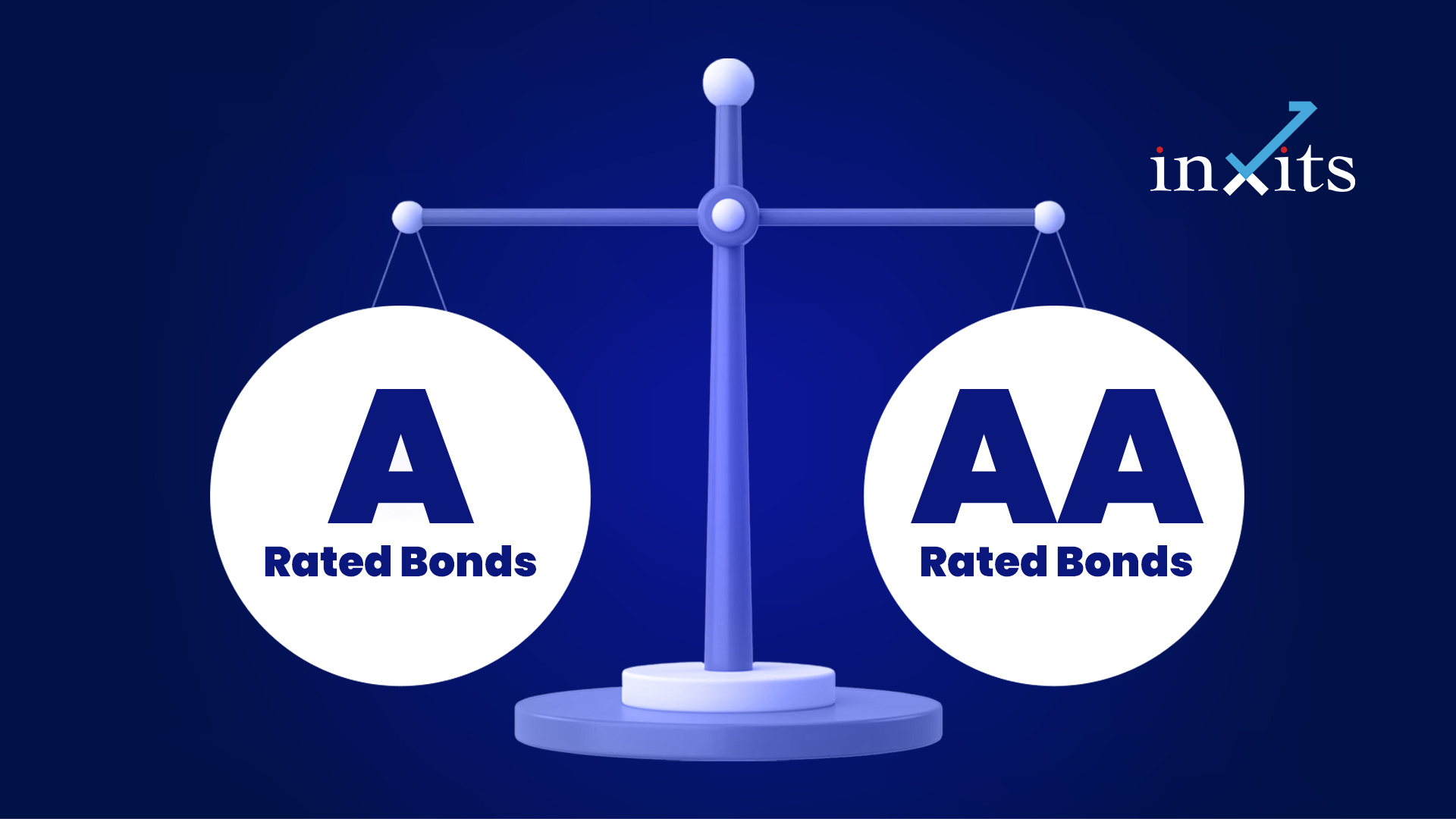
| AA | Very strong repayment capacity |
| A | Adequate financial strength |
| BBB | Moderate credit quality, lowest investment-grade rating |
| BB and Below | Below investment grade, higher credit risk |
Ratings from AAA to BBB are generally considered investment-grade. Ratings BB and below are sometimes called high-yield or speculative-grade bonds.
As ratings move lower, the probability of credit risk generally increases.
Investors should understand that higher returns often accompany higher levels of risk.
Why Do Bond Ratings Matter?
Bond ratings play an important role in fixed-income investing because they provide a quick assessment of credit quality.
Understanding Credit Risk
Every bond carries some degree of credit risk.
Credit ratings help investors estimate the likelihood that the issuer may face financial difficulty in meeting repayment obligations.
This process is often referred to as credit risk assessment.
Comparing Investment Options
Bond ratings make it easier to compare different issuers.
For example, two bonds with similar maturity periods may have different ratings because their financial strength differs.
Investors can use ratings as one factor while evaluating available investment options.
Supporting Portfolio Diversification
Many investors diversify across different asset classes and credit profiles.
Understanding debt instrument ratings helps investors select bonds that match their overall risk tolerance and investment objectives.
Those looking to understand fixed-income investing in greater detail may also benefit from working with a fixed income advisor who can explain how different bond categories fit within a diversified portfolio.
Are Higher-Rated Bonds Always Better?
Not necessarily.
Invest Smarter.
Grow Confidently.
Your AI-powered SEBI-registered investment advisor — with research you can trust and insights that grow with you.
Download inXits Free
Higher-rated bonds generally carry lower credit risk, but they may also offer relatively lower yields.
Lower-rated bonds may provide higher potential returns because investors expect additional compensation for accepting greater uncertainty.
Therefore, selecting a bond should involve balancing:
- Credit quality
- Investment horizon
- Risk tolerance
- Income requirements
- Overall portfolio allocation
Rather than focusing only on ratings, investors should evaluate multiple factors before making investment decisions.
Limitations of Bond Ratings
Although ratings provide valuable information, they also have limitations.
Investors should remember that:
- Ratings represent opinions based on available information.
- Financial conditions may change after a rating is assigned.
- Ratings may be revised if business conditions change.
- No rating completely eliminates investment risk.
Therefore, bond ratings should be viewed as one part of the overall investment evaluation process rather than the only decision-making factor.
Common Mistakes Investors Make
Some investors misunderstand the purpose of bond ratings.
Common mistakes include:
- Assuming higher ratings guarantee repayment.
- Ignoring financial fundamentals beyond the rating.
- Chasing higher yields without understanding credit risk.
- Investing without considering portfolio diversification.
- Focusing only on interest rates instead of overall credit quality.
Avoiding these mistakes can help investors make more balanced fixed-income decisions.
If you are unsure how bond ratings influence your investment choices, discussing your portfolio with a fixed income advisor can help you understand how credit quality aligns with your financial goals.
How Bond Ratings Fit Into Financial Planning
Bonds often serve different purposes within a portfolio.
Some investors seek regular income, while others use bonds to reduce overall portfolio volatility or diversify away from equity investments.
Understanding bond creditworthiness helps investors identify debt instruments that match their financial objectives and comfort with risk.
However, bond ratings should always be considered alongside investment horizon, liquidity requirements and broader asset allocation rather than in isolation.
How inXits Helps Investors Understand Fixed-Income Investments
Selecting bonds involves more than comparing interest rates. Investors also need to understand issuer quality, credit risk, maturity profiles and how different debt instruments fit into their long-term financial plans.
At inXits, advisors help investors evaluate fixed-income opportunities by considering financial goals, risk tolerance and portfolio diversification instead of relying on a single metric such as bond ratings.
If you are exploring fixed-income investments, consulting a bond investment advisor can help you understand how different debt instruments may complement your broader investment strategy.
Conclusion
Understanding what are bond ratings is an important step for anyone considering fixed-income investments. These ratings provide an independent assessment of an issuer’s repayment capacity and help investors evaluate credit risk before investing.
Although higher-rated bonds generally indicate stronger credit quality, no rating removes investment risk completely. Reviewing bond creditworthiness alongside financial fundamentals, investment objectives and portfolio allocation leads to more informed decisions.
Building a diversified portfolio requires balancing both risk and return. If you would like personalised guidance while evaluating bonds or other fixed-income investments, speaking with a financial advisor can help you make decisions aligned with your long-term financial goals.
Frequently Asked Questions
What are bond ratings?
Bond ratings are independent opinions issued by recognised credit rating agencies regarding an issuer’s ability to repay interest and principal according to the bond’s terms.
What is bond rating meaning?
Bond rating meaning refers to the assessment of an issuer’s creditworthiness and financial capacity to meet debt repayment obligations.
Why do bond ratings matter?
Bond ratings help investors compare debt instruments, evaluate credit risk and make more informed investment decisions.
What is bond creditworthiness?
Bond creditworthiness refers to the financial strength of the issuer and its ability to repay borrowed money according to agreed terms.
Are bond ratings guaranteed?
No. Bond ratings are opinions based on available information and do not guarantee repayment or future investment performance.
What is credit risk assessment?
Credit risk assessment is the process of evaluating the likelihood that a borrower may fail to meet its financial obligations on time.
Can bond ratings change?
Yes. Credit rating agencies may upgrade or downgrade ratings if the issuer’s financial condition or business outlook changes.
Should investors rely only on bond ratings?
No. Bond ratings should be considered alongside financial analysis, investment goals, maturity period and overall portfolio diversification before making investment decisions.
Disclaimer
Investments in securities markets are subject to market risks. Read all related documents carefully before investing.
inXits is a SEBI-registered investment adviser (Registration No. INA000020369). This article is for educational purposes only and does not constitute personalised investment advice.
Registration granted by SEBI, membership of BSE, and certification from NISM in no way guarantee performance of the intermediary or provide any assurance of returns to investors.

Himani Barot, CFP, is a Principal Officer at inXits with 4+ years of experience in portfolio management, investment advisory, and comprehensive financial planning. As a Certified Financial Planner, she helps clients navigate complex financial goals with structured, personalised strategies.