 AI Summary
Hybrid mutual funds invest in a combination of equity and debt instruments, offering a balance between growth potential and stability. By blending market-linked equity exposure with the relatively stable nature of debt investments, they aim to reduce volatility while still participating in long-term wealth creation. Available in various categories such as Aggressive Hybrid, Conservative Hybrid, Balanced Advantage, Multi-Asset, and Equity Savings Funds, they cater to different risk profiles and financial goals. Hybrid funds are generally suitable for investors with a 3–5 year investment horizon who seek a middle ground between pure equity and pure debt funds, but like all market-linked investments, their returns are not guaranteed and depend on market conditions and asset allocation strategies.
Hybrid mutual funds are designed for investors who want a balance between growth and stability. These funds invest in a mix of equity and debt instruments, making them suitable for people who do not want to take the full risk of equity funds but still want some exposure to market-linked growth.
In India, hybrid mutual funds are often chosen by beginners and moderate investors because they sit between equity and debt funds in terms of risk and return. Understanding how they work, how they compare with other types of mutual fund, and the different options available can help investors decide whether they fit their financial goals.
On this page
What Are Hybrid Mutual Funds
Hybrid mutual funds invest in both:
- Equity instruments such as company shares
- Debt instruments such as bonds and money market securities
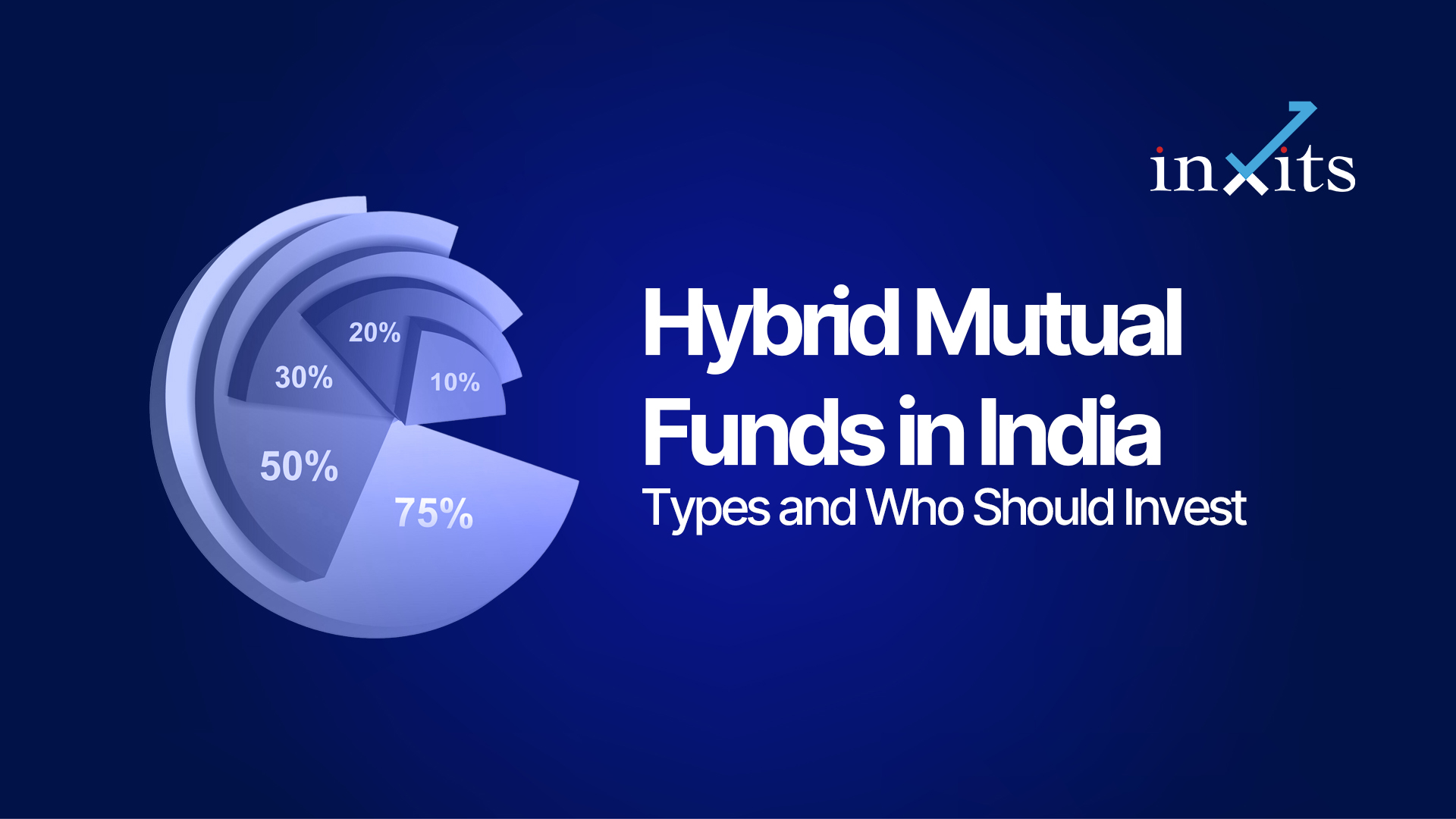
The proportion of equity and debt varies depending on the type of hybrid fund. This mix helps reduce overall portfolio volatility while still allowing participation in market growth.
Must Read: What Is a Mutual Fund and How Does It Work?
How Hybrid Mutual Funds Work
When you invest in a hybrid mutual fund:
- Your money is split between equity and debt assets
- Equity aims to provide growth over time
- Debt aims to provide stability and reduce sharp fluctuations
- The fund manager rebalances the allocation as per the scheme rules
Because of this structure, hybrid funds tend to be less volatile than pure equity funds but more growth-oriented than pure debt funds.
Risk Profile and Time Horizon
Risk Profile (Risk-O-Meter)
Moderately High Risk
Hybrid funds carry moderate to moderately high risk depending on their equity allocation.
Recommended Time Horizon
3 to 5 years
This time period allows the equity portion to work through market cycles while the debt portion provides stability.
Types of Hybrid Mutual Funds in India
Hybrid mutual funds are classified based on how much they invest in equity and debt.
Aggressive Hybrid Funds
Equity allocation: Around 65 to 80 percent
Debt allocation: Around 20 to 35 percent
Risk level: Moderately High Risk
Who should consider them:
- Investors seeking higher growth with some stability
- Investors with a medium-term horizon
- Those transitioning from debt to equity
Conservative Hybrid Funds
Equity allocation: Around 10 to 25 percent
Debt allocation: Around 75 to 90 percent
Risk level: Low to Moderate Risk
Who should consider them:
- Conservative investors
- Investors closer to short-term goals
- Those prioritising capital stability
Balanced Hybrid Funds
Equity allocation: Around 40 to 60 percent
Debt allocation: Around 40 to 60 percent
Risk level: Moderate Risk
Who should consider them:
- Investors seeking balance between growth and stability
- Beginners with moderate risk comfort
Balanced Advantage Funds (Dynamic Asset Allocation Funds)
These funds actively change equity and debt allocation based on market conditions.
Risk level: Moderate to Moderately High
Who should consider them:
- Investors who prefer dynamic allocation
- Those who do not want to adjust portfolios themselves
Understanding how these funds rebalance can be complex. If allocation logic feels confusing, a mutual fund investment planner can help explain how these funds behave across market conditions.
Invest Smarter.
Grow Confidently.
Your AI-powered SEBI-registered investment advisor — with research you can trust and insights that grow with you.
Download inXits Free
Multi Asset Allocation Funds
These funds invest in at least three asset classes, usually equity, debt, and gold or commodities.
Risk level: Moderate
Who should consider them:
- Investors looking for wider diversification
- Investors with medium-term goals
Equity Savings Funds
These funds combine equity, debt, and arbitrage strategies.
Risk level: Low to Moderate
Who should consider them:
- Investors seeking lower volatility
- Those looking for tax-efficient options with relatively stable returns
Returns from Hybrid Mutual Funds
Returns from hybrid funds are market-linked and depend on:
- Equity market performance
- Interest rate movement
- Asset allocation strategy
- Time horizon
Hybrid funds do not offer guaranteed returns. Their aim is to deliver smoother returns compared to pure equity funds over medium-term periods.
Hybrid Fund Categories – Equity Exposure & Best Use Case
| Hybrid Fund Category | Equity Exposure | Taxation Style | Best For |
| Aggressive Hybrid | 65% – 80% | Equity | Wealth creation with low volatility |
| Balanced Advantage | Dynamic (0–100%) | Usually Equity | Automatic market timing |
| Conservative Hybrid | 10% – 25% | Debt/Slab | Regular income (Pension-like) |
| Equity Savings | 65%+ (with Arbitrage) | Equity | Low risk, High tax efficiency |
| Multi-Asset | 3+ Asset Classes | Varies | All-weather diversification |
Who Should Invest in Hybrid Mutual Funds
Hybrid mutual funds may suit:
- Beginners who want equity exposure with controlled risk
- Investors with 3–5 year goals
- Conservative investors moving gradually into equity
- Investors who prefer balanced portfolios
They may not suit investors with very short-term needs or those seeking aggressive long-term growth.
Hybrid Mutual Funds vs Equity and Debt Funds
| Aspect | Hybrid Funds | Equity Funds | Debt Funds |
| Risk Level | Moderate to Moderately High | Very High | Low to Moderate |
| Volatility | Medium | High | Low |
| Growth Potential | Medium | High | Low |
| Stability | Medium | Low | High |
| Time Horizon | 3–5 years | 5+ years | 1–3 years |
Taxation of Hybrid Mutual Funds in India
Taxation of hybrid mutual funds depends mainly on their equity exposure.
Equity-Oriented Hybrid Funds (≥65% Equity Exposure)
These are taxed like equity mutual funds:
- STCG (holding period ≤ 1 year): 15%
- LTCG (holding period > 1 year): 10% on gains above ₹1 lakh per year
Examples: Aggressive Hybrid Funds, Equity Savings Funds (typically), some Balanced Advantage Funds depending on equity level.
Debt-Oriented Hybrid Funds (<65% Equity Exposure)
For investments made on or after 1 April 2023, these funds are taxed as per income tax slab, irrespective of holding period:
- Gains are added to income and taxed as per the investor’s slab rate
- Indexation benefit is not available
Examples: Conservative Hybrid Funds (usually), some Balanced Hybrid Funds, and certain Multi-Asset funds depending on allocation.
Common Mistakes Investors Make with Hybrid Funds
- Treating them as risk-free
- Ignoring equity allocation percentage
- Investing without matching time horizon
- Expecting equity-like returns in the short term
Understanding the structure of hybrid funds helps avoid these mistakes.
When Guidance Can Be Helpful
Hybrid funds look simple but differ widely in structure. Understanding equity percentage, rebalancing rules, and tax treatment matters.
If you feel unsure while comparing hybrid fund categories or aligning them with your goals, speaking with a qualified mutual fund advisor can help. The inXits also offers educational support and 24×7 free consulting for investors who want clarity before investing.
Conclusion
Hybrid mutual funds offer a middle path between equity and debt by combining growth potential with relative stability. With multiple types available in India, investors can choose funds that match their risk comfort and time horizon.
The right hybrid fund depends on understanding asset allocation, risk level, and investment duration. Taking time to learn these basics helps investors make better decisions and stay invested with confidence.
Mandatory SEBI Warning & Disclaimer
Investment in securities market are subject to market risks. Read all the related documents carefully before investing.
Registration granted by SEBI, membership of BSE and certification from NISM in no way guarantee performance of the intermediary or provide any assurance of returns to investors.
The securities quoted above are for illustration only and are not recommendatory.
Looking to align risk and returns more effectively?
Connect Now
Aditya Rajpurohit is a Mutual Fund Research Analyst at inXits with 5+ years of experience in equity and mutual fund analysis. He specialises in fund selection, portfolio construction, and long-term wealth creation strategies for retail and HNI investors.
FAQs
1. Are hybrid mutual funds safe
They carry moderate risk and are generally less volatile than pure equity funds.
2. How long should I stay invested in hybrid funds
Ideally 3 to 5 years.
3. Do hybrid funds guarantee returns
No. Returns are market-linked and not guaranteed.
4. Are hybrid funds suitable for beginners
Suitable for beginners with moderate risk comfort and a minimum 3-year horizon.
5. Can hybrid funds replace equity or debt funds
They complement equity and debt funds but do not fully replace either.