
 AI Summary
A Systematic Investment Plan (SIP) is not limited to a single investment format. Investors can choose from seven different SIP types—Regular SIP, Step-Up SIP, Flexible SIP, Perpetual SIP, Trigger SIP, Multi SIP, and Goal-Based SIP—depending on their income pattern, financial goals, and investment preferences. While a Regular SIP offers consistency, Step-Up SIPs help increase investments as income grows, Flexible SIPs provide adaptability during fluctuating cash flows, and Goal-Based SIPs align investments with specific objectives such as education or retirement. Understanding these SIP structures helps investors see how systematic investing can evolve alongside different life stages, changing financial needs, and long-term planning goals, enabling a more structured and personalized investment approach.
Many investors start their mutual fund journey with a simple idea: invest a fixed amount every month through SIP. It feels straightforward at first.
However, as income changes, expenses increase, and financial goals evolve, one fixed SIP may not always fit every situation.
For example, someone early in their career may want to increase investments over time, while someone with variable income may need flexibility.
This is where understanding what are 7 types of SIP becomes useful. Different SIP structures exist to match different real-life financial situations.
On this page
Understanding SIP Before Exploring Its Types
A Systematic Investment Plan (SIP) allows investors to invest money at regular intervals instead of investing a lump sum.
Think of SIP like a monthly financial habit:
- A fixed or flexible amount gets invested
- Investments happen automatically
- It builds consistency over time
However, SIP is not just one format. It can be structured differently depending on income patterns and financial goals.
Real Investor Scenario: How SIP Needs Change Over Time
Consider three individuals:
- Rahul (25, first job): Stable salary, low expenses
- Meera (32, mid-career): Higher income but also higher responsibilities
- Anil (40, business owner): Income fluctuates month to month
All three use SIPs, but their needs differ:
- Rahul may prefer a simple regular SIP
- Meera may choose a step-up SIP as income grows
- Anil may need a flexible SIP
This shows why multiple SIP structures exist.
1. Regular SIP
This is the most commonly used format.
- Fixed amount
- Fixed interval
- Fixed duration
SIP journey example
Rahul starts investing ₹5,000 monthly.
- Month 1: ₹5,000
- Month 12: ₹5,000
- Year 5: ₹5,000
The structure remains unchanged.
This works well for investors who prefer consistency.
2. Step-Up SIP (Top-Up SIP)
This SIP increases investment over time.
Salary growth SIP example
Meera starts with ₹5,000/month.
Each year, she increases it by ₹1,000:
| Year | Monthly SIP |
| Year 1 | ₹5,000 |
| Year 2 | ₹6,000 |
| Year 3 | ₹7,000 |
This aligns SIP contributions with salary growth.
3. Flexible SIP
This structure adjusts based on financial conditions.
Real-life situation
Anil runs a business:
- Good month → invests ₹15,000
- Slow month → reduces to ₹5,000
This allows investment continuity without pressure.
4. Perpetual SIP
This SIP has no end date.
Practical use case
Instead of setting a 5-year limit, an investor continues investing indefinitely until they manually stop.
This supports long-term investing habits without predefined timelines.
5. Trigger SIP
This SIP activates based on specific conditions.
Example
An investor sets a rule:
- Invest when market index drops to a certain level
- Or when valuation conditions are met
This structure is rule-based rather than time-based.
6. Multi SIP
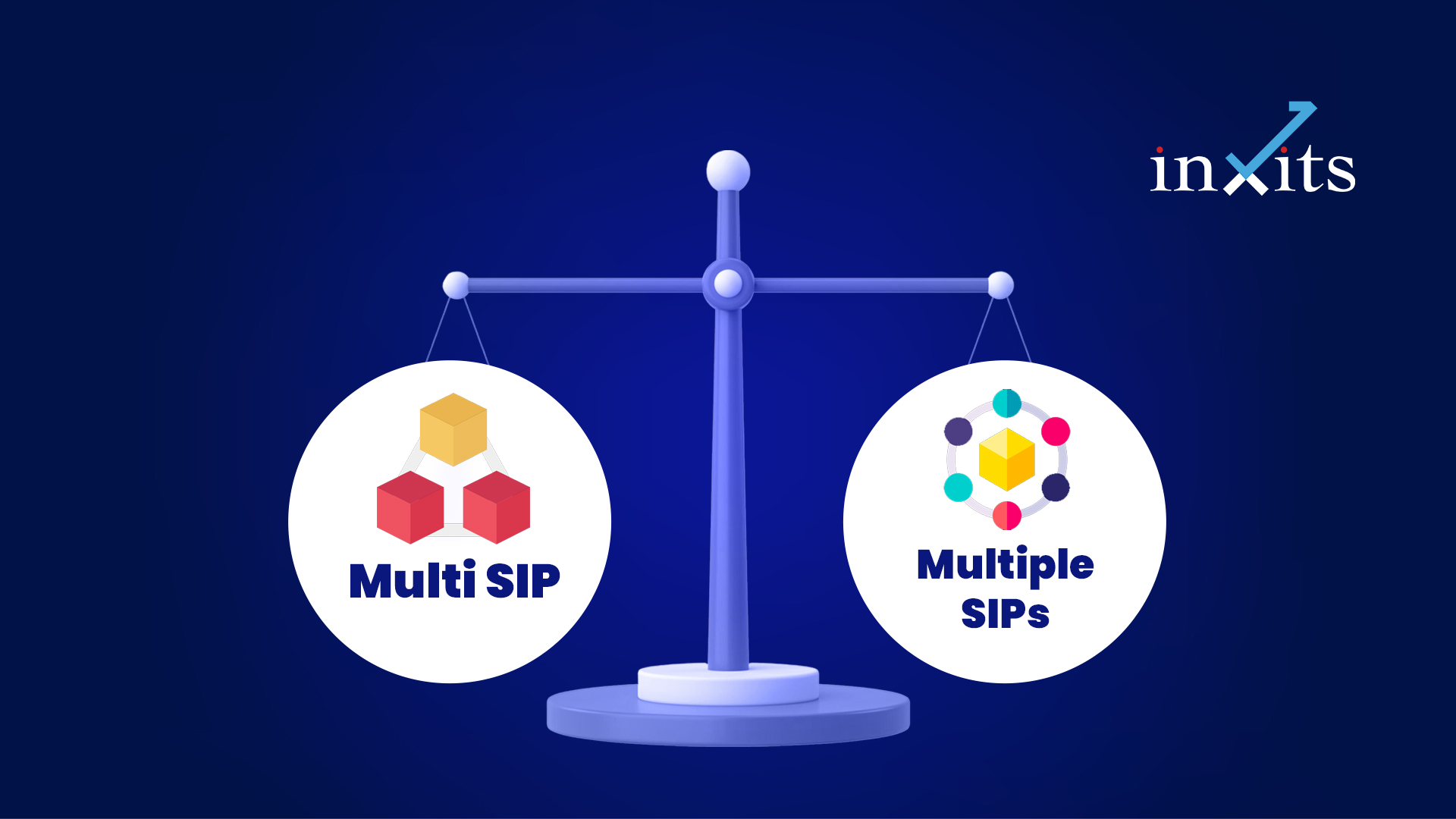
This allows investment in multiple funds through one SIP.
Invest Smarter.
Grow Confidently.
Your AI-powered SEBI-registered investment advisor — with research you can trust and insights that grow with you.
Download inXits Free
Example
Total SIP: ₹10,000
- ₹5,000 → Equity fund
- ₹3,000 → Debt fund
- ₹2,000 → Hybrid fund
This simplifies diversification.
The securities quoted are for illustration only and are not recommendatory.
7. Goal-Based SIP
This SIP aligns with a financial objective.
Example
A parent plans for a child’s education in 12 years:
- Defines goal amount
- Sets time horizon
- Structures SIP accordingly
This connects investing directly with financial planning.
Income Lifecycle Example: How SIP Changes Over Time
An individual’s SIP approach may evolve with life stages.
Early Career (Age 22–30)
- Lower income
- Fewer responsibilities
- Simple SIP (₹3,000–₹5,000)
Mid Career (Age 30–45)
- Higher income
- More responsibilities
- Step-up SIP + hybrid approach
Later Stage (45+)
- Focus on stability
- Balanced SIP allocation
This shows how SIP strategies may adapt over time.
Inflation SIP Example
Inflation affects purchasing power.
Example
If expenses increase every year, a fixed SIP may not align with future needs.
- Year 1 SIP: ₹5,000
- After 5 years, expenses rise significantly
To adjust, an investor may:
- Increase SIP gradually (step-up SIP)
- Review contributions periodically
This highlights how SIP structures can adapt to changing economic conditions.
Also read: SIP vs Lumpsum
Visual Flow: How SIP Structures Work
Here is a simplified way to understand SIP evolution:
Start → Regular SIP
↓
Income increases → Step-Up SIP
↓
Income fluctuates → Flexible SIP
↓
Long-term focus → Perpetual SIP
↓
Specific goals → Goal-Based SIP
This flow shows how different SIP types connect to real-life situations.
Comparing the 7 Types of SIP
| SIP Type | Key Feature | Flexibility |
| Regular SIP | Fixed investment | Low |
| Step-Up SIP | Increasing amount | Moderate |
| Flexible SIP | Adjustable amount | High |
| Perpetual SIP | No end date | Moderate |
| Trigger SIP | Condition-based | Moderate |
| Multi SIP | Multiple funds | Moderate |
| Goal-Based SIP | Goal-linked | Moderate |
Each type supports a different financial need.
Factors Investors Often Consider
While understanding what are 7 types of SIP, investors often evaluate:
- Income stability
- Financial goals
- Investment discipline
- Time horizon
- Cash flow flexibility
These factors help determine which SIP structure aligns with personal financial situations.
Also read: What Is SIP Pause & How It Works
Structured Investing and Financial Planning
SIPs are one part of financial planning. Understanding how they fit into a broader framework is equally important.
A structured approach may include:
- Reviewing goals periodically
- Tracking contributions
- Monitoring portfolio allocation
- Adjusting based on life changes
Platforms like inXits provide frameworks that help investors understand how SIPs connect with overall financial planning.
Conclusion
Systematic Investment Plans are widely used in mutual fund investing. However, understanding what are 7 types of SIP shows that SIPs are not limited to one format.
From regular SIPs to goal-based SIPs, each structure reflects different financial needs and life situations.
Learning how these SIP strategies function helps investors understand how systematic investing can adapt over time.
Connect with inXits for a 24×7 consultation focused on financial planning and portfolio review processes.
📘 Disclaimer
Investment in securities market are subject to market risks. Read all the related documents carefully before investing.
Registration granted by SEBI, membership of BSE and certification from NISM in no way guarantee performance of the intermediary or provide any assurance of returns to investors.
Choose the Right SIP for Your Goals
Get Expert Guidance
Aditya Rajpurohit is a Mutual Fund Research Analyst at inXits with 5+ years of experience in equity and mutual fund analysis. He specialises in fund selection, portfolio construction, and long-term wealth creation strategies for retail and HNI investors.
FAQs
What are 7 types of SIP?
They include regular SIP, step-up SIP, flexible SIP, perpetual SIP, trigger SIP, multi SIP, and goal-based SIP.
What is a regular SIP?
A regular SIP involves fixed investments at regular intervals.
What is a step-up SIP?
It allows investors to increase SIP contributions periodically.
What is a flexible SIP?
It allows adjusting SIP amounts based on financial conditions.
What is a perpetual SIP?
It continues without a fixed end date.
What is a trigger SIP?
It activates based on predefined conditions.
What is multi SIP?
It allows investing in multiple funds through one SIP.
What is goal-based SIP?
It aligns investments with specific financial goals.
Why do investors use SIPs?
SIPs support structured investing and gradual participation.
How can SIPs fit into financial planning?
They can be aligned with income, goals, and long-term planning frameworks.