Many investors reach a point where traditional options such as mutual funds, fixed deposits, and direct equities no longer cover every investment objective. At that stage, curiosity often turns toward Alternative Investment Funds. However, the terminology can feel complex, and many investors are unsure whether these products are meant only for ultra-high-net-worth individuals.
If you have searched for what is AIF, you are likely looking for clarity rather than a product recommendation. That uncertainty is understandable because Alternative Investment Funds operate differently from mutual funds and follow a separate regulatory framework.
A structured understanding can remove much of that confusion. Once you know how AIFs are categorised, who can invest, and how taxation broadly works, the concept becomes easier to evaluate within the wider investment landscape.
On this page
Key Takeaways: What Is AIF
Before diving deeper, here are the essentials:
- AIF stands for Alternative Investment Fund.
- AIFs are regulated by the Securities and Exchange Board of India (SEBI).
- AIFs are divided into Category I, Category II, and Category III funds.
- Most AIFs are designed for sophisticated or high-net-worth investors.
- Tax treatment varies by category and investment structure.
What Is an Alternative Investment Fund in India?
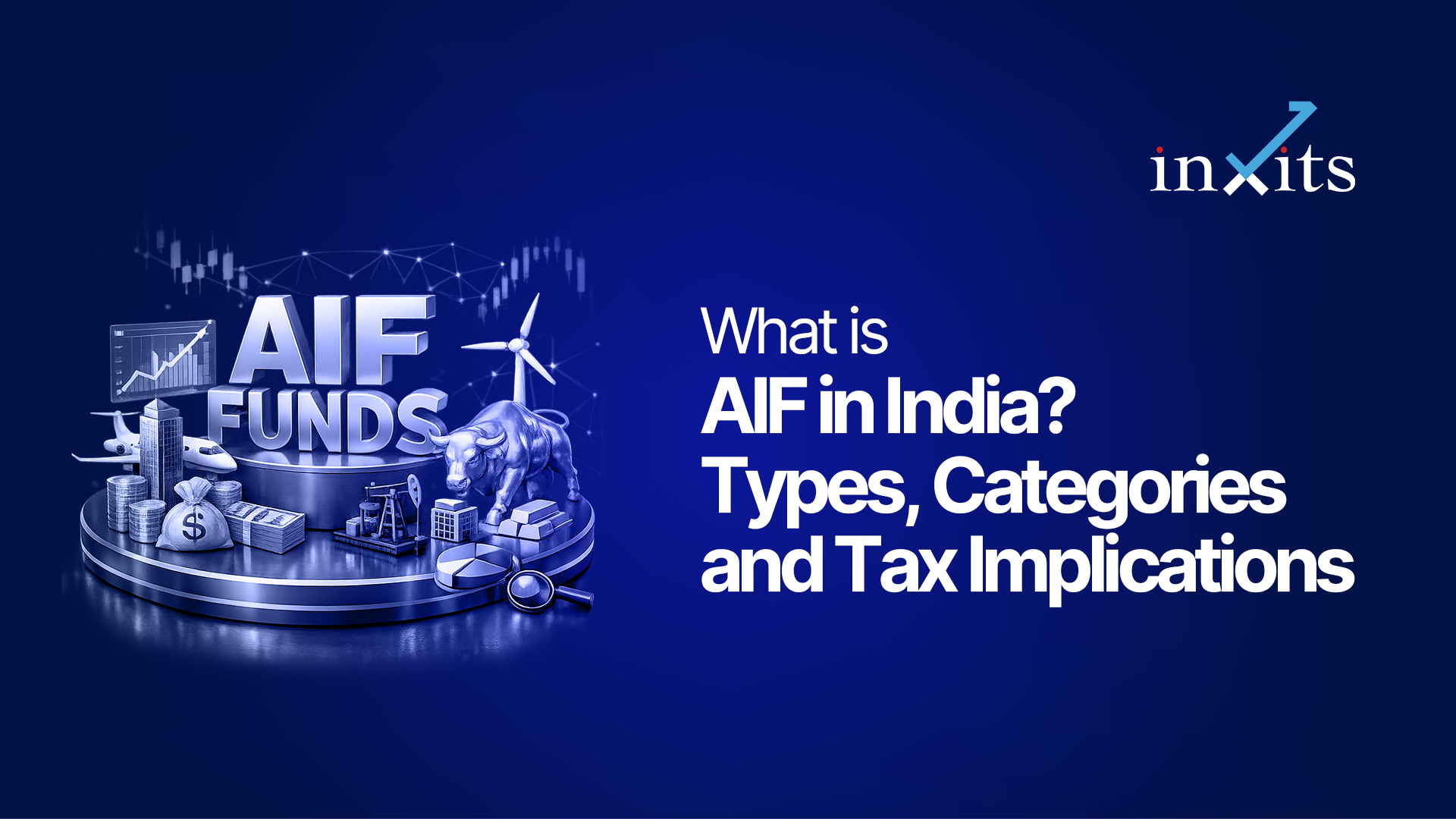
An Alternative Investment Fund (AIF) is a privately pooled investment vehicle that collects capital from investors and invests according to a defined strategy. SEBI introduced the AIF Regulations in 2012 to regulate investment vehicles that fall outside the traditional mutual fund framework.
Unlike mutual funds, AIFs often invest in specialised opportunities such as:
- Private equity
- Venture capital
- Infrastructure projects
- Start-ups
- Private credit
- Real estate assets
- Structured investment strategies
Most AIFs target experienced investors who understand liquidity constraints, longer investment horizons, and specialised risks.
Every AIF scheme (except angel funds) must have a minimum total corpus of ₹20 crore. Angel funds require a minimum corpus of ₹10 crore.
(Source: SEBI — AIF FAQs )
Who Can Invest in an AIF?
AIFs are generally designed for accredited, high-net-worth, institutional, or sophisticated investors.
SEBI requires a minimum investment of ₹1 crore per investor. Employees or directors of the AIF or its fund manager get a lower threshold of ₹25 lakh.
Source: SEBI — AIF FAQs . Therefore, AIFs are not usually the first investment vehicle for new investors.
Why Were AIFs Introduced?
Before AIF regulations were introduced, several pooled investment structures operated without a dedicated regulatory framework.
SEBI created the AIF framework to:
- Improve transparency
- Standardise disclosures
- Strengthen investor protection
- Create category-specific regulations
- Bring specialised investment vehicles under formal oversight
What Are the Different AIF Types?
SEBI classifies Alternative Investment Funds into three categories. Each category follows a different investment objective and risk profile.
AIF Category I
Category I AIFs invest in sectors that policymakers generally view as economically desirable.
Examples include:
- Venture Capital Funds
- SME Funds
- Infrastructure Funds
- Social Venture Funds
These funds typically channel capital into businesses or sectors that may support economic development and innovation.
AIF Category II
Category II AIFs form the largest segment of the AIF market.
Common examples include:
- Private Equity Funds
- Debt Funds
- Fund of Funds
These funds can invest across multiple opportunities but generally cannot employ significant leverage except for operational requirements.
AIF Category III
Category III AIFs use more complex investment strategies.
Examples include:
- Hedge Funds
- Long-short strategies
- Market-neutral strategies
- Trading-oriented investment funds
Category III AIF leverage is capped at 2 times the fund’s NAV under SEBI regulations, giving these funds more flexibility than Category I or II, which generally cannot use leverage except for short-term operational needs.
Source: SEBI — Circular CIR/IMD/DF/10/2013
AIF Category 1, 2, 3: Key Differences
| Feature | Category I | Category II | Category III |
| Primary Focus | Development-oriented sectors | Private equity and debt opportunities | Trading and market strategies |
| Use of Leverage | Limited | Limited | May be permitted subject to regulations |
| Investment Horizon | Long-term | Medium to long-term | Can be short or long-term |
| Typical Examples | Venture capital, infrastructure | Private equity, debt funds | Hedge funds |
| Risk Level | Moderate to High | Moderate to High | High |
Investors often focus only on potential returns when comparing AIF categories. However, liquidity, lock-in periods, transparency, and risk management processes are equally important considerations.
What Most Investors Assume About AIFs
Assumption
AIFs are simply mutual funds for wealthy investors.
Reality
AIFs often invest in asset classes, private businesses, and specialised opportunities that mutual funds cannot access directly.
Why This Matters
The additional flexibility can create different risk and return characteristics. Therefore, understanding strategy and portfolio construction becomes more important than simply comparing historical performance.
Not sure whether specialised investments fit your existing allocation? A review with a SEBI registered financial advisor can help identify whether your portfolio already carries similar exposures and where concentration risks may exist.
How Does AIF Taxation Work?
AIF taxation is one of the most frequently misunderstood aspects of Alternative Investment Funds.
The exact tax treatment depends on the category of fund, the nature of income generated, and prevailing tax laws. Tax provisions can also change through future Finance Acts.
Broad Tax Framework
Historically, Category I and Category II AIFs have been granted pass-through treatment for certain income categories, meaning tax liability may flow through to investors rather than remaining at the fund level.
However, the treatment can vary depending on:
Invest Smarter.
Grow Confidently.
Your AI-powered SEBI-registered investment advisor — with research you can trust and insights that grow with you.
Download inXits Free
- Capital gains
- Interest income
- Dividend income
- Business income
- Investor type
What About Category III AIF Taxation?
Category III AIFs generally follow a different taxation structure compared with Category I and II funds.
Because tax outcomes can depend on fund structure, investor classification, and applicable regulations, investors should always review the scheme information document and seek tax-specific guidance before investing.
Key Facts on AIF Taxation
- Tax treatment depends on both fund category and income type.
- Changes in Finance Acts can affect taxation rules over time.
- Investors should review fund-level tax disclosures carefully.
- International investors may face additional tax considerations.
What Risks Should Investors Understand Before Investing in AIFs?
Alternative investments can provide portfolio diversification. However, they also introduce risks that many retail investors have never encountered.
Liquidity Risk
Many AIFs have lock-in periods that can extend for several years. Investors may not have the flexibility to exit whenever they choose.
Valuation Risk
Private assets are not always traded on exchanges daily. As a result, valuation methodologies may differ from publicly traded securities.
Concentration Risk
Certain AIF strategies hold relatively concentrated portfolios. A smaller number of investments can increase exposure to individual outcomes.
Strategy Risk
Investment success depends heavily on the fund manager’s ability to execute the stated strategy over time.
For investors considering alternatives as part of a broader wealth plan, working with a portfolio management service framework can help assess how such exposures interact with existing equity, debt, and global allocations.
Are AIFs Suitable for Every Investor?
The short answer is no.
AIFs serve a specific purpose within the investment ecosystem. They may suit investors who:
- Understand higher risk levels
- Have long investment horizons
- Can tolerate lower liquidity
- Seek exposure beyond traditional asset classes
- Have diversified core portfolios already in place
Many investors first build a foundation using equity, debt, retirement, and mutual fund allocations before considering alternatives.
For example, an entrepreneur in Bengaluru with substantial exposure to his own business may use alternative assets differently from a salaried professional building a retirement corpus. The suitability depends on financial goals, cash flow needs, and overall portfolio construction.
How inXits Helps Investors Evaluate Alternative Investments
Understanding what is AIF is only the first step. The more important question is whether an Alternative Investment Fund fits within your overall financial plan.
At inXits, advisors evaluate investment opportunities within the context of asset allocation, liquidity requirements, taxation considerations, and long-term financial objectives. Rather than viewing alternative investments in isolation, the focus remains on how each allocation affects the broader portfolio.
Many investors struggle with questions such as whether alternatives should complement equity exposure, how much concentration is appropriate, or when private market investments make sense. Those answers depend on individual circumstances rather than generic rules.
If you want a structured evaluation of alternative assets alongside your current investments, connect with an experienced portfolio management advisor to understand where AIFs may fit within a long-term wealth strategy.
Conclusion
Understanding what is AIF becomes much easier once the structure is broken down into categories, objectives, and risk characteristics. Alternative Investment Funds provide access to opportunities that often sit outside traditional mutual funds and listed securities.
Category I, Category II, and Category III funds each serve different purposes and operate under different investment approaches. In addition, AIF taxation can vary depending on the category, income type, and prevailing regulations.
For investors evaluating specialised investment opportunities, the focus should remain on suitability, liquidity, portfolio impact, and risk management rather than chasing a particular investment trend. If you are assessing whether alternatives belong in your overall financial plan, speaking with a qualified investment advisor can help place those decisions within a broader wealth-building framework.
Frequently Asked Questions
What is AIF in simple terms?
An Alternative Investment Fund is a privately pooled investment vehicle regulated by SEBI. It collects money from eligible investors and invests according to a specific strategy that may include private equity, venture capital, debt, infrastructure, or alternative market strategies.
How does an Alternative Investment Fund India framework work?
The Alternative Investment Fund India framework is governed by SEBI regulations. Funds are registered under Category I, Category II, or Category III depending on their investment mandate, risk profile, and operating structure.
What are the main AIF types?
The three primary AIF types are Category I, Category II, and Category III funds. Each category follows different investment objectives, permitted activities, and regulatory requirements.
What is the difference between AIF Category 1, 2, and 3?
Category I focuses on sectors such as venture capital and infrastructure. Category II commonly includes private equity and debt funds. Category III generally covers hedge-fund-style strategies and may use more complex investment techniques.
Is AIF taxation the same across all categories?
No. AIF taxation can differ based on fund category, income type, and prevailing tax provisions. Investors should review fund-specific documentation and current tax regulations before making decisions.
Are AIFs regulated by SEBI?
Yes. Alternative Investment Funds operate under the Securities and Exchange Board of India (Alternative Investment Funds) Regulations, 2012.
Are AIFs suitable for first-time investors?
In many cases, first-time investors begin with simpler investment products before considering alternative investments. Suitability depends on risk tolerance, liquidity needs, and financial goals.
Can salaried professionals invest in AIFs?
Yes, provided they meet eligibility and investment requirements. However, investors should assess whether the investment aligns with their overall financial plan and liquidity needs.
Why do investors consider Alternative Investment Funds?
Investors may consider AIFs for diversification, access to private market opportunities, and exposure to specialised investment strategies that traditional products may not offer.
What risks should investors understand before investing in AIFs?
Key risks include liquidity risk, valuation risk, concentration risk, and strategy risk. The specific risks vary by category and investment mandate.
What is the minimum investment required for an AIF in India?
SEBI requires a minimum investment of ₹1 crore per investor for most AIFs. Employees or directors of the AIF or its fund manager can invest with a lower minimum of ₹25 lakh. Angel funds, a sub-category of Category I, accept a minimum of ₹25 lakh per investor.
(Source: SEBI — AIF FAQs )
Disclaimer
Investments in securities markets are subject to market risks. Read all related documents carefully before investing.
inXits is a SEBI-registered investment adviser (Registration No. INA000020369). This article is for educational purposes only and does not constitute personalised investment advice.
Registration granted by SEBI, membership of BSE, and certification from NISM in no way guarantee performance of the intermediary or provide any assurance of returns to investors.

Himani Barot, CFP, is a Principal Officer at inXits with 4+ years of experience in portfolio management, investment advisory, and comprehensive financial planning. As a Certified Financial Planner, she helps clients navigate complex financial goals with structured, personalised strategies.