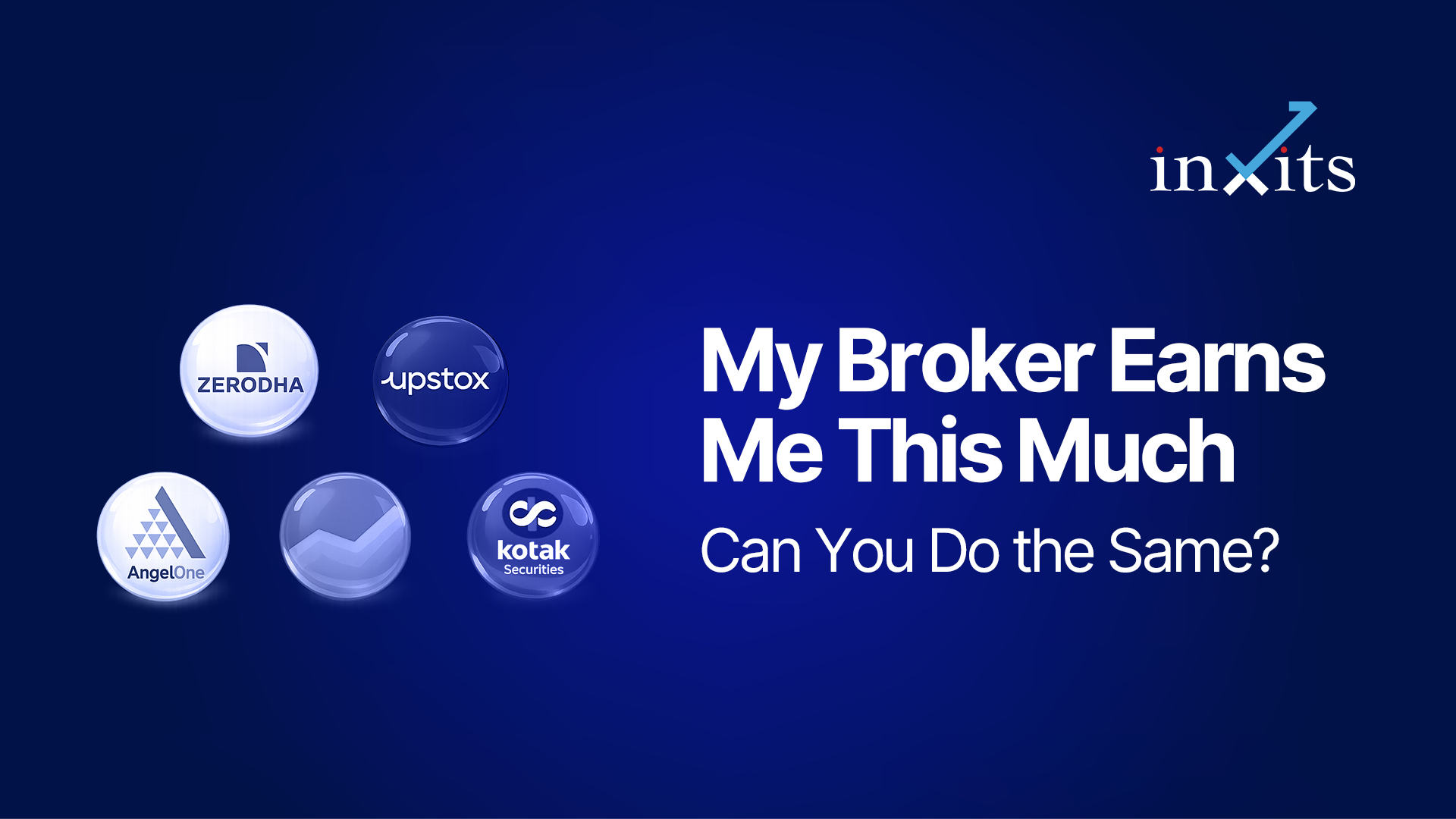
One of the most common questions prospective clients ask is surprisingly direct: “My broker earns me this much. Can you do the same?”
The question is understandable. Most investors naturally focus on returns because returns are easy to measure. However, the answer is often more complicated than many people expect.
A responsible advisor cannot promise future returns. More importantly, comparing advisors solely on historical performance can lead investors to overlook factors that matter far more over the long term.
Before asking whether another advisor can generate the same returns, it helps to understand what those returns actually represent and the risks taken to achieve them.
On this page
Broker Returns in India: Key Takeaways
- Past returns do not guarantee future outcomes.
- Higher returns often come with higher risk.
- Portfolio suitability matters as much as performance.
- Risk-adjusted returns provide a more meaningful comparison.
- A good advisor focuses on goals, not return promises.
Why Comparing Advisors Based Only on Returns Can Be Misleading
Two investors may earn the same return while taking completely different levels of risk.
For example, one portfolio might be heavily concentrated in a few small-cap stocks. Another may be diversified across asset classes. During a strong market rally, the concentrated portfolio may outperform significantly.
However, the same portfolio could experience much larger declines during difficult market conditions.
Therefore, a return figure without context tells only part of the story.
When investors ask, “Can you do the same?”, a more useful question may be:
“How were those returns generated?”
That question opens the door to understanding risk, suitability, and sustainability.
What Information Is Missing Behind Return Numbers?
Investment returns rarely tell the complete story.
Several important factors should be evaluated alongside performance:
| Question | Why It Matters |
| How much risk was taken? | Higher returns often involve higher volatility |
| Was the portfolio diversified? | Concentration increases risk |
| What was the investment period? | Short-term results can be misleading |
| Were goals achieved? | Returns should support financial objectives |
| How did the portfolio behave during market declines? | Downside protection matters |
Many investors see a headline return figure and assume it reflects advisor skill alone. In reality, market conditions, risk exposure, timing, and asset allocation all contribute to outcomes.
What Most Investors Assume
Higher returns automatically mean better advice.
What Actually Happens
A portfolio may generate strong returns simply because it took more risk during a favourable market environment.
Why This Matters
Without understanding the risks involved, investors may compare portfolios that are fundamentally different.
What Should Investors Compare Instead?
A better comparison starts with suitability.
An advisor’s role is not simply to seek the highest possible return. The role is to help align investments with financial goals, time horizons, liquidity needs, and risk tolerance.
Consider these factors:
Is the Portfolio Suitable for Your Goals?
A portfolio designed for retirement may look very different from one designed for short-term wealth creation.
The right portfolio depends on the purpose of the money.
How Is Risk Managed?
Risk management often becomes visible only during market declines.
A portfolio that appears impressive during rising markets may reveal weaknesses during corrections.
Is There a Clear Investment Process?
Professional investing requires a repeatable framework.
Investors should understand:
- How investments are selected.
- How asset allocation decisions are made.
- How portfolios are reviewed.
- How risk exposure is monitored.
A structured process often matters more than short-term performance comparisons.
For investors who are unsure whether their current portfolio aligns with their long-term objectives, a review with a SEBI registered financial advisor can help identify gaps between portfolio construction and financial goals.
Why SEBI-Registered Advisors Cannot Promise Returns
This is an important distinction.
Invest Smarter.
Grow Confidently.
Your AI-powered SEBI-registered investment advisor — with research you can trust and insights that grow with you.
Download inXits Free
Under Securities and Exchange Board of India (SEBI) regulations, registered investment advisers cannot guarantee returns or provide assurances regarding future performance.
Therefore, when a prospective client asks, “Can you do the same returns?”, a compliant response focuses on process rather than promises.
The conversation should include:
- Risk tolerance.
- Financial objectives.
- Existing portfolio structure.
- Asset allocation.
- Time horizon.
- Expected volatility.
A portfolio recommendation should emerge from these discussions rather than from a target return number.
Can Past Performance Predict Future Returns?
Not reliably.
Market conditions change continuously. Sectors that outperform during one period may underperform during another.
Therefore, historical returns should be treated as information rather than prediction.
Why Do Investors Focus So Much on Returns?
Returns are visible and easy to compare.
However, less visible factors such as taxes, diversification, behaviour, and risk management often have a larger impact on long-term wealth accumulation.
How Does inXits Approach Investor Conversations?
When prospective clients ask about returns, the discussion at inXits typically begins with understanding the investor rather than the portfolio’s historical performance.
Advisors assess financial goals, existing investments, risk capacity, cash-flow requirements, and investment timelines before suggesting any course of action. The objective is not to replicate another portfolio blindly but to determine whether the current strategy genuinely supports the investor’s needs.
Many investors discover that their real concern is not whether another advisor can generate identical returns. Instead, they want confidence that their investments are aligned with their future goals and managed through a disciplined framework.
For individuals seeking clarity on portfolio structure, diversification, and long-term planning, speaking with an investment advisor can provide a more meaningful comparison than focusing solely on historical returns.
Conclusion
“My broker earns me this much. Can you do the same?” is a reasonable question, but it is rarely the most useful one.
Returns alone cannot explain the risks taken, the suitability of a portfolio, or whether the strategy supports long-term financial goals. A stronger evaluation considers risk-adjusted performance, diversification, investment discipline, and goal alignment.
The most productive advisor conversations move beyond return comparisons and focus on understanding what the investor is trying to achieve. Once goals, risk tolerance, and time horizon become clear, portfolio decisions can be evaluated in a more meaningful way.
If you would like an independent review of whether your current investments match your objectives, a conversation with a financial advisor can help assess your portfolio through a broader lens than returns alone.
Frequently Asked Questions
Can an investment advisor guarantee the same returns as my broker?
No. SEBI-registered investment advisers cannot guarantee future returns. Investment outcomes depend on market conditions, asset allocation, risk exposure, and several other factors.
Why is comparing advisors using returns alone problematic?
Returns do not show the level of risk taken, diversification, suitability, or consistency of the investment process. Two portfolios with similar returns may have very different risk profiles.
What should I ask instead of “Can you do the same returns?”
Ask about portfolio construction, risk management, asset allocation, review processes, and how recommendations align with your financial goals.
How do SEBI regulations affect return discussions?
SEBI regulations prohibit registered investment advisers from guaranteeing returns or providing assurances regarding future performance.
What is risk-adjusted return?
Risk-adjusted return evaluates performance relative to the amount of risk taken. It provides a more balanced assessment than looking at returns alone.
Is higher return always better?
Not necessarily. Higher returns may involve higher volatility, concentration, or downside risk. Suitability matters alongside performance.
How often should investors review their portfolio?
Many investors benefit from periodic reviews based on financial goals, asset allocation, and changes in personal circumstances rather than reacting solely to market movements.
How can I determine if my current portfolio is suitable?
A structured review should examine goals, time horizon, diversification, liquidity needs, tax considerations, and risk tolerance rather than focusing only on returns.
Disclaimer
Investments in securities markets are subject to market risks. Read all related documents carefully before investing.
inXits is a SEBI-registered investment adviser (Registration No. INA000020369). This article is for educational purposes only and does not constitute personalised investment advice.
Registration granted by SEBI, membership of BSE, and certification from NISM in no way guarantee performance of the intermediary or provide any assurance of returns to investors.

Himani Barot, CFP, is a Principal Officer at inXits with 4+ years of experience in portfolio management, investment advisory, and comprehensive financial planning. As a Certified Financial Planner, she helps clients navigate complex financial goals with structured, personalised strategies.