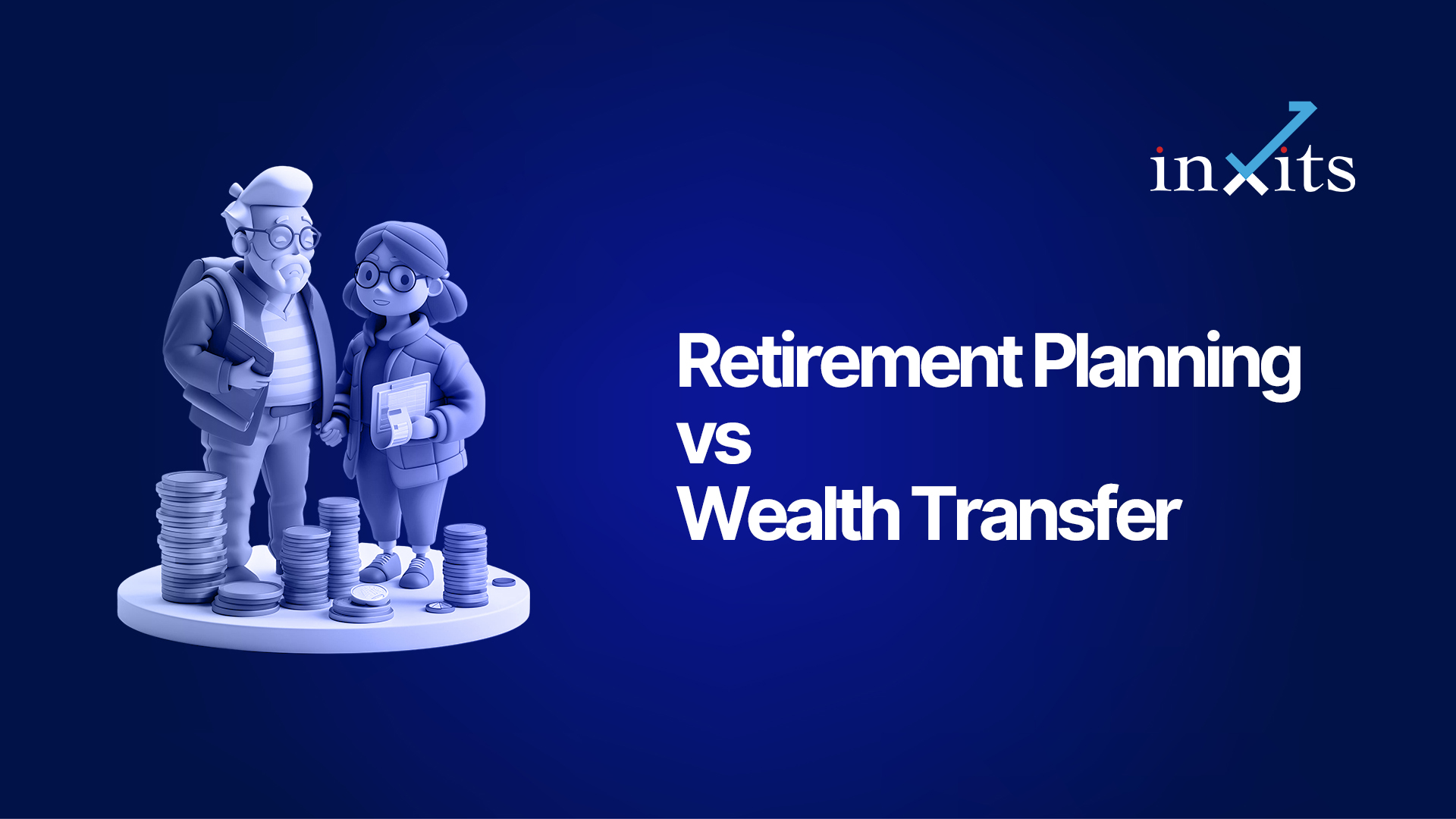
Many investors assume that building wealth and passing wealth to the next generation require the same investment strategy. At first glance, that seems reasonable. After all, both goals involve growing money over time.
However, retirement planning vs wealth transfer is not simply a difference in timelines. The two objectives often require completely different decisions about risk, liquidity, income generation, and asset allocation.
A retirement portfolio is designed to support your lifestyle. A wealth transfer portfolio is designed to preserve and pass assets efficiently to future generations. When investors combine these goals without a clear framework, they may end up taking too much risk, holding unsuitable assets, or creating complications for their heirs.
Understanding the distinction can help families build a financial structure that supports both their own needs and the legacy they hope to leave behind.
On this page
Retirement planning vs wealth transfer, the core difference:
Retirement planning is about funding your own lifestyle after active employment ends. Wealth transfer is about preserving and passing assets to future generations efficiently. Both involve long-term investing but require different risk profiles, liquidity levels, and asset structures. Combining them in a single undifferentiated portfolio without a clear framework often creates conflicts between present spending needs and future legacy goals.
Retirement Planning vs Wealth Transfer: Key Takeaways
Before looking at the details, here are a few important points:
- Retirement planning focuses on income and financial independence.
- Wealth transfer focuses on preserving and passing assets efficiently.
- The ideal asset allocation may differ for each goal.
- Liquidity requirements are often higher in retirement portfolios.
- Estate planning becomes increasingly important for wealth transfer.
What Is the Difference Between Retirement Planning and Wealth Transfer?
Retirement planning aims to create sufficient financial resources to support spending needs after active employment ends.
Wealth transfer focuses on moving assets to future generations, charitable causes, or family beneficiaries in an organised manner.
Although both objectives involve long-term financial management, the priorities differ significantly.
| Retirement Planning | Wealth Transfer |
| Generate sustainable income | Preserve family wealth |
| Fund lifestyle expenses | Pass assets efficiently |
| Manage longevity risk | Manage succession risk |
| Maintain liquidity | Maintain continuity |
| Protect purchasing power | Protect legacy assets |
| Time horizon: until end of life | Time horizon: multi-generational |
| Key risk: outliving your corpus | Key risk: undocumented or disputed assets |
A retiree may prioritise regular cash flow and portfolio stability. Meanwhile, someone focused on wealth transfer may accept a longer investment horizon because future beneficiaries may not need immediate access to the assets.
Why Does Retirement Planning Require a Different Investment Approach?
Retirement introduces a unique challenge: the portfolio must support withdrawals while continuing to grow.
Many investors spend decades accumulating wealth. However, retirement shifts the focus from accumulation to distribution.
How Does Retirement Change Investment Risk?
Risk looks different once regular employment income stops.
During working years, market declines can often be managed through continued investing. In retirement, withdrawals during market downturns can create additional pressure on a portfolio.
Therefore, retirement planning often requires balancing growth assets with investments that provide stability and liquidity.
Why Is Income Generation Important?
Retirement portfolios need to support recurring expenses such as:
- Housing costs
- Healthcare expenses
- Travel and lifestyle spending
- Family support obligations
- Emergency requirements
Many retirees prefer maintaining a mix of growth-oriented and income-generating investments rather than relying entirely on one asset class.
For investors evaluating long-term retirement goals, professional retirement planning services can help align investment decisions with expected future income needs.
Key Facts on Retirement Planning
- Life expectancy in India continues to increase.
- Retirement can last 25 to 30 years or longer.
- Inflation remains one of the biggest threats to purchasing power.
- Healthcare expenses often rise faster than general inflation.
What Makes Wealth Transfer Planning Different?
Wealth transfer focuses on preserving assets beyond the current generation.
Unlike retirement planning, wealth transfer often involves a much longer time horizon. Assets may remain invested for decades before beneficiaries eventually receive them.
As a result, the portfolio may tolerate different levels of volatility depending on family circumstances and future objectives.
Is Wealth Preservation More Important Than Income?
In many cases, yes.
A family focused on wealth transfer may prioritise:
- Long-term capital growth.
- Tax-efficient structures.
- Succession planning.
- Asset protection.
- Family governance.
Income may still matter. However, preserving the integrity of the overall estate often becomes the primary objective.
What Happens If Wealth Transfer Planning Is Ignored?
Many families accumulate substantial assets but spend little time planning how those assets will transfer.
Common issues include:
- Outdated nominations.
- Lack of estate documentation.
- Unclear beneficiary instructions.
- Concentrated holdings.
- Family disputes.
A structured wealth transfer strategy can reduce uncertainty and improve continuity across generations.
Can One Portfolio Serve Both Goals?
Yes, but careful planning is required.
Many investors in their 50s and 60s simultaneously think about retirement and legacy planning. In such cases, a single portfolio may need multiple layers.
A Practical Framework
A balanced approach often separates assets into distinct buckets:
Invest Smarter.
Grow Confidently.
Your AI-powered SEBI-registered investment advisor — with research you can trust and insights that grow with you.
Download inXits Free
| Portfolio Bucket | Primary Purpose |
| Retirement Income Bucket | Short- and medium-term expenses |
| Growth Bucket | Long-term inflation protection |
| Legacy Bucket | Wealth transfer objectives |
| Emergency Bucket | Unexpected expenses |
This framework helps investors avoid using long-term legacy assets for short-term spending needs.
Consider Rajesh, a 58-year-old business owner from Bengaluru. He wants retirement income for himself and his spouse while preserving part of his wealth for his children. Instead of viewing all assets as one pool, he allocates resources according to specific objectives. That separation helps create greater clarity around risk and expected outcomes.
Investors seeking support with asset allocation and long-term planning often work with a financial planning tools framework to evaluate multiple goals simultaneously.
How Should Asset Allocation Change for Retirement vs Wealth Transfer?
Asset allocation remains one of the most important decisions in both scenarios.
However, the objective should guide the allocation rather than age alone.
Retirement-Focused Allocation Considerations
Retirement portfolios often prioritise:
- Liquidity
- Income generation
- Inflation protection
- Capital preservation
- Diversification
Wealth Transfer-Focused Allocation Considerations
Legacy-focused portfolios may emphasise:
- Long-term growth
- Intergenerational wealth preservation
- Strategic diversification
- Estate efficiency
- Family governance structures
What Most Investors Assume
Retirement and wealth transfer require identical portfolios.
What Actually Happens
The purpose of the money determines how it should be invested. Assets intended for current spending often require different risk characteristics than assets intended for future generations.
Why This Matters
Clear separation of objectives helps investors make more informed decisions and avoid conflicts between present and future financial priorities.
If you are unsure whether your current investments can support both retirement income and family legacy goals, a discussion with a SEBI registered financial advisor can help identify gaps in your existing plan and create a structured roadmap.
How Can inXits Help With Retirement and Legacy Planning?
Retirement planning and wealth transfer planning are closely connected, yet they serve different purposes. Creating a sustainable retirement income strategy while preserving assets for future generations requires careful coordination.
At inXits, advisors help investors evaluate retirement income requirements, asset allocation, portfolio structure, risk capacity, and succession considerations within a unified framework. The focus remains on aligning investments with specific life goals rather than viewing wealth as a single undifferentiated pool of assets.
Many investors reach a stage where they ask important questions. Will my retirement corpus support my lifestyle? Have I structured my assets efficiently for the next generation? Is my current allocation suitable for both goals?
Working with a retirement planning advisor can help create greater clarity around these decisions and establish a framework that balances present needs with long-term family objectives.
Conclusion
Retirement planning vs wealth transfer is not a choice between two competing goals. Instead, it is a process of balancing current financial independence with future family aspirations.
Retirement planning focuses on generating sustainable income, managing longevity risk, and maintaining purchasing power. Wealth transfer planning focuses on preserving assets, improving succession readiness, and supporting future generations. Although both goals involve long-term investing, they often require different portfolio structures and decision-making frameworks.
Investors who clearly separate these objectives are generally better positioned to make thoughtful asset allocation decisions and avoid unnecessary complexity later in life. A well-structured approach to retirement planning vs wealth transfer can support both personal financial security and long-term family continuity.
If you would like to assess whether your current portfolio supports both objectives effectively, connecting with a financial advisor can provide an independent review of your retirement and legacy planning strategy.
Frequently Asked Questions
What is retirement planning vs wealth transfer in simple terms?
Retirement planning focuses on creating income and financial independence after employment ends. Wealth transfer focuses on preserving and passing assets to beneficiaries or future generations in an organised and efficient manner.
Can the same investments support retirement and wealth transfer goals?
Yes. However, investors often benefit from separating assets according to purpose. Some investments may support retirement income, while others may remain invested for long-term family legacy objectives.
Why is asset allocation important in retirement planning vs wealth transfer?
Asset allocation determines how risk, liquidity, growth potential, and income generation are balanced. Different goals often require different portfolio structures to meet specific financial objectives.
When should wealth transfer planning begin?
Wealth transfer planning should ideally begin well before retirement. Early planning provides more flexibility for nominations, estate documentation, succession structures, and family discussions.
How does inflation affect retirement planning?
Inflation reduces purchasing power over time. Retirement portfolios therefore need a growth component that helps maintain the ability to meet future expenses.
What role does estate planning play in wealth transfer?
Estate planning helps determine how assets are distributed after death. It may include wills, nominations, trusts, beneficiary designations, and succession planning arrangements.
Is wealth transfer planning only for high-net-worth families?
No. Families across different wealth levels can benefit from organised succession planning. Clear documentation and beneficiary arrangements can help reduce future complications.
How is retirement planning regulated in India?
Investment products and advisory services related to retirement planning may fall under regulations established by the Securities and Exchange Board of India (SEBI), Pension Fund Regulatory and Development Authority (PFRDA), and other regulatory bodies depending on the product involved.
Disclaimer
Investments in securities markets are subject to market risks. Read all related documents carefully before investing.
inXits is a SEBI-registered investment adviser (Registration No. INA000020369). This article is for educational purposes only and does not constitute personalised investment advice.
Registration granted by SEBI, membership of BSE, and certification from NISM in no way guarantee performance of the intermediary or provide any assurance of returns to investors.

Himani Barot, CFP, is a Principal Officer at inXits with 4+ years of experience in portfolio management, investment advisory, and comprehensive financial planning. As a Certified Financial Planner, she helps clients navigate complex financial goals with structured, personalised strategies.