 AI Summary
ETFs and mutual funds both offer investors a way to participate in diversified market investments, but they differ in how they are managed and accessed. ETFs are traded on stock exchanges like shares, require a Demat and trading account, and offer real-time pricing throughout the trading day. Mutual funds, on the other hand, are purchased and redeemed at end-of-day NAV and are commonly used through automated SIPs. While ETFs generally have lower costs and suit investors who prefer a hands-on, passive investing approach, mutual funds are often preferred for their simplicity, professional management, and disciplined long-term investing framework. The choice between the two depends on an investor’s goals, involvement level, and comfort with market tracking, and many investors use both as part of a diversified portfolio.
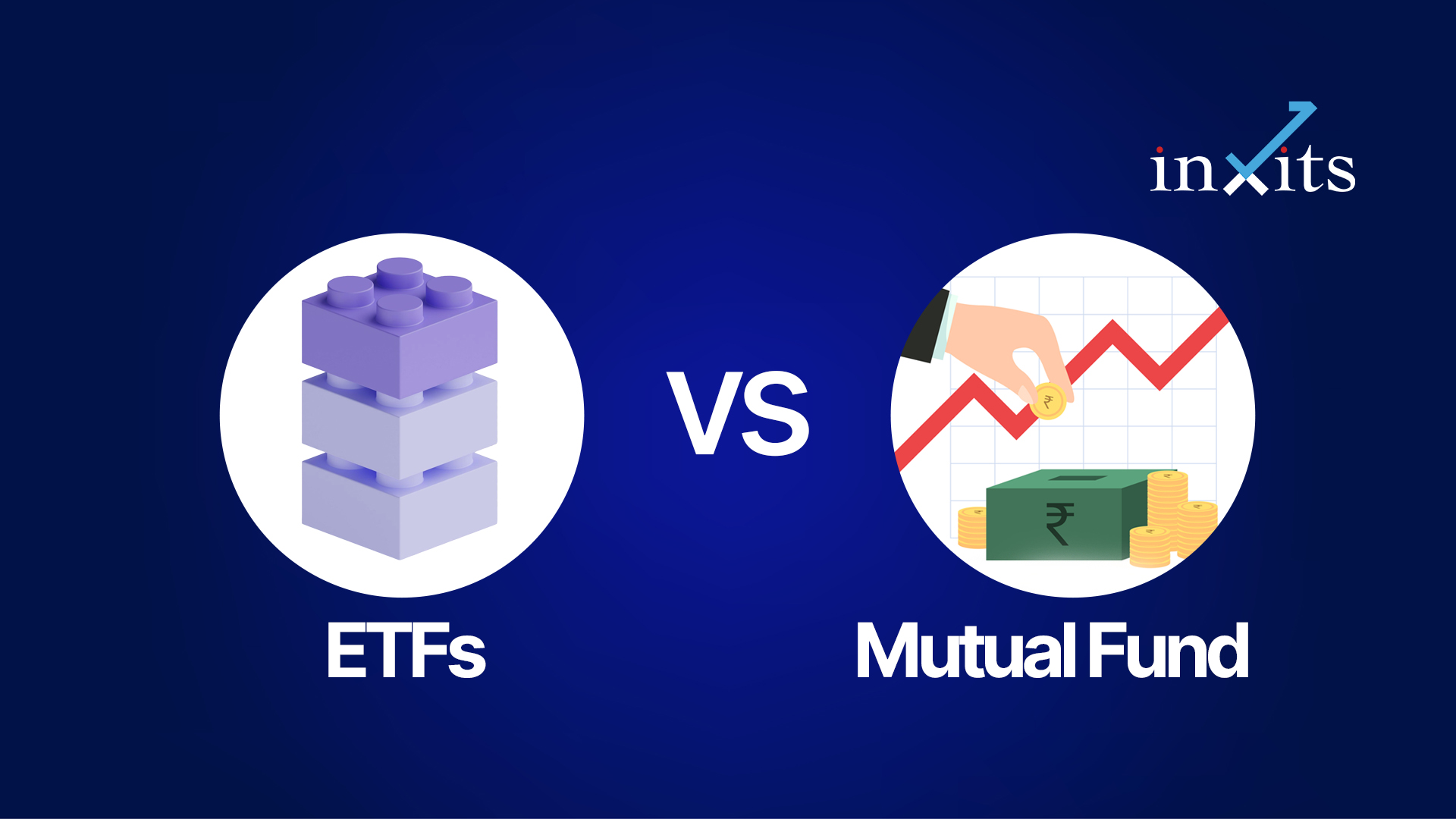
When investors begin exploring market-linked investments, two options often come up: ETFs (Exchange Traded Funds) and Mutual Funds. Both allow investors to invest in a diversified basket of securities, yet the way they work, how they are bought and sold, and the level of involvement required can be quite different.
Understanding the difference between ETFs and mutual funds helps investors choose an option that suits their investment style, time commitment, and comfort with market movements.
On this page
What Is an ETF
An ETF is a fund that tracks an index, sector, or asset and is traded on stock exchanges like a share. Its price changes throughout the trading day based on demand and supply. ETF liquidity also depends on trading volume, which can vary across ETFs.
ETFs usually track:
- Market indices such as Nifty 50 or Sensex
- Sectors like banking or IT
- Commodities such as gold
To invest in ETFs, an investor needs:
- A Demat account
- A trading account
What Is a Mutual Fund
A mutual fund pools money from multiple investors and invests it based on the scheme’s objective. Unlike ETFs, mutual funds are not traded during the day. Transactions happen at the end-of-day NAV.
Mutual funds are commonly used through:
- Lump sum investments
- SIPs (Systematic Investment Plans)
Many investors prefer mutual funds because they are easier to manage and do not require active tracking during market hours.
How ETFs and Mutual Funds Are Bought and Sold
ETFs
- Bought and sold on stock exchanges
- Prices fluctuate throughout the day
- Require manual execution during market hours
Mutual Funds
- Bought or redeemed at NAV
- NAV is calculated once daily
- Suitable for investors who prefer simplicity
This difference alone often influences whether an investor prefers ETFs or mutual funds.
Cost Structure: ETFs vs Mutual Funds
ETFs generally have:
- Lower expense ratios
- No fund manager-driven stock selection
Mutual funds may have:
- Slightly higher costs
- Active management (in many cases)
- Ongoing portfolio monitoring
While cost matters, it should not be the only deciding factor. Structure, discipline, and suitability matter just as much.
Liquidity and Pricing Differences
| Aspect | ETF | Mutual Fund |
| Trading / Pricing | Real-time during market hours | End-of-day NAV |
| Buying method | Through stock exchange (Demat + trading account) | Through AMC / apps / platforms (no Demat needed) |
| SIP automation | Manual (you place trades each time) | Automatic (SIP can be scheduled) |
| SIP | Manual | Fully automated |
| Expense ratio | Usually lower (0.05% – 0.30%) | Usually higher (0.5% – 2.0%) |
| Minimum investment | Price of 1 unit (can be as low as ~₹100 depending on ETF) | Often starts from ₹500–₹1,000 for SIP (varies by scheme/platform) |
| Liquidity | Depends on market buyers/sellers and trading volume | Fund house provides redemption liquidity |
ETFs suit investors comfortable with real-time trading, while mutual funds suit those who prefer a hands-off approach.
Investment Style and Discipline
ETFs require investors to:
- Time trades during market hours
- Decide entry and exit prices
- Monitor price movement
Mutual funds focus more on:
- Long-term discipline
- Automated investing through SIPs
- Goal-based planning
This is why mutual funds are often preferred for long-term wealth creation and structured investing. ETFs demand decision-making at the moment of trade, while mutual funds reduce decision fatigue through automation.
ETFs vs Mutual Funds for SIP Investing
ETFs do not naturally support SIP investing unless done manually through trading accounts. Mutual funds, on the other hand, are designed for systematic investing.
Invest Smarter.
Grow Confidently.
Your AI-powered SEBI-registered investment advisor — with research you can trust and insights that grow with you.
Download inXits Free
Investors using a SIP investment service often prefer mutual funds because:
- Investments are automated
- Market timing pressure is reduced
- Long-term discipline is easier to maintain
Active vs Passive Approach
Most ETFs follow a passive strategy, tracking an index.
Mutual funds can be:
- Active (fund manager selects stocks)
- Passive (index funds)
The choice depends on whether an investor prefers:
- Market-linked returns with lower costs
- Or active decision-making with professional oversight
Who Should Consider ETFs
ETFs may suit investors who:
- Have a Demat and trading account
- Understand market movements
- Prefer passive investing
- Are comfortable placing trades themselves
Who Should Consider Mutual Funds
Mutual funds may suit investors who:
- Prefer long-term investing
- Want automated SIPs
- Need structured portfolio building
- Seek professional guidance
This is where working with a mutual fund financial advisor becomes helpful, especially for goal-based planning.
Choosing Between ETFs and Mutual Funds
There is no single right answer. The choice depends on:
- Your involvement level
- Your time commitment
- Your comfort with market tracking
- Your financial goals
Many investors use both ETFs and mutual funds as part of a diversified approach
Need Help Deciding Between ETFs and Mutual Funds?
Choosing between ETFs and mutual funds is not just about cost or returns. It is about how the investment fits into your overall financial plan.
If you want clarity on asset allocation, SIP planning, or portfolio structure, speaking with a mutual fund consultant can help. Investors who prefer structured guidance often work with advisory platforms like inXits, which focus on mutual fund portfolio management and long-term planning rather than product pushing.
This approach allows investors to choose the right mix of ETFs and mutual funds with confidence.
Conclusion
ETFs and mutual funds both offer efficient ways to invest in the markets, but they serve different types of investors. ETFs provide flexibility and lower costs for hands-on investors, while mutual funds offer simplicity, discipline, and structured investing.
The better option depends on your investing style, time horizon, and comfort with market movements. Understanding these differences helps investors make informed choices and stay aligned with their long-term goals.
Mandatory SEBI Warning & Disclaimer
Investment in securities market are subject to market risks. Read all the related documents carefully before investing.
Registration granted by SEBI, membership of BSE and certification from NISM in no way guarantee performance of the intermediary or provide any assurance of returns to investors.
The securities quoted above are for illustration only and are not recommendatory.
Planning your investments for the long term?
Talk to an Expert
Aditya Rajpurohit is a Mutual Fund Research Analyst at inXits with 5+ years of experience in equity and mutual fund analysis. He specialises in fund selection, portfolio construction, and long-term wealth creation strategies for retail and HNI investors.
FAQs
1. Are ETFs better than mutual funds
Neither is better for everyone. Suitability depends on investor preference and discipline.
2. Can beginners invest in ETFs
Beginners can invest, but ETFs require more active involvement.
3. Are mutual funds safer than ETFs
Both carry market risk. The difference lies in structure, not safety.
4. Can I invest in both ETFs and mutual funds
Yes. Many investors use both for diversification.
5. Do I need an advisor to choose between ETFs and mutual funds
Guidance can help align investments with goals and risk comfort.