 AI Summary
The SIP vs home loan prepayment decision is not about finding a universally better option, but understanding which approach aligns with your financial goals and circumstances. SIPs focus on long-term wealth creation through market-linked investments, while home loan prepayments help reduce debt and save on future interest costs. The article explains that factors such as time horizon, risk tolerance, loan interest rate, and financial priorities play a key role in deciding between the two. The key takeaway is that many investors may benefit from a balanced approach—allocating a portion of their surplus toward investments and the rest toward loan repayment—rather than viewing it as an either-or decision.
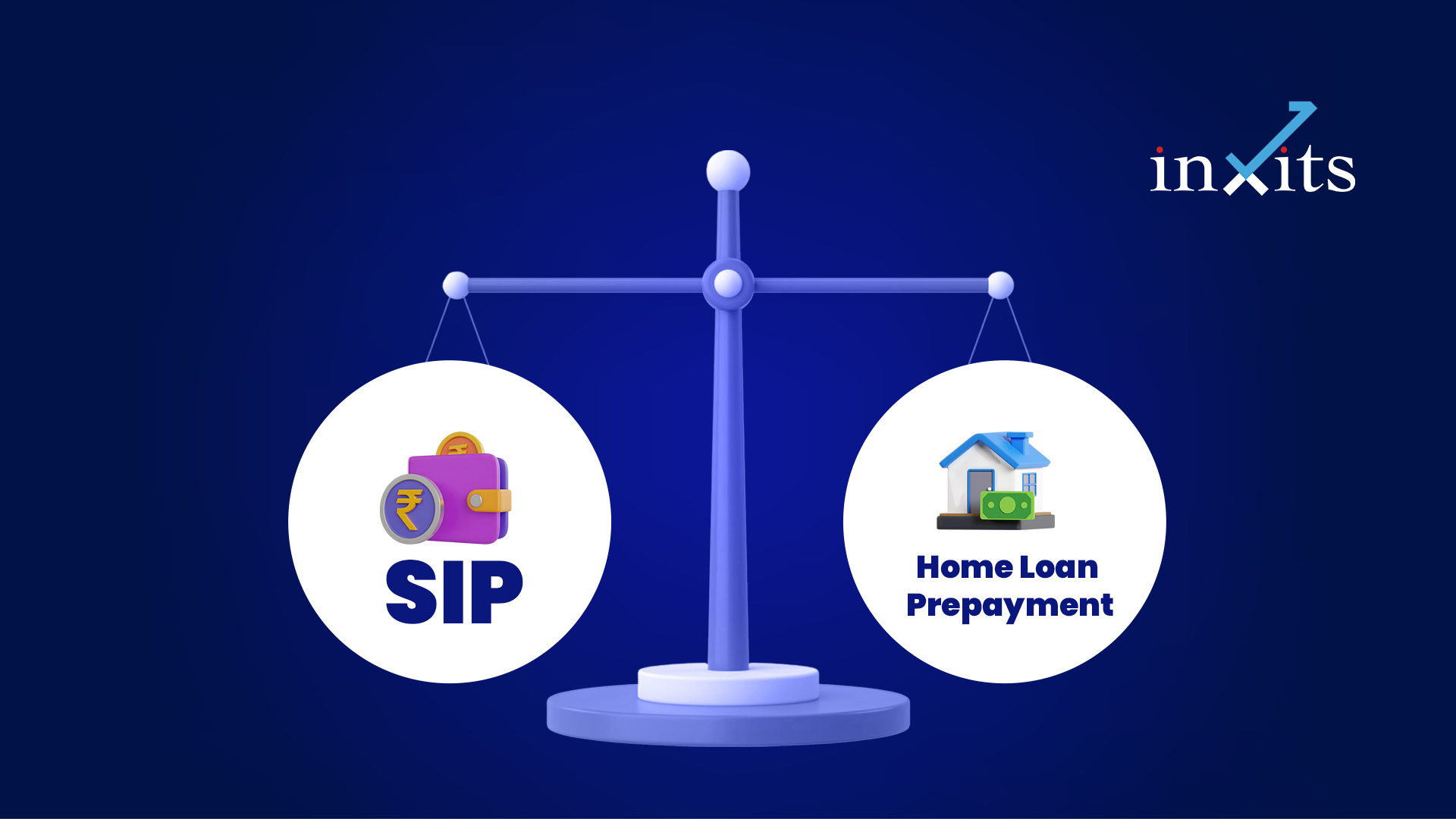
The SIP vs home loan prepayment dilemma is one many Indian homeowners face when they have extra money each month.
Should you invest it through SIP and grow your wealth over time, or use it to prepay your home loan and reduce debt faster?
Both options are logical.One builds assets; the other reduces liabilities. The challenge is not choosing the “better” option. It is understanding which one fits your situation.
On this page
What this will help you decide
- When SIP makes more sense
- When prepayment is more practical
- How to compare both options
- A simple framework to choose
SIP vs Home Loan Prepayment: Understanding Both Options
Before comparing, it helps to simplify both options.
Option 1: Invest via SIP
- Invest monthly in mutual funds
- Potential for long-term growth
- Market-linked returns
Option 2: Prepay Home Loan
- Pay extra towards loan principal
- Reduce total interest burden
- Become debt-free faster
Core Difference: Growth vs Reduction
| Factor | SIP Investment | Loan Prepayment |
| Purpose | Wealth creation | Debt reduction |
| Return type | Market-linked | Interest saved |
| Risk | Market risk | No market risk |
| Liquidity | Available | Locked |
A Simple Way to Think About It
- SIP → “Grow money over time”
- Prepayment → “Save interest immediately”
Both are valid. But timing and situation matter.
Real-Life Scenario: Which One Works Better?
Let’s take an example.
Meet Vikram, 35, Ahmedabad
- Home loan: ₹50 lakh
- Interest rate: 8.5%
- Extra money: ₹10,000/month
Option A: Prepayment
- Reduces principal
- Saves interest over time
- Shortens loan tenure
Option B: SIP Investment
- Invest ₹10,000 monthly
- Potential long-term growth
- Builds investment corpus
👉 The decision depends on:
- Time horizon
- Risk comfort
- Financial priorities
When SIP May Be a Better Option
SIP may make sense if:
You have a long time horizon
- 10+ years allows compounding to work
You are comfortable with market fluctuations
- SIP involves ups and downs
Your loan interest rate is moderate
- Lower interest → less urgency to prepay
You are building long-term wealth
To understand how SIP grows over time, it helps to revisit how SIP works.
When Loan Prepayment May Be Better
Prepayment may be more suitable if:
You prefer certainty
- Interest saved is predictable
You want to reduce financial burden
- Lower EMI or shorter tenure
Your loan interest rate is high
- Higher cost of borrowing
You are close to retirement
- Lower debt reduces risk
Assumption vs Reality
| Assumption | Reality |
| SIP always gives better returns | Depends on market and time |
| Prepayment always safer | It reduces liquidity |
| One option is universally better | Depends on situation |
The Hidden Factor: Time Horizon
Time changes everything.
Short-term (3–5 years)
- Prepayment often makes more sense
Long-term (10–15 years)
- SIP may offer better growth potential
A Hybrid Approach (Often Overlooked)
You don’t always need to choose one.
Example:
- 60% → SIP
- 40% → Prepayment
This balances:
- Wealth creation
- Debt reduction
How Goals Change the Decision
If your focus is:
Invest Smarter.
Grow Confidently.
Your AI-powered SEBI-registered investment advisor — with research you can trust and insights that grow with you.
Download inXits Free
Wealth building → SIP preferred
Debt-free lifestyle → Prepayment preferred
If your investments are linked to specific goals, understanding goal-based SIP planning can help clarify priorities.
Common Mistakes to Avoid
Avoid:
- Ignoring loan interest cost
- Investing without clear timeline
- Using all surplus in one option
- Not reviewing strategy periodically
A Simple Decision Framework
Ask yourself:
1. What is my priority?
- Growth → SIP
- Stability → Prepayment
2. What is my risk tolerance?
- Comfortable → SIP
- Prefer certainty → Prepayment
3. What is my timeline?
- Long-term → SIP
- Short-term → Prepayment
A Quick Reality Check
- Am I over-leveraged?
- Do I have emergency savings?
- Can I handle market fluctuations?
Your answers shape the decision.
Have a question about whether your extra money should go into SIP or reduce your home loan faster? Talk to a mutual fund advisor — a conversation with a qualified advisor, no forms, no wait.
How inXits Helps You Decide Between SIP and Prepayment
This decision is not just about numbers. It is about your overall financial structure.
At inXits, advisors help investors:
- Evaluate loan vs investment trade-offs
- Align decisions with long-term goals
- Balance risk and liquidity
This helps avoid one-sided decisions.
Conclusion
SIP and home loan prepayment are not competing choices. They serve different purposes. One builds future wealth. The other reduces current liability. The better option depends on your financial situation, goals, and comfort with risk.
In many cases, the answer is not choosing one over the other, but finding the right balance.
If you are unsure how to split your surplus effectively, it may help to look at your finances as a whole rather than in isolation. A structured discussion with a mutual fund advisor can help you decide whether your current approach is aligned with both your wealth goals and debt obligations.
Disclaimer
Investments in securities markets are subject to market risks. Read all related documents carefully before investing.
inXits is a SEBI-registered investment adviser (Registration No. INA000020369). This article is for educational purposes only and does not constitute personalised investment advice.
Registration granted by SEBI, membership of BSE, and certification from NISM in no way guarantee performance of the intermediary or provide any assurance of returns to investors.
Invest More or Become Debt-Free Faster?
Talk to a Personal CFO
Himani Barot, CFP, is a Principal Officer at inXits with 4+ years of experience in portfolio management, investment advisory, and comprehensive financial planning. As a Certified Financial Planner, she helps clients navigate complex financial goals with structured, personalised strategies.
FAQs
Is SIP better than home loan prepayment?
It depends on your financial goals, time horizon, and risk comfort.
Should I invest or prepay home loan?
Both options have benefits. A balanced approach may work better.
Does SIP give higher returns than loan interest?
It depends on market performance and duration.
Is prepayment always safe?
It reduces interest but also reduces liquidity.
Can I do both SIP and prepayment?
Yes, many investors use a combination strategy.
When should I prioritise loan repayment?
When interest rates are high or financial risk needs to be reduced.