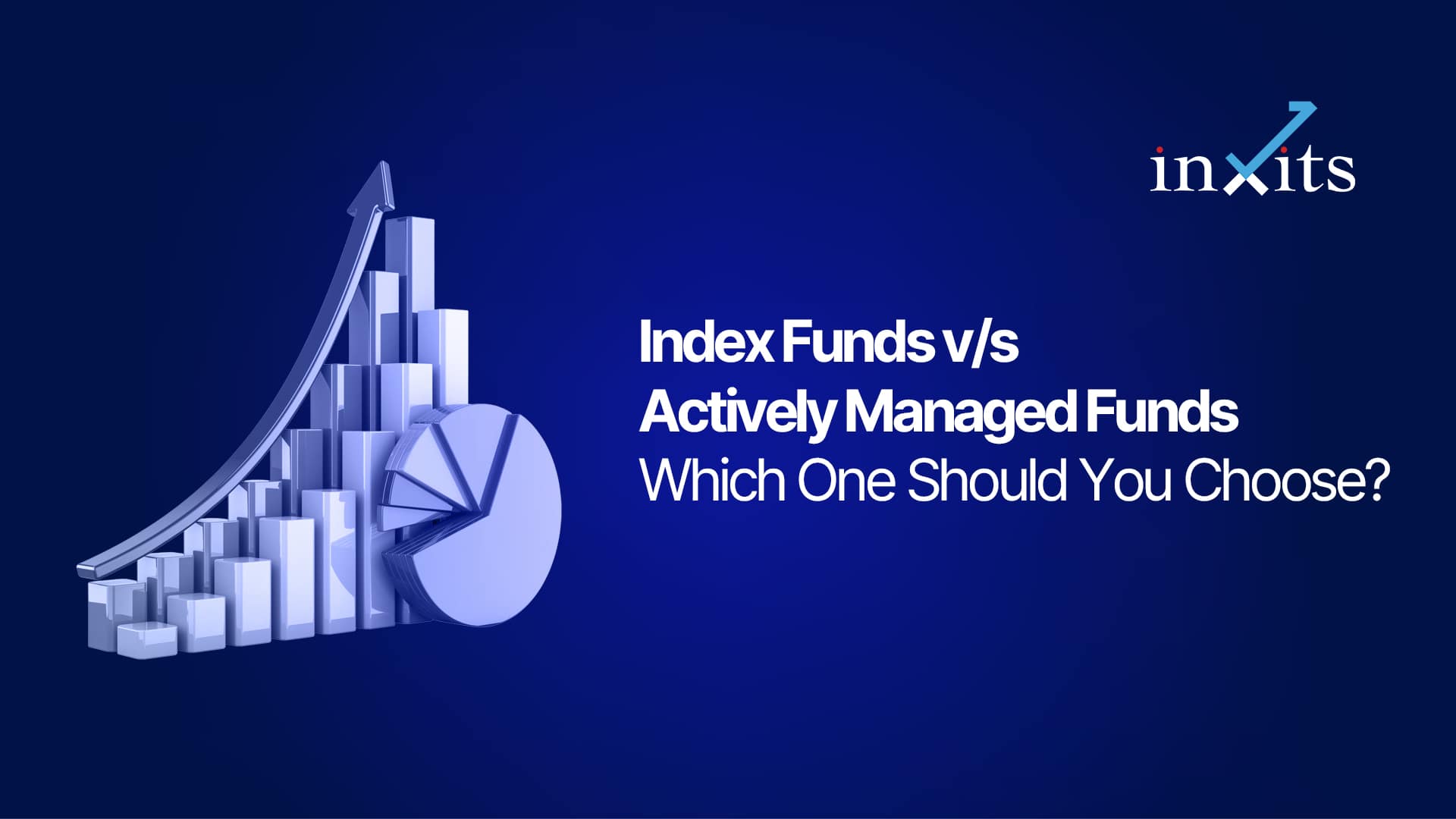
When investing in mutual funds, one of the most common questions investors face is whether to choose index funds or actively managed funds. These are two major types of mutual fund options available to investors. Both invest in the stock market, but they follow very different approaches.
Understanding how these two fund types work, their costs, risks, and suitability can help investors make better decisions based on their goals and comfort level. This guide explains the difference between index funds and actively managed funds in a clear and practical way.
What Are Index Funds
Index funds are passive mutual funds. They aim to replicate the performance of a specific market index such as the Nifty 50 or Sensex.
Instead of trying to select winning stocks, index funds invest in the same stocks that make up the chosen index, in the same proportion.
How Index Funds Work
- Track a market index
- No active stock selection
- Portfolio changes only when the index changes
- Performance closely follows the index
What Are Actively Managed Funds
Actively managed funds are mutual funds where a fund manager actively selects stocks with the aim of outperforming the market or a benchmark index.
The fund manager and research team continuously analyse companies, market trends, and economic factors to decide which stocks to buy or sell.
How Actively Managed Funds Work
- Fund manager selects stocks
- Portfolio changes based on research and market views
- Aim is to beat the benchmark
- Requires frequent decision making
Key Differences Between Index Funds and Actively Managed Funds
1. Investment Approach
- Index Funds: Follow a passive approach by tracking an index
- Actively Managed Funds: Follow an active approach to outperform the market
2. Cost and Expense Ratio
One of the biggest differences is cost.
- Index Funds:
- Lower expense ratio
- Minimal fund management activity
- Actively Managed Funds:
- Higher expense ratio
- Costs include research, analysis, and frequent trading
Lower costs are a key reason many beginners prefer index funds for long-term investing.
3. Risk Profile
- Index Funds:
- Market-linked risk
- Move in line with the index
- Actively Managed Funds:
- Market risk along with fund manager decision risk, as performance depends on stock selection and timing.
- Performance depends on investment decisions
4. Return Behaviour
- Index Funds:
- Returns mirror the index over time
- Do not aim to beat the market
- Actively Managed Funds:
- Returns may be higher or lower than the index
- Depend on fund manager strategy and timing
It is important to remember that higher return potential also comes with higher uncertainty.
5. Transparency
- Index Funds:
- Portfolio composition is predictable and transparent
- Portfolio composition is predictable and transparent
- Actively Managed Funds:
- Portfolio changes frequently
- Requires regular monitoring
Risk-O-Meter Comparison
| Fund Type | Risk Level |
| Index Funds | Market-linked Risk |
| Actively Managed Equity Funds | Very High Risk |
Both fund types are affected by market movements, but active funds also depend on the quality of fund management decisions.
Time Horizon for Index vs Active Funds
Both index funds and actively managed equity funds are suitable for long-term investing.
Recommended time horizon: 5 years or more, with longer horizons preferred for consistent outcomes.
Longer holding periods help manage market volatility and improve consistency of outcomes.
Who Should Consider Index Funds
Index funds may suit investors who:
- Prefer a simple investment approach
- Want lower costs
- Are comfortable matching market performance
- Do not want to track fund manager decisions frequently
- Have a long-term investment horizon
They are often used as a core holding in long-term portfolios.
Who Should Consider Actively Managed Funds
Actively managed funds may suit investors who:
- Are comfortable with higher risk
- Want the possibility of outperforming the market
- Trust professional fund management
- Are willing to monitor performance periodically
These funds may perform differently across market cycles.
Who Should NOT Choose This
Index funds may not suit investors who:
- Seek tactical or short-term market opportunities
- Want to actively time the market or switch stocks frequently
- Expect returns significantly higher than the market average
Actively managed funds may not suit investors who:
- Are highly cost-sensitive and prefer lower expense ratios
- Want a completely hands-off investment approach
- Do not wish to monitor fund performance or fund manager decisions periodically
Choosing the wrong fund type for your investment style may lead to discomfort and poor decision-making during market volatility.
Index Funds vs Active Funds: Quick Comparison Table
| Aspect | Index Funds | Actively Managed Funds |
| Investment Style | Passive | Active |
| Expense Ratio | Lower | Higher |
| Goal | Match the index | Beat the index |
| Fund Manager Role | Limited | Significant |
| Portfolio Changes | Low | High |
| Risk Level | Market-linked | Very High |
| Time Horizon | 5+ years | 5+ years |
Common Mistakes Investors Make
- Choosing based only on short-term performance
- Ignoring expense ratios
- Expecting active funds to always beat the market
- Switching frequently between fund types
Understanding your own goals matters more than choosing between index or active funds.
Can You Use Both in One Portfolio
Yes. Many investors use:
- Index funds for stability and cost efficiency
- Actively managed funds for selective growth opportunities
This combination can help balance cost, risk, and return expectations.
If you ever feel unsure how to structure this balance, speaking with a qualified mutual fund advisor can help. The certified financial advisor also provides educational support for investors who want clarity before investing.
Conclusion
Index funds and actively managed funds serve different purposes. Index funds offer simplicity, lower costs, and market-linked returns, while actively managed funds offer the potential to outperform the market with higher involvement and higher costs.
The right choice depends on your investment goals, risk comfort, time horizon, and preference for simplicity or active decision making. Understanding these differences helps investors stay confident and disciplined over the long term.
FAQs
1. Are index funds better than actively managed funds
Neither is universally better. The choice depends on investor goals and preferences.
2. Do index funds guarantee returns
No. Returns are market-linked and not guaranteed.
3. Are actively managed funds risky
They carry higher risk due to market movement and fund manager decisions.
4. Can beginners invest in index funds
Yes. Index funds are often suitable for beginners with long-term goals.
5. Can I switch between index and active funds
Yes, but frequent switching is usually not recommended.
Mandatory SEBI Warning & Disclaimer
Investment in securities market are subject to market risks. Read all the related documents carefully before investing.
Registration granted by SEBI, membership of BSE and certification from NISM in no way guarantee performance of the intermediary or provide any assurance of returns to investors.
The securities quoted above are for illustration only and are not recommendatory.