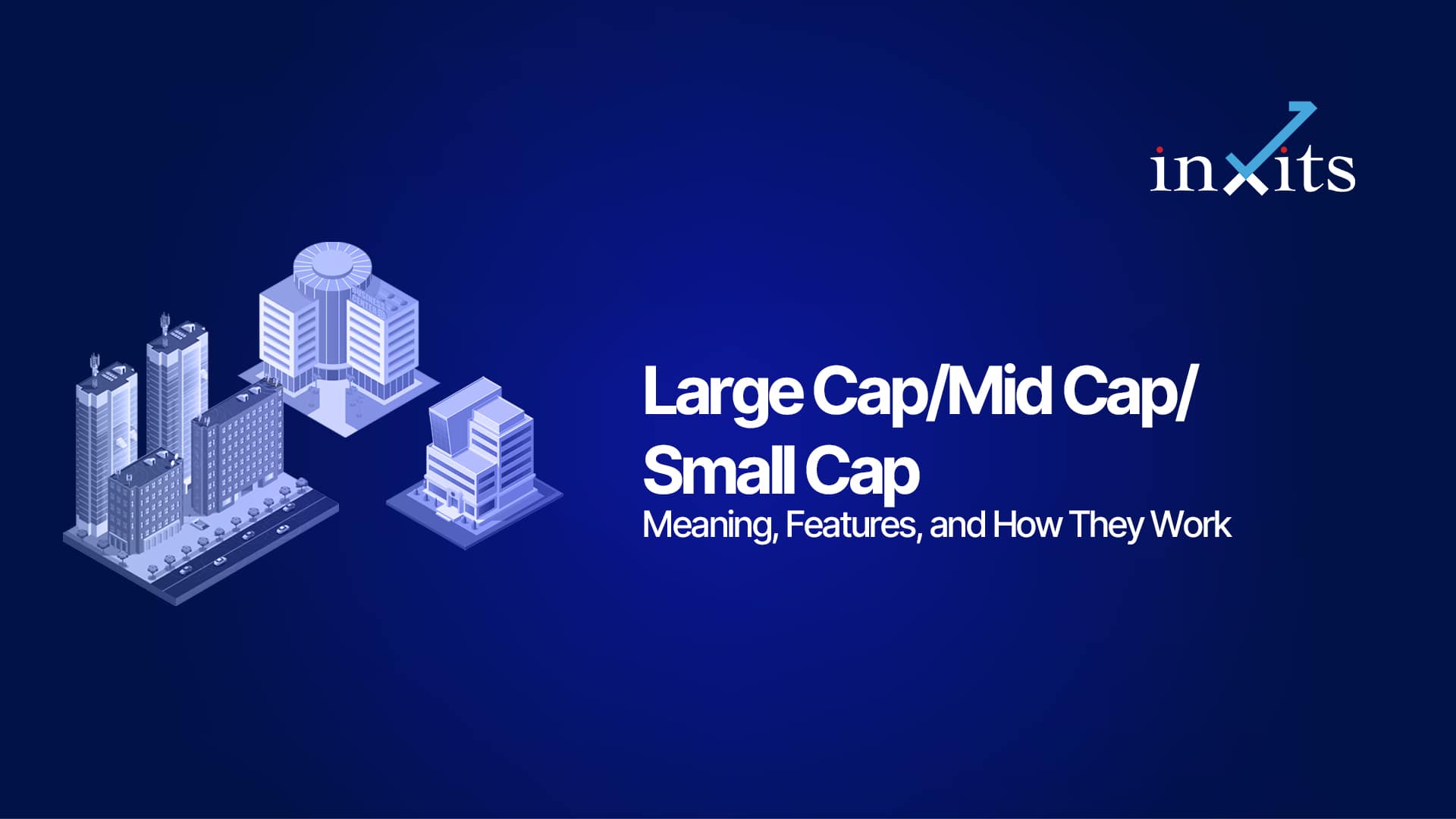
When investing in equity mutual funds, investors often come across three common categories, which are important types of mutual fund to understand: large cap funds, mid cap funds, and small cap funds. These categories are based on the size of the companies the fund invests in and play a major role in determining risk, volatility, and long-term return potential.
Choosing between large cap, mid cap, and small cap funds is not about finding the best performer. It is about understanding how each category behaves and how it fits your financial goals, time horizon, and comfort with market fluctuations.
This guide explains the differences clearly to help you decide what may suit you best.
What Do Large Cap, Mid Cap, and Small Cap Funds Mean
Equity mutual funds are classified based on the market capitalisation of the companies they invest in.
As per SEBI classification:
- Large Cap Funds invest mainly in the top 100 companies by market capitalisation
- Mid Cap Funds invest mainly in companies ranked from 101 to 250
- Small Cap Funds invest mainly in companies ranked beyond 250
These classifications help investors understand the size, stability, and growth stage of the underlying companies.
Large Cap Funds Explained
What They Invest In
Large cap funds invest in well-established companies with strong market presence and stable business models.
Risk Profile
High risk, but relatively lower volatility compared to mid cap and small cap funds.
Return Behaviour
Returns are market-linked and usually steadier over long periods.
Time Horizon
5 years or more.
Who May Consider Them
- Beginners in equity mutual funds
- Long-term investors
- Investors seeking relatively stable equity exposure
Large cap funds often form the core of an equity mutual fund portfolio.
Read More About Large Cap Funds
Mid Cap Funds Explained
What They Invest In
Mid cap funds invest in companies that are in a growth phase and have the potential to become large companies in the future.
Risk Profile
Higher risk than large cap funds.
Return Behaviour
Higher growth potential, but with sharper ups and downs.
Time Horizon
7 years or more.
Who May Consider Them
- Investors with moderate to high risk comfort
- Long-term investors seeking higher growth
- Investors who can tolerate volatility
Mid cap funds can add growth to a portfolio but require patience and discipline.
Learn More About Mid Cap Funds
Small Cap Funds Explained
What They Invest In
Small cap funds invest in smaller companies that are still developing their business scale.
Risk Profile
Very high risk due to higher volatility and lower liquidity.
Return Behaviour
Strong return potential in favourable market conditions, but sharp declines during downturns.
Time Horizon
7 to 10 years.
Who May Consider Them
- Experienced investors
- Investors with high risk tolerance
- Investors with long-term goals and patience
Small cap funds demand emotional discipline and a long investment horizon.
Read More About Small Cap Funds
Risk-O-Meter Comparison
| Fund Category | Risk Level |
| Large Cap Funds | High Risk |
| Mid Cap Funds | High to Very High Risk |
| Small Cap Funds | Very High Risk |
Risk increases as exposure moves from large cap to small cap funds.
Time Horizon Comparison
| Fund Category | Ideal Time Horizon |
| Large Cap Funds | 5+ years |
| Mid Cap Funds | 7+ years |
| Small Cap Funds | 7–10 years |
Matching the fund category with time horizon helps manage volatility better.
Large Cap vs Mid Cap vs Small Cap Funds: Key Differences
| Aspect | Large Cap Funds | Mid Cap Funds | Small Cap Funds |
| Stability | High | Medium | Low |
| Volatility | Lower | Medium | High |
| Growth Potential | Moderate | High | Very High |
| Risk Level | High | Higher | Very High |
| Suitable For | Beginners, core portfolio | Growth-focused investors | High-risk investors |
Which Fund Category Is Best for You
There is no single best category for everyone. The right choice depends on:
Your Risk Comfort
If market fluctuations worry you, large cap exposure may suit you better.
Your Time Horizon
Longer time horizons allow more exposure to mid and small cap funds.
Your Financial Goals
Growth-oriented goals may include mid and small cap exposure, while stability-focused goals rely more on large cap funds.
Most investors do not choose just one category. A combination often works better.
Common Mistakes Investors Make
- Investing only in small cap funds for higher returns
- Avoiding mid and small cap funds completely due to fear
- Ignoring time horizon
- Reacting emotionally during market corrections
Understanding fund behaviour helps avoid these mistakes.
How These Funds Fit into a Mutual Fund Portfolio
Equity mutual fund portfolios often include:
- Large cap funds as the base
- Mid cap funds for growth
- Small cap funds for higher long-term potential
Balancing these categories depends on asset allocation rather than performance chasing.
Not sure how to balance large, mid, and small-cap funds? A mutual fund advisor can guide you. The inXits also offers mutual fund investment services and 24×7 support to help you make smart decisions.
Conclusion
Large cap, mid cap, and small cap funds each play a distinct role in equity mutual fund investing. Large cap funds offer stability, mid cap funds offer growth, and small cap funds offer higher potential with higher risk.
The best choice depends on your goals, time horizon, and comfort with volatility. A balanced approach often helps investors stay invested with confidence across market cycles.
FAQs
1. Are large cap funds safer than small cap funds
They are generally more stable but still carry equity market risk.
2. Can beginners invest in mid and small cap funds
Yes, but with a long-term view and moderate allocation.
3. Should I invest only in one category
Most investors benefit from diversification across categories.
4. Which fund category offers the highest returns
Higher potential returns usually come with higher risk, especially in small cap funds.
5. Are SIPs suitable for all three categories
Yes, SIPs can help manage volatility across all equity fund categories.
Mandatory SEBI Warning & Disclaimer
Investment in securities market are subject to market risks. Read all the related documents carefully before investing.
Registration granted by SEBI, membership of BSE and certification from NISM in no way guarantee performance of the intermediary or provide any assurance of returns to investors.
The securities quoted above are for illustration only and are not recommendatory.