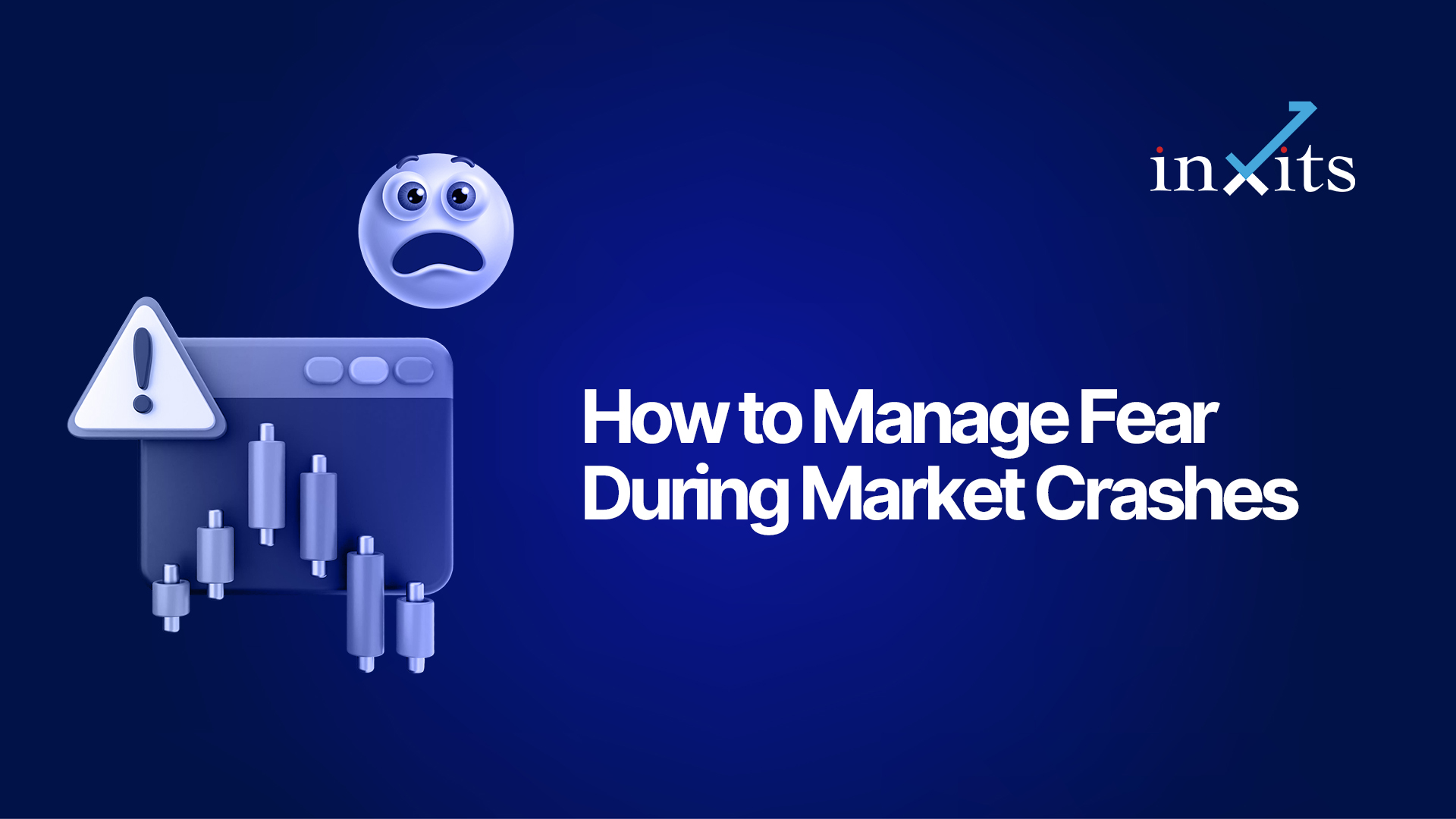
Fear during a market crash is a behavioural response, not a financial signal. The most effective approach is to focus on your original investment goal and horizon rather than daily portfolio movements. Selling during a crash converts temporary paper losses into permanent realised losses, and the challenge of knowing when to re-enter means many investors miss the recovery entirely.
Watching your portfolio fall can feel uncomfortable. A few days of market declines may be manageable, but a sharp correction often creates a different emotional response. Suddenly, every headline appears negative, social media becomes louder, and the temptation to sell everything starts to feel reasonable.
Many investors searching for ways to manage fear during market crashes are not looking for complex market analysis. They want reassurance that they are not making a costly mistake by staying invested. Anxiety, uncertainty, and self-doubt become common emotions during periods of market stress.
The challenge is that market crashes test behaviour more than knowledge. Most investors understand that markets move in cycles. However, acting rationally when portfolio values are falling requires a different skill altogether.
Understanding why fear appears during market downturns and learning how to respond can help investors avoid panic selling and make decisions that remain aligned with their long-term financial goals.
On this page
Market Crashes in India: Key Takeaways
Market downturns are a normal part of investing.
- Fear often causes more damage than the market decline itself.
- Panic selling converts temporary losses into realised losses.
- Diversified portfolios are built to withstand periods of volatility.
- Historical market recoveries have followed many major corrections.
- A structured investment plan can reduce emotional decision-making.
Why Do Market Crashes Trigger So Much Fear?
Fear during a market crash is a natural human response.
When investors see portfolio values decline daily, the brain often treats financial losses more seriously than financial gains. Behavioral finance researchers call this loss aversion. Simply put, losing Rs. 1 lakh feels more painful than gaining Rs. 1 lakh feels rewarding.
As a result, many investors begin focusing on short-term losses rather than long-term objectives.
Consider a salaried professional in Bengaluru investing through SIPs for retirement twenty years away. During a sharp market correction, the portfolio may decline significantly on paper. Even though the retirement goal remains decades away, the immediate decline can create pressure to act.
Market crashes often create emotional stress because investors confuse temporary price declines with permanent financial damage.
Does Panic Selling Actually Protect Investors?
In most cases, panic selling reduces future flexibility rather than reducing risk.
Selling during a crash locks in losses immediately. Furthermore, investors who exit during extreme fear often struggle to re-enter when markets recover.
A common pattern looks like this:
- Market falls sharply.
- Fear increases.
- Investor sells.
- Market stabilises.
- Recovery begins.
- Investor waits for “more certainty.”
- Markets move higher without them.
The problem is not the sale itself. The challenge lies in correctly identifying when to return.
What Happens If You Sell During Every Market Correction?
Investors who repeatedly sell during corrections often miss recovery periods.
Historically, some of the strongest market gains have occurred shortly after severe declines. Missing only a handful of recovery days can meaningfully affect long-term outcomes.
Therefore, a temporary emotional decision can create a lasting financial impact.
Is Staying Invested Always the Right Choice?
Not necessarily.
Investment decisions should depend on goals, time horizon, and portfolio suitability. However, selling solely because prices are falling is different from reviewing whether an investment still matches your objectives.
A thoughtful review is rational. Panic-driven selling is emotional.
How Can Investors Manage Fear During Market Crashes?
Managing fear begins with understanding what is actually happening.
Market crashes create uncertainty. However, uncertainty does not automatically mean your financial plan is broken.
Several practical approaches can help investors remain disciplined.
Focus on Your Original Goal
Every investment should have a purpose.
If your goal is retirement twenty years away, a six-month market decline may not change the objective. Likewise, if you are investing for a child’s education ten years from now, short-term volatility may have limited relevance.
Looking at goals instead of daily market movement often reduces emotional reactions.
Reduce Portfolio Checking Frequency
Many investors check portfolios more frequently during market declines.
Unfortunately, this habit usually increases anxiety. Constant monitoring makes every market fluctuation feel important, even when it has little impact on long-term outcomes.
Several experienced advisors encourage clients to review progress against goals rather than daily market movements.
Remember That Volatility Is Normal
Market volatility is not an exception. It is part of investing.
Indian and global markets have experienced multiple corrections, economic disruptions, geopolitical events, and policy changes over time. Yet businesses continue operating, economies continue growing, and markets continue adjusting to new information.
Understanding this context helps place short-term declines into perspective.
Invest Smarter.
Grow Confidently.
Your AI-powered SEBI-registered investment advisor — with research you can trust and insights that grow with you.
Download inXits Free
Maintain Diversification
Diversification reduces concentration risk.
A portfolio spread across asset classes generally behaves differently from a portfolio concentrated in one stock, sector, or theme. Consequently, diversification can help reduce emotional pressure during market stress.
Investors who want to review whether their current asset allocation matches their goals may benefit from speaking with a SEBI registered financial advisor who can assess portfolio risk in the context of their financial objectives.
Also read: How to diversify mutual fund portfolio
What Should You Do During a Market Crash?
A market crash is often a time for review rather than reaction.
Instead of focusing on headlines, investors can evaluate whether their portfolio remains aligned with their financial plan.
A Simple Market Crash Checklist
Before making any decision, ask yourself:
- Has my financial goal changed?
- Has my investment horizon changed?
- Has my risk tolerance changed permanently?
- Has the quality of my investments deteriorated?
- Am I reacting to facts or emotions?
Many investors discover that none of these factors have changed. Only market prices have changed.
Key Facts on Market Corrections
- Equity market corrections of 10% or more occur periodically.
- Market volatility often increases during economic uncertainty.
- Diversification cannot eliminate risk, but it can reduce concentration risk.
- Long-term investment outcomes depend on both asset allocation and investor behaviour.
Not sure whether your current portfolio can handle periods of volatility? A personalised portfolio review with an investment advisor can help identify concentration risks, asset allocation gaps, and behavioural blind spots before they become larger issues.
How Can Long-Term Investors Build Emotional Discipline?
Emotional discipline is rarely developed during a market crash. It is usually built beforehand.
Investors who enter markets expecting occasional declines often respond differently from those expecting markets to move upward continuously.
One helpful approach is creating written investment rules. For example:
- Review portfolio quarterly instead of daily.
- Rebalance according to predetermined allocation limits.
- Avoid making investment decisions based on headlines.
- Focus on goal progress rather than market predictions.
A structured process often reduces emotional decision-making during uncertain periods.
Many successful investors are not distinguished by their ability to predict market movements. Instead, they are distinguished by their ability to remain disciplined when uncertainty increases.
How inXits Helps Investors Navigate Market Volatility
Market volatility often raises difficult questions. Should you continue investing? Is your portfolio carrying more risk than intended? Has your asset allocation drifted away from your original goals?
At inXits, advisors help investors evaluate portfolio structure, diversification, risk alignment, and goal suitability rather than reacting to short-term market noise. The focus remains on creating a disciplined investment framework that can withstand changing market conditions.
Many investors discover that fear becomes easier to manage when decisions are based on a clear financial plan instead of daily market sentiment. If you are unsure whether your current strategy remains aligned with your long-term objectives, connecting with a financial advisor can help bring clarity to the decision-making process.
Conclusion
Market crashes are uncomfortable. Even experienced investors can feel anxious when portfolio values decline rapidly.
However, the ability to manage fear during market crashes often matters more than the ability to predict them. Panic selling can transform temporary declines into realised losses, while disciplined decision-making keeps financial plans aligned with long-term goals.
A market correction does not automatically mean your strategy is failing. In many cases, it is simply a reminder that volatility remains part of the investing journey. Reviewing goals, maintaining diversification, and focusing on long-term objectives can help investors respond more rationally during periods of uncertainty.
If recent market movements have left you questioning whether your portfolio still reflects your financial goals, a conversation with a investment advisor near me can provide an objective assessment of your current strategy.
Frequently Asked Questions
How can I manage fear during market crashes effectively?
Managing fear during market crashes begins with focusing on long-term goals rather than daily portfolio movements. Investors often benefit from reviewing their financial plan, reducing portfolio monitoring frequency, and avoiding decisions driven purely by market headlines.
Why do investors panic sell during market downturns?
Panic selling usually occurs because investors fear further losses. Behavioural finance research shows that people experience losses more intensely than gains, which can lead to emotional decisions during periods of heightened volatility.
Is panic selling ever a good idea?
Selling may be appropriate if your goals, financial circumstances, or investment suitability have changed. However, selling solely because prices are falling often locks in losses and can make it difficult to participate in future recoveries.
How long do market crashes usually last?
The duration varies significantly depending on economic conditions, investor sentiment, and broader market factors. Some corrections recover within months, while others may take longer. Every market cycle is different.
Should SIP investors stop investing during market crashes?
Stopping a SIP should depend on personal financial circumstances rather than market fear alone. Continuing systematic investments during volatility may result in purchasing more units when prices are lower, although outcomes are never guaranteed.
How does diversification help during market downturns?
Diversification spreads investments across different asset classes and sectors. While it cannot eliminate losses entirely, it can reduce dependence on any single investment or market segment.
How are Indian investors protected during market volatility?
The Securities and Exchange Board of India (SEBI) regulates market participants, disclosure standards, and investment intermediaries. However, regulation cannot eliminate investment risk or market fluctuations.
What is the difference between a market correction and a market crash?
A market correction generally refers to a decline of around 10% or more from recent highs. A market crash usually describes a more severe and rapid decline accompanied by heightened investor fear and uncertainty.
Can emotional investing affect long-term wealth creation?
Yes. Repeated emotional decisions, such as panic selling during downturns and re-entering after recoveries, can negatively affect long-term investment outcomes compared with maintaining a disciplined strategy.
Disclaimer
Investments in securities markets are subject to market risks. Read all related documents carefully before investing.
inXits is a SEBI-registered investment adviser (Registration No. INA000020369). This article is for educational purposes only and does not constitute personalised investment advice.
Registration granted by SEBI, membership of BSE, and certification from NISM in no way guarantee performance of the intermediary or provide any assurance of returns to investors.

Himani Barot, CFP, is a Principal Officer at inXits with 4+ years of experience in portfolio management, investment advisory, and comprehensive financial planning. As a Certified Financial Planner, she helps clients navigate complex financial goals with structured, personalised strategies.