 AI Summary
A stock demerger is a corporate restructuring process in which a company separates one of its business divisions into an independent entity, with existing shareholders typically receiving shares in the new company. While investors often assume that receiving additional shares automatically increases wealth, the article explains that a demerger primarily redistributes value rather than creating it instantly. The long-term impact depends on how both companies perform after the split, their management quality, and business fundamentals. By understanding how demergers affect share prices, ownership structure, and portfolio composition, investors can avoid reacting emotionally and instead evaluate whether the restructuring supports their long-term financial goals.
It usually starts with a simple notification. A company you own announces a “demerger,” and suddenly, your portfolio shows unfamiliar names or additional shares.
For many investors, a stock demerger creates more confusion than clarity. You might wonder whether this is a good sign, a risk, or just a technical change that does not matter much.
The uncertainty is understandable — corporate actions like demergers are not part of everyday investing decisions, yet they can reshape how your investments behave over time.
Understanding what a stock demerger is and how it impacts your portfolio can help you move from reacting to these events to interpreting them with clarity.
Before you read on
- A stock demerger separates a company into two or more independent entities
- Shareholders typically receive shares in the new company
- The total value may not change immediately, but the structure does
- Long-term impact depends on business fundamentals, not the event itself
On this page
What Is a Stock Demerger and Why Do Companies Do It?
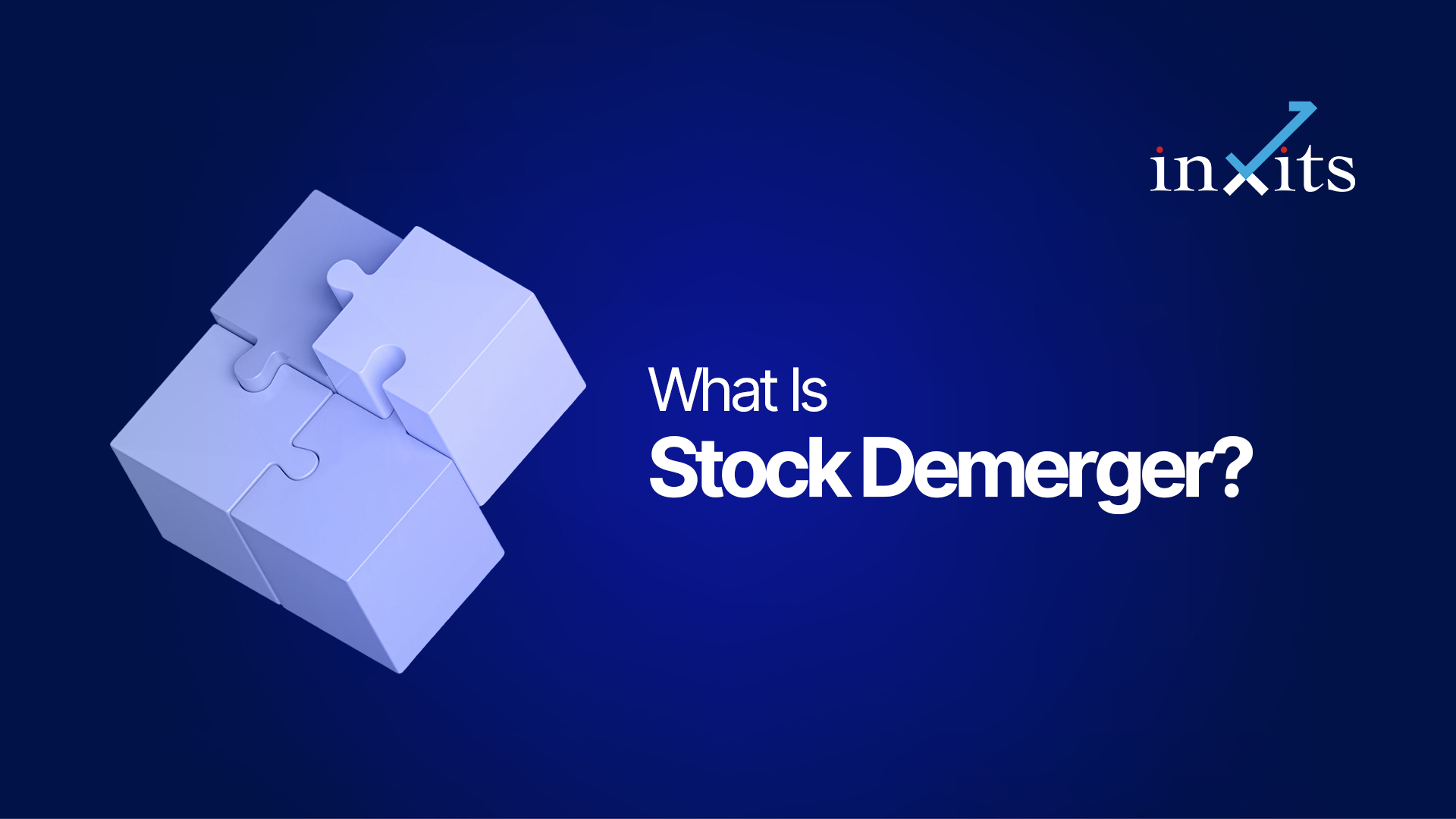
A stock demerger is a corporate restructuring process where a company splits one of its business units into a separate, independent entity. The existing shareholders usually receive shares in the newly formed company in proportion to their holdings.
Think of it as one company becoming two, each focused on a specific business line.
Companies may choose to demerge to improve focus, unlock hidden value, or simplify operations. This idea of structuring investments for clarity is similar to how different mutual fund categories in India are designed around specific goals and risk levels.
How Does a Demerger Work for Shareholders?
When a demerger happens, your existing shares do not disappear. Instead, they are reorganised.
You continue to hold shares in the original company while receiving shares in the new entity based on a fixed ratio. The share price of the original company adjusts to reflect this change.
Imagine Rohan, a 35-year-old IT professional in Ahmedabad, who owns 100 shares of a company. After a demerger, he still holds his original shares and also receives shares in the new business entity.
To evaluate whether this shift creates long-term value, investors often rely on concepts like growth measurement, similar to understanding what is the CAGR in mutual funds and how returns evolve over time.
Assumption vs Reality: Does a Demerger Increase Your Wealth?
What most investors assume:
A demerger automatically increases wealth because you receive additional shares.
What actually happens:
The total value is redistributed between the original company and the new entity.
Why this matters:
Real wealth creation depends on how each business performs after separation, not the act of splitting itself.
This misunderstanding is not uncommon and often reflects broader investing misconceptions, similar to those discussed in mutual fund myths that cost you money.
What Happens to Share Prices After a Demerger?
On the ex-date, the share price of the original company typically adjusts downward. This reflects the value that has been transferred to the new entity.
Over time, both companies may perform differently depending on business fundamentals, management, and market conditions.
Invest Smarter.
Grow Confidently.
Your AI-powered SEBI-registered investment advisor — with research you can trust and insights that grow with you.
Download inXits Free
This can feel unsettling, especially for investors who prefer stability. The reaction is similar to how some investors compare stability versus growth when evaluating options like FD vs mutual fund difference.
Demerger vs Other Corporate Actions: What Is the Difference?
It helps to distinguish demergers from other corporate actions that may appear similar on the surface.
| Corporate Action | What It Does | Impact on Investors |
| Demerger | Splits a business into separate companies | Receive shares in new entity |
| Stock Split | Increases number of shares | No change in total value |
| Bonus Issue | Free additional shares issued | Value adjusted proportionately |
| Spin-off | Similar to demerger structurally | Shares allocated differently |
Understanding structural differences is important, just like comparing investment products such as an ETF vs a mutual fund where the underlying mechanics shape outcomes.
Is a Demerger Good or Bad for Investors?
There is no single answer — it depends entirely on the situation.
A demerger may create value if both businesses perform better independently. However, it may also introduce uncertainty if execution challenges arise.
For many investors, this uncertainty links back to personal comfort with risk. That is why understanding your behaviour matters, and tools like how to check financial personality can help bring clarity to such decisions.
Have a specific question about how corporate actions like demergers affect your portfolio? Talk to a personal CFO — a conversation with a qualified advisor, no forms, no wait.
How Should Investors Approach a Demerger?
Instead of reacting immediately, one approach is to evaluate the fundamentals behind the decision.
Look at why the company is separating, whether each business is viable independently, and how it fits into your long-term investment plan.
A demerger should not be viewed in isolation. It should be assessed as part of your overall portfolio strategy.
How inXits Helps You Navigate Complex Corporate Actions
Navigating stock demergers can feel complex without a clear framework. At inXits, advisors work with investors to evaluate how such structural changes align with their broader portfolio and long-term financial goals. If you have questions about corporate actions or portfolio shifts, speaking with a qualified personal CFO can help bring clarity tailored to your situation.
Understanding a demerger clearly is one part. Knowing how it fits your portfolio is what actually moves things forward. At inXits, a personal CFO connects these events to your financial strategy, not just explains them in isolation.
Conclusion
A stock demerger changes how a business is structured, not necessarily the value you hold immediately. What matters more is how each entity performs over time and whether it aligns with your financial goals.
For long-term investors, understanding events like these helps reduce confusion and build confidence in decision-making. Clarity around stock demerger impact on investors becomes an important part of navigating markets thoughtfully.
If you are unsure how such changes affect your portfolio, a structured conversation can help. You can connect with a personal CFO to evaluate how these events align with your financial plan.
Disclaimer
Investments in securities markets are subject to market risks. Read all related documents carefully before investing.
inXits is a SEBI-registered investment adviser (Registration No. INA000020369). This article is for educational purposes only and does not constitute personalised investment advice.
Registration granted by SEBI, membership of BSE, and certification from NISM in no way guarantee performance of the intermediary or provide any assurance of returns to investors.
Understand Your Portfolio Changes
Talk to a Personal CFO
Megha Joshi is a Research Analyst at inXits with 2.5 years of focused experience in equity markets. She conducts in-depth stock research and market analysis to support data-backed investment decision-making for clients.
FAQs
What is a stock demerger in simple terms?
A stock demerger is when a company separates part of its business into a new entity and distributes shares of that entity to existing shareholders.
How does a stock demerger affect share price?
The share price adjusts to reflect the value transferred to the new company, without necessarily reducing total investor value.
Is a stock demerger good for investors?
It depends on how each company performs after the split and whether the demerger improves business efficiency.
Do I get new shares after a demerger?
Yes, shareholders typically receive shares in the newly created company based on a fixed ratio.
What is the difference between demerger and stock split?
A demerger creates a new company, while a stock split only changes the number of shares without affecting structure.
How is a stock demerger taxed in India?
Certain demergers may be tax-neutral if they meet conditions under the Income Tax Act.
Can I sell shares after a demerger?
Yes, once shares are credited and listed, investors can buy or sell them.
How is a demerger regulated in India?
Demerger processes are governed by SEBI regulations and require multiple approvals.