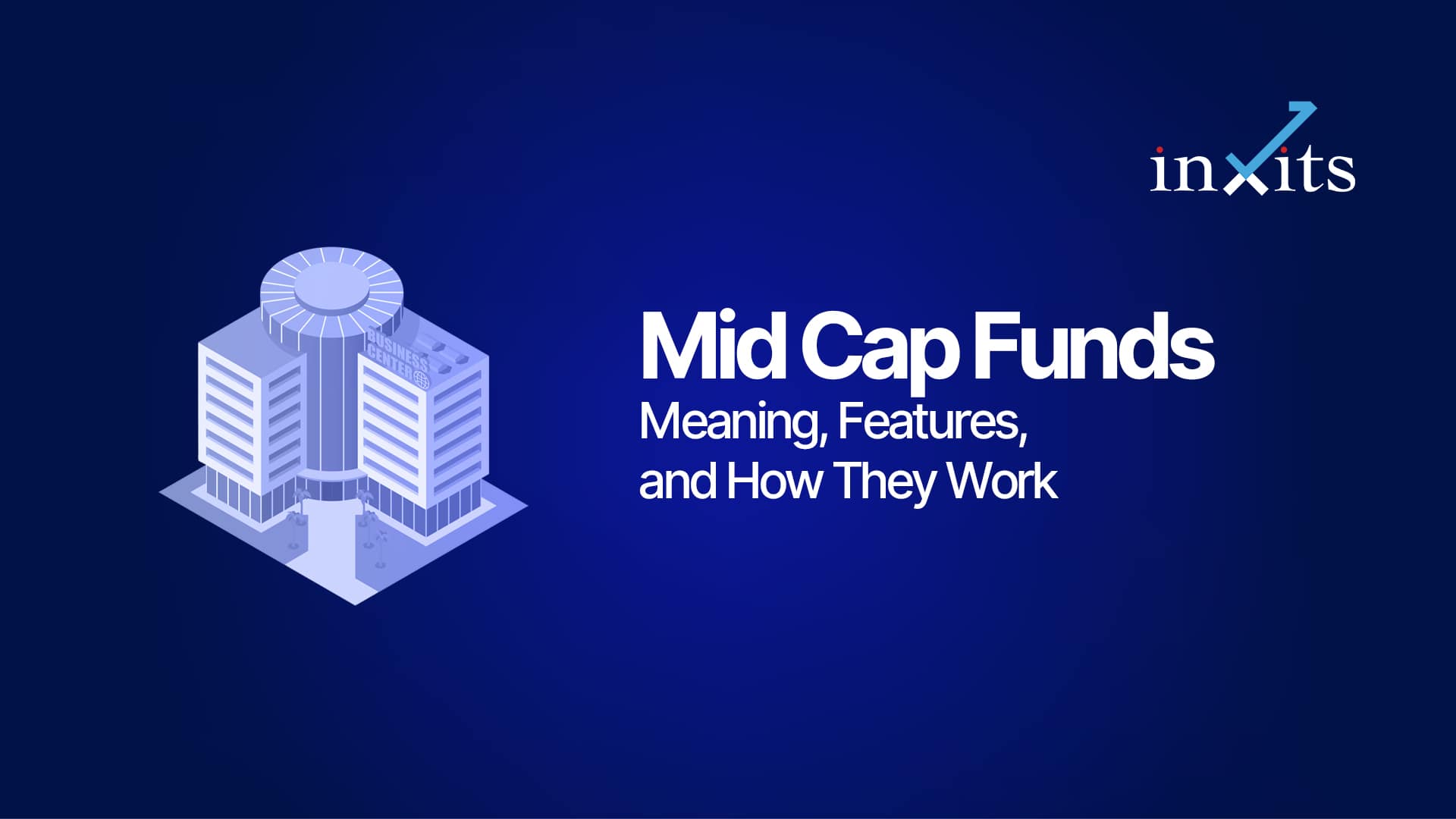
Mid cap funds are a popular type of mutual fund under Equity Mutual Funds that invest in companies which are neither very large nor very small in size. These companies are often in a growth phase, expanding their business and market reach — and are sometimes seen as the blue chips of tomorrow.
Because of this, mid cap funds can offer higher growth potential than large cap funds, but they also carry higher risk.
What Are Mid Cap Funds
Mid cap funds are equity mutual funds that invest primarily in mid-cap companies. As per SEBI classification, mid-cap companies are those ranked from 101 to 250 by market capitalisation.
A mid cap fund must invest at least 65 percent of its assets in mid-cap stocks. These companies are usually established businesses with scope to grow faster than large companies over time.
How Mid Cap Funds Work
When you invest in a mid cap fund:
- Money from multiple investors is pooled together
- The fund manager selects stocks of mid-cap companies
- Investors are allotted units based on the fund’s NAV
- NAV changes daily based on stock market movement
Many mid cap funds are benchmarked against indices like the Nifty Midcap 150 TRI, and aim to deliver returns that beat the benchmark over the long term through active stock selection.
Returns depend on how these mid-sized companies perform and how market conditions affect them.
Key Features of Mid Cap Funds
1. Higher Growth Potential
Mid-cap companies often have more room to expand compared to large companies, which can lead to higher growth over time.
2. Higher Volatility
Mid cap funds can show sharper ups and downs in the short term due to market sensitivity.
3. Equity-Oriented Returns
Returns are market-linked and depend on business performance and market conditions.
4. Active Fund Management
Many mid cap funds rely on active stock selection to identify promising companies.
Risk Profile of Mid Cap Funds
Risk-O-Meter
High to Very High Risk
Mid cap funds carry higher risk than large cap funds because mid-sized companies are more affected by economic changes and market sentiment.
Types of Risks Involved
- Market risk
- Business risk
- Liquidity risk
- Volatility risk
Understanding these risks helps investors prepare for short-term fluctuations.
Time Horizon for Mid Cap Funds
Mid cap funds are suitable for long-term investing.
Recommended time horizon:
7 years or more
A longer holding period helps manage volatility and allows companies time to grow.
Returns from Mid Cap Funds
Returns from mid cap funds are:
- Market-linked
- Potentially higher than large cap funds over long periods
- Uneven in the short term
Mid cap funds do not offer guaranteed returns. Performance can vary significantly across market cycles.
Taxation of Mid Cap Funds (Equity-Oriented Mutual Funds)
Mid cap funds are treated as equity mutual funds for taxation purposes.
Short-Term Capital Gains (STCG)
- If units are redeemed within 1 year, gains are treated as short-term capital gains.
- STCG is taxed at 20%.
Long-Term Capital Gains (LTCG)
- If units are redeemed after 1 year, gains are treated as long-term capital gains.
- LTCG above ₹1.25 lakh in a financial year is taxed at 12.5%.
📌 Tax rules may change over time, so it is advisable to check the latest budget updates or consult an advisor before redeeming.
Mid Cap Funds vs Other Equity Funds
| Aspect | Mid Cap Funds | Large Cap Funds | Small Cap Funds |
| Risk Level | High to Very High | High | Very High |
| Volatility | High | Lower | Very High |
| Growth Potential | High | Moderate | Very High |
| Stability | Medium | High | Low |
| Time Horizon | 7+ years | 5+ years | 7–10 years |
Who Should Consider Mid Cap Funds
Mid cap funds may suit investors who:
- Have long-term financial goals
- Can stay invested for several years
- Are comfortable with market ups and downs
- Want higher growth than large cap funds
They may not suit conservative investors or those with short-term goals.
Common Mistakes Investors Make with Mid Cap Funds
- Expecting steady short-term returns
- Panic selling during market corrections
- Investing without proper diversification
- Allocating too much of the portfolio to mid caps
Balancing mid cap exposure with other fund categories is important.
How Mid Cap Funds Fit into a Portfolio
Mid cap funds are often used as:
- A growth-focused component of equity allocation
- A complement to large cap funds
- A way to enhance long-term return potential
They should usually form a portion of the equity allocation, not the entire portfolio.
If you ever feel unsure about how much exposure to mid-cap funds is suitable for your goals, speaking with a mutual fund advisor can help.
The inXits team also provides educational support, mutual fund investment services, and 24×7 free consulting for investors who want clarity before investing.
Conclusion
Mid cap funds invest in companies that are in a growth phase and can deliver strong long-term returns if held with patience. However, they also come with higher volatility and risk compared to large cap funds.
Understanding the nature of mid cap funds, staying invested for the long term, and avoiding emotional decisions are key to using them effectively. Mid cap funds work best when they are part of a well-balanced portfolio aligned with your goals and risk comfort.
FAQs
1. Are mid cap funds risky
Yes, mid cap funds carry higher risk and volatility compared to large cap funds.
2. How long should I stay invested in mid cap funds
Ideally 7 years or more.
3. Do mid cap funds guarantee returns
No. Returns are market-linked and not guaranteed.
4. Are mid cap funds suitable for beginners
They can be part of a beginner’s portfolio, but usually as a secondary holding. Most experts suggest beginners start with Index Funds or Large Cap funds and add mid cap funds once they understand market volatility and have built long-term investing discipline.
5. Can mid cap funds give better returns than large cap funds
They have higher growth potential over long periods but also higher risk.
Mandatory SEBI Warning & Disclaimer
Investment in securities market are subject to market risks. Read all the related documents carefully before investing.
Registration granted by SEBI, membership of BSE and certification from NISM in no way guarantee performance of the intermediary or provide any assurance of returns to investors.
The securities quoted above are for illustration only and are not recommendatory.