 AI Summary
Direct mutual funds help investors reduce costs by eliminating distributor commissions, but they do not remove the need for planning, risk management, and disciplined decision-making. While investors gain more control over fund selection and portfolio management, they also take on the responsibility of asset allocation, portfolio reviews, rebalancing, and managing emotions during market volatility. A financial advisor can still add value by providing goal-based planning, risk assessment, portfolio structure, and behavioural guidance, even when investments are made through direct plans. Ultimately, direct investing and advisory support are not mutually exclusive and can work together to help investors make more informed and consistent long-term decisions.
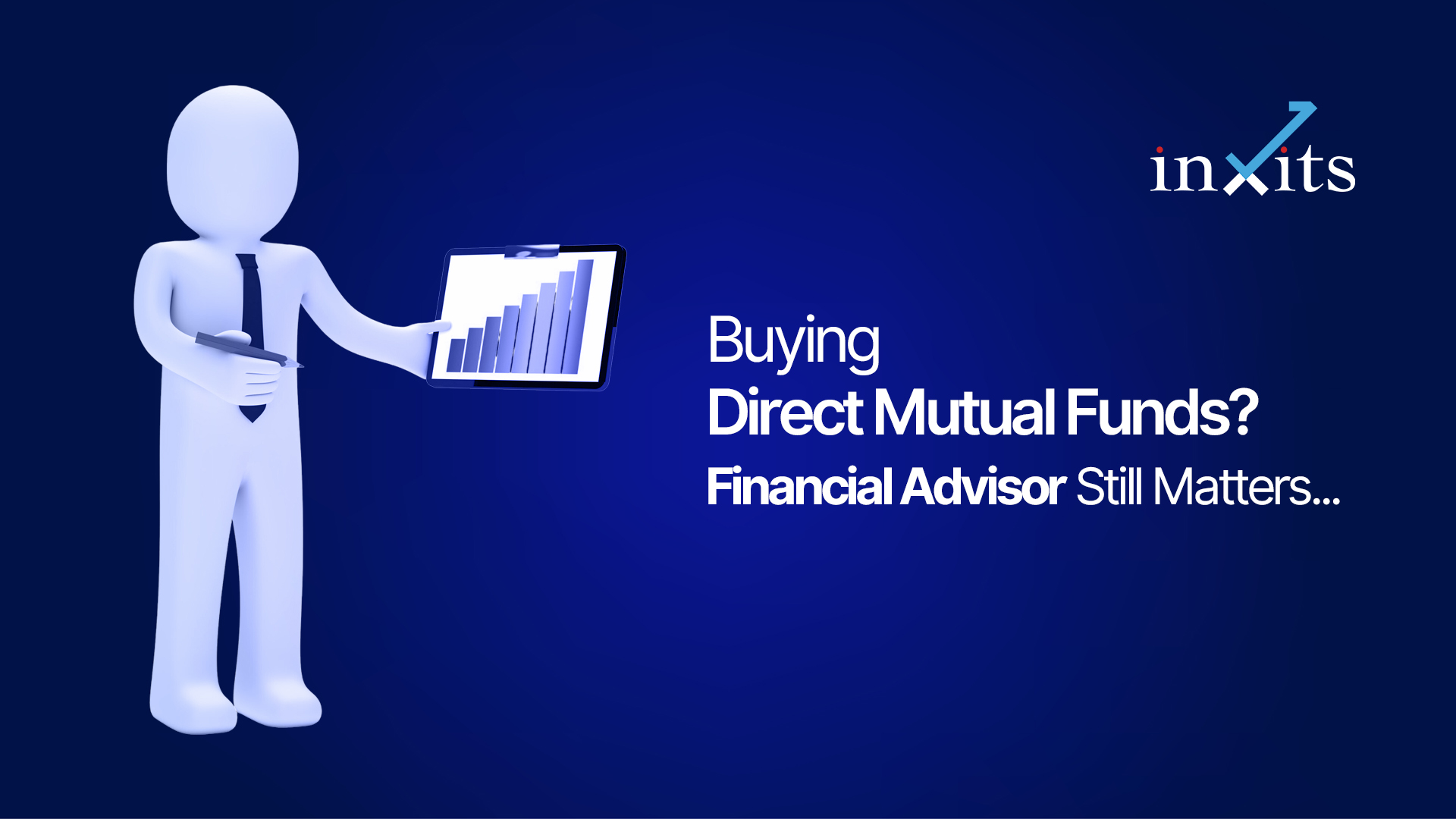
Direct mutual funds are often chosen by investors who want lower costs and more control over their investments. By investing directly with the fund house, investors avoid distributor commissions and benefit from a lower expense ratio.
Because of this, many investors believe that once they start buying direct mutual funds, the role of a financial advisor becomes unnecessary.
In reality, buying direct mutual funds changes how you invest, not what you need to manage. Planning, risk management, and discipline still remain critical, and this is where the role of a financial advisor continues to matter.
On this page
What Buying Direct Mutual Funds Really Means
When you invest in direct mutual funds:
- You select schemes on your own
- You decide asset allocation between equity, debt, and hybrid funds
- You monitor performance and rebalance when needed
- You manage emotional decisions during market volatility
Direct plans reduce costs, but they also transfer all responsibility to the investor. Cost efficiency does not automatically lead to better outcomes if decisions lack structure.
Also Read: Direct vs Regular Mutual Funds
The Common Assumption: Direct Means Self-Sufficient
Many investors assume:
- “I am investing directly, so I do not need advice”
- “Saving on expense ratio is enough”
This assumption works only if the investor clearly understands fund categories, risk levels, time horizon, and can stay disciplined during market volatility. For many investors, the challenge is not buying funds, but managing behaviour and portfolio structure over time.
Where Direct Investors Often Struggle
1. Asset Allocation Decisions
Many investors invest in multiple equity funds without knowing how much overall risk they are taking. Overlapping funds and imbalance between equity and debt are common issues.
A financial advisor helps bring structure so investments align with goals rather than market noise.
2. Market Volatility and Emotional Decisions
During market corrections, investors may stop SIPs, exit equity too early, or switch funds frequently. These behavioural decisions often cause more damage than higher costs ever could.
3. Portfolio Reviews and Rebalancing
Direct plans do not rebalance automatically. Without periodic review, portfolios drift away from the original plan. Rebalancing requires judgement, not reactions.
4. Life Changes and Financial Planning
Changes in income, responsibilities, or goals require adjustments in investment strategy. Without guidance, many investors delay these decisions or act too late.
Invest Smarter.
Grow Confidently.
Your AI-powered SEBI-registered investment advisor — with research you can trust and insights that grow with you.
Download inXits Free
What a Financial Advisor Adds Even When You Invest Directly
A financial advisor does not replace direct investing. Instead, advisory support focuses on:
- Goal-based planning
- Asset allocation clarity
- Risk suitability
- Portfolio review and rebalancing
- Behavioural discipline
This support remains relevant regardless of whether investments are direct or regular.
Direct Mutual Funds and Advisory Support Can Work Together
There is a common misconception that advisory support exists only to sell regular mutual funds. In practice, many investors today prefer to combine direct mutual fund investing with independent advisory guidance.
For example, investors who want to continue investing in direct mutual funds but also want clarity on fund selection, allocation, and reviews often seek advisory platforms that focus on education and planning. inXits works in this space by helping investors evaluate and manage their direct mutual fund portfolios without pushing product switches.
Cost vs Clarity: The Real Trade-Off
Direct mutual funds reduce cost.
Advisory support reduces costly mistakes.
The real comparison is not expense ratio versus advisory fee, but cost savings versus long-term decision quality. For many investors, avoiding one major behavioural mistake can matter more than years of lower expense ratios.
How to Decide What Is Right for You
Ask yourself:
- Do I clearly understand my portfolio structure
- Can I stay calm during market corrections
- Do I know when and how to rebalance
- Do I review investments objectively
If the answer to any of these is uncertain, structured guidance can help. Investors who prefer clarity without sales pressure often work with advisory platforms like inXits, which focus on explaining options and improving decision-making while allowing investors to stay invested in direct mutual funds.
Conclusion
Buying direct mutual funds is a smart step toward cost efficiency, but it does not eliminate the need for planning, discipline, and review.
A financial advisor still plays an important role by helping investors stay focused on goals, manage risk, and avoid emotional decisions. Combining direct mutual funds with the right advisory support can lead to more consistent and confident investing over time.
Mandatory SEBI Warning & Disclaimer
Investment in securities market are subject to market risks. Read all the related documents carefully before investing.
Registration granted by SEBI, membership of BSE and certification from NISM in no way guarantee performance of the intermediary or provide any assurance of returns to investors.
The securities quoted above are for illustration only and are not recommendatory.
Want to avoid costly investment mistakes while keeping costs low?
Book a Consultation
Aditya Rajpurohit is a Mutual Fund Research Analyst at inXits with 5+ years of experience in equity and mutual fund analysis. He specialises in fund selection, portfolio construction, and long-term wealth creation strategies for retail and HNI investors.
FAQs
1. Can I invest in direct mutual funds and still take advisory support
Yes. Advisory support can complement direct investing.
2. Does taking advice mean switching to regular mutual funds
No. Advisory guidance can work alongside direct plans.
3. Are direct mutual funds risk-free with an advisor
Market risk remains, but decision-making risk can reduce.
4. Is advisory support useful for long-term investors
Yes. Long-term investing benefits from planning and reviews.
5. Is it necessary to review direct mutual fund portfolios
Yes. Periodic review is essential for alignment with goals.