 AI Summary
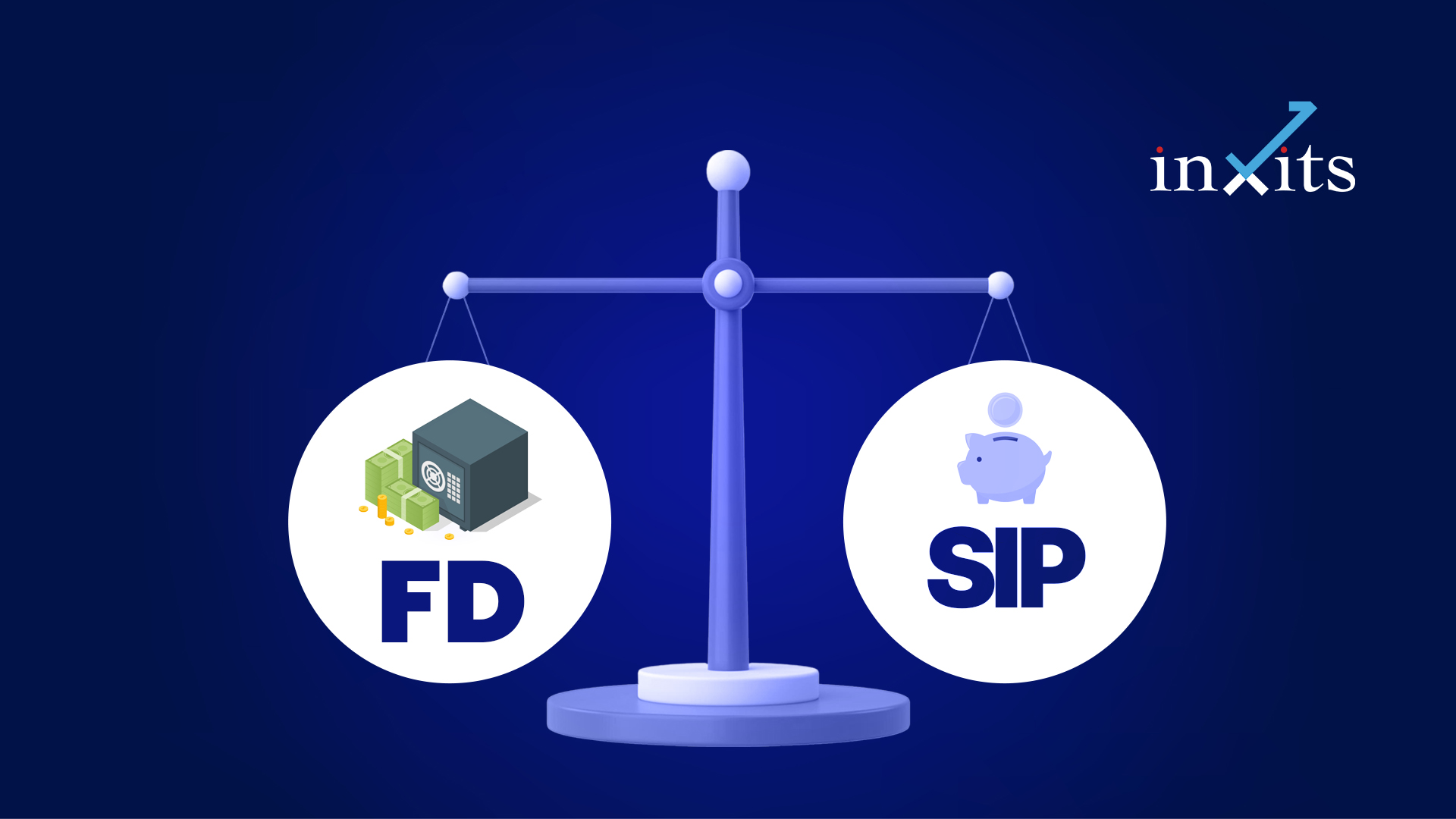
The debate between SIP vs Fixed Deposit is not about choosing a universally better option, but about matching investments to financial goals, risk tolerance, and time horizon. A SIP (Systematic Investment Plan) offers disciplined participation in market-linked mutual funds, making it commonly associated with long-term goals such as retirement, education planning, and wealth creation. In contrast, a Fixed Deposit provides predictable returns and capital stability, making it suitable for short-term needs and investors who prioritize certainty. Factors such as risk, taxation, liquidity, inflation, and investment duration play an important role in determining suitability. While SIPs can offer growth potential over time, they involve market volatility, whereas FDs provide stability but may face challenges in keeping pace with inflation after taxes. For many investors, the decision is not SIP or FD, but how both can work together within a balanced financial plan.
A salary credit, a maturity amount, or a year-end bonus often brings the same question: Should this money go into a SIP or a Fixed Deposit?
For many Indian investors, the choice feels confusing. On one side, Fixed Deposits are familiar and predictable. On the other, SIPs are linked to market investments and long-term wealth creation. News headlines, interest rate changes, and market swings can further complicate the decision.
Without a clear method to evaluate risk and goals, investors may choose based on comfort alone rather than alignment with financial objectives. Understanding SIP vs Fixed Deposit in a structured way can help bring clarity and reduce emotional decisions.
This article explains SIP vs Fixed Deposit from the lens of risk, return structure, time horizon, and goal suitability so that investors can make informed decisions.
On this page
What Does SIP vs Fixed Deposit Mean?
SIP vs Fixed Deposit compares two different approaches to investing and saving money.
What is a SIP?
A Systematic Investment Plan, commonly known as SIP, allows investors to invest a fixed amount at regular intervals into mutual funds. Most SIPs are monthly, although other frequencies are possible.
In a SIP:
- Money gets invested into market-linked instruments.
- Returns depend on the performance of underlying assets.
- Value can fluctuate in the short term.
SIPs are commonly used for long-term goals such as retirement planning or children’s education.
What is a Fixed Deposit?
A Fixed Deposit, or FD, is a savings instrument offered by banks and certain financial institutions.
In an FD:
- Money is deposited for a fixed tenure.
- Interest rate is predetermined at the time of investment.
- Returns are known in advance, subject to bank terms.
FDs are often used for capital preservation and short to medium-term needs.
How Does Risk Differ in SIP vs Fixed Deposit?
Risk is often the first factor investors consider.
Risk in SIP
SIPs usually invest in mutual funds, which may include equity, debt, or hybrid instruments. Therefore:
- Market volatility affects returns.
- Portfolio value may rise or fall.
- Long-term outcomes depend on asset allocation and market cycles.
For example, if a SIP invests in an equity mutual fund, its value may fluctuate during market corrections. These are general illustrations. The securities quoted are for illustration only and are not recommendatory.
Risk in SIP depends on the type of mutual fund chosen. Equity funds typically carry higher volatility compared to debt funds.
Risk in Fixed Deposit
FDs offer relatively stable returns:
- Interest rate remains fixed for the tenure.
- Principal is not affected by market movements.
- Returns are predictable.
However, FD returns are subject to:
- Interest rate risk at renewal.
- Inflation risk, which may reduce real purchasing power over time.
- Credit risk in case of certain non-bank deposits.
Therefore, while FDs provide stability, they may not always keep pace with inflation over longer periods.
How Returns Work in SIP vs Fixed Deposit
Return structure differs clearly between SIP vs Fixed Deposit.
Return Structure in SIP
SIP returns are:
- Market-linked.
- Not guaranteed.
- Based on fund performance and time horizon.
If markets grow over time, long-term SIP investments may reflect growth due to compounding and rupee cost averaging. However, short-term volatility can affect interim values.
Return Structure in Fixed Deposit
FD returns are:
- Fixed at the time of deposit.
- Paid periodically or at maturity.
- Independent of stock market performance.
For example, if an FD offers 7 percent annual interest for 3 years, the maturity amount is known at the beginning.
While this predictability provides comfort, long-term wealth growth may depend on whether the interest rate outpaces inflation.
How Time Horizon Influences SIP vs Fixed Deposit
Time horizon plays a central role in evaluating SIP vs Fixed Deposit.
Short-Term Goals
For goals within 1 to 3 years, such as:
- Travel plans
- Down payment requirements
- Emergency funds
Capital stability becomes important. Since SIP investments linked to equity markets can fluctuate, short-term exposure to volatility may not suit every investor.
FDs are often used for short-duration needs because maturity value is known in advance.
Long-Term Goals
For long-term goals such as:
- Retirement planning
- Higher education funding
- Long-term wealth accumulation
Time in the market can support growth-oriented investments.
SIPs in diversified mutual funds are often considered for such goals because they allow disciplined participation over several years.
The suitability depends on risk tolerance and asset allocation rather than method alone.
Liquidity and Flexibility Comparison
Liquidity refers to how easily funds can be accessed.
Liquidity in SIP
In mutual funds:
- Investors can redeem units partially or fully.
- Exit loads may apply depending on scheme rules.
- Tax implications apply upon redemption.
Liquidity is generally flexible, although market value at redemption time may differ from invested amount.
Liquidity in Fixed Deposit
In FDs:
- Premature withdrawal is allowed in many cases.
- Banks may charge penalties on early withdrawal.
- Interest rate may reduce if withdrawn early.
Therefore, both options offer liquidity, but terms and consequences differ.
Taxation: SIP vs Fixed Deposit
Taxation affects post-tax returns.
Invest Smarter.
Grow Confidently.
Your AI-powered SEBI-registered investment advisor — with research you can trust and insights that grow with you.
Download inXits Free
Tax on SIP Investments
Tax depends on:
- Type of mutual fund
- Holding period
- Applicable capital gains rules
Each SIP installment is treated as a separate investment for tax calculation.
For example:
- Equity mutual funds follow equity capital gains taxation rules.
- Debt funds follow applicable debt taxation norms.
Tax applies only when units are redeemed.
Tax on Fixed Deposit
Interest earned on FD is:
- Taxable as per investor’s income tax slab.
- Added to total income.
- Subject to TDS if applicable.
Even if interest is reinvested, tax liability may arise annually.
Therefore, investors should evaluate post-tax returns while comparing SIP vs Fixed Deposit.
Inflation Impact in SIP vs Fixed Deposit
Inflation reduces purchasing power over time.
If inflation averages 6 percent annually:
- An FD offering 6 percent interest may only maintain purchasing power before tax.
- Post-tax returns may be lower than inflation.
In contrast, equity-oriented SIP investments may have potential to outpace inflation over longer horizons, though they carry higher volatility.
These are general educational points and not outcome-based statements.
Behavioural Factors in Decision Making
Financial decisions are not only mathematical. Behaviour also matters.
Comfort with Stability
Some investors prefer:
- Predictable maturity values.
- Low fluctuation.
- Simplicity.
For them, FDs may align with emotional comfort.
Comfort with Volatility
Other investors accept:
- Short-term fluctuations.
- Market-linked movements.
- Long-term growth orientation.
For them, SIP may align with financial planning objectives.
Understanding one’s reaction to market movement helps in aligning investments with personal temperament.
When SIP May Be Considered
SIP investments are often considered in situations such as:
• Long-term financial goals such as retirement planning or children’s education
• Investors comfortable with market fluctuations
• Situations where the objective includes long-term growth that may potentially outpace inflation
When Fixed Deposits May Be Considered
Fixed Deposits are commonly considered in situations such as:
• Short-term capital protection requirements
• Predictable income or known maturity value needs
• Parking emergency funds or contingency reserves
These points are general illustrations intended for educational understanding and not investment recommendations.
Can SIP and Fixed Deposit Coexist in a Portfolio?
The comparison of SIP vs Fixed Deposit does not mean selecting only one.
In practice, diversified portfolios often include:
- Equity-oriented SIPs for long-term growth.
- Fixed Deposits for capital stability and short-term needs.
For example:
- Emergency fund parked in FD.
- Retirement corpus built through SIP.
- Short-term planned expenses allocated to FDs.
Such allocation depends on:
- Age
- Income stability
- Financial goals
- Risk tolerance
A balanced approach often involves allocating funds across instruments rather than concentrating entirely in one.
Structured Evaluation Framework
Before deciding between SIP vs Fixed Deposit, investors may consider the following questions:
- What is the goal timeline?
- Is capital protection the priority?
- Can short-term market fluctuations be tolerated?
- What is the current asset allocation?
- What is the post-tax return expectation?
- How does inflation affect the goal amount?
Answering these questions can provide direction without relying on external opinions or short-term market trends.
How inXits Supports Risk and Goal Alignment
Choosing between SIP vs Fixed Deposit requires clarity on goals, risk capacity, and long-term planning structure.
inXits works as a personal CFO framework that focuses on:
- Goal-based financial planning
- Risk profiling
- Portfolio allocation reviews
- Periodic monitoring processes
Instead of viewing SIP and Fixed Deposit as competing choices, structured planning reviews how each fits into an overall financial roadmap.
Conclusion: SIP vs Fixed Deposit Depends on Risk and Goals
SIP vs Fixed Deposit is not about selecting a superior option. It is about alignment.
Fixed Deposits provide predictable returns and stability. SIPs offer disciplined exposure to market-linked investments. Risk tolerance, time horizon, taxation, and inflation impact all influence suitability.
Rather than reacting to interest rate cycles or market rallies, investors may benefit from structured evaluation and periodic review. Informed decision making supports long-term financial stability.
Connect with inXits for a 24×7 consultation focused on financial planning and portfolio review processes.
📘 Disclaimer
Investment in securities market are subject to market risks. Read all the related documents carefully before investing.
Registration granted by SEBI, membership of BSE and certification from NISM in no way guarantee performance of the intermediary or provide any assurance of returns to investors.
Choose Investments That Match Your Goals
Review My Financial Plan
Aditya Rajpurohit is a Mutual Fund Research Analyst at inXits with 5+ years of experience in equity and mutual fund analysis. He specialises in fund selection, portfolio construction, and long-term wealth creation strategies for retail and HNI investors.
FAQs
1. What is the basic difference between SIP vs Fixed Deposit?
SIP invests money periodically into mutual funds, while Fixed Deposit locks money for a fixed tenure at a predetermined interest rate.
2. Is SIP riskier than Fixed Deposit?
SIP investments linked to equity or hybrid funds may fluctuate due to market movements. Fixed Deposits offer more stable returns but may carry inflation risk.
3. Which option is suitable for short-term goals?
Fixed Deposits are commonly used for short-duration goals due to predictable maturity value. Suitability depends on individual planning needs.
4. Can SIP provide guaranteed returns?
No. SIP returns depend on the performance of underlying mutual funds and are not guaranteed.
5. Is interest from Fixed Deposit taxable?
Yes. FD interest is taxable as per the investor’s income tax slab.
6. Can investors use both SIP and Fixed Deposit?
Yes. Many investors allocate funds across both instruments depending on goals and risk profile.
7. How does inflation affect SIP vs Fixed Deposit?
Inflation may reduce real returns from Fixed Deposits if interest does not exceed inflation after tax. Equity-oriented SIPs may have potential to address inflation over longer periods, though volatility remains.
8. Does SIP require long-term commitment?
SIP is commonly used for long-term goals, but investors can modify or stop SIPs as per scheme rules.
9. Is capital protected in SIP?
No. Since SIP investments are market-linked, capital value may fluctuate.
10. How should investors evaluate risk before choosing between SIP vs Fixed Deposit?
Investors may review time horizon, financial goals, liquidity needs, tax impact, and emotional comfort with market fluctuations.