UHNWI – or Ultra High Net Worth Individual – is a term many people hear in banking, investing, or wealth management discussions without ever getting a clear explanation of what it actually means. The phrase often sounds exclusive and technical, especially when wealth management firms, private banks, or market reports use it without explanation.
That confusion is understandable — the term is used liberally across private banking and wealth management without a consistent definition being offered.
Someone may assume an Ultra High Net Worth Individual simply means “very rich.” In reality, the classification is more specific and usually relates to investable wealth, financial complexity, and access to specialised financial services.
The idea becomes easier to understand once the terminology is separated from the glamour often attached to it. This guide explains what is UHNWI, the ultra high net worth individual meaning, how UHNWI classifications work, and the practical difference between HNI and UHNWI in India.
On this page
UHNWI Full Form and Meaning
UHNWI Full Form: Ultra High Net Worth Individual
UHNWI Meaning: An individual with extremely large investable financial assets. Globally, many wealth management reports classify individuals with investable assets above USD 30 million as UHNWIs, although thresholds vary by institution and country.
In India: Private banks and wealth advisory firms classify UHNWIs separately from standard HNIs based on portfolio size, planning complexity, and service eligibility.
Key Difference from HNI: Scale of wealth, depth of financial planning, and access to institutional-level investment structures.
Key Takeaways: What Is UHNWI?
If you are looking for a quick answer to what is UHNWI, here are the key points:
- UHNWI stands for Ultra High Net Worth Individual.
- UHNWIs generally have extremely high levels of investable wealth.
- UHNWIs differ from HNIs in terms of wealth scale and financial complexity.
- Wealth management becomes more specialised at UHNW levels.
- Tax, succession, liquidity, and diversification planning can become major priorities.
- UHNWI status is about financial structure and planning needs, not simply lifestyle.
What Is UHNWI and Why Does the Term Exist?
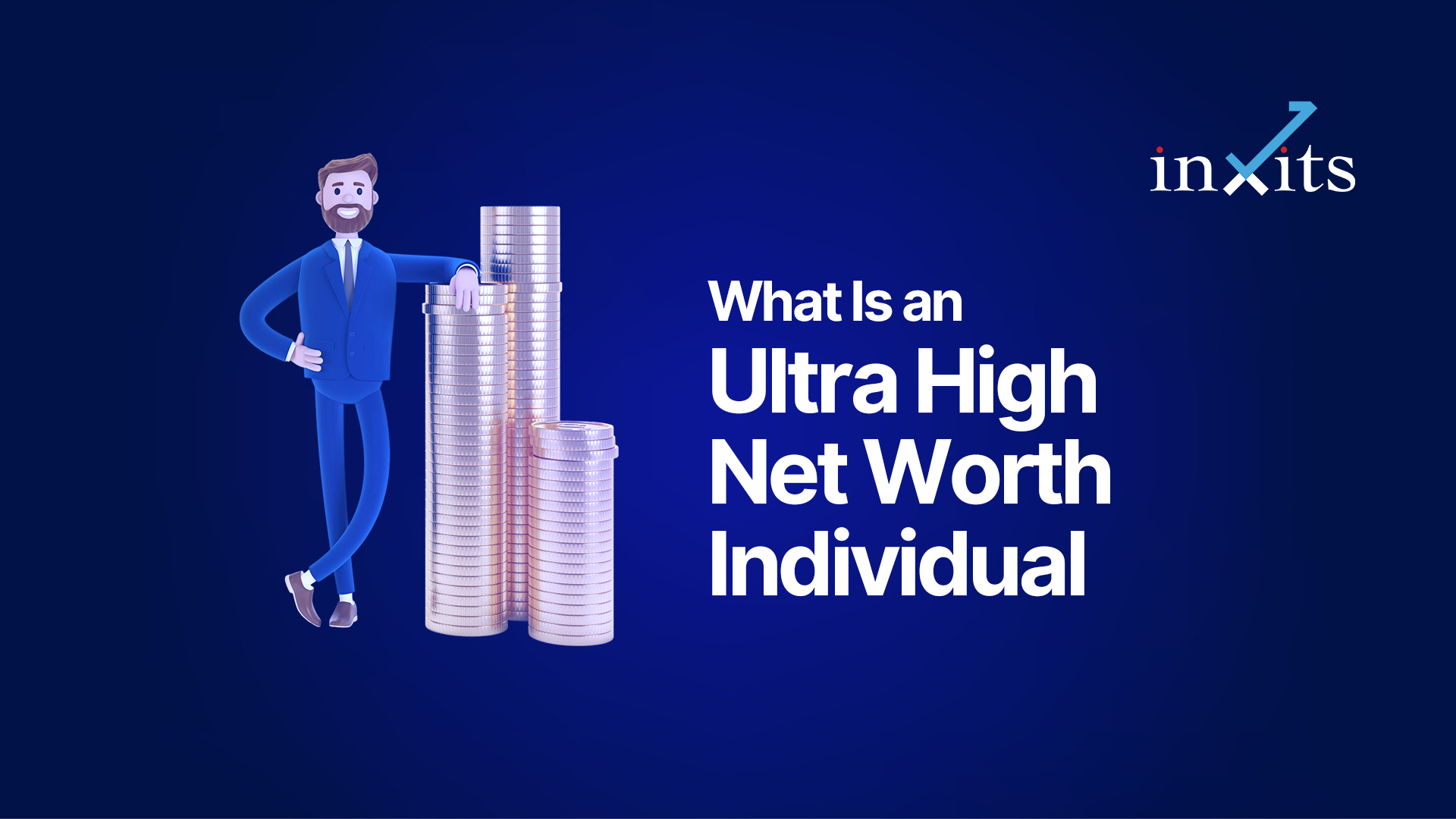
UHNWI stands for Ultra High Net Worth Individual.
The term is commonly used by wealth management firms, private banks, investment platforms, and financial institutions to classify individuals with very high levels of investable assets.
What Is an Ultra High Net Worth Individual in Simple Words?
An ultra high net worth individual is someone who holds extremely large investable wealth beyond standard HNI categories.
The classification usually focuses on financial assets that can be invested rather than assets held purely for personal use.
These may include:
- Equity investments
- Bonds
- Mutual funds
- Business ownership value
- Alternative investments
- Cash holdings
Personal-use property, lifestyle assets, and everyday consumption spending may be treated differently depending on the methodology used.
Why Do Financial Institutions Classify UHNWIs Separately?
Financial needs change significantly as wealth levels rise.
A person investing Rs. 10 lakh usually requires very different planning compared with someone managing:
- Multiple businesses
- International investments
- Family trusts
- Estate planning structures
- Large tax exposure
- Intergenerational wealth transfer
At UHNW levels, wealth management becomes less about selecting individual products and more about organising an entire financial ecosystem.
This is why many affluent households eventually require broader financial planning rather than isolated investment decisions.
Is There One Fixed UHNWI Definition Globally?
No. Different institutions use different thresholds.
Many globally recognised wealth reports – including those published by Knight Frank (Wealth Report) and Capgemini (World Wealth Report) – commonly classify individuals with investable assets above USD 30 million as Ultra High Net Worth Individuals.
These are widely referenced industry classifications, not statutory definitions.
In India, regulatory thresholds are generally set product-by-product through applicable SEBI regulations rather than through a single UHNWI classification.
The exact benchmark may vary depending on:
- Country
- Currency
- Financial institution
- Reporting methodology
In India, private banks and wealth advisory firms may also create internal categories based on portfolio size, planning complexity, and service eligibility.
Difference Between HNI and UHNWI
Many people searching for the “difference between HNI and UHNWI” assume both terms mean the same thing. In practice, the scale of wealth and financial complexity can be significantly different.
How Are HNIs Generally Viewed?
A High Net Worth Individual (HNI) typically has substantial investable assets and may receive premium banking or investment services.
HNI financial planning may involve:
- Portfolio diversification
- Tax-efficient investing
- Insurance planning
- Retirement planning
- Real estate allocation
How Is UHNWI Financial Planning Different?
UHNWIs often face far more layered financial decisions.
These may include:
- Succession planning
- Family office structures
- International taxation
- Business transition planning
- Cross-border investments
- Legacy planning
- Philanthropic structuring
At this level, preserving wealth can become as important as growing it.
HNI vs UHNWI: Key Differences
| Area | HNI | UHNWI |
| Wealth level | High | Extremely high |
| Financial planning complexity | Moderate to high | Very high |
| Investment access | Premium products | Institutional-level opportunities |
| Tax planning | Important | Highly specialised |
| Family wealth structures | Limited | Often extensive |
| Succession planning | Sometimes needed | Usually critical |
| Liquidity management | Important | Strategically managed |
The key point is that HNI vs UHNWI is not only a comparison of wealth figures. It is also about the complexity involved in managing, preserving, transferring, and structuring that wealth.
Investors gradually building larger portfolios may begin with fundamental portfolio diversification before moving toward more advanced wealth structures. For example, understanding how to diversify a mutual fund portfolio can help investors build a more structured approach to portfolio management.
How Do UHNWIs Usually Build Wealth?
There is no single path to becoming an ultra high net worth individual.
Common sources of wealth can include:
- Entrepreneurship
- Business ownership
- Equity market participation
- Inherited family wealth
- Real estate ownership
- Private investments
Why Does Business Ownership Matter So Much?
Many UHNWIs in India derive substantial wealth from privately owned businesses.
For example, a manufacturing business owner in Surat may hold wealth through:
- Company ownership
- Commercial real estate
- Equity investments
- Family assets
In such cases, net worth may appear extremely high while liquidity remains uneven across asset classes.
This is why wealth management discussions at higher levels often focus strongly on liquidity planning and concentration risk.
Why Does Diversification Become More Important at Higher Wealth Levels?
A surprising reality is that wealth concentration risk can increase after financial success.
What Most People Assume
Wealthy individuals automatically have highly diversified portfolios.
What Can Actually Happen
Many affluent individuals may hold large exposure to:
- One business
- One sector
- One asset class
- Concentrated real estate holdings
- A family-owned enterprise
Why Does This Matter?
A large net worth does not automatically reduce financial risk if wealth remains heavily concentrated.
Some affluent investors may therefore consider fixed income solutions alongside growth-oriented investments to address liquidity and capital-preservation objectives, depending on their financial goals and risk profile.
Does UHNWI Status Automatically Mean a Luxury Lifestyle?
Not always.
Some UHNWIs live visibly luxurious lifestyles, while others remain financially conservative despite substantial wealth.
Lifestyle behaviour can depend on:
- Family culture
- Business background
- Personal preferences
- Financial priorities
- Long-term goals
Therefore, UHNWI is primarily a wealth and financial-planning classification, not a lifestyle label.
Financial Challenges Faced by UHNWIs
The public conversation around wealth often highlights luxury, access, and status. The operational side of managing very large wealth receives far less attention.
Succession Planning Becomes Unavoidable
As wealth grows across generations, ownership structures can become more complicated.
Questions may include:
- Who controls family assets?
- How should inheritance be structured?
- Should business ownership be divided equally?
- How should tax exposure be managed?
- How should the next generation participate in financial decisions?
Succession planning therefore becomes an important part of long-term wealth management.
Tax Exposure Can Become More Complex
At UHNWI levels, taxation can become highly layered.
This may involve:
- Capital gains
- International investments
- Trust structures
- Property taxation
- Business income planning
Tax efficiency can therefore become an ongoing part of financial decision-making rather than simply an annual filing activity.
Investment Decision Fatigue Can Become Common
Larger wealth creates more choices and more unsolicited advice.
A UHNWI may regularly receive proposals involving:
- Private equity
- Real estate projects
- Structured products
- Offshore investments
- Alternative assets
Without a clear financial structure, having more choices can make decision-making more difficult.
Invest Smarter.
Grow Confidently.
Your AI-powered SEBI-registered investment advisor — with research you can trust and insights that grow with you.
Download inXits Free
Not sure whether your current wealth structure balances liquidity, growth, taxation, and long-term family priorities properly? A financial advisor at inXits can help review asset allocation, concentration risk, and long-term planning needs.
Key Facts About UHNWI Financial Planning
| Topic | Practical Understanding |
| Main focus | Wealth preservation and structured allocation |
| Common challenge | Asset concentration and succession planning |
| Investment structure | Often diversified across multiple asset classes |
| Liquidity planning | Extremely important |
| Family involvement | Usually significant |
| Financial planning approach | Long-term and multi-generational |
Wealth management at this level can become increasingly interconnected with family governance, taxation, business continuity, succession, and investment management.
Do UHNWIs Invest Differently From Regular Investors?
Often, yes.
UHNWIs may access investment opportunities unavailable to smaller investors.
These may include:
- Private equity
- Alternative investments
- Structured products
- International opportunities
- Private investment structures
However, access does not automatically make an investment suitable.
Risk, liquidity, taxation, time horizon, and financial goals still matter.
Why Do UHNWIs Use Professional Advisors?
At higher wealth levels, financial decisions become increasingly interconnected across:
- Investments
- Taxation
- Liquidity
- Business ownership
- Estate planning
- Succession
- Family wealth
Structured coordination can therefore become more important than evaluating individual financial products in isolation.
Can Someone Become a UHNWI Through Salary Income Alone?
It is possible, though uncommon.
Long tenures in senior executive roles with equity compensation – particularly ESOPs that appreciate significantly – combined with disciplined investing over 20–30 years, have created UHNWI-level wealth for some professionals in India’s technology and financial services sectors.
Entrepreneurship, business ownership, inheritance, and substantial equity ownership can also play significant roles in reaching this level of wealth.
UHNWI Financial Planning in India
In India, UHNWI financial planning can become particularly complex when substantial personal wealth is connected to businesses, real estate, family assets, and financial investments.
For example, an entrepreneur may have significant wealth tied up in a privately held company. Another individual may have substantial wealth through a combination of ESOPs, listed equity, real estate, and financial investments.
In both situations, the headline net worth may not tell the complete story.
The more important questions may include:
- How liquid is the wealth?
- How concentrated is the portfolio?
- How much wealth is tied to a business?
- What happens if the business is sold?
- How should wealth be transferred to the next generation?
- What level of risk is appropriate?
- Is the investment structure aligned with long-term family goals?
This is why UHNWI wealth management in India often requires a coordinated approach rather than a collection of unrelated investment decisions.
Financial Advisor in Ahmedabad for Wealth Planning
For affluent investors in Gujarat, choosing the right financial professional can be an important part of building a structured wealth strategy.
A financial advisor in Ahmedabad can help investors evaluate areas such as:
- Portfolio diversification
- Asset allocation
- Liquidity requirements
- Concentration risk
- Long-term investment goals
- Tax-efficient investment planning
- Succession and intergenerational wealth considerations
For UHNWIs, financial planning is generally not limited to choosing individual investments. It can involve coordinating multiple aspects of wealth to create a more structured long-term strategy.
When Does Wealth Management Need Long-Term Structure?
Ultra high net worth planning is rarely about chasing short-term returns.
At higher wealth levels, the focus usually shifts toward:
- Wealth preservation
- Liquidity management
- Portfolio diversification
- Ownership structures
- Tax efficiency
- Succession planning
- Family governance
- Intergenerational wealth transfer
At inXits, advisors work with affluent investors to review portfolio concentration, liquidity exposure, family financial goals, and long-term allocation strategy within one coordinated framework.
After understanding the difference between HNI and UHNWI, many people still carry one practical question:
Is my current wealth structure prepared for my long-term financial and family goals?
That answer depends on liquidity, ownership patterns, tax exposure, asset allocation, and long-term objectives.
Connect with a SEBI registered financial advisor at inXits for a structured review of your long-term wealth planning approach.
Conclusion
Understanding what is UHNWI becomes easier once the term is separated from public perceptions around luxury and exclusivity.
An Ultra High Net Worth Individual is generally someone managing extremely large investable wealth along with the financial complexity that can come with it.
The difference between HNI and UHNWI is not only about asset size. It can also involve:
- Planning depth
- Tax exposure
- Liquidity requirements
- Succession needs
- Business exposure
- Family wealth coordination
- Intergenerational wealth transfer
As wealth expands, financial management usually becomes more interconnected. Liquidity planning, diversification, inheritance structures, and family governance can become just as important as investment growth.
A thoughtful wealth strategy at higher levels is therefore not only about increasing net worth. It is about creating a financial structure that remains sustainable through changing business, family, and economic circumstances.
If you want clarity on whether your current financial structure aligns with your long-term goals, an investment advisor at inXits can help review your allocation, liquidity, concentration risk, and broader wealth planning framework.
Frequently Asked Questions About UHNWI
What Is UHNWI in Simple Words?
UHNWI stands for Ultra High Net Worth Individual. The term generally refers to individuals with extremely large investable wealth managed across multiple financial assets, businesses, or investment structures.
What Is the Difference Between HNI and UHNWI?
The difference between HNI and UHNWI mainly relates to wealth scale and financial complexity. UHNWIs generally manage much larger portfolios and may require deeper planning around taxation, succession, liquidity, business ownership, and intergenerational wealth transfer.
What Qualifies Someone as an Ultra High Net Worth Individual?
Different institutions use different definitions, but many global wealth reports use USD 30 million in investable assets as a benchmark for UHNWI classification.
This is an industry classification rather than a single universal statutory definition, and the exact threshold can vary between institutions and countries.
What Is the UHNWI Wealth Threshold in India?
There is no single statutory UHNWI threshold applicable across all financial products in India.
Many global wealth reports use USD 30 million in investable assets as an industry benchmark, while Indian regulatory thresholds are generally determined product-by-product under applicable regulations.
Do UHNWIs Invest Differently From Regular Investors?
UHNWIs may have access to broader investment categories such as private equity, alternative investments, structured products, and international opportunities.
However, access does not automatically make an investment suitable. Goals, risk tolerance, liquidity requirements, taxation, and time horizon remain important.
Why Is Diversification Important for UHNWIs?
Many wealthy individuals can have concentrated exposure through businesses, property, or particular sectors.
Diversification can help reduce dependency on a single source of wealth and support more balanced long-term financial planning.
Do UHNWIs Need Succession Planning?
Yes. Succession planning becomes increasingly important at higher wealth levels because family ownership, inheritance structures, business interests, and long-term asset transfers can become financially and emotionally complex.
Can a Salaried Professional Become a UHNWI?
It is possible, though uncommon.
Long tenures in senior executive roles with equity compensation – particularly ESOPs that appreciate significantly – combined with disciplined investing over 20–30 years, have created UHNWI-level wealth for some professionals in India’s technology and financial services sectors.
Why Do UHNWIs Work With Wealth Advisors?
At higher wealth levels, taxation, liquidity, business exposure, investments, estate planning, and succession can become interconnected.
Professional advisors can help coordinate these financial decisions within a broader long-term framework.
Does UHNWI Status Always Mean a Luxury Lifestyle?
Not necessarily.
Some UHNWIs maintain relatively conservative lifestyles despite substantial wealth. Spending habits can depend on family culture, business background, personal preferences, and financial priorities.
Are All UHNWIs Financially Stress-Free?
No.
Significant wealth can create financial complexity, family responsibilities, investment decisions, succession challenges, and decision pressure.
Managing substantial wealth often requires careful coordination rather than simply accumulating more assets.
Disclaimer
Investments in securities markets are subject to market risks. Read all related documents carefully before investing.
inXits is a SEBI-registered investment adviser (Registration No. INA000020369). This article is for educational purposes only and does not constitute personalised investment advice.
Registration granted by SEBI, membership of BSE, and certification from NISM in no way guarantee performance of the intermediary or provide any assurance of returns to investors.

Himani Barot, CFP, is a Principal Officer at inXits with 4+ years of experience in portfolio management, investment advisory, and comprehensive financial planning. As a Certified Financial Planner, she helps clients navigate complex financial goals with structured, personalised strategies.