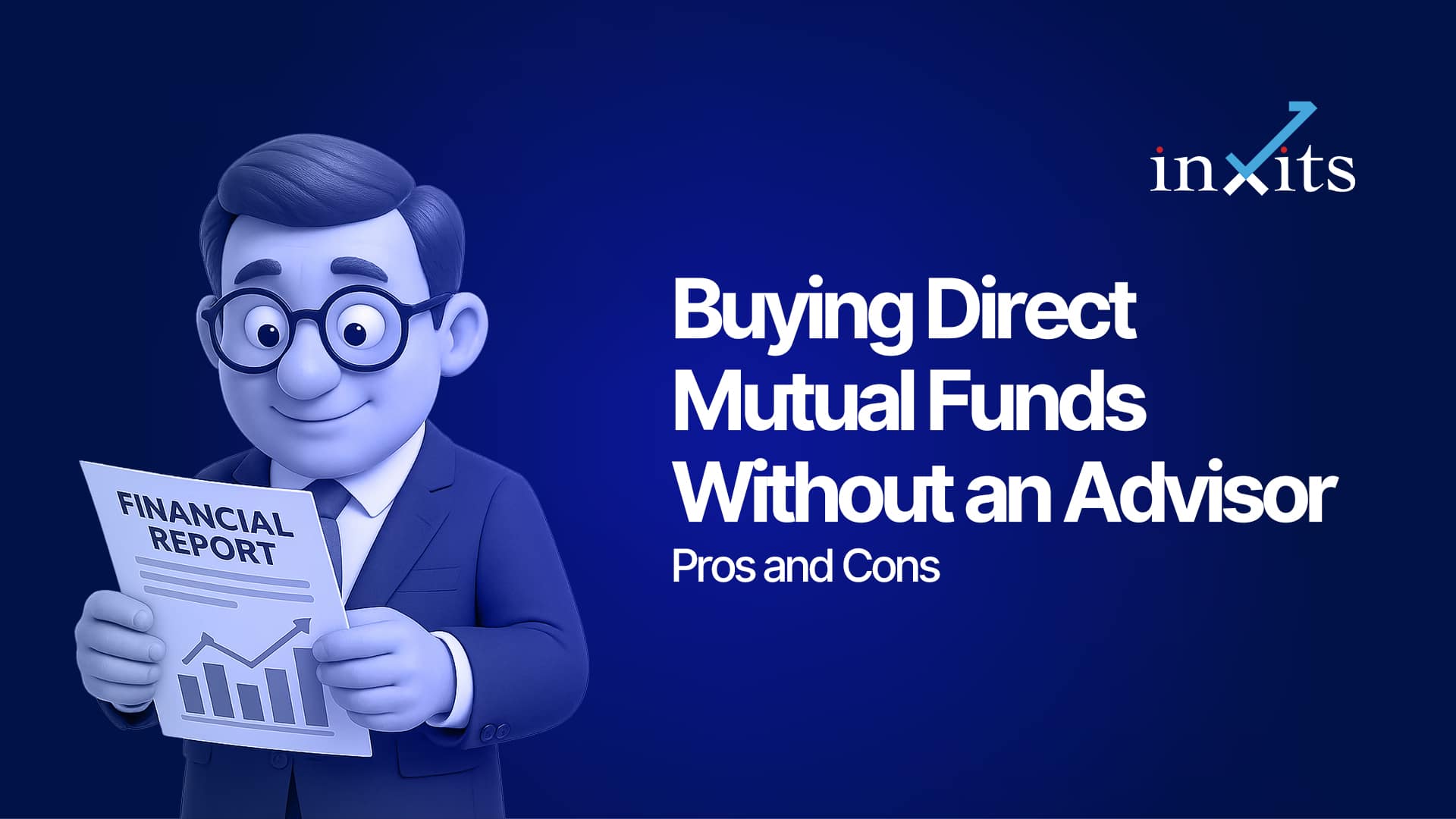
Direct mutual funds allow investors to invest directly with the fund house without involving a distributor or advisor. Over the years, many investors in India have shown interest in buying direct mutual funds on their own, mainly because of lower costs.
While investing without an advisor can work well for some investors, it may not suit everyone. Understanding the advantages and drawbacks of buying direct mutual funds without professional guidance is important before making this choice.
This blog explains the pros and cons clearly so investors can decide whether managing direct mutual funds independently matches their comfort level and experience.
What Does Buying Direct Mutual Funds Without an Advisor Mean
Buying direct mutual funds without an advisor means:
- You choose the mutual fund schemes yourself
- You invest directly through the AMC website or an online platform
- You do not receive ongoing advisory or distributor support
- You are fully responsible for fund selection, monitoring, and review
The underlying investments remain the same as regular plans. The difference lies in who makes decisions and manages the process.
Why Investors Choose Direct Mutual Funds Without an Advisor
Many investors prefer this approach because:
- Expense ratios are lower
- There is no distributor commission
- They want full control over investment decisions
- They are comfortable researching mutual funds on their own
However, lower cost should not be the only reason for choosing this route.
Also read: Direct vs Regular Mutual Funds
Pros of Buying Direct Mutual Funds Without an Advisor
Lower Expense Ratio
Direct mutual funds do not include distributor commissions, which reduces overall costs. Over long periods, this cost difference can slightly improve net returns.
Full Control Over Decisions
Investors make all decisions related to fund selection, SIP amounts, switches, and redemptions.
Transparency
You know exactly where your money is invested and why each fund is part of your portfolio.
Flexibility
Investors can change funds or allocation without depending on an intermediary.
Cons of Buying Direct Mutual Funds Without an Advisor
No Professional Guidance
Without an advisor, investors must understand:
- Fund categories
- Risk levels
- Asset allocation
- Time horizon
Lack of clarity can lead to poor fund selection.
Higher Behavioural Risk
During market volatility, investors may panic and make emotional decisions such as stopping SIPs or exiting at the wrong time.
Portfolio Imbalance
Without guidance, investors may:
- Overinvest in equity during market highs
- Ignore debt or hybrid funds
- Build overlapping portfolios
Time and Effort Required
Managing direct mutual funds independently requires regular learning, tracking, and reviewing.
Common Mistakes Investors Make Without an Advisor
- Choosing funds based only on recent returns
- Ignoring risk comfort
- Overtracking NAV daily
- Failing to rebalance portfolios
- Treating direct plans as “set and forget”
These mistakes are more common when investors invest without structured guidance.
Who Can Consider Buying Direct Mutual Funds Without an Advisor
This approach may suit investors who:
- Understand mutual fund basics
- Are comfortable assessing risk
- Have long-term investing discipline
- Can review portfolios periodically
- Do not react emotionally to market movement
It may not suit beginners or investors who feel uncertain during market ups and downs.
Direct Mutual Funds Without Advisor vs With Guidance
| Aspect | Without Advisor | With Guidance |
| Expense ratio | Lower | Slightly higher |
| Decision making | Self-managed | Supported |
| Behavioural support | Not available | Available |
| Time involvement | Higher | Lower |
| Suitability | Experienced investors | Beginners and long-term planners |
This comparison highlights that the choice is about comfort and discipline, not just cost.
When Limited Guidance Can Be Helpful
Some investors want to invest through direct plans but still seek clarity on:
- Asset allocation
- Fund selection
- Portfolio review
- Risk alignment
In such cases, educational guidance can help bridge the gap between full self-management and distributor-led investing.
This is where platforms like inXits can be useful, as they focus on helping investors understand mutual fund choices and portfolio structure, while allowing them to stay informed and in control of their decisions.
How to Decide If This Approach Is Right for You
Ask yourself:
- Can I choose funds without relying on recommendations
- Am I comfortable during market corrections
- Do I review my portfolio calmly
- Do I understand risk and time horizon clearly
If the answer to most of these is yes, buying direct mutual funds without an advisor may suit you.
If not, some level of guidance can help avoid long-term mistakes.
Conclusion
Buying direct mutual funds without an advisor offers cost benefits and control, but it also places full responsibility on the investor. The success of this approach depends more on discipline, understanding, and behaviour than on expense ratios.
There is no single right choice for everyone. Some investors do well managing investments independently, while others benefit from structured guidance. Investors who want clarity while managing their own investments may consider educational support from platforms such as inXits, which focus on decision clarity rather than product pushing.
Choosing the right approach helps ensure you stay invested with confidence over the long term.
FAQs
1. Is it safe to buy direct mutual funds without an advisor
It can be suitable for informed and disciplined investors, but it requires understanding and regular review.
2. Do direct mutual funds give guaranteed higher returns
No. Returns are market-linked. Lower costs may slightly improve net returns over time.
3. Are direct mutual funds risky without an advisor
Market risk remains the same. The main risk is poor decision-making.
4. Can beginners buy direct mutual funds without guidance
Beginners can, but guidance is often helpful until confidence and understanding improve.
5. Can I take advice even if I invest in direct plans
Yes. Many investors seek educational guidance while managing direct investments themselves.
Mandatory SEBI Warning & Disclaimer
Investment in securities market are subject to market risks. Read all the related documents carefully before investing.
Registration granted by SEBI, membership of BSE and certification from NISM in no way guarantee performance of the intermediary or provide any assurance of returns to investors.
The securities quoted above are for illustration only and are not recommendatory.