You need funds now. If you’re an investor in India, you likely have two options in front of you: a personal loan or a loan against mutual funds (LAMF). Here’s how to decide.
Both options seem straightforward at first. One is quick and unsecured. The other uses your portfolio as collateral. But the real difference is not just in approval speed or paperwork. It sits deeper, in cost, flexibility, and how each choice affects your long-term financial path.
If you’ve ever wondered which is the cheapest loan option or the more sensible one for your situation, the answer is not one-size-fits-all. But there is a clear way to think about it.
On this page
Key Takeaways: Mutual Fund Loan vs Personal Loan
- Mutual fund loan vs personal loan differs mainly in cost and structure
- LAMF interest rates are usually lower due to collateral
- Personal loans offer simplicity but at a higher cost
- Risk and flexibility vary significantly between the two
- The right choice depends on time horizon and repayment clarity
What is the difference between a mutual fund loan and a personal loan?
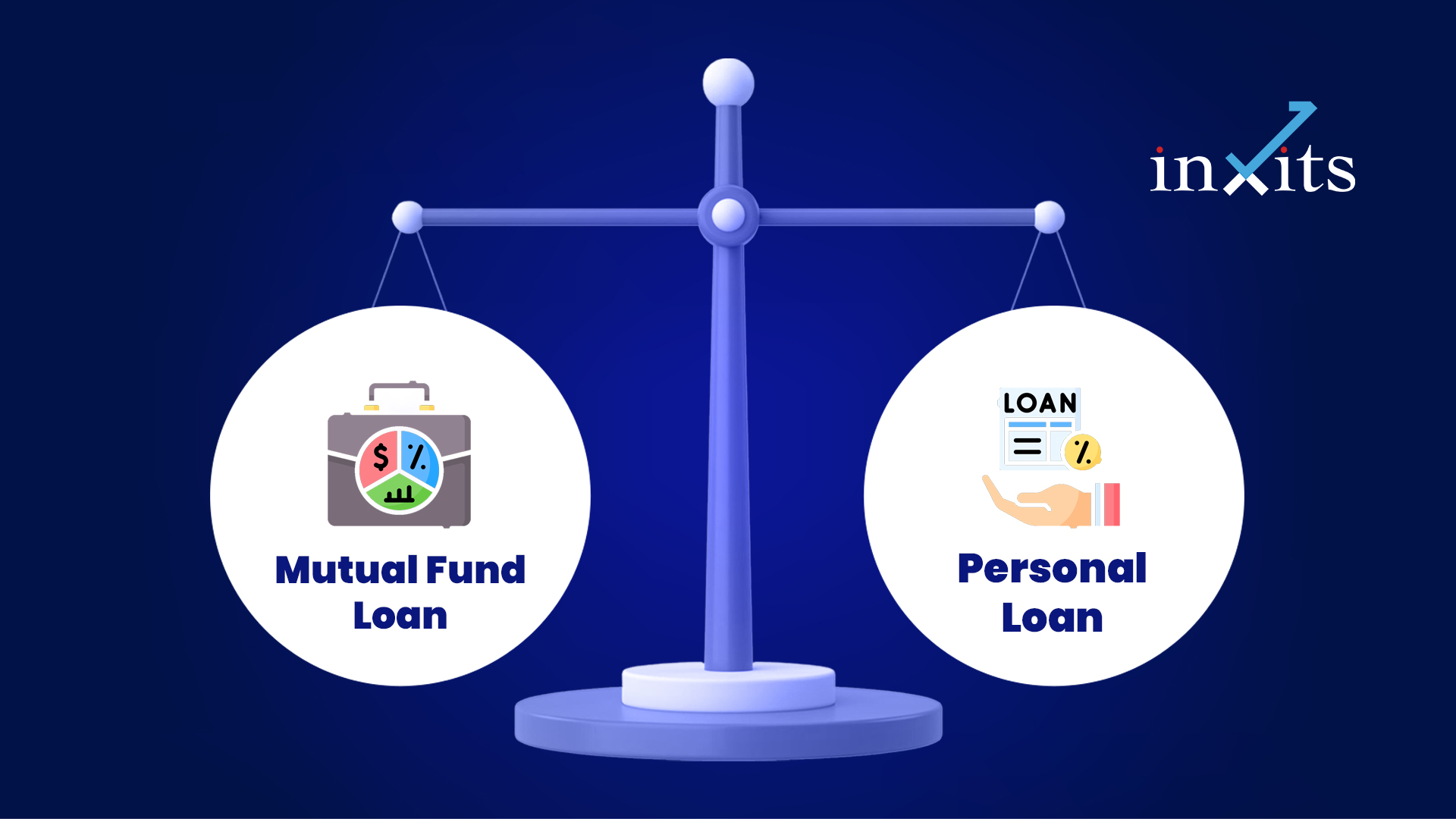
At the simplest level, this is a comparison between a secured and an unsecured loan.
| Feature | Loan Against Mutual Funds | Personal Loan |
| Type | Secured | Unsecured |
| Collateral | Mutual funds pledged | No collateral |
| Interest rates | Lower | Higher |
| Approval | Based on portfolio value | Based on income and credit |
| Risk | Market-linked | No market risk |
| Flexibility | Limited due to pledge | Higher flexibility |
A mutual fund pledge loan works by using your investments as collateral. A personal loan relies entirely on your income, credit score, and repayment capacity.
This structural difference is what drives most of the cost and risk variations.
Why do LAMF interest rates differ from personal loan rates?
Assumption vs Reality
What most investors assume:
“All loans are similar. The only difference is how fast I get the money.”
What actually happens:
As of 2025–26, LAMF interest rates in India typically range from 9% to 13% p.a., while personal loan rates from major banks and NBFCs generally range between 12% and 24% p.a., depending on your credit profile, lender policies, and repayment tenure.
Why this matters:
Over time, even a small difference in interest rates can significantly change the total cost of borrowing. Choosing the wrong structure for convenience can quietly increase your financial burden.
A real-life scenario: Which option would you choose?
Consider Amit, 38, a salaried professional in Mumbai.
He needs ₹4 lakh for a short-term expense. He evaluates two options:
- Personal loan at a higher interest rate
- Loan against his ₹10 lakh mutual fund portfolio
If Amit chooses a personal loan:
- No need to touch investments
- Higher EMI due to interest
If he chooses a mutual fund loan:
- Lower interest cost
- His investments stay invested
- But he must monitor market fluctuations
Amit chooses the second option because his need is temporary, and he has a clear repayment plan.
This example highlights an important point: the decision is not just about rates, but about context.
Which is the cheapest loan option in practical terms?
The idea of the cheapest loan option depends on more than just interest rates.
Cost comparison factors
- Interest rate
LAMF loans generally have lower rates compared to personal loans - Tenure
Longer tenure increases total cost, regardless of loan type - Hidden costs
Processing fees, penalties, and charges can differ - Opportunity cost
Redeeming investments has a cost, but pledging them has restrictions
In most short-term scenarios, a mutual fund loan vs personal loan comparison often leans towards LAMF being more cost-efficient. However, this only holds if the loan is managed carefully.
What are the risks in each option?
This is where the decision becomes less obvious.
Risks in loan against mutual funds
- Market fluctuations can reduce collateral value
- You may face margin calls
- Pledged funds cannot be accessed freely
Risks in personal loans
- Higher interest burden
- Fixed EMI pressure regardless of financial situation
- No flexibility linked to asset value
Many investors feel more comfortable with personal loans because they are simpler. That feeling is valid. Simplicity often reduces perceived risk, even if the cost is higher.
Invest Smarter.
Grow Confidently.
Your AI-powered SEBI-registered investment advisor — with research you can trust and insights that grow with you.
Download inXits Free
When should you choose a mutual fund loan over a personal loan?
You may consider a mutual fund loan vs personal loan comparison in favor of LAMF when:
- The requirement is short-term
- You have a stable mutual fund portfolio
- You want to avoid redeeming investments
- You are confident about repayment
It may not be suitable if:
- Markets are highly volatile
- You are unsure about repayment timelines
- You prefer fixed, predictable structures
Have a specific question about which option fits your situation better? You can discuss your borrowing options with an investment advisor — a conversation with a qualified advisor, no forms, no wait.
How inXits helps you evaluate loan decisions
Choosing between a personal loan and a loan against mutual funds can feel unclear without a structured comparison. At inXits, advisors work with investors to evaluate borrowing decisions in the context of their portfolio, cash flow, and long-term goals. If this comparison feels confusing, a conversation with a qualified personal CFO can help bring clarity to what actually fits your situation.
Conclusion
The comparison between a mutual fund loan vs personal loan is not just about interest rates. It is about structure, flexibility, and how each choice impacts your financial journey.
A mutual fund loan may offer lower costs and preserve your investments, but it comes with market-linked considerations. A personal loan offers simplicity and predictability, but often at a higher cost.
Choosing between the two requires clarity, not urgency. If you are evaluating your options, taking the time to assess your situation carefully can make a meaningful difference. You can also review your loan against mutual funds options with an advisor to align the decision with your long-term financial plan.
FAQ
What is the difference between mutual fund loan vs personal loan?
A mutual fund loan is secured using your investments, while a personal loan is unsecured and based on income and credit profile.
Which is cheaper: mutual fund loan or personal loan?
In most cases, LAMF loans have lower interest rates, making them more cost-efficient for short-term borrowing.
What are typical LAMF interest rates in India?
LAMF interest rates are generally lower than personal loans because the loan is backed by collateral.
Is a personal loan safer than a mutual fund loan?
A personal loan avoids market-linked risk, but it comes with higher interest costs.
Can I lose my mutual funds in a pledge loan?
If you fail to repay and do not meet margin requirements, the lender may liquidate pledged units.
When should I choose a mutual fund pledge loan?
It is suitable for short-term needs when you want to avoid redeeming investments.
Does a personal loan affect credit score more?
Both loans impact credit score if repayments are missed, but approval for personal loans depends more heavily on credit history.
How is loan against mutual funds regulated in India?
SEBI governs mutual fund operations, while RBI regulates lending institutions offering these loans.
Disclaimer
Investments in securities markets are subject to market risks. Read all related documents carefully before investing.
inXits is a SEBI-registered investment adviser (Registration No. INA000020369). This article is for educational purposes only and does not constitute personalised investment advice.
Registration granted by SEBI, membership of BSE, and certification from NISM in no way guarantee performance of the intermediary or provide any assurance of returns to investors.

Himani Barot, CFP, is a Principal Officer at inXits with 4+ years of experience in portfolio management, investment advisory, and comprehensive financial planning. As a Certified Financial Planner, she helps clients navigate complex financial goals with structured, personalised strategies.