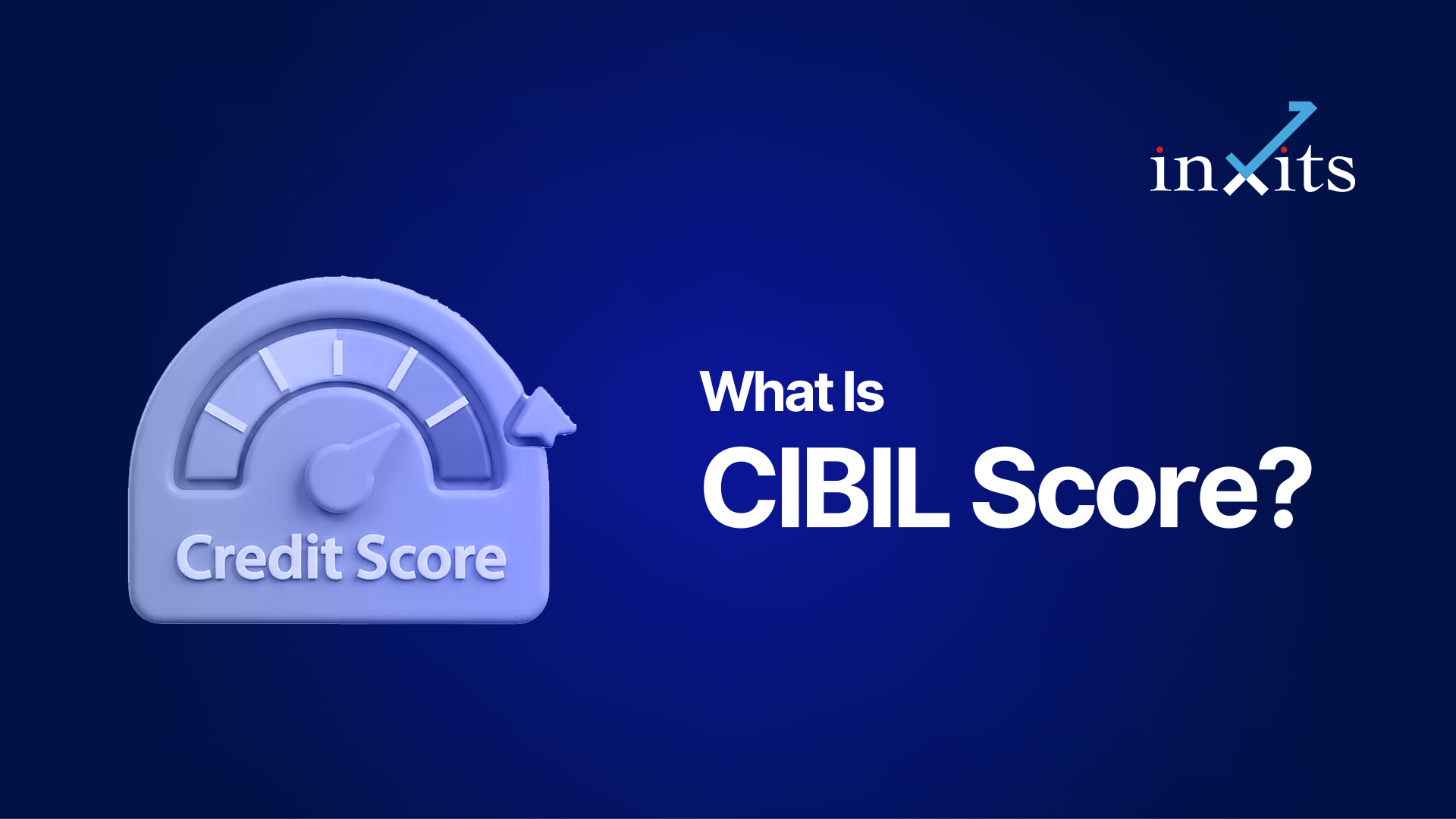
Applying for a home loan, personal loan or credit card can feel confusing when one three-digit number suddenly becomes important. For many borrowers, the concern starts with a simple question: what is CIBIL score, and why does a lender care about it?
A CIBIL score summarises your credit history. It reflects how you have handled loans and credit cards, including repayment behaviour, credit utilisation and credit enquiries. A lender may use it as one part of its credit assessment, but the score alone does not decide whether a loan will be approved.
The confusion usually grows when a score falls unexpectedly. A missed payment, high card utilisation, several recent applications or inaccurate information in a credit report can all affect how your credit profile is viewed.
Understanding how the CIBIL score works makes the process easier. Instead of treating the number as a mysterious rating, you can look at the underlying credit behaviour that produced it.
On this page
Key Takeaways: CIBIL Score
A CIBIL score is a three-digit summary of an individual’s credit history and ranges from 300 to 900.
Payment history, credit utilisation, age of credit and credit enquiries are major factors affecting the score.
A higher CIBIL score can improve the chances of a loan or credit card application being considered favourably, but lenders make their own lending decisions.
A CIBIL report contains detailed information about credit accounts, repayment history and enquiries, which helps explain the score.
What Is CIBIL Score and Why Does It Matter?
A CIBIL score is a three-digit numerical summary of your credit history, ranging from 300 to 900. TransUnion CIBIL calculates the score using information in the Accounts and Enquiries sections of the CIBIL Report. A higher score generally indicates a stronger repayment record and can improve the chances of loan or credit card approval.
TransUnion CIBIL is a credit information company that collects credit-related information supplied by banks and financial institutions. Its CIBIL Report records details such as active and inactive credit accounts, payment history and lender enquiries.
The score therefore reflects credit behaviour, not your overall financial position. Your savings, investments and fixed deposits do not form part of the CIBIL Report used to calculate the score.
For example, someone may have a high salary and substantial savings but still have a weak credit profile if they repeatedly miss loan EMIs or credit card payments. Another person with a modest income may have a stronger credit history if they manage existing credit responsibly.
A useful distinction is simple: CIBIL score measures credit behaviour, not wealth.
What Is a Good CIBIL Score?
A CIBIL score above 700 is generally considered good, according to CIBIL’s consumer guidance. The score itself ranges from 300 to 900, and lenders may have their own internal policies for assessing applications.
There is no universal score at which every lender must approve a loan. A lender can also consider income, existing obligations, employment details, loan amount, repayment capacity and its own credit policy.
Therefore, a CIBIL score should be viewed as one part of a wider lending assessment rather than an approval guarantee.
How Is CIBIL Score Calculated?
The exact CIBIL score calculation uses a proprietary scoring algorithm, so TransUnion CIBIL does not publish a simple formula that lets consumers calculate their exact score manually. However, CIBIL identifies payment history, credit utilisation, age of credit and enquiries as key factors influencing the score.
The calculation can therefore be understood through the underlying credit behaviour:
- Payment history: Checks how consistently credit obligations have been paid.
- Credit utilisation: Looks at how much available revolving credit is being used.
- Age of credit: Considers how long credit accounts have existed.
- Credit enquiries: Records lender checks made when new credit is requested.
- Credit profile: The information across accounts and enquiries forms the broader credit history used in scoring.
CIBIL also notes that factors such as outstanding balances, transaction history, repayment amounts, new accounts and account closures can affect the score.
The exact weight assigned to each factor should not be assumed from generic online percentage charts. CIBIL’s scoring model is proprietary, so a table claiming that payment history is exactly a particular percentage of the score should not be treated as an official CIBIL formula.
How Does Payment History Affect CIBIL Score?
Payment history records whether loan EMIs and credit card dues are paid on time and in full. Late payments, missed payments and delinquencies can negatively affect the CIBIL score because they indicate difficulties in meeting credit obligations.
Payment behaviour also provides lenders with a record of how an individual has handled credit over time. A single missed payment does not create a universal outcome for every borrower, because the effect depends on the wider credit profile and the information reported.
However, repeated delays can create a more persistent problem.
For instance, a borrower who pays a credit card bill after the due date may think that a small delay is harmless because the amount was eventually paid. From a credit-reporting perspective, the repayment record can still matter.
A pattern advisors see often is that borrowers focus on the size of the EMI but overlook the consistency of repayment. Credit history is built through repeated behaviour, not through one large transaction.
How Does Credit Utilisation Affect CIBIL Score?
Credit utilisation refers to the amount of available revolving credit being used, particularly on credit cards. Higher utilisation can suggest that a borrower is relying heavily on available credit and may negatively affect the credit profile.
For example, suppose a credit card has an available limit of Rs. 2 lakh and the outstanding balance is Rs. 1.20 lakh. The utilisation is 60%. A borrower with the same limit and a Rs. 30,000 balance has a 15% utilisation level.
The calculation is straightforward:
Credit utilisation = Credit card balance ÷ Total available credit × 100
The important point is that utilisation relates to available revolving credit. It is not the same as the percentage of a home loan or personal loan that remains outstanding.
CIBIL advises consumers to keep credit balances under control. However, there is no need to treat one specific utilisation percentage found on social media as an official CIBIL scoring threshold.
If you use a credit card frequently, paying the outstanding amount on time and keeping balances manageable can help maintain a healthier credit profile.
Why Does Credit History Age Matter?
The age of credit refers to how long your existing credit accounts have been active. CIBIL identifies the length of time you have held credit accounts as one of the factors affecting the score.
A longer credit history gives lenders more information about past borrowing and repayment behaviour. Someone with several years of well-managed credit history has a longer record for assessment than someone who has recently entered the credit system.
That does not mean you should keep unnecessary loans or credit cards simply to increase the age of your credit history. Closing or opening accounts can affect the overall profile, and the appropriate decision depends on the purpose and terms of each account.
For a person who has just started using credit, time itself becomes part of the process. There is no legitimate shortcut that can create several years of repayment history immediately.
Why Does a New Credit Application Affect CIBIL Score?
When you apply for a loan or credit card, the lender generally checks your credit report. CIBIL records these lender checks as enquiries. Frequent applications within a short period can have a negative effect on the score because they may indicate increased demand for credit.
Not every enquiry has the same context. A lender’s check connected with an actual credit application is different from checking your own credit report.
CIBIL states that its consumer report includes lender enquiries made for loan and credit card applications during the previous 36 months.
Therefore, applying for several credit cards or loans within a short period simply to compare offers can create multiple lender enquiries.
What Does a CIBIL Report Contain?
A CIBIL Report is a record of an individual’s credit history received from banks and financial institutions. It includes personal information, credit accounts, payment history and enquiry information.
A typical report can contain:
Invest Smarter.
Grow Confidently.
Your AI-powered SEBI-registered investment advisor — with research you can trust and insights that grow with you.
Download inXits Free
| Report section | What it shows |
| CIBIL Score | Three-digit score ranging from 300 to 900 |
| Personal information | Details such as name, date of birth and identification information |
| Contact information | Reported addresses and contact details |
| Account information | Loans, credit cards, account status, balances and payment records |
| Enquiry information | Lender checks associated with credit applications |
The report is useful because the score alone does not tell you why your credit profile looks the way it does.
For example, a lower score may become easier to understand once you see an overdue account, high card balance or several recent enquiries in the report.
CIBIL also allows consumers to raise disputes where they identify information that does not belong to them or appears incorrect.
What Can Lower Your CIBIL Score?
A CIBIL score can be affected by several credit behaviours rather than one isolated factor. Late payments, high credit utilisation, frequent new-credit enquiries and changes in credit accounts can all influence the score.
Common issues include:
- Missing loan EMI or credit card payments.
- Carrying high credit card balances.
- Applying for several new credit facilities within a short period.
- Maintaining a history with repeated repayment delays.
- Having incorrect or disputed information in the credit report.
- Opening or closing several credit accounts without considering the effect on the overall profile.
The impact can vary between individuals because the CIBIL score considers the broader information in the credit report.
For that reason, trying to repair a score by focusing on one factor alone can miss the actual issue.
How Can You Maintain a Healthy CIBIL Score?
Maintaining a healthy CIBIL score mainly involves consistent credit management. There is no instant method that can replace a reliable repayment history, and CIBIL itself recommends timely payments, controlled balances and responsible use of credit.
A practical approach is:
- Pay EMIs and credit card dues on time.
- Monitor credit card balances and available limits.
- Limit unnecessary credit applications.
- Review your CIBIL Report periodically.
- Check that loan accounts show accurate repayment information.
- Raise a dispute if you identify incorrect information.
- Keep existing credit accounts organised and manageable.
The goal is not to chase a particular number every month. The more useful approach is to maintain credit behaviour that remains consistent over time.
CIBIL provides one free CIBIL Score and Report per calendar year through its website or mobile application. If a person receives a free report on or after January 1, 2026, the next free report becomes available on January 1, 2027.
What Happens If Your CIBIL Score Is NA or NH?
An NA or NH CIBIL score does not automatically mean that you have a poor credit profile. CIBIL explains that these indicators can appear when a person has little or no credit history, has not had recent credit activity, or has certain limited types of credit exposure.
For a young salaried person who has never borrowed, an NA or NH result can simply mean that there is not enough credit history to generate a conventional score.
Some lenders may still have policies that make lending more difficult for applicants without an established credit history. Therefore, having no score and having a low score are two different situations.
The first reflects limited information. The second reflects information about existing credit behaviour.
Does CIBIL Score Decide Whether a Loan Gets Approved?
No. CIBIL does not approve or reject loans. Lenders use the CIBIL score and credit report as part of their own credit assessment, along with other information and internal lending policies.
A high score can improve the chances of an application being considered favourably, but it does not guarantee approval. Similarly, a lower score does not create one universal outcome across every lender.
For example, a lender may consider income stability, existing EMIs, loan-to-income levels, employment profile, collateral and its own underwriting rules alongside the credit score.
That is why the right question is not simply, “How can I reach 900?” A better question is, “What does my credit report say about how I currently manage borrowed money?”
How CIBIL Score Differs From Your Overall Financial Health
CIBIL score focuses on credit behaviour. It does not measure investments, savings, insurance coverage, emergency reserves or overall net worth. CIBIL itself states that savings, investments and fixed deposits are not part of the credit report used for the score.
Someone can therefore have a strong financial position but a limited CIBIL history. The reverse can also happen: a person may have a high score while carrying substantial financial commitments.
That distinction matters when making financial decisions. Creditworthiness is only one part of financial planning.
If borrowing decisions are connected with investments or liquidity needs, it is also useful to understand the difference between secured and unsecured borrowing. For example, a loan against mutual funds uses eligible mutual fund investments as security, subject to the lender’s terms.
How inXits Can Help You Understand Credit-Related Financial Decisions
A CIBIL score is one piece of a person’s financial picture. At inXits, financial planning discussions can consider credit obligations alongside investments, cash flow, liquidity needs and longer-term goals rather than looking at a credit score in isolation.
For example, before taking additional borrowing, an investor may need to understand how an existing EMI affects monthly cash flow and whether the proposed borrowing fits the wider financial plan.
The question is not only whether a lender may approve the loan. It is also whether the borrowing fits the person’s existing obligations and financial priorities.
A structured financial review can help organise these questions before a major borrowing decision is made. If your borrowing decisions are part of a wider financial plan, you can speak with a financial advisor about how credit obligations fit into your overall finances.
Conclusion
A CIBIL score is a three-digit summary of your credit history that ranges from 300 to 900. It is calculated using information from your credit history, including accounts and enquiries, while factors such as payment history, credit utilisation, age of credit and new enquiries influence the score.
The most useful way to understand your score is to look beyond the number. A score tells you part of the story, while the CIBIL Report shows the accounts, repayment records and enquiries behind that number.
Timely repayments, controlled credit utilisation, limited unnecessary applications and regular report checks can help you maintain a healthy credit profile. At the same time, a high score does not guarantee a loan because each lender applies its own assessment criteria.
Understanding what is CIBIL score and how it is calculated can therefore help you make more informed borrowing decisions. If you need to connect credit commitments with your wider financial goals, a financial advisor in Ahmedabad can help you review the broader financial picture.
Frequently Asked Questions About CIBIL Score
What is CIBIL score in simple terms?
A CIBIL score is a three-digit summary of your credit history, ranging from 300 to 900. It reflects credit behaviour reported by lenders, including repayment patterns and credit enquiries. Lenders may use it while assessing loans and credit cards, but the score does not independently decide whether an application will be approved.
How is CIBIL score calculated?
CIBIL score is calculated using a proprietary scoring algorithm based on information in the Accounts and Enquiries sections of the CIBIL Report. CIBIL identifies payment history, credit utilisation, age of credit and enquiries as key factors. Because the exact algorithm is proprietary, consumers cannot calculate their precise score using a published percentage formula.
What is a good CIBIL score in India?
CIBIL states that a score above 700 is generally considered good. The consumer score ranges from 300 to 900. However, lenders can use their own credit policies and may consider income, existing obligations, employment, loan amount and other information before making a lending decision. Therefore, a particular score does not guarantee approval.
How much does one missed EMI affect CIBIL score?
There is no universal number of points that CIBIL deducts for one missed EMI. The effect depends on the repayment information reported by the lender and the borrower’s wider credit history. Late payments, missed payments and delinquencies can negatively affect the score, so consistent repayment is important for maintaining a healthy credit profile.
Does checking my own CIBIL score reduce it?
Checking your own CIBIL score is different from a lender making an enquiry when you apply for credit. CIBIL records lender enquiries associated with loan and credit card applications. Frequent new-credit applications can negatively affect the score, while checking your own report helps you monitor the information recorded about your credit history.
How does credit card utilisation affect CIBIL score?
Credit card utilisation refers to the amount of available revolving credit being used. Higher utilisation can suggest greater reliance on available credit and may negatively affect the credit profile. CIBIL recommends keeping balances under control. However, there is no single publicly stated utilisation percentage that guarantees a particular CIBIL score.
Can a person have a CIBIL score without taking a loan?
A person may have limited or no conventional CIBIL score if there is insufficient credit history. CIBIL uses NA or NH indicators in certain situations, including when there is no credit history or insufficient recent credit activity. Some lenders may have policies that make obtaining credit more difficult without an established credit track record.
How often should I check my CIBIL Report?
Checking your CIBIL Report periodically can help you identify incorrect account information, unfamiliar enquiries or repayment records that need attention. CIBIL currently provides one free CIBIL Score and Report per calendar year through its website or mobile application. The report can also help you understand the information behind your score.
Can I improve my CIBIL score quickly?
There is no reliable instant method for changing a CIBIL score. Improvement generally comes from consistent credit behaviour, such as timely payments, controlled credit utilisation and avoiding unnecessary new-credit applications. The time required depends on the issue affecting the credit profile and the information subsequently reported by lenders.
Does a high CIBIL score guarantee loan approval?
No. CIBIL does not approve or reject loans. A lender may use the CIBIL score and report as part of its assessment, but it can also consider income, existing obligations, employment, loan amount, collateral and internal lending criteria. Therefore, a high CIBIL score can support an application but cannot guarantee approval.
Disclaimer Investments in securities markets are subject to market risks. Read all related documents carefully before investing. inXits is a SEBI-registered investment adviser (Registration No. INA000020369). This article is for educational purposes only and does not constitute personalised investment advice. Registration granted by SEBI, membership of BSE, and certification from NISM in no way guarantee performance of the intermediary or provide any assurance of returns to investors.

Himani Barot, CFP, is a Principal Officer at inXits with 4+ years of experience in portfolio management, investment advisory, and comprehensive financial planning. As a Certified Financial Planner, she helps clients navigate complex financial goals with structured, personalised strategies.