How a Mutual Fund Advisor Helps in Long-Term Planning

Many investors start their financial journey with good intentions. They want to save regularly, invest wisely, and build stability over time. However, as years pass, financial decisions often become scattered. New goals emerge, income changes, markets fluctuate, and personal responsibilities evolve.

The challenge is rarely about motivation. Instead, it is about maintaining structure and clarity over the long term. Without a documented approach, investors may react to short-term noise, delay reviews, or lose alignment with goals.

This is where understanding the role of a mutual fund advisor becomes important. Not as a decision-maker, but as a guide who helps investors frame long-term planning in a structured and disciplined way.

This blog explains how a mutual fund advisor helps in long-term planning, purely from an educational and non-advisory perspective.

What Is Long-Term Financial Planning?

Long-term financial planning is the process of aligning financial resources with future goals over an extended time horizon. These goals may include retirement, children’s education, home ownership, or wealth preservation.

At its core, long-term planning focuses on:

  • Clearly defined financial goals
  • Time horizon associated with each goal
  • Risk tolerance and capacity
  • Asset allocation across different instruments
  • Periodic review and documentation

Long-term planning is not static. It evolves as personal circumstances and financial markets change. Therefore, having a structured process becomes more important than individual product selection.

Who Is a Mutual Fund Advisor?

A mutual fund advisor is a registered intermediary who provides guidance on mutual fund-related planning and portfolio structuring, within regulatory frameworks.

From an educational standpoint, the advisor’s role is not limited to selecting funds. Instead, it often involves helping investors understand how mutual funds fit within a broader financial plan.

A mutual fund advisor typically supports investors in areas such as:

  • Understanding different mutual fund categories
  • Aligning investments with long-term goals
  • Explaining risk and volatility
  • Structuring portfolios across asset classes
  • Reviewing portfolios periodically

The exact scope depends on the advisory model and regulatory permissions.

How a Mutual Fund Advisor Helps in Long-Term Planning

Understanding how a mutual fund advisor helps in long-term planning requires looking at the process rather than outcomes.

Helping Define Financial Goals Clearly

Long-term planning begins with clarity around goals.

A mutual fund advisor often helps investors articulate goals in specific terms, such as:

  • Purpose of the goal
  • Time horizon
  • Approximate financial requirement

For example, instead of a broad goal like “retirement,” the planning discussion may focus on expected retirement age, lifestyle assumptions, and income needs. These discussions help convert abstract ideas into measurable planning inputs.

Supporting Risk Assessment and Risk Awareness

Risk is an unavoidable part of investing, especially over long periods.

A mutual fund advisor helps investors understand:

  • Difference between risk capacity and risk tolerance
  • How equity, debt, and hybrid funds behave differently
  • Impact of volatility over short and long horizons

This educational process helps investors align expectations with reality, reducing the likelihood of emotional reactions during market fluctuations.

Structuring Asset Allocation Thoughtfully

Asset allocation refers to how investments are distributed across different asset classes such as equity, debt, and cash equivalents.

A mutual fund advisor helps in long-term planning by explaining:

  • Why diversification matters
  • How asset allocation affects portfolio stability
  • How allocation may change with age or goals

Rather than focusing on individual funds, the emphasis remains on overall balance and alignment with time horizon.

Explaining Mutual Fund Categories and Their Roles

Mutual funds come in many categories, each serving a different purpose.

An advisor helps investors understand:

  • Equity funds for long-term growth potential
  • Debt funds for stability and income orientation
  • Hybrid funds for balanced exposure
  • Solution-oriented funds for specific objectives

This categorisation helps investors avoid random selection and instead view funds as tools within a plan.

Role of a Mutual Fund Advisor in Portfolio Construction

Portfolio construction is the process of combining different funds into a cohesive structure.

From an educational lens, a mutual fund advisor supports this by:

  • Avoiding over-concentration in a single theme or category
  • Explaining correlation between different funds
  • Maintaining alignment with asset allocation targets
  • Ensuring portfolio complexity remains manageable

The focus remains on structure and clarity, not on chasing short-term trends.

How Mutual Fund Advisors Help With Discipline Over Time

One of the most underestimated aspects of long-term planning is discipline.

Markets move in cycles. News flow changes daily. Emotions often influence decisions more than logic.

A mutual fund advisor helps reinforce discipline by:

  • Encouraging systematic investment approaches
  • Explaining the importance of staying aligned with goals
  • Providing context during volatile periods
  • Supporting periodic, planned reviews instead of reactive changes

This process-oriented approach helps investors stay focused on long-term objectives.

Portfolio Reviews as Part of Long-Term Planning

Long-term planning does not mean “set and forget.”

Portfolio reviews help assess whether investments remain aligned with goals and risk profile.

A mutual fund advisor typically supports reviews by examining:

  • Changes in investor income or responsibilities
  • Shifts in goals or time horizons
  • Asset allocation drift due to market movements
  • Need for rebalancing based on planning logic

These reviews are educational check-ins, not predictions or forecasts.

Documentation and Record-Keeping Support

Over long periods, financial decisions can become difficult to track.

Mutual fund advisors often help investors maintain documentation related to:

  • Investment rationale
  • Goal mapping
  • Review notes
  • Portfolio structure

This documentation supports continuity, especially when plans span decades.

How Mutual Fund Advisors Support SIP-Based Long-Term Planning

Systematic Investment Plans are commonly used for long-term investing.

An advisor helps investors understand SIP-related aspects such as:

  • Role of consistency over timing
  • Impact of compounding over long periods
  • Managing SIP amounts as income changes
  • Aligning SIPs with specific goals

This structured understanding supports sustainable long-term participation.

Understanding Long-Term Planning Beyond Market Cycles

Markets will experience ups and downs over time.

A mutual fund advisor helps investors view long-term planning beyond short-term cycles by:

  • Providing historical context of market behaviour
  • Reinforcing time horizon relevance
  • Linking investment decisions to life goals rather than market levels

This perspective helps reduce decision fatigue and emotional stress.

Understanding the Advisory Role Within Financial Planning Support

Some investors prefer to integrate mutual fund planning within a broader financial planning and portfolio review framework.

inXits offers 24×7 consultations focused on financial planning and portfolio review processes, supporting structured documentation and long-term clarity for investors.

Conclusion: 

Understanding how a mutual fund advisor helps in long-term planning is about recognising the value of structure, discipline, and education.

Rather than focusing on short-term outcomes, the advisory process supports clarity around goals, risk awareness, asset allocation, and periodic review. Over time, this structured approach helps investors stay aligned with their financial objectives.

Long-term planning works best when decisions are informed, documented, and reviewed thoughtfully.

Connect with inXits for a 24×7 consultation focused on financial planning and portfolio review processes.

FAQs 

How does a mutual fund advisor help in long-term planning?

A mutual fund advisor helps by structuring goals, explaining risk, supporting asset allocation, and guiding periodic reviews.

Is a mutual fund advisor only for fund selection?

No. The role often includes goal alignment, risk assessment, portfolio structure, and documentation support.

Why is long-term planning important in mutual funds?

Because mutual fund investing benefits from time, discipline, and alignment with financial goals.

How often should long-term plans be reviewed?

Reviews are typically done periodically or when there are significant life or income changes.

Do mutual fund advisors predict markets?

No. Advisors focus on planning frameworks, not market forecasting.

How does risk assessment help long-term investors?

It helps align expectations with market behaviour and reduces emotional decision-making.

Can SIPs support long-term planning?

SIPs are commonly used for long-term investing due to their disciplined structure.

What role does asset allocation play in long-term planning?

Asset allocation helps balance risk and stability over different life stages.

Is documentation important in financial planning?

Yes. Documentation helps maintain continuity and clarity over long time horizons.

Where can investors discuss long-term planning processes?

Investors may use structured consultations focused on financial planning and portfolio review processes.

📘 Disclaimer
Investment in securities market are subject to market risks. Read all the related documents carefully before investing.
Registration granted by SEBI, membership of BSE and certification from NISM in no way guarantee performance of the intermediary or provide any assurance of returns to investors.

Mutual Fund vs SIP: Understanding the Difference for Long-Term Wealth

Many investors often ask a common question: Is a mutual fund better or is SIP better for long-term wealth creation? The confusion usually comes from thinking that mutual funds and SIPs are two different investment products.

In reality, they are not competitors.

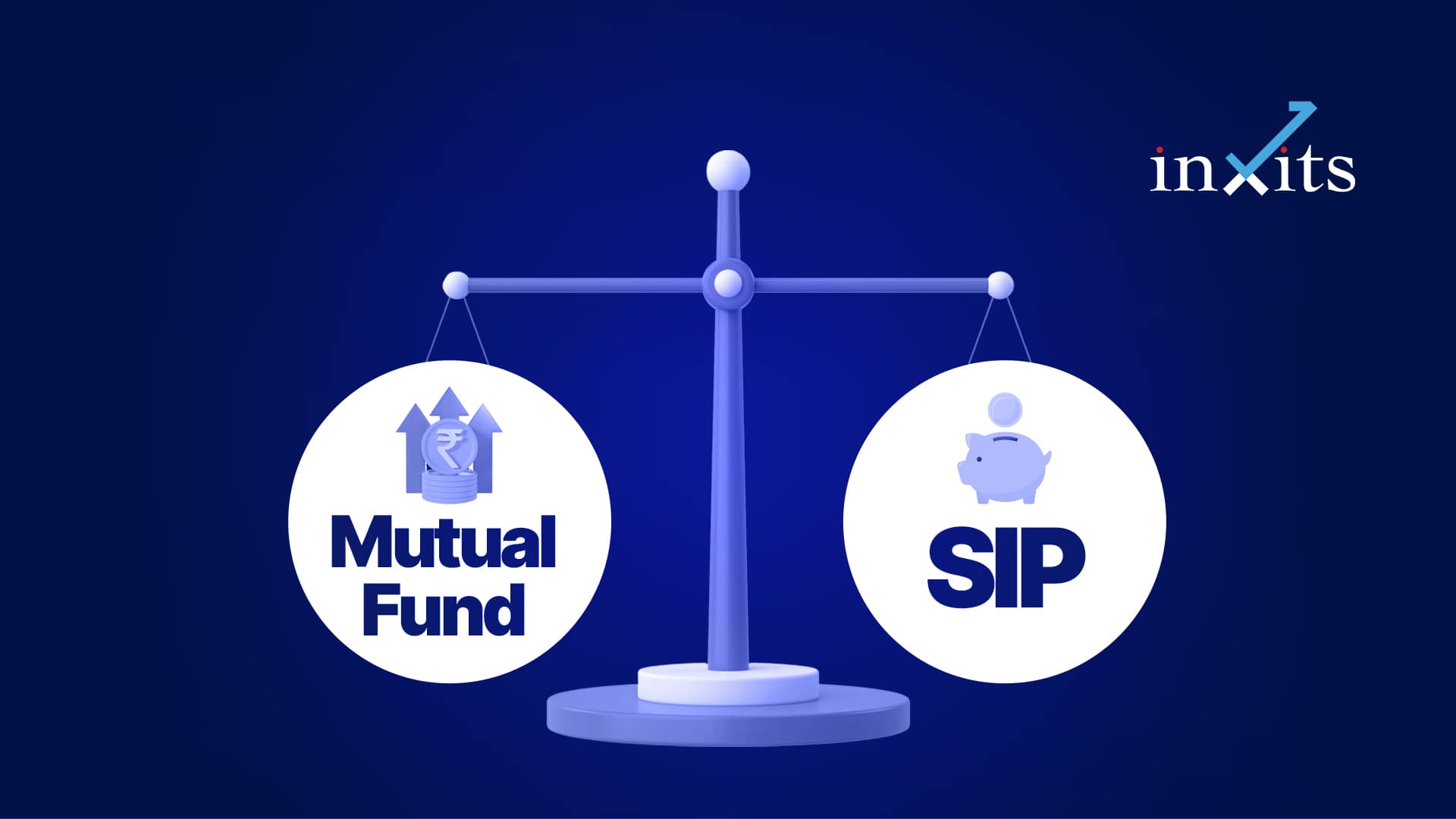
A mutual fund is what you invest in, while SIP is how you invest. Understanding this difference clearly helps investors make better long-term decisions.

This blog explains how mutual funds and SIPs work, how they differ, and which approach may suit long-term wealth building.

What Is a Mutual Fund

A mutual fund is an investment vehicle that pools money from multiple investors and invests it in assets such as:

  • Equity shares
  • Debt instruments
  • A mix of equity and debt

Mutual funds are managed by professional fund managers and are available in different categories based on risk and time horizon.

When you invest in a mutual fund, you can invest either:

  • As a lump sum
  • Through SIP

Read more: What Is a Mutual Fund and How Does It Work?

What Is SIP

SIP stands for Systematic Investment Plan.

SIP is a method of investing in a mutual fund where you invest a fixed amount at regular intervals, usually monthly.

Instead of investing a large amount at once, SIP allows you to invest gradually over time.

Important point:
👉 SIP is not an investment product. It is a way to invest in mutual funds.

Mutual Fund vs SIP: The Core Difference

AspectMutual FundSIP
What it isInvestment productInvestment method
PurposeGrows money through marketsHelps invest regularly
Investment styleLump sum or SIPPeriodic investment
Risk exposureDepends on fund categoryDepends on fund category
Suitable forLump sum investorsLong-term disciplined investors
Decision typeProduct selectionInvestment discipline

This shows that comparing mutual funds and SIPs directly is not fully accurate.

Example: Investing ₹1,20,000 at once is a lump sum mutual fund investment.

Investing ₹10,000 monthly for 12 months into the same fund is SIP.

Why SIP Is Popular for Long-Term Wealth

1. Encourages Discipline

SIP builds a habit of regular investing. You invest regardless of market ups and downs.

2. Reduces Timing Risk

Instead of worrying about market timing, SIP spreads investments across different market levels.

3. Works Well with Long Time Horizons

Over long periods, SIP helps average purchase costs and smooth market volatility.

4. Affordable for Most Investors

You can start SIPs with small amounts, making long-term investing accessible.

When Lump Sum Mutual Fund Investment Makes Sense

Lump sum investment may suit investors who:

  • Have surplus money available
  • Are comfortable with market fluctuations
  • Have a long investment horizon
  • Understand market cycles

However, lump sum investing requires emotional discipline, especially during market volatility.

To make the decision easier, here is a simple comparison:

If you have…Choose…Because…
Monthly salary incomeSIPIt aligns with regular cash flow and builds discipline.
Yearly bonus or surplus moneyLump SumIdle cash can be invested immediately for long-term growth.
Fear of market volatilitySIPYou invest across market ups and downs, reducing timing stress.
High risk appetite and market comfortLump SumYou may benefit from investing more during market dips.

Risk Considerations: SIP vs Lump Sum

The risk in both SIP and lump sum investments depends on:

SIP does not remove market risk. It helps manage investment behaviour, not market movement.

Long-term wealth creation still depends on staying invested through market cycles.

For investors who want structured guidance while investing in mutual funds, inXits provides mutual fund advisory support focused on planning, discipline, and long-term clarity.

Time Horizon Matters More Than Method

For long-term wealth creation:

  • Equity mutual funds usually require 5 years or more
  • SIPs work best when continued consistently over long periods

Short-term investing with SIPs may not give the desired outcome. Time in the market matters more than timing the market.

Common Mistakes Investors Make

  • Thinking SIP and mutual funds are different products
  • Stopping SIPs during market falls
  • Investing without a clear goal
  • Choosing funds based only on recent performance

Avoiding these mistakes is often more important than choosing between SIP or lump sum.

So, Which Is Better for Long-Term Wealth

The correct answer is:

  • Mutual funds are essential for wealth creation
  • SIP is a practical way to invest in mutual funds over time

For most long-term investors, especially beginners, SIP combined with suitable mutual funds works well because it encourages consistency and emotional discipline.

How Guidance Helps in Choosing the Right Approach

Choosing between SIP and lump sum is not just about preference. It depends on:

  • Income stability
  • Risk comfort
  • Financial goals
  • Market behaviour

Some investors use SIPs for regular income and lump sum investments when surplus funds are available.

Investors who want clarity on fund selection, SIP amounts, and portfolio balance often seek advisory support. Platforms like inXits help investors structure mutual fund investments thoughtfully, whether through SIP, lump sum, or a combination of both.

Conclusion

Mutual funds and SIPs are not rivals. They work together.

Mutual funds provide the opportunity for long-term growth, while SIPs provide a disciplined way to participate in that growth. For long-term wealth creation, the focus should be on:

  • Choosing the right mutual fund category
  • Staying invested for sufficient time
  • Maintaining discipline during market fluctuations

The best approach is the one that helps you stay consistent with your investment plan over the long run.

FAQs

1. Is SIP better than mutual fund investment

SIP is a way to invest in mutual funds, not a replacement for them.

2. Can SIP create long-term wealth

Yes, when continued consistently in suitable mutual funds.

3. Is lump sum risky compared to SIP

Lump sum investments face higher timing risk, especially in volatile markets.

4. Can I invest using both SIP and lump sum

Yes, many investors use both based on cash flow and market conditions.

5. Do SIPs guarantee returns

No. Returns depend on market performance and fund selection.

Mandatory SEBI Warning & Disclaimer

Investment in securities market are subject to market risks. Read all the related documents carefully before investing.

Registration granted by SEBI, membership of BSE and certification from NISM in no way guarantee performance of the intermediary or provide any assurance of returns to investors.
The securities quoted above are for illustration only and are not recommendatory.

Do You Really Need a Financial Advisor If You Invest in Direct Mutual Funds?

control over their investments. Since these funds do not involve distributor commissions, many investors assume that investing directly also means they no longer need a financial advisor.

But is that always true?

The real question is not whether direct mutual funds are good or bad. The real question is whether investing without guidance suits your knowledge level, behaviour, and long-term goals.

This blog explains when a financial advisor is still useful even if you invest in direct mutual funds, and when you may be comfortable managing on your own.

What Investing in Direct Mutual Funds Really Means

When you invest in direct mutual funds:

  • You invest directly with the fund house
  • You save on distributor commissions
  • You manage fund selection, monitoring, and rebalancing yourself

Direct plans give cost efficiency, but they also shift all decision-making responsibility to the investor.

Lower cost does not remove market risk, behavioural challenges, or planning complexity.

The Common Belief: Direct Plans Mean No Advisor Needed

Many investors believe:

  • “I am investing directly, so I do not need a financial advisor”
  • “I can select funds on my own and save costs”

This belief is partly true only if the investor:

  • Understands mutual fund categories
  • Can assess risk correctly
  • Reviews the portfolio periodically
  • Stays disciplined during market volatility

For everyone else, lack of guidance can lead to mistakes that cost more than the saved expense ratio.

Also read: Direct vs Regular Mutual Funds

What a Financial Advisor Actually Does 

A financial advisor is not just for buying mutual funds. A good advisor helps with:

  • Goal-based financial planning
  • Asset allocation between equity, debt, and other assets
  • Risk assessment and suitability
  • Portfolio review and rebalancing
  • Behavioural support during market ups and downs

Even when investing in direct mutual funds, these aspects remain relevant.

Situations Where You May Still Need a Financial Advisor

1. You Are Unsure About Asset Allocation

Choosing funds without understanding how much to allocate to equity, debt, or hybrid funds can create imbalance.

A financial advisor helps align investments with goals and time horizon, not trends.

2. Market Volatility Affects Your Decisions

Many investors panic during market corrections:

  • Stopping SIPs
  • Selling funds at the wrong time
  • Switching frequently

Behavioral mistakes are common, especially without guidance.

3. Your Financial Situation Is Changing

Life events such as:

  • Job change
  • Marriage
  • Children’s education
  • Retirement planning

require portfolio adjustments. Direct plans do not adjust themselves.

4. You Track NAV Too Often

Checking NAV daily can lead to emotional decisions. Long-term investing needs patience, not constant monitoring.

An advisor helps shift focus from short-term movement to long-term planning.

When You May Not Need a Financial Advisor

You may be comfortable without an advisor if:

  • You clearly understand mutual fund categories
  • You have a long-term investment discipline
  • You review your portfolio calmly once or twice a year
  • You are comfortable taking responsibility for decisions

Even in such cases, periodic consultation can still add clarity.

Direct Mutual Funds and Advisory Support Can Coexist

A common misconception is that:

“If I invest in direct mutual funds, I cannot take advisory help.”

This is not true.

Many investors use:

  • Direct mutual funds for cost efficiency
  • Independent financial advisors for planning and review

The two are not mutually exclusive.

How inXits Fits for Direct Mutual Fund Investors

This is where inXits works as a practical solution for mutual fund investors.

inXits focuses on mutual fund advisory and financial planning, not on pushing specific products. Investors who prefer direct mutual funds but still want:

  • Help with fund selection
  • Clear asset allocation
  • Portfolio reviews
  • Behavioural guidance during volatility

can use inXits as a clarity-driven advisory layer on top of their direct investments.

The idea is simple:
You stay invested in direct mutual funds, while inXits helps you invest correctly and consistently.

Cost vs Value: The Right Way to Think About It

Direct mutual funds reduce cost.
A financial advisor reduces decision errors.

The real comparison is not:

  • Cost saved vs advisory fee

It is:

  • Cost saved vs mistakes avoided

For many investors, avoiding one major behavioural error can outweigh years of expense ratio savings.

How to Decide If You Need an Advisor

Ask yourself honestly:

  • Do I understand my portfolio structure clearly
  • Can I stay calm during market corrections
  • Do I review my investments objectively
  • Do I know when and how to rebalance

If the answer to any of these is uncertain, advisory support can add value.

Investors who want support without sales pressure often prefer advisory platforms like inXits, which focus on education, planning, and clarity while allowing investors to continue using direct mutual funds.

Conclusion

Direct mutual funds are a cost-efficient investment option, but they do not eliminate the need for planning, discipline, and clarity.

Some investors are comfortable managing everything on their own. Others benefit from guidance, even while investing directly.

The decision to work with a financial advisor should be based on your confidence, behaviour, and long-term needs, not just expense ratios. Combining direct investing with the right advisory support can often lead to better outcomes and fewer mistakes over time.

FAQs

1. Can I invest in direct mutual funds and still take advice

Yes. Advisory support and direct investing can work together.

2. Does a financial advisor force regular mutual funds

A qualified advisor should explain options, not force products.

3. Are direct mutual funds risk-free

No. Market risk remains the same as regular mutual funds.

4. Do beginners need a financial advisor even for direct plans

Beginners often benefit from guidance until they gain confidence.

5. Is advisory support worth the cost

It depends on how much clarity, discipline, and planning support you need.

Mandatory SEBI Warning & Disclaimer

Investment in securities market are subject to market risks. Read all the related documents carefully before investing.

Registration granted by SEBI, membership of BSE and certification from NISM in no way guarantee performance of the intermediary or provide any assurance of returns to investors.
The securities quoted above are for illustration only and are not recommendatory.

Large Cap vs Mid Cap vs Small Cap Funds: Which Is Best for You?

When investing in equity mutual funds, investors often come across three common categories, which are important types of mutual fund to understand: large cap funds, mid cap funds, and small cap funds. These categories are based on the size of the companies the fund invests in and play a major role in determining risk, volatility, and long-term return potential.

Choosing between large cap, mid cap, and small cap funds is not about finding the best performer. It is about understanding how each category behaves and how it fits your financial goals, time horizon, and comfort with market fluctuations.

This guide explains the differences clearly to help you decide what may suit you best.

What Do Large Cap, Mid Cap, and Small Cap Funds Mean

Equity mutual funds are classified based on the market capitalisation of the companies they invest in.

As per SEBI classification:

  • Large Cap Funds invest mainly in the top 100 companies by market capitalisation
  • Mid Cap Funds invest mainly in companies ranked from 101 to 250
  • Small Cap Funds invest mainly in companies ranked beyond 250

These classifications help investors understand the size, stability, and growth stage of the underlying companies.

Large Cap Funds Explained

What They Invest In

Large cap funds invest in well-established companies with strong market presence and stable business models.

Risk Profile

High risk, but relatively lower volatility compared to mid cap and small cap funds.

Return Behaviour

Returns are market-linked and usually steadier over long periods.

Time Horizon

5 years or more.

Who May Consider Them

  • Beginners in equity mutual funds
  • Long-term investors
  • Investors seeking relatively stable equity exposure

Large cap funds often form the core of an equity mutual fund portfolio.

Read More About Large Cap Funds

Mid Cap Funds Explained

What They Invest In

Mid cap funds invest in companies that are in a growth phase and have the potential to become large companies in the future.

Risk Profile

Higher risk than large cap funds.

Return Behaviour

Higher growth potential, but with sharper ups and downs.

Time Horizon

7 years or more.

Who May Consider Them

  • Investors with moderate to high risk comfort
  • Long-term investors seeking higher growth
  • Investors who can tolerate volatility

Mid cap funds can add growth to a portfolio but require patience and discipline.

Learn More About Mid Cap Funds

Small Cap Funds Explained

What They Invest In

Small cap funds invest in smaller companies that are still developing their business scale.

Risk Profile

Very high risk due to higher volatility and lower liquidity.

Return Behaviour

Strong return potential in favourable market conditions, but sharp declines during downturns.

Time Horizon

7 to 10 years.

Who May Consider Them

  • Experienced investors
  • Investors with high risk tolerance
  • Investors with long-term goals and patience

Small cap funds demand emotional discipline and a long investment horizon.

Read More About Small Cap Funds

Risk-O-Meter Comparison

Risk increases as exposure moves from large cap to small cap funds.

Time Horizon Comparison

Matching the fund category with time horizon helps manage volatility better.

Large Cap vs Mid Cap vs Small Cap Funds: Key Differences

AspectLarge Cap FundsMid Cap FundsSmall Cap Funds
StabilityHighMediumLow
VolatilityLowerMediumHigh
Growth PotentialModerateHighVery High
Risk LevelHighHigherVery High
Suitable ForBeginners, core portfolioGrowth-focused investorsHigh-risk investors

Which Fund Category Is Best for You

There is no single best category for everyone. The right choice depends on:

Your Risk Comfort

If market fluctuations worry you, large cap exposure may suit you better.

Your Time Horizon

Longer time horizons allow more exposure to mid and small cap funds.

Your Financial Goals

Growth-oriented goals may include mid and small cap exposure, while stability-focused goals rely more on large cap funds.

Most investors do not choose just one category. A combination often works better.

Common Mistakes Investors Make

  • Investing only in small cap funds for higher returns
  • Avoiding mid and small cap funds completely due to fear
  • Ignoring time horizon
  • Reacting emotionally during market corrections

Understanding fund behaviour helps avoid these mistakes.

How These Funds Fit into a Mutual Fund Portfolio

Equity mutual fund portfolios often include:

  • Large cap funds as the base
  • Mid cap funds for growth
  • Small cap funds for higher long-term potential

Balancing these categories depends on asset allocation rather than performance chasing.

Not sure how to balance large, mid, and small-cap funds? A mutual fund advisor can guide you. The inXits also offers mutual fund investment services and 24×7 support to help you make smart decisions.

Conclusion

Large cap, mid cap, and small cap funds each play a distinct role in equity mutual fund investing. Large cap funds offer stability, mid cap funds offer growth, and small cap funds offer higher potential with higher risk.

The best choice depends on your goals, time horizon, and comfort with volatility. A balanced approach often helps investors stay invested with confidence across market cycles.

FAQs

1. Are large cap funds safer than small cap funds

They are generally more stable but still carry equity market risk.

2. Can beginners invest in mid and small cap funds

Yes, but with a long-term view and moderate allocation.

3. Should I invest only in one category

Most investors benefit from diversification across categories.

4. Which fund category offers the highest returns

Higher potential returns usually come with higher risk, especially in small cap funds.

5. Are SIPs suitable for all three categories

Yes, SIPs can help manage volatility across all equity fund categories.

Mandatory SEBI Warning & Disclaimer

Investment in securities market are subject to market risks. Read all the related documents carefully before investing.

Registration granted by SEBI, membership of BSE and certification from NISM in no way guarantee performance of the intermediary or provide any assurance of returns to investors.

The securities quoted above are for illustration only and are not recommendatory.

What Is a Mutual Fund and How Does It Work? Explained Simply

A mutual fund is one of the easiest ways to start investing, especially for beginners who want a simple structure without tracking markets every day. In a mutual fund, money from many investors is collected and managed by a professional fund manager. This pooled money is then invested in a mix of assets such as stocks, bonds, and other securities.

For people who want a guided and organised way to invest, mutual funds can help provide structure through disciplined investment habits. With the help of a mutual fund financial advisor, even new investors can start building their portfolio with more clarity.

In this guide, you will learn how mutual funds work, what types exist, and how to begin your own journey.

How Mutual Funds Collect and Use Your Money

When investors put money into a mutual fund, the fund manager invests that money according to the fund’s stated objective. This is known as mutual fund portfolio management, where a trained professional decides how much to invest in different assets.

Here is how the process usually works:

1. Money is pooled from many investors

This pooled amount becomes the total fund size.

2. The fund manager invests according to the scheme objective

For example, an equity fund buys stocks, while a debt fund buys bonds.

3. Investors receive units

These units represent their share in the fund.

4. The NAV changes every day

NAV, or Net Asset Value, reflects the current value of the fund’s holdings.

If you want help understanding which fund type suits your plan, you can speak with a mutual fund advisor at inXits, who can explain the choices in simple words.

Why People Choose Mutual Funds

Here are some reasons why beginners often prefer mutual funds:

Professional management

A trained fund manager studies companies, checks financials, and adjusts the portfolio as needed.

Diversification

Your money is spread across different assets, reducing the impact of one poor-performing investment.

Flexible investment options

You can invest monthly through SIP or make a lump sum investment.

Easy to start

You do not need advanced market knowledge or constant monitoring.

Types of Mutual Funds

Equity Funds

These invest in stocks and suit long-term investors who can handle market ups and downs.

Debt Funds

These invest in bonds, government securities, and fixed-income instruments.

Hybrid Funds

These combine both equity and debt in varying proportions.

Index Funds

These follow a market index such as Nifty 50.

Solution-oriented Funds

These target long-term goals like retirement or children’s education.

Direct vs Regular Mutual Funds

Mutual funds are available in two plans: Direct and Regular.

Direct Mutual Funds

  • Purchased directly from the fund house
  • Lower expense ratio
  • No distributor commission included
  • Suitable for investors who can manage fund selection and monitoring on their own

Regular Mutual Funds

  • Purchased through a distributor or advisor
  • Slightly higher expense ratio due to advisory and service support
  • Includes guidance, portfolio reviews, and ongoing assistance

Also read: What Is the 80% Rule for Mutual Funds?

How You Earn Returns From Mutual Funds

You earn through two possible sources:

1. Capital appreciation

If the value of the fund’s investments increases, the NAV rises.

2. Dividends

Some funds may distribute dividends from the profits they receive.

Remember, returns depend on market movements and fund performance. No advisor or platform can guarantee returns. SEBI also does not allow any assurance of performance.

Taxation on Mutual Fund Returns: Short-Term vs Long-Term

Mutual fund returns are taxable, and the tax treatment depends on the type of mutual fund and how long you stay invested.

Equity Mutual Funds

  • Short-Term Capital Gains (STCG):
    If units are sold within 12 months, gains are taxed at 15%.
  • Long-Term Capital Gains (LTCG):
    If units are sold after 12 months, gains above ₹1 lakh in a financial year are taxed at 10% (without indexation).

Debt Mutual Funds

  • If units are sold within 36 months, gains are added to your income and taxed as per your income slab.
  • If held beyond 36 months, long-term taxation rules apply as per prevailing regulations.

Tax rules may change over time, so it is advisable to consult a mutual fund advisor to understand how taxation impacts your investment plan.

How to Start Investing in Mutual Funds

1. Complete KYC

Your PAN, Aadhaar, and other basic details are needed.

2. Open a mutual fund account or use a distributor service

Many people prefer guided platforms to avoid confusion.

3. Choose between SIP or lump sum

SIP is popular among beginners because it encourages discipline.

4. Select your funds

Choose based on goals, not based on popularity.

5. Monitor periodically

Review once every few months instead of checking daily.

If this feels too technical, you can talk to inXits for step-by-step support through their mutual fund expert consultation service.

How Mutual Fund Portfolio Management Works

Mutual fund portfolio management involves:

  • Allocation of your money
  • Ongoing research
  • Making adjustments based on market conditions
  • Managing risk levels
  • Keeping the portfolio aligned with the scheme objective

Since this requires constant study, many investors prefer getting support from a mutual fund advisory firm for clarity. inXits can offer personalised plans that suit your goals without making any performance claims.

Understanding Expense Ratio and Exit Load

Before investing, it is important to understand two common cost-related terms:

Expense Ratio

The expense ratio is the annual fee charged by the mutual fund to manage your investment.
It includes fund management, administrative, and operational costs.
A lower expense ratio generally helps improve net returns over the long term.

Exit Load

Exit load is a charge applied if you withdraw your investment before a specified period.
It is used to discourage early withdrawals and maintain fund stability.
Not all funds have exit loads, and the structure varies from scheme to scheme.

A mutual fund advisor can help you compare funds not just on returns, but also on costs. inXits ensures transparency by explaining all charges clearly before you invest.

How a Mutual Fund Advisor Helps Beginners

Here is what an advisor or consultant usually does:

1. Understands your financial goals

Short-term needs, long-term goals, family plans, and savings habits.

2. Checks your risk comfort

This ensures you do not choose funds that feel stressful later.

3. Creates a clear plan

This includes SIP amounts, fund selection, time horizon, and review frequency.

4. Reviews your portfolio regularly

This helps you stay aligned with long-term plans.

When Should You Consider Getting Advisory Support

You may want help when:

  • You do not know how to compare funds
  • You want a long-term plan
  • You are unsure how much to invest
  • Market movements make you anxious
  • You want a structured portfolio

A professional like inXits can guide you with simple processes and easy-to-understand suggestions.

Conclusion

Mutual funds offer a simple way to start investing and build long-term habits. With professional management, easy entry, and diversification, they suit many types of investors. But choosing the right fund and understanding the process is important.

If you want help at any stage, whether it is fund selection, SIP planning, or portfolio review, the inXits advisory team is available with clear guidance and free 24×7 support. A calm and well-planned approach can help you build a strong financial path through mutual fund investing.

Frequently Asked Questions (FAQs)

1. Are mutual fund returns guaranteed?
No. Mutual fund returns depend on market performance and fund strategy. SEBI regulations do not allow guaranteed returns.

2. Is SIP better than lump sum investment?
SIP helps investors invest gradually and manage market volatility. Lump sum investments may suit investors with surplus funds and higher risk comfort.

3. Can I withdraw money from mutual funds anytime?
Most mutual funds allow redemption at any time, but exit loads or tax implications may apply depending on the fund and holding period.

4. Do I need a mutual fund advisor to invest?
An advisor is not mandatory, but many investors prefer professional guidance for fund selection, portfolio planning, and regular reviews.

5. How does inXits support mutual fund investors?
inXits offers clear guidance through SEBI-registered professionals, helping investors understand fund choices, SIP planning, taxation, and long-term portfolio management with simple explanations.

Mandatory SEBI Warning And Disclaimer

Investment in securities market are subject to market risks. Read all the related documents carefully before investing.

Registration granted by SEBI, membership of BSE and certification from NISM in no way guarantee performance of the intermediary or provide any assurance of returns to investors.

The securities quoted above are for illustration only and are not recommendatory.

How to Invest in Pre-IPO Companies in India: Step by Step Guide

Investing in a company before it gets listed on the stock market has drawn interest from many Indian investors in recent years. These early shares are known as pre-IPO shares, and they trade in the private market before the company goes public. Since these shares are not available on regular stock exchanges, the process of investing, the risks involved, and the level of information available differ from listed companies.

Currently, the market is overheated, and the risk is on the higher side.
Because of this, investors need to be even more careful while deciding whether pre-IPO shares suit their financial plan.

This guide explains each step in a simple and clear way so you can understand how pre-IPO investments usually work, what to check before you invest, and how to handle the entire process with care. Whether you are learning about unlisted shares for the first time or planning to take your research further, this detailed guide will help you move forward in a thoughtful and informed manner.

What Are Pre-IPO Shares?

Pre-IPO shares are company shares sold privately before the firm gets listed on NSE or BSE. These shares may belong to:

  • Early employees holding ESOPs
  • Promoters
  • Early-stage investors
  • Venture capital funds
  • Angel investors

Since these shares change hands outside the regular market, the buying and selling process happens through approved intermediaries who match buyers and sellers.

These intermediaries maintain proper documentation, help carry out off-market transfers, and ensure regulatory compliance. As an investor, you should check the registration details of the platform or broker before taking part in any transaction.

If understanding the source of shares, valuation, or documentation feels confusing, you can always reach out to the inXits team, which offers 24×7 support to help you understand these steps more clearly.

Once an Investor Decides to Invest in Pre-IPO Shares

After an investor feels comfortable with the risk, the next step is choosing which company they want to invest in, understanding its price, and reviewing valuation details.

This includes checking:

  • Current buying price
  • Historical financials
  • Company performance
  • Demand in the private market

If you struggle to study companies or compare available information, inXits can help you understand the basics, analyse public data, and build clarity before making any decision.

Also read: A Complete Beginner’s Guide to Buying Shares Before Listing

3 Must-Have Documents to Invest in Pre-IPO Shares

Your client required these details — here they are added naturally in the flow:

To complete a pre-IPO investment, you need three essential documents:

  1. PAN Card
  2. Aadhaar Card
  3. CML Copy (Client Master List) from your Demat account

Without these, intermediaries cannot process the transfer.

How Pre-IPO Trading Usually Works

Pre-IPO shares are transferred through an off-market route. The seller initiates a transfer request to your Demat account, and once the transfer is approved, the shares reflect in your holdings.

If anyone buys the shares in the unlisted market, then a 6-month lock-in period applies after the IPO listing, as per regulations.

Since prices are based on demand and supply, and not on live market quotes, they may vary across intermediaries and may not reflect actual listing value later.

To navigate these steps without confusion, many investors prefer guidance from professionals. At inXits, you can understand these processes in a clearer and simpler way through expert-driven financial guidance tailored to your goals.

Step-by-Step Guide to Investing in Pre-IPO Companies in India

Below is a detailed breakdown of each stage in the pre-IPO investing process.

Step 1: Gain Clarity About How Private Market Deals Work

Pre-IPO investments happen outside the exchanges. Since they fall under private transactions, the rules, availability, liquidity, and documentation differ from listed shares. You will usually deal with:

  • SEBI-registered intermediaries
  • Unlisted share platforms
  • Brokers handling private equity transactions

Avoid informal networks or unknown sources. Check the credibility of the intermediary, verify the registration details, and ask for all documents related to the transaction.

If this part feels overwhelming, you can connect with inXits, where the team helps you understand how these channels work so you do not feel lost.

Step 2: Study the Company With Care

Since pre-IPO companies do not disclose as much data as listed companies, you need to gather information from:

  • Publicly available reports
  • Company filings
  • News sources
  • Industry updates
  • Interviews with company management shared online

Try to understand:

  • Business model
  • Cash flow history
  • Market presence
  • Growth plans
  • Competition
  • Long-term sustainability

Remember that information may be limited. Make decisions only after checking data from reliable sources.

Step 3: Check if You Qualify to Invest

Some pre-IPO deals have specific terms including:

  • Minimum ticket size
  • Lock-in rules
  • Eligibility criteria for investor category

Before going further, confirm all conditions. Make sure the holding period and liquidity comfortably fit your financial plan.

Step 4: Pick a Trusted and Registered Intermediary

A safe pre-IPO investment begins with the right intermediary. Choose someone who:

  • Is registered with SEBI
  • Provides proper contracts
  • Shares detailed risk disclosures
  • Offers invoices and payment receipts
  • Uses approved transfer routes

Do not proceed with transactions where documentation is unclear or inconsistent.

If you want guidance on how to assess intermediaries or need support in evaluating private market opportunities, inXits can help you understand these steps with greater clarity through professional financial advisory services.

Step 5: Complete the Documentation Process

Once you decide to buy pre-IPO shares, you must follow formal documentation steps:

  • Provide PAN
  • Share Demat account details
  • Sign agreements
  • Make payments through verified banking channels

You must also provide your CML Copy, which confirms your Demat account details.

The seller will then initiate the off-market transfer to your Demat account. You should receive contract notes and confirmations for your records. Keep all documents safe since they may be needed later during tax filing or exit.

What Happens After Shares Come to Your Account?

Once the shares appear in your Demat account, you have two choices:

✓ 1. Hold the shares until the IPO listing

This is the most common route.

✓ 2. Exit before the IPO listing

Some investors choose to exit before the company lists.
This can be done in the private market, but you must do your own research before taking this step.

If you feel unsure, inXits can help you understand possible scenarios so you can make decisions calmly.

Step 6: Learn About Lock-In Rules

After a company lists, pre-IPO shares may be subject to a lock-in period. During this time, you cannot sell the shares even if the listing price rises. Lock-in rules vary based on investor type and regulatory requirements.

If shares were bought in the unlisted market, 6-month lock-in applies after the listing date.

Step 7: Track the Company’s IPO Progress

IPO timelines can change for many reasons including market situations, regulatory clearances, or company-level decisions. A company planning to list may delay the process or choose not to proceed.

Since there is no guarantee of listing, staying updated through official announcements is important.

To avoid confusion, many investors prefer working with advisors who keep track of market activity and help interpret changes. At inXits, you can get guidance on how to stay aligned with your long-term plan while tracking private and public market updates.

Step 8: Understand the Risks Clearly

Pre-IPO investments involve higher risk because:

  • Liquidity is lower than public markets
  • Information is limited
  • Prices can vary across intermediaries
  • Exit may take more time
  • Listing is not guaranteed
  • Market value after listing may be different from your purchase price

Invest only after checking your comfort with these points.

If you are unsure whether this category suits you, inXits can help you evaluate your risk comfort before you take any step, and their 24×7 free advisory makes it easy to ask questions anytime.

How to Decide if Pre-IPO Investing Suits You

Pre-IPO investing usually matches people who:

  • Can take higher risk
  • Are comfortable with longer holding periods
  • Understand that listing outcomes may vary
  • Prefer studying companies carefully
  • Want early entry into businesses they believe in

If you are unsure whether this category fits your plan, a financial advisor can help you decide based on your profile, goals, and risk comfort. inXits provides guidance that helps you shape your investment path in a clear and simple manner.

Practical Tips for First-Time Pre-IPO Investors

  1. Never invest based on hype
  2. Read all documents
  3. Verify the source of shares
  4. Keep expectations realistic
  5. Maintain a balanced portfolio
  6. Seek professional support — inXits can help anytime with 24×7 free consulting

Conclusion

Pre-IPO investing can be a thoughtful addition for some investors, but it demands patience, careful study, and clarity about risks. Since these transactions take place privately, understanding the process is essential.

If you ever feel confused about valuation, intermediary checks, documents, or whether pre-IPO shares suit your financial plan, inXits is always available with 24×7 free consulting to guide you in a simple and transparent manner.

With steady guidance and proper understanding, you can decide whether this category aligns with your long-term goals.

FAQs 

1. Is pre-IPO investing legal in India?
Yes, pre-IPO investing is legal when done through registered intermediaries.

2. Are pre-IPO shares taxed differently?
Tax rules depend on holding period and capital gains rules at the time of sale.

3. Can retail investors buy pre-IPO shares?
Yes, retail investors can buy through approved intermediaries.

4. Do pre-IPO shares have a lock-in period?
Usually yes, and if bought in the unlisted market, a 6-month lock-in applies after listing.

5. Can I sell pre-IPO shares before IPO?
Yes, it is possible to exit in the private market, but you must do your own research.

6. What documents are needed?
PAN, Aadhaar, and CML Copy are mandatory.

7. How are pre-IPO shares transferred?
Through off-market transfer into your Demat account.

8. Is pricing fixed?
No, prices vary based on demand and supply between intermediaries.

9. Is liquidity high?
No, liquidity is generally low in the private market.

10. Can inXits help me with pre-IPO investing?
Yes, the inXits team offers 24×7 free consulting to help you understand the process.

Mandatory SEBI Warning & Disclaimer

Investment in securities market are subject to market risks. Read all the related documents carefully before investing.

Registration granted by SEBI, membership of BSE and certification from NISM in no way guarantee performance of the intermediary or provide any assurance of returns to investors.

The securities quoted above are for illustration only and are not recommendatory.

inXits: Your Personal CFO for Lifelong Financial Growth

When you think of an investing website, you might imagine a place to read information or buy stocks. But inXits is far more than that! It’s like having a personal CFO who’s with you for life, helping you make smart money choices. Designed for Indian investors, inXits uses modern technology to guide you through stocks, mutual funds, and Systematic Investment Plans (SIPs), no matter where you are in your financial journey. Whether you’re just starting out or planning for retirement, inXits provides clear data to help you build wealth with confidence. It’s not just a tool; it’s a partner that grows with you, helping you create a financial plan that lasts a lifetime.

How inXits Understands Your Needs

inXits isn’t a random website; it’s built to understand your unique money goals. It uses smart tech to analyze your income, goals, and risk tolerance, then provides tailored recommendations. For instance, if you’re a beginner, inXits might suggest a ₹500 SIP in a mutual fund that fits your budget. It’s like having a CFO who truly knows you, guiding you with investment strategies that make sense for your individual situation. As your financial situation evolves, inXits adjusts to keep your plan on track.

Smart Tools for Smart Investing

What makes inXits so special? Its intelligent technology and powerful tools act like your personal CFO. inXits analyzes your profile first, considering your investment psychology. Then, it gathers extensive data on stocks and mutual funds, offering detailed insights for informed decisions.

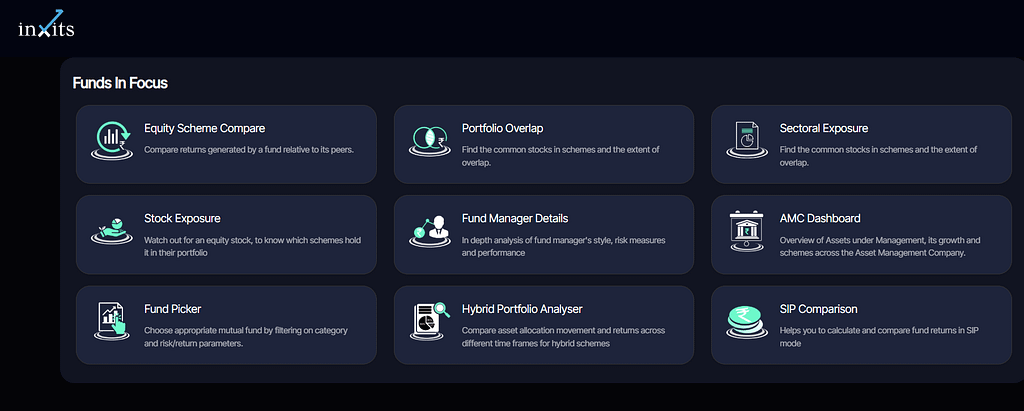
Key tools include:

  • Stock Exposure: See which mutual funds hold specific stocks like Infosys or Reliance.
  • Portfolio Overlap: Ensure your funds aren’t too similar, helping you diversify effectively.
  • Fund Manager Details: Learn about the individuals managing your funds.
  • Sectoral Exposure: Understand which funds are tied to specific sectors like banking or pharma.
  • AMC Dashboard: Get an overview of how asset management companies are investing.
  • Hybrid Portfolio Analyzer: Evaluate the performance of funds that blend stocks and safer options.

These tools simplify investing, helping you create long-term investment strategies and aiming for financial independence with clear, data-backed advice.

inXits: Your Partner at Every Stage

inXits is there for you no matter where you are in life.

Existing Investors: Easily transfer and manage your entire portfolio on the platform, making inXits a comprehensive solution.

Starting Out: Begin with a small SIP (e.g., ₹500) in an equity mutual fund, learning how to grow your money over time.

Growing Income: As your earnings increase, inXits suggests options that align with your new goals, like analyzing stock risks.

Planning for Big Dreams: When saving for a house or retirement, inXits helps adjust your financial plan with strategies that keep your money growing safely, even suggesting hybrid funds for balanced risk and growth.

Why Choose inXits for Life?

Choosing inXits means selecting a partner that stays with you forever. With India’s market offering significant growth opportunities (the Nifty 50 growing 8-15% annually over a decade), inXits is your ideal companion for wealth creation. It helps you maximize these opportunities, whether you’re starting with a SIP, exploring stocks, or selecting mutual funds that fit your aspirations. It’s more than just a website; it’s a personal CFO that uses smart tech and tools to guide your investment strategies for life. From your very first investment to retirement planning, inXits adapts to your needs, helping you build wealth with a financial plan that grows with you.

Ready to Take Charge of Your Money?

inXits is more than just a website, it’s your personal CFO for life! This blog showed how inXits helps Indian investors at every stage, using smart tools like Goal setting, Investor analysis, Stock Exposure, Portfolio Overlap and much more to make stocks, mutual funds, and SIPs simple. It grows with you, guiding you with investment strategies that fit your goals, whether you’re saving for a trip or planning for retirement. inXits your CFO turns your dreams into a financial plan you can trust, helping you build wealth with confidence. Ready to take charge of your money? Visit inXits today.

Chat on WhatsApp