

What Is a Flexible SIP? Meaning, Benefits & When to Use It

Not every investor has a fixed monthly income.

Some months feel comfortable. Other months feel tighter due to unexpected expenses, bonuses, or irregular cash flow. In such situations, committing to a fixed SIP amount can feel restrictive.

This is where a flexible SIP becomes relevant. Understanding flexible SIP meaning and how to adjust SIP amount helps investors manage investments better.

Instead of locking yourself into a fixed contribution, a flexible SIP allows you to adjust your investment amount based on your financial situation, while still staying invested.

Before you read on

  • A flexible SIP allows you to increase or decrease your SIP amount
  • It suits investors with variable income
  • It provides control without stopping investments
  • It balances discipline with flexibility

What is a Flexible SIP and how does it work?

A flexible SIP is a type of SIP where the investment amount is not fixed. You can increase, decrease, or even pause contributions based on your financial situation.

How it works:

  • You set a base SIP amount
  • You adjust contributions depending on income or market conditions
  • Investments continue without needing to stop the SIP completely

This makes it a practical SIP with variable amount approach, especially useful as a SIP for freelancers India.

If you are new to SIP itself, it is helpful to first understand what is SIP before exploring flexible variations.

Why do investors consider Flexible SIP?

The need for flexibility usually comes from real-life financial situations.

Common scenarios:

  • Freelancers or business owners with variable income
  • Professionals receiving bonuses or incentives
  • Investors facing temporary cash flow issues

Key advantages:

  • Control over investment amount
  • Ability to invest more during surplus months
  • Option to reduce investment during tight periods
  • Avoids stopping SIP completely

For comparison, understanding how a fixed approach works in regular SIP can help you see the difference clearly.

Assumption vs Reality: Does flexibility reduce discipline?

AspectAssumptionReality
FlexibilityLeads to inconsistencyCan be structured with discipline
Investor behaviourRandom decisionsControlled adjustments possible
OutcomeLower returnsDepends on usage, not structure

Why this matters

Many investors believe flexibility means lack of discipline.

In reality, discipline depends on behaviour, not the SIP type. A flexible SIP simply gives control, how you use it defines the outcome.

To understand structured investing better, you can revisit how SIP works across different strategies.

Real-Life Example of Flexible SIP

Let’s take a practical scenario.

Meet Kunal, 32, a freelancer in Ahmedabad

  • Monthly income: Variable (₹40,000 to ₹90,000)
  • Initial SIP: ₹5,000

His investment pattern:

  • High-income month → invests ₹8,000
  • Average month → invests ₹5,000
  • Low-income month → reduces to ₹3,000

What happens?

  • He stays invested consistently
  • Avoids stopping SIP during low-income periods
  • Invests more when surplus is available

For comparison, investors with stable income may prefer step-up SIP instead.

Key Benefits of Flexible SIP

1. Adapts to Income Variability

Ideal for those without fixed salary structures.

2. Prevents SIP Breaks

Instead of stopping SIP completely, you adjust the amount.

3. Allows you to invest more during surplus months

You can increase contributions when income is higher.

4. Reduces Financial Stress

You are not locked into a fixed commitment during tough months.

5. Supports Long-Term Continuity

Consistency is maintained even with fluctuating income.

If you are unsure how much to invest initially, exploring choose right SIP amount based on income can help.

Biggest Risk of Flexible SIP

– Inconsistent investing reduces compounding impact 

– Emotional decisions may increase 

– Investors may under-invest during uncertainty 

Flexibility is useful, but without discipline, it can reduce long-term wealth creation potential.

When should you use a Flexible SIP?

Flexible SIP is not for everyone.

It suits:

  • Freelancers and business owners
  • Individuals with variable income
  • Investors with irregular cash flow
  • Those who want more control

It may not suit:

  • Salaried individuals with fixed income
  • Investors who prefer automation
  • Beginners who need strict discipline

If you are deciding between investing styles, reviewing SIP vs lump sum helps compare approaches.

Flexible SIP vs Other SIP Types

SIP TypeStructureBest For
Regular SIPFixed amountSalaried investors
Step-Up SIPIncreasing amountGrowing income
Flexible SIPVariable amountIrregular income
Trigger SIPMarket-basedAdvanced investors

To understand all formats clearly, revisit types of SIP.

How inXits helps you structure SIP decisions

Understanding flexible SIP is one step. Using it correctly is another.

At inXits, advisors help investors:

  • Structure SIP based on income pattern
  • Balance flexibility with discipline
  • Align investments with long-term goals

If these decisions feel confusing, structured guidance can help.

Conclusion

A flexible SIP brings adaptability into investing.

It recognises that not all investors have predictable income and allows them to stay invested without pressure.

However, flexibility should not replace discipline. The real value comes when flexibility is used thoughtfully.

Understanding flexible SIP helps you choose an approach that matches your financial reality rather than forcing a fixed structure.

If you are unsure how to structure your SIP based on income variability, speak with a mutual fund advisor to evaluate the right approach.

In Summary

A flexible SIP allows investors to adjust their investment amount based on income and financial situation. It is especially useful for individuals with irregular earnings. While it provides control and reduces pressure, it requires discipline to use effectively. Choosing between flexible, regular, or step-up SIP depends on income pattern and long-term goals.

Disclaimer

Investment in securities market are subject to market risks. Read all the related documents carefully before investing.
Registration granted by SEBI, membership of BSE and certification from NISM in no way guarantee performance of the intermediary or provide any assurance of returns to investors.

What Is Regular SIP? Meaning, Benefits, Example & Who Should Invest

Many investors reach a point where they know they should start investing, but the question is how to begin without overcomplicating things. A one-time investment feels risky. Waiting for the right market level feels uncertain.

This is where the idea of a regular SIP comes in. Understanding SIP meaning and how SIP works can make this decision much easier. It sounds simple, but many still hesitate because they do not fully understand how it works.

That hesitation is normal. Financial decisions feel heavier without clarity.

Understanding a regular SIP properly can turn that confusion into a structured starting point.

Before you read on

  • A regular SIP is a fixed monthly investment into a mutual fund
  • It removes the need to time the market
  • It builds discipline over time
  • It suits both beginners and long-term investors

What is a regular SIP and how does it work?

A regular SIP is a method where you invest a fixed amount at regular intervals, usually monthly, into a mutual fund.

How it works in simple steps:

  1. Choose a mutual fund
  2. Decide SIP amount (e.g. ₹5,000/month)
  3. Select date (e.g. 5th of every month)
  4. Money auto-invests from your bank

This structure makes SIP a simple and effective monthly SIP investment approach for most investors.

If you are new to investing, it helps to first understand what is a mutual fund before going deeper.

Why do investors prefer regular SIP?

Regular SIP is not just about convenience. It solves real behavioural problems.

Key benefits:

  • Removes timing stress
    You do not need to guess market highs or lows
  • Builds discipline automatically
    Once set, investing becomes routine
  • Works with monthly income
    Perfect for salaried individuals
  • Helps reduce emotional decision-making by automating investments
    You continue investing even during volatility

If you are comparing approaches, reading SIP vs lump sum helps clarify when SIP makes more sense.

Why SIP Works

Regular SIP is effective because it is built on three core concepts:

Rupee Cost Averaging

You invest at different market levels, which helps average out the purchase cost over time.

Power of Compounding

Returns generated over time get reinvested, helping your investment grow exponentially in the long run.

Discipline

SIP creates a habit of investing regularly, regardless of market conditions or emotions.

Assumption vs Reality: Is regular SIP only for beginners?

AspectAssumptionReality
Who uses SIPOnly beginnersEven experienced investors
PurposeSmall investmentsLong-term disciplined investing
StrategyBasic methodCore portfolio strategy

Why this matters

If you think SIP is only for beginners, you might ignore a structure that helps manage long-term investing more effectively.

To understand behaviour in real markets, it helps to explore how SIP works across different conditions.

Real-life example of regular SIP

Imagine Rohan, a 30-year-old professional in Ahmedabad.

He earns a steady salary but delays investing because he is unsure about market timing.

Instead of waiting, he starts a SIP of ₹10,000 monthly.

What happens over time:

  • Some months → markets are high
  • Some months → markets fall
  • Overall → investment spreads across levels

This reduces the pressure of perfect timing.

For better clarity on long-term impact, you can explore SIP of 10000 per month for 10 years.

Who should consider a regular SIP?

A regular SIP is more about behaviour than income.

It suits:

  • Salaried individuals
    Monthly income matches SIP cycle
  • First-time investors
    Simple and structured entry
  • Long-term planners
    Useful for retirement, education, wealth building
  • Busy professionals
    No need to track markets daily

If you’re unsure about how much to start, check choose the right SIP amount based on income.

Limitations of a regular SIP

A regular SIP is simple, but not perfect.

Key limitations:

  • Fixed amount does not grow automatically
  • Not ideal if income is variable
  • Requires patience during market dips

Because of this, some investors later explore what is SIP step up.

Regular SIP vs Other SIP Types

SIP TypeHow it WorksBest For
Regular SIPFixed monthly amountBeginners, steady income
Step-up SIPAmount increases over timeGrowing income
Flexible SIPAmount changesIrregular income
Trigger SIPBased on conditionsAdvanced investors

To understand all formats clearly, explore types of SIP in detail.

How inXits helps you structure SIP decisions

Understanding SIP is one step. Structuring it correctly is another.

At inXits, advisors help investors align SIP with:

  • Income patterns
  • Risk comfort
  • Long-term goals

If SIP decisions feel confusing, structured guidance can simplify things.

Conclusion

A regular SIP is a simple but powerful investing method. It removes the stress of timing, builds discipline, and aligns with real-life income patterns.

It is not just for beginners. It is a structured approach used by many long-term investors.

Understanding how a regular SIP works helps you move from hesitation to clarity.

Still unsure how much SIP is right for you? Get a personalized SIP plan based on your income, risk behaviour, and goals, speak with a mutual fund advisor

In Summary

A regular SIP is a fixed monthly investment method in mutual funds that focuses on consistency rather than timing. It suits salaried individuals, beginners, and long-term planners who want a structured approach. While it has limitations, it forms a strong foundation for disciplined investing. Understanding its role clearly helps investors make better long-term decisions.

Disclaimer

Investment in securities market are subject to market risks. Read all the related documents carefully before investing.
Registration granted by SEBI, membership of BSE and certification from NISM in no way guarantee performance of the intermediary or provide any assurance of returns to investors.

Who Is a Fund Manager? What Do They Actually Do?

You may have looked at a mutual fund’s past performance and wondered, “Who is actually making these decisions?”

It is a natural question. After all, when you invest in a mutual fund, you are not picking individual stocks yourself. Someone else is deciding where your money goes, when to buy, and when to exit.

Many investors also wonder who manages mutual funds in India when evaluating performance. For many investors, this part remains unclear. The fund name, returns, and rankings are visible. But the person behind those decisions often stays in the background.

Understanding who a fund manager is helps bring clarity to how mutual funds really work. It shifts the focus from just numbers to the process and thinking behind them.

Before you read on, here is what this covers:

  • What a fund manager actually does day to day
  • How fund managers influence mutual fund performance
  • The difference between skill, process, and market conditions
  • How investors can evaluate a fund manager without overcomplicating it

Who Is a Fund Manager in a Mutual Fund?

A fund manager is a professional who manages mutual fund investments by selecting securities and maintaining portfolio strategy within a defined mandate.

In simple terms, they decide where the pooled money from investors should be invested. This includes selecting stocks, bonds, or other securities based on the fund’s objective.

Fund managers work within an Asset Management Company (AMC) and follow a defined investment mandate. For example, a large-cap equity fund must primarily invest in large-cap stocks as per SEBI categorisation.

Also read: Role of AMC, Fund Manager, and SEBI in Mutual Funds

They are not working in isolation. A fund manager typically collaborates with:

  • Research analysts who study companies and sectors
  • Risk teams that monitor exposure and compliance
  • Economists who track macroeconomic trends

So while the fund manager typically makes final portfolio decisions within the AMC’s investment framework, those decisions are supported by structured research and internal processes.

What Does a Fund Manager Actually Do Day to Day?

The role of a fund manager goes far beyond buying and selling investments.

On a typical day, their responsibilities include:

  • Analysing companies, sectors, and economic data
  • Reviewing existing portfolio holdings
  • Deciding whether to increase, reduce, or exit positions
  • Managing risk through diversification and allocation
  • Ensuring the portfolio stays aligned with the fund’s objective

For example, if interest rates are expected to change, a debt fund manager may adjust the portfolio’s duration accordingly. Similarly, an equity fund manager may rebalance sector exposure based on earnings outlook.

This process is continuous. Markets evolve daily, and fund managers constantly reassess their decisions.

Equity vs Debt Fund Manager: Key Difference

TypeFocus
EquityStock selection, growth, valuation
DebtInterest rates, duration, credit risk

This highlights the equity vs debt fund manager difference in how decisions are made.

How Much Does a Fund Manager Influence Returns?

This is one of the most important questions investors ask.

Let’s break it down clearly.

What most investors assume:
A skilled fund manager alone determines the returns of a mutual fund.

What actually happens:
Returns are influenced by multiple factors, including market conditions, fund category, investment strategy, and time horizon. The fund manager plays a role, but not in isolation.

Why this matters:
Focusing only on the fund manager’s reputation or past success can lead to unrealistic expectations. It is more useful to evaluate the overall process and consistency.

For instance, during a broad market rally, many funds may perform well regardless of individual decisions. In contrast, during volatile periods, risk management becomes more visible. This helps clarify the role of fund manager in mutual fund returns beyond just reputation.

Role of Fund Manager in Mutual Fund Returns

The role of fund manager in mutual fund returns is important, but it works alongside market conditions, fund category, and investment strategy.

A fund manager influences:

  • Security selection
  • Portfolio allocation
  • Risk management decisions

However, returns are not solely dependent on the fund manager, which is why outcomes may vary across market cycles.

What Skills Does a Fund Manager Need?

Fund management requires a combination of analytical ability, discipline, and decision-making under uncertainty.

Some key skills include:

  • Financial analysis and valuation
  • Understanding of macroeconomic trends
  • Risk assessment and portfolio construction
  • Behavioural discipline during market extremes
  • Ability to stick to a defined investment strategy

Many fund managers in India also hold qualifications such as CFA (Chartered Financial Analyst) and are required to comply with SEBI regulations.

However, qualifications alone do not define effectiveness. Consistency in applying a process over time matters just as much.

Can a Good Fund Manager Underperform?

Yes, and this often surprises investors.

Even experienced fund managers may underperform during certain periods.

This can happen because:

  • Their investment style is out of favour in current market conditions
  • The sectors they prefer are not performing well
  • Short-term volatility impacts their holdings

For example, a value-oriented fund manager may lag during a growth-driven market phase.

This does not necessarily mean poor decision-making. It may simply reflect a difference in investment style relative to the market cycle.

Understanding this helps reduce the urge to switch funds based on short-term performance.

How Can You Evaluate a Fund Manager as an Investor?

You do not need to analyse every stock decision to evaluate a fund manager effectively.

Instead, focus on a few practical aspects:

  • Consistency: Has the fund performed reasonably well across different market cycles?
  • Risk management: How has the fund behaved during market downturns?
  • Investment style: Does the manager follow a clear and consistent approach?
  • Tenure: How long has the manager been handling the fund?

Imagine Neha, 34, a chartered accountant in Ahmedabad, reviewing her equity mutual funds.

She notices that one fund has slightly lower recent returns than its peers. Instead of exiting immediately, she checks how it performed during previous market corrections and whether its strategy aligns with her long-term goals.

This approach shifts the focus from short-term rankings to long-term consistency.

How to Evaluate Fund Manager in India

Investors evaluating how to evaluate fund manager India may consider the following:

What to Look ForWhy It Matters
Manager TenureStability; have they seen a full market cycle (5–7 years)?
Performance vs. BenchmarkDid they beat the Nifty/Sensex, or just ride the wave?
Upside/Downside CaptureHow much do they gain in booms vs. lose in crashes?

Common Mistakes Investors Make

Investors may unintentionally make mistakes when evaluating fund managers. Common mistakes include:

  • Choosing a fund only because of a famous fund manager
  • Ignoring the investment process behind the fund
  • Exiting when a manager underperforms in the short term

Understanding these mistakes helps investors take a more structured and long-term approach to fund selection.

Do Fund Managers Change? And Does It Matter?

Yes, fund managers can change over time, and it can have an impact.

When a new manager takes over:

  • The investment strategy may evolve
  • Portfolio composition may change gradually
  • Risk approach may differ

However, in many AMCs, the investment philosophy is institutional rather than individual. This means the process remains relatively stable even if the manager changes.

Still, it is useful for investors to stay aware of such changes and review whether the fund continues to align with their expectations.

Have a specific question about how a fund manager’s decisions affect your investments? connect with an investment advisor — a conversation with a qualified advisor, no forms, no wait.

Are Fund Managers Regulated in India?

Yes, fund managers operate within a regulated framework in India.

SEBI sets guidelines to ensure:

  • Transparency in portfolio disclosures
  • Adherence to investment mandates
  • Risk management practices
  • Investor protection

Fund managers must also comply with internal AMC policies and industry standards.

This regulatory structure helps create a level of accountability, though it does not eliminate market risks.

How Should You Think About a Fund Manager in Your Portfolio?

A fund manager is an important part of the investment process, but not the only factor.

Instead of asking “Is this fund manager the best?”, a more useful approach is:

  • Does this fund’s strategy align with my goals?
  • Am I comfortable with the level of risk?
  • Does the fund fit into my overall portfolio allocation?

When viewed this way, the fund manager becomes one piece of a larger framework.

Navigating who a fund manager is and how they influence outcomes can feel complex without a clear structure. At inXits, advisors work with investors to evaluate funds not just by who manages them, but by how those decisions fit into a broader financial plan. If you have questions about fund selection or portfolio alignment, speaking with a qualified personal CFO can help bring clarity tailored to your situation.

Understanding who a fund manager is clearly is one part. Knowing how their decisions align with your financial goals is what actually moves things forward. At inXits, a financial advisor works with you to connect fund evaluation to your actual investment profile, not a generic explanation. connect with an investment advisor

Conclusion

A fund manager is responsible for making investment decisions within a mutual fund, but those decisions are guided by research, process, and market conditions.

Their role influences outcomes, yet it is not the sole driver of returns. Factors like asset allocation, market cycles, and risk management all play a part.

For investors, the goal is not to find a perfect fund manager, but to understand how a fund fits within their overall financial plan.

Over time, clarity around roles like fund managers helps build more informed and disciplined investment decisions. If you want to go beyond surface-level metrics and understand what works for your situation, connect with an investment advisor to explore your options with greater confidence.

In Summary

A fund manager is the professional responsible for managing a mutual fund’s investments, including selecting securities and maintaining portfolio balance. While their decisions matter, they operate within a broader framework of research, regulation, and market conditions. Evaluating a fund manager requires looking at consistency, risk management, and alignment with investment goals rather than short-term performance. Understanding this role helps investors make more structured and thoughtful decisions.

Disclaimer
Investment in securities market are subject to market risks. Read all the related documents carefully before investing.
Registration granted by SEBI, membership of BSE and certification from NISM in no way guarantee performance of the intermediary or provide any assurance of returns to investors.

How to Diversify Mutual Fund Portfolio: Strategy, Example & Allocation

Many investors begin their mutual fund journey with enthusiasm. However, as investments grow over time, portfolios sometimes become concentrated in a few schemes or asset categories without investors realizing it. This often happens because funds are added gradually without reviewing the overall structure.

At the same time, financial markets move through different cycles. Some sectors expand rapidly, while others experience slower growth. If a portfolio remains concentrated in a single category, these shifts may create uneven risk exposure.

Therefore, understanding how to diversify mutual fund portfolio becomes an important part of structured financial planning. Diversification does not eliminate market risks, but it helps distribute exposure across different assets, sectors, and investment styles.

This article explains diversification strategies in mutual fund portfolios, common frameworks investors study, and how diversification supports long-term financial planning.

What Does Diversification Mean in Mutual Funds?

Diversification refers to spreading investments across different assets or strategies rather than concentrating capital in a single investment.

In the context of mutual funds, diversification may involve distributing investments across:

For example, a portfolio that invests only in technology sector funds may behave very differently from a portfolio spread across multiple sectors.

Also read: Types of Mutual Funds in India and Their Risk-Return Profiles

Why Diversification Matters in Mutual Fund Investing

Markets rarely move in a straight line. Different asset classes and sectors respond differently to economic changes, interest rates, and global developments.

For example:

Market SituationPossible Impact
Rising interest ratesDebt funds may behave differently than equity funds
Economic expansionEquity markets may perform differently across sectors
Inflation changesSome sectors may react differently

Because of these differences, diversification aims to distribute exposure across multiple investment categories.

Key benefits of diversification include:

  • Reduced concentration risk
  • Exposure to different market segments
  • Better portfolio balance during market cycles
  • Improved risk management

Diversifying Across Asset Classes

One of the primary diversification strategies involves allocating investments across different asset classes.

The three major categories often considered include:

Equity Mutual Funds

Equity funds invest primarily in shares of companies. These funds are typically associated with long-term wealth creation potential, although they also involve market volatility.

Examples include:

The securities quoted are for illustration only and are not recommendatory.

Debt Mutual Funds

Debt funds invest in fixed-income instruments such as bonds, treasury bills, and corporate debt.

These funds may focus on:

  • Short-term instruments
  • Corporate bonds
  • Government securities
  • Liquid funds

Debt funds are often studied for their role in income stability and liquidity management.

Hybrid Funds

Hybrid funds combine both equity and debt instruments.

Common hybrid categories include:

  • Balanced advantage funds
  • Aggressive hybrid funds
  • Conservative hybrid funds

Hybrid funds aim to balance equity growth exposure with fixed-income stability.

By distributing investments across these asset classes, investors begin implementing the first step in how to diversify mutual fund portfolio.

Beginner Allocation Model 

A simple way to understand diversification is through a model allocation.

Example: Age 30 investor

  • 60% equity
  • 25% debt
  • 15% hybrid

This structure reflects a growth-oriented approach while maintaining some stability through debt and hybrid exposure. The allocation may vary depending on individual financial goals and risk tolerance.

Diversification Across Market Capitalization

Another dimension of diversification involves investing across companies of different sizes.

Mutual funds often categorize equity investments into:

CategoryCompany Type
Large CapEstablished companies
Mid CapGrowing businesses
Small CapEmerging companies

Each category may behave differently during market cycles.

For instance:

  • Large-cap stocks may demonstrate relative stability during volatile periods.
  • Mid-cap companies may experience expansion during economic growth phases.
  • Small-cap firms may display higher volatility but also growth potential.

Combining different market capitalization segments can help create a more balanced portfolio structure.

Diversification Across Investment Styles

Mutual funds follow different investment approaches depending on their strategy and philosophy.

Common investment styles include:

Growth-Oriented Funds

Growth funds focus on companies expected to expand earnings over time.

These funds may invest in:

  • Technology companies
  • Consumer growth businesses
  • Expanding industries

Value-Oriented Funds

Value funds focus on companies that appear undervalued based on financial metrics.

These strategies examine:

  • Price-to-earnings ratios
  • Balance sheet strength
  • Long-term business potential

Flexi-Cap Strategies

Flexi-cap funds allow fund managers to allocate investments across large, mid, and small-cap companies based on market conditions.

Diversifying across investment styles allows portfolios to participate in different market environments.

Sector Diversification

Sector concentration can significantly affect portfolio behavior.

For example, portfolios heavily invested in one sector may experience sharp movements if that sector undergoes rapid change.

Common sectors in equity markets include:

  • Information technology
  • Banking and financial services
  • Pharmaceuticals
  • Energy
  • Consumer goods
  • Infrastructure

Diversifying across sectors spreads exposure to different parts of the economy.

Hypothetical illustration:

SectorPortfolio Allocation Example
Banking20%
Technology15%
Consumer15%
Healthcare10%
OthersRemaining allocation

The securities quoted are for illustration only and are not recommendatory.

Diversification Across Investment Time Horizons

Investment time horizon also influences diversification strategies.

Different mutual funds suit different time frames.

For example:

Investment HorizonPossible Fund Category
Short-termLiquid funds
Medium-termShort duration debt funds
Long-termEquity-oriented funds

By aligning investments with time horizons, investors may manage liquidity needs and risk exposure more effectively.

Ideal Diversification Percentage:

Diversification is often evaluated through asset allocation.

A commonly observed diversification structure may include:

  • 50–70% equity exposure
  • 20–40% debt exposure
  • 10–20% hybrid or alternative exposure

The appropriate allocation depends on factors such as age, financial goals, investment horizon, and risk tolerance.

Avoiding Over-Diversification

While diversification spreads risk, excessive diversification may also create complexity.

For example, holding too many mutual funds may lead to:

  • Overlapping portfolios
  • Difficulty tracking performance
  • Similar underlying securities

A portfolio containing multiple funds that invest in the same companies may not achieve true diversification.

Therefore, investors often review:

  • Fund overlap
  • Asset allocation balance
  • Sector exposure

This may also lead to increased mutual fund overlap, reducing effective diversification.

Diversification Mistakes

Investors may unintentionally make mistakes while attempting diversification. Common mistakes include:

  • Holding too many mutual funds
  • Investing in multiple funds from the same category
  • Ignoring overlap between fund holdings
  • Not aligning investments with risk capacity

These factors may reduce the effectiveness of diversification.

Ideal Number of Mutual Funds

A common question investors ask is: how many mutual funds should one hold?

There is no fixed number, but many portfolio frameworks suggest:

  • 4–6 funds for a simple portfolio
  • 6–10 funds for a moderately diversified portfolio

Holding too few funds may lead to concentration risk, while holding too many may create overlap and complexity. Therefore, the focus is often on quality and diversification of holdings rather than quantity of funds.

Example Portfolio (India)

A hypothetical diversified portfolio in the Indian context may look like:

  • Large-cap fund (core stability)
  • Mid-cap fund (growth exposure)
  • Flexi-cap fund (dynamic allocation)
  • Short-duration debt fund (stability and liquidity)
  • Hybrid fund (balanced exposure)

Such a structure distributes investments across asset classes and market segments.

The securities quoted are for illustration only and are not recommendatory.

Importance of Periodic Portfolio Reviews

Diversification is not a one-time activity. As markets move and new investments are added, portfolios may gradually become imbalanced.

Regular portfolio reviews help investors examine:

  • Asset allocation changes
  • Sector concentration
  • Risk exposure
  • Alignment with financial goals

Many financial frameworks recommend periodic portfolio assessments to maintain diversification and balance.

Also read: ETF vs Mutual Fund: What’s the Difference?

How Structured Financial Planning Supports Diversification

Mutual fund diversification often works best when integrated into a broader financial planning framework.

Investors sometimes adopt a structured approach similar to how a personal CFO organizes financial decision-making.

Such frameworks may involve:

  • Assessing financial goals
  • Evaluating risk tolerance
  • Designing asset allocation strategies
  • Monitoring portfolio diversification
  • Conducting periodic portfolio reviews

Platforms such as inXits combine technology and research-driven frameworks to help investors better understand portfolio structures, diversification strategies, and financial planning considerations.

Behavioural Finance Angle

Diversification decisions are often influenced by investor behavior.

Some common behavioural factors include:

  • Herd behaviour: Investing in popular funds without evaluating portfolio fit
  • Recency bias: Choosing funds based on recent performance trends
  • Advisor dependency: Relying entirely on recommendations without understanding allocation

Understanding these behavioural aspects helps investors make more structured diversification decisions.

Conclusion

Mutual fund investing offers access to diversified portfolios managed by professional fund managers. However, investors still benefit from understanding how different funds interact within a broader investment strategy.

Learning how to diversify mutual fund portfolio involves spreading investments across asset classes, market capitalizations, sectors, and investment styles. This approach helps reduce concentration risk and improves the structural balance of a portfolio.

At the same time, diversification works best when combined with clear financial goals, appropriate time horizons, and periodic portfolio reviews.

Building financial awareness and reviewing portfolio structures regularly can help investors approach mutual fund investing with greater clarity and discipline.

Connect with inXits for a 24×7 consultation focused on financial planning and portfolio review processes.

📘 Disclaimer
Investment in securities market are subject to market risks. Read all the related documents carefully before investing.
Registration granted by SEBI, membership of BSE and certification from NISM in no way guarantee performance of the intermediary or provide any assurance of returns to investors.
The securities quoted are for illustration only and are not recommendatory.

How to Choose a Mutual Fund Advisor: 10 Questions to Ask Before You Decide

You may have savings. You may even have investments. Yet when markets move sharply or financial goals feel distant, one question often surfaces: Am I making decisions with clarity or just reacting?

Many investors start mutual fund investing based on tips, online lists, or peer suggestions. Over time, portfolios become scattered. Goals remain loosely defined. Risk exposure becomes unclear. Eventually, the need for structured guidance emerges.

That is where the conversation around how to choose a mutual fund advisor becomes important. However, choosing an advisor should not be based on brand visibility or confidence in conversation. Instead, it requires structured evaluation, regulatory awareness, and clarity about your own expectations.

This guide explains 10 essential questions investors in India can ask before selecting a mutual fund advisor. The objective is not to promote any service but to help you make informed, disciplined decisions.

Why Choosing the Right Mutual Fund Advisor Matters

Mutual funds offer diversification, professional management, and accessibility. However, the outcome of investing often depends on:

  • Asset allocation discipline
  • Risk alignment
  • Portfolio review consistency
  • Behaviour during volatility

An advisor may influence how these elements are structured. Therefore, understanding how to choose a mutual fund advisor becomes part of long-term financial planning.

1. Are You Registered with SEBI as an Investment Advisor?

In India, mutual fund advisory services may fall under regulatory oversight.

Ask clearly:

  • Are you a SEBI-registered Investment Advisor (RIA)?
  • What is your registration number?
  • Do you follow SEBI (Investment Advisers) Regulations?

Why this matters:

SEBI-registered advisors operate under defined compliance standards, including suitability assessment and fee transparency. Registration does not guarantee performance, but it establishes regulatory accountability.

Investors should independently verify registration details on SEBI’s official website.

2. What Is Your Compensation Structure?

Understanding compensation reduces conflicts of interest.

You may ask:

  • Do you charge a fixed fee, percentage-based fee, or commission?
  • Do you receive trail commissions from mutual fund companies?
  • How are fees disclosed?

Broadly, advisors in India may operate as:

  • Fee-only RIAs
  • Commission-based distributors
  • Hybrid models

Each structure has implications. Transparency in compensation allows investors to evaluate alignment objectively.

3. How Do You Assess Risk Profile?

Risk profiling is foundational to mutual fund selection.

Ask:

  • Do you conduct a formal risk assessment?
  • Is it questionnaire-based, discussion-based, or both?
  • How often is risk profile reviewed?

A structured risk profiling process typically considers:

  • Income stability
  • Financial goals
  • Time horizon
  • Existing liabilities
  • Emotional tolerance for volatility

Without this step, fund selection may not align with investor capacity or comfort.

4. How Do You Decide Asset Allocation?

Asset allocation often influences portfolio behavior more than individual fund selection.

You may ask:

  • How do you determine equity-debt allocation?
  • Do you adjust allocation based on age or goals?
  • How frequently do you rebalance?

For example, a long-term retirement goal may have a different allocation approach compared to a short-term purchase plan. The methodology should be explained clearly and logically.

5. What Is Your Fund Selection Framework?

Instead of asking which funds are “best,” ask about process.

Questions can include:

  • What parameters do you review before selecting a mutual fund?
  • Do you evaluate expense ratios, portfolio turnover, or fund manager tenure?
  • How do you monitor scheme changes?

A structured approach may involve reviewing:

  • Investment mandate consistency
  • Portfolio diversification
  • Risk-adjusted metrics
  • Fund house governance

The focus should remain on process transparency rather than performance claims.

6. How Do You Handle Portfolio Reviews?

Markets evolve. Goals change. Income levels shift.

Therefore, ask:

  • How often do you conduct portfolio reviews?
  • Are reviews calendar-based or event-based?
  • Do you provide written summaries?

Periodic reviews help assess:

  • Drift in asset allocation
  • Overconcentration in specific sectors
  • Alignment with updated goals

Without review discipline, portfolios may gradually move away from intended structure.

7. How Do You Manage Behavioural Bias During Volatility?

Investor behaviour often impacts outcomes more than fund selection.

Consider asking:

  • How do you guide investors during market corrections?
  • Do you provide structured communication during volatility?
  • How do you prevent emotional decision-making?

Advisors who discuss behaviour management openly often emphasize long-term discipline rather than short-term reactions.

8. What Reporting and Transparency Do You Provide?

Clarity builds trust.

Ask about:

  • Portfolio reporting frequency
  • Access to consolidated statements
  • Tax reporting assistance
  • Capital gains summaries

Structured reporting enables investors to understand:

  • Portfolio performance trends
  • Risk exposure
  • Tax implications

Transparency reduces ambiguity and improves financial awareness.

9. Do You Provide Goal-Based Planning or Only Fund Execution?

There is a difference between transaction facilitation and financial planning.

You may ask:

  • Do you map investments to specific goals?
  • Do you calculate inflation-adjusted target amounts?
  • Do you integrate insurance and emergency fund planning?

Goal-based investing typically includes:

  1. Defining financial milestones
  2. Estimating required corpus
  3. Aligning time horizon
  4. Assigning appropriate asset mix

This structured approach differs from selecting funds without context.

10. What Happens If Regulations or Market Conditions Change?

Regulatory frameworks and tax rules evolve.

Therefore, consider asking:

  • How do you stay updated with SEBI and AMFI regulations?
  • How do you communicate regulatory changes?
  • How do you adapt strategy when tax laws change?

For example, changes in capital gains taxation may alter holding strategies. An advisor’s ability to interpret regulatory updates responsibly is important.

Common Mistakes Investors Make While Choosing an Advisor

While evaluating how to choose a mutual fund advisor, investors sometimes:

  • Select based on past returns discussion
  • Choose based on peer recommendation alone
  • Ignore fee clarity
  • Skip regulatory verification
  • Focus only on short-term gains

Instead, structured due diligence can improve clarity.

A Practical Checklist for Investors

Before finalizing, ensure you have clarity on:

  • SEBI registration status
  • Fee structure transparency
  • Risk profiling process
  • Asset allocation methodology
  • Review frequency
  • Reporting systems
  • Behavioural guidance approach
  • Regulatory update awareness

Documenting these responses can help compare advisors objectively.

The Role of Structured Advisory Platforms

Today, advisory services may combine technology and human oversight. Structured platforms typically focus on:

  • Risk-based profiling
  • Goal mapping
  • Portfolio tracking dashboards
  • Compliance-aligned processes

At inXits, the emphasis remains on disciplined financial planning, portfolio review frameworks, and structured mutual fund evaluation processes rather than product promotion.

Connect with inXits for a 24×7 consultation focused on mutual fund advisory frameworks, financial planning alignment, and portfolio review processes.

Conclusion: Clarity Before Commitment

Understanding how to choose a mutual fund advisor is not about finding someone confident or persuasive. Instead, it involves assessing structure, transparency, regulatory compliance, and alignment with your financial goals.

If you’re specifically looking for a mutual fund advisor in Ahmedabad, prioritize professionals or firms registered with Securities and Exchange Board of India (SEBI) as Registered Investment Advisors (RIAs). This ensures they follow strict guidelines around fee transparency and conflict of interest.

An advisor should help you build discipline, maintain allocation balance, and make informed decisions—especially during uncertain times. However, responsibility ultimately remains with the investor.

Therefore, take time to ask structured questions, review disclosures carefully, and ensure alignment with your long-term financial objectives.

Connect with inXits for a 24×7 consultation focused on financial planning and portfolio review processes.

📘 Disclaimer
Investment in securities market are subject to market risks. Read all the related documents carefully before investing.
Registration granted by SEBI, membership of BSE and certification from NISM in no way guarantee performance of the intermediary or provide any assurance of returns to investors.
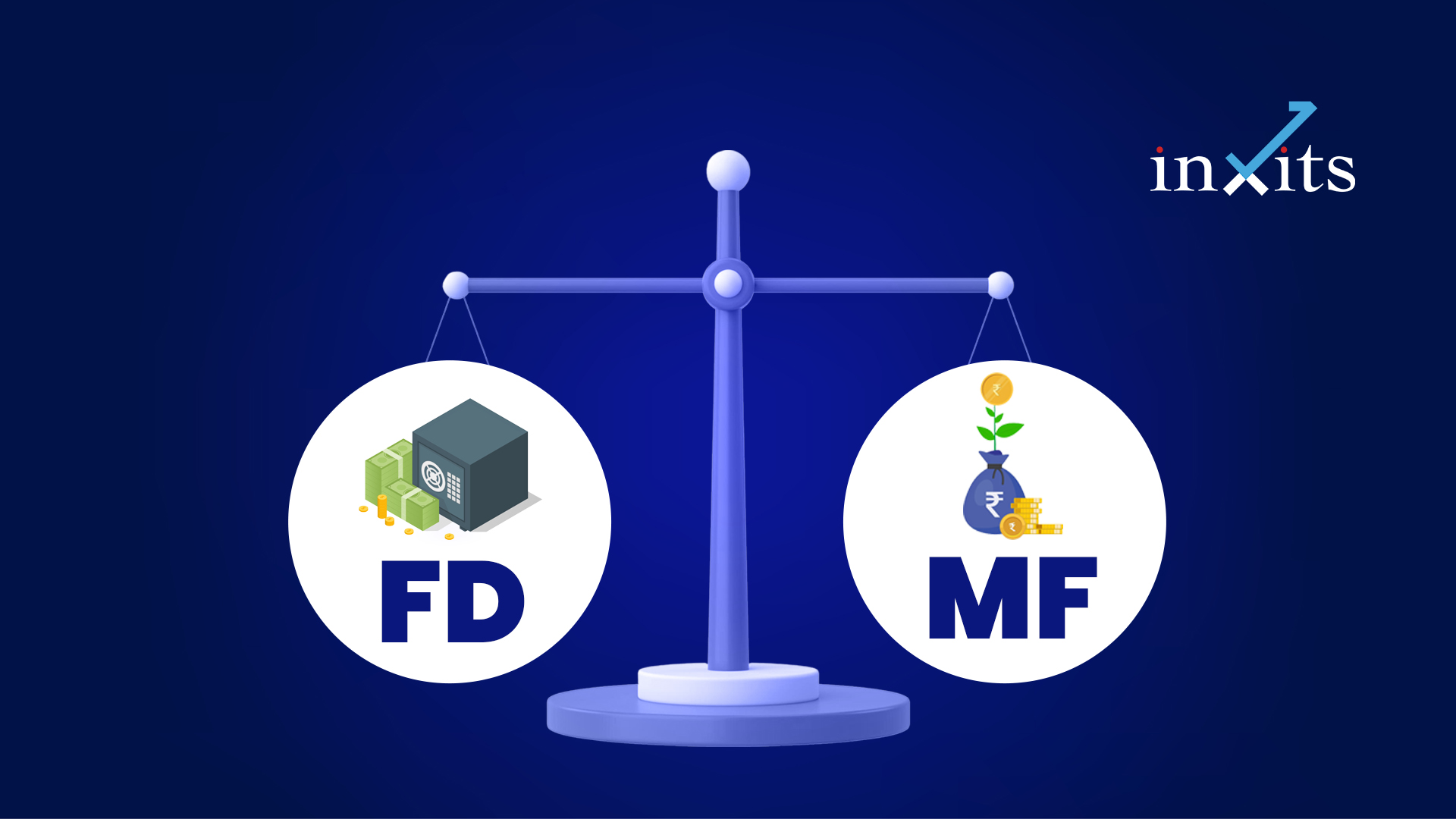
FD vs Mutual Fund: Understanding the Difference

“Should I put my money in an FD or mutual fund?”

This question usually comes at a very practical moment. You have some savings, and you want to place them somewhere that feels right.

Some people lean toward fixed deposits because they feel familiar. Others hear about mutual funds and feel they might offer something different.

But the confusion starts when comparisons become too simplified. One side talks about stability, the other about market participation.

Instead of asking which is better, it helps to understand FD vs mutual fund as two different tools designed for different situations.

What is a Fixed Deposit (FD)?

A fixed deposit is one of the most familiar financial instruments in India. You deposit a fixed amount for a fixed period, and the bank provides interest based on predefined rates.

Simple example

  • Deposit: ₹1,00,000
  • Tenure: 3 years
  • Outcome: Principal + fixed interest

Why investors feel comfortable

  • Clear structure
  • Known maturity value
  • No daily market fluctuations

This is why many investors associate FDs with stability.

What is a Mutual Fund?

A mutual fund works differently.

Instead of depositing money, you invest in a portfolio of assets such as:

  • Equity shares
  • Bonds
  • Government securities

The value of your investment changes based on the market value of these assets.

Simple view

  • Your money is part of a larger pool
  • A fund manager allocates investments
  • Value changes through NAV

This is the core difference in mutual fund vs FD India comparison.

Also read: Mutual Fund Categories in India

Myth vs Reality: FD vs Mutual Fund

Myth

FD is safe and mutual funds are risky.

Reality

Both have different types of risk and serve different purposes.

  • FD → Interest rate and inflation impact
  • Mutual fund → Market-linked fluctuations

So the comparison is not about safe vs unsafe, but about structure and use case.

FD vs Mutual Fund: Key Differences

FeatureFixed DepositMutual Fund
NatureDepositMarket-linked investment
ReturnsFixedVariable
Risk TypeInterest + inflationMarket-linked
LiquidityLimited by tenureDepends on fund
RegulationBanking systemSEBI

This table simplifies the FD vs MF difference.

Liquidity: When Can You Access Your Money?

Liquidity often matters more than returns in real life.

Fixed Deposit

  • Locked for a specific tenure
  • Early withdrawal may reduce interest

Mutual Funds

  • Open-ended funds → redeem anytime
  • Exit load may apply in some schemes
  • ELSS funds → 3-year lock-in

What is the exit load?

  • A small charge if you withdraw early
  • Applicable in certain mutual fund schemes

This makes liquidity planning important in fixed deposit vs mutual fund decisions.

Also read: What Is the 80% Rule for Mutual Funds?

Taxation: What Happens After Returns?

Taxation is where many investors feel confused.

Fixed Deposit Taxation

  • Interest is taxed as per your income slab

Mutual Fund Taxation (Post April 2023)

Equity Mutual Funds

  • Short Term Capital Gains (STCG): If held < 1 year
  • Long Term Capital Gains (LTCG): If held > 1 year

Debt Mutual Funds

  • Taxed as per income slab (no indexation benefit for newer investments)

Why this matters

The tax treatment can influence actual outcomes, especially over longer periods.

Risk: Understanding It Practically

Risk is not just about losing money. It is about how the instrument behaves.

Fixed Deposit Risk

  • Returns remain fixed
  • Inflation may affect purchasing power

Mutual Fund Risk

  • Value fluctuates
  • Depends on underlying assets

Different funds behave differently:

Understanding this helps in evaluating FD vs mutual fund beyond surface-level comparisons.

Real-Life Case Study: Choosing Based on Timeline

Scenario 1

‘X’ has ₹1 lakh for his sister’s wedding in 6 months

  • Priority: Capital stability + short duration
  • Instruments often considered: FD or liquid-type structures

Scenario 2

‘X’ has ₹1 lakh for retirement in 20 years

  • Priority: Long-term growth and participation
  • Instruments often considered: Equity-oriented mutual funds

This shows the real difference:

It is not about “which is better,” but “what fits the timeline.”

Inflation: The Silent Factor

Many investors overlook inflation.

Example:

  • Today: ₹1 lakh value
  • After years: Purchasing power changes

FD perspective

  • Fixed returns
  • Real value depends on inflation

Mutual fund perspective

  • Market-linked
  • May behave differently depending on asset type

This adds another layer to mutual fund vs FD India comparison.

Emotional Side of the Decision

Financial decisions are not only logical.

Common feelings include:

  • Comfort with guaranteed returns
  • Fear of market fluctuations
  • Confusion due to too many options

Understanding how each instrument behaves helps reduce uncertainty.

How a Structured Approach Helps

Instead of choosing between FD or mutual fund directly, a structured approach may help:

  • Define financial goals
  • Identify time horizon
  • Understand liquidity needs
  • Evaluate risk exposure

This is similar to how a personal CFO would approach financial decisions.

Connect with inXits for a 24×7 consultation focused on financial planning and portfolio review processes.

Conclusion

The FD vs mutual fund discussion often starts with a simple question but leads to a deeper understanding of how financial instruments work.

Fixed deposits provide a predefined structure with known outcomes, while mutual funds offer market-linked participation across different assets.

Understanding the FD vs MF difference helps investors evaluate how each option fits within their financial plan.

Instead of focusing only on returns, considering factors such as time horizon, liquidity, taxation, and financial goals can bring more clarity to financial decisions.

Connect with inXits for a 24×7 consultation focused on financial planning and portfolio review processes.

📘 Disclaimer
Investment in securities market are subject to market risks. Read all the related documents carefully before investing.
Registration granted by SEBI, membership of BSE and certification from NISM in no way guarantee performance of the intermediary or provide any assurance of returns to investors.

The securities quoted are for illustration only and are not recommendatory.

What Is the 80% Rule for Mutual Funds? Understanding a Key SEBI Regulation

Mutual funds are widely used investment vehicles in India because they allow investors to participate in financial markets through professionally managed portfolios. However, with hundreds of schemes available across categories such as equity, debt, and hybrid funds, many investors often wonder how these schemes maintain consistency with their stated investment strategy.

In many cases, investors select a mutual fund based on its category label. For example, someone choosing a large-cap equity fund expects the portfolio to primarily contain large-cap companies. However, without clear rules, fund portfolios could drift away from their stated category over time.

The SEBI 80% rule requires equity mutual funds in India to invest a minimum of 80% of their assets in the specific asset class or sector stated in their scheme name and mandate. This regulation ensures fund managers do not deviate from the category the investor chose.

This is where regulatory frameworks become important. The 80% rule for mutual funds helps ensure that mutual fund schemes remain aligned with their declared investment objectives. By setting portfolio allocation requirements, this rule aims to bring transparency and consistency to the mutual fund ecosystem.

Understanding this rule helps investors learn how mutual funds are structured and how regulators attempt to maintain clarity across fund categories.

Understanding the 80% Rule for Mutual Funds

The 80% rule for mutual funds refers to a regulatory requirement that mandates mutual fund schemes to invest at least 80% of their assets in the asset class or category they claim to follow.

This rule was introduced as part of broader classification and rationalization guidelines to bring greater transparency and uniformity to the mutual fund industry.

For example:

Mutual Fund CategoryMinimum Allocation Requirement
Large Cap Equity FundAt least 80% in large-cap stocks
Mid Cap Equity FundAt least 80% in mid-cap stocks
Small Cap Equity FundAt least 80% in small-cap stocks
Sectoral FundsAt least 80% in the specified sector

By setting this requirement, regulators aim to ensure that the fund’s portfolio reflects its stated strategy.

Therefore, when investors examine the 80% rule for mutual funds, they are essentially learning how fund portfolios must align with the category under which they are registered.

Also read: 10 Mutual Fund Myths That Cost You Money

Why the 80% Rule Was Introduced

Before regulatory categorization frameworks were implemented, mutual fund portfolios sometimes varied significantly even within the same category.

For instance:

Two funds labeled as “large-cap funds” could have very different portfolio allocations, with one fund investing heavily in mid-cap stocks. This could create confusion for investors attempting to understand risk exposure.

The introduction of the 80% rule for mutual funds aimed to address several challenges:

Clarity in fund categories
The rule ensures that each category has a clearly defined portfolio structure.

Transparency for investors
Investors can better understand what type of assets dominate a fund’s portfolio.

Reduced portfolio drift
Fund managers must maintain category alignment rather than significantly changing asset allocation.

Improved comparability
Investors can compare schemes within the same category more easily.

These objectives form part of broader regulatory efforts to standardize the mutual fund landscape.

How the 80% Rule Works in Practice

The rule requires mutual funds to allocate at least 80% of their total assets to the specific category mentioned in their scheme mandate.

The remaining 20% portion of the portfolio may be used for flexibility.

This flexible allocation allows fund managers to:

  • Manage liquidity requirements
  • Adjust exposure during market changes
  • Hold cash or debt instruments if required
  • Rebalance the portfolio periodically

For example:

Portfolio ComponentAllocation Example
Large-Cap Stocks80% or more
Other SecuritiesUp to 20%

The flexible portion allows operational freedom while maintaining the core strategy of the fund.

Understanding the 80% rule for mutual funds helps investors see how fund portfolios maintain both structure and flexibility.

Also read: What Is Mutual Fund Ranking in India? Meaning, Risks & How to Use It

Example of the 80% Rule in Equity Mutual Funds

Equity mutual funds are among the most widely discussed categories in India. Therefore, they provide a useful example of how the rule works.

Consider a hypothetical large-cap mutual fund.

A typical portfolio allocation could look like this:

Asset CategoryAllocation
Large-Cap Stocks82%
Mid-Cap Stocks8%
Debt or Cash10%

In this illustration:

  • The fund maintains compliance with the 80% rule by holding at least 80% in large-cap companies.
  • The remaining portion allows diversification and liquidity management.

This structure demonstrates how the rule maintains alignment between a fund’s name and its underlying portfolio.

Application of the Rule Across Different Mutual Fund Categories

The 80% rule for mutual funds does not apply only to equity funds. It also affects several other categories.

Examples include:

Sectoral and Thematic Funds

Sector-specific funds must invest at least 80% of their assets in companies belonging to that particular sector.

Example:

Sector FundMinimum Allocation
Banking Sector Fund80% in banking companies
Technology Sector Fund80% in technology companies

Debt Mutual Funds

Certain debt funds must maintain a specific allocation to defined credit categories or duration ranges depending on the scheme type.

Hybrid Funds

Hybrid funds combine equity and debt allocations. While their structures differ, their portfolio composition must still align with their declared mandate.

These frameworks ensure that each fund category remains identifiable and transparent.

What the 80% Rule Means for Investors

Although the 80% rule for mutual funds primarily governs fund managers, it also has implications for investors trying to understand their portfolio exposure.

Some of the insights investors often derive from this rule include:

Category consistency
Funds within the same category tend to follow broadly similar allocation guidelines.

Predictability of exposure
Investors selecting a large-cap fund generally expect significant exposure to large companies.

Improved comparison
Because funds follow category guidelines, comparing funds within the same segment becomes easier.

Portfolio transparency
Regulatory requirements encourage funds to maintain clear disclosures regarding asset allocation.

However, investors often remember that fund categories alone do not fully explain a scheme’s risk profile. Factors such as portfolio construction, market conditions, and investment strategy may still vary.

Limitations of the 80% Rule

While the rule provides structure, it does not eliminate all differences between mutual funds.

For instance:

Two funds within the same category may still differ in areas such as:

  • Stock selection
  • Portfolio concentration
  • Risk management approach
  • Turnover ratio

Consider a hypothetical example:

FundAllocation in Large Caps
Fund A82%
Fund B95%

Both funds comply with the rule, yet their portfolios may behave differently due to varying allocation levels.

Therefore, investors often study additional information such as scheme documents, portfolio disclosures, and risk factors.

Regulatory Role in Mutual Fund Classification

Mutual funds in India operate under regulatory oversight designed to maintain transparency and investor protection.

Regulatory frameworks typically focus on:

  • Scheme classification
  • Portfolio disclosure
  • Risk labeling
  • Investment restrictions

The 80% rule for mutual funds forms part of this broader regulatory structure.

These frameworks aim to ensure that investors receive clear information regarding how funds invest and how their portfolios are constructed.

How Structured Financial Planning Helps Interpret Mutual Fund Rules

Financial regulations, fund structures, and portfolio disclosures can sometimes feel complex for retail investors. Therefore, many investors approach financial decisions through structured frameworks that evaluate asset allocation, diversification, and risk exposure.

This approach is similar to how a personal CFO might organize financial information and review investment portfolios.

A structured review process may include:

  • Understanding asset allocation across equity, debt, and other instruments
  • Reviewing portfolio diversification
  • Evaluating tax considerations
  • Monitoring financial goals over time
  • Periodically reviewing investment portfolios

Platforms such as inXits combine research-backed frameworks and technology to help investors understand financial concepts, portfolio structures, and long-term planning considerations more clearly.

Connect with inXits for a 24×7 consultation focused on financial planning and portfolio review processes.

Conclusion

The 80% rule for mutual funds plays an important role in maintaining transparency within India’s mutual fund industry. By requiring schemes to invest at least 80% of their assets in the category they represent, regulators aim to ensure that mutual fund portfolios remain aligned with their stated investment objectives.

This rule helps improve category clarity, portfolio transparency, and comparability among mutual funds. However, investors often remember that while regulatory rules provide structure, individual funds may still differ in portfolio construction, risk management, and investment approach.

Understanding such regulatory frameworks can help investors develop a clearer perspective on how mutual funds operate within the broader financial system.

Connect with inXits for a 24×7 consultation focused on financial planning and portfolio review processes.

FAQ

What is the 80% rule for mutual funds?

The 80% rule requires a mutual fund to invest at least 80% of its assets in the asset class or category it represents.

Why was the 80% rule introduced?

It was introduced to bring clarity and consistency to mutual fund categories and help investors understand portfolio allocation.

Does the 80% rule apply to all mutual funds?

It mainly applies to equity and category-specific funds such as large-cap, mid-cap, small-cap, sectoral, and thematic schemes.

Which funds follow the 80% rule?

The rule applies to equity mutual funds, including large-cap, mid-cap, small-cap, sectoral, and thematic funds.

Can mutual funds invest the remaining 20% in other assets?

Yes, the remaining portion may be used for liquidity, diversification, or other permitted investments.

How does the 80% rule affect large-cap mutual funds?

Large-cap funds must invest at least 80% of their assets in large-cap companies as per classification norms.

Does the rule limit fund manager flexibility?

The rule ensures category alignment while allowing limited flexibility through the remaining allocation.

Are sectoral mutual funds subject to the 80% rule?

Yes, sectoral and thematic funds must invest at least 80% in their specified sector or theme.

What happens if a fund breaks the 80% rule?

The fund must rebalance within a specified time. Repeated violations may attract regulatory scrutiny.

How can investors check 80% rule compliance?

Investors can review monthly portfolios, fact sheets, and official disclosures to verify asset allocation.

Does the 80% rule guarantee mutual fund returns?

No, it ensures allocation consistency but does not guarantee returns or performance.

Why is understanding mutual fund regulations important?

It helps investors better understand fund structure, portfolio composition, and investment strategy.

📘 Disclaimer
Investment in securities market are subject to market risks. Read all the related documents carefully before investing.
Registration granted by SEBI, membership of BSE and certification from NISM in no way guarantee performance of the intermediary or provide any assurance of returns to investors.

Is ₹10,000 Enough to Start Mutual Fund Investing?

For many people, starting is the hardest part of investing. A common thought is: is ₹10,000 enough to begin?

Some hesitate because the amount feels small compared to what others may be investing. Others are unsure how such an amount actually works once invested.

At the same time, financial platforms often show charts, returns, and market data without explaining what happens behind the scenes.

So instead of focusing on “how much is enough,” it helps to understand what actually happens when you invest ₹10,000 and how small investment mutual funds fit into a broader financial plan.

Understanding Mutual Funds in Simple Terms

A mutual fund collects money from many investors and invests it across different assets.

These may include:

  • Company shares
  • Government securities
  • Corporate bonds
  • Money market instruments

Think of it like this:

Instead of putting ₹10,000 into one stock, your money gets spread across multiple securities based on the fund’s structure.

This is why mutual funds are often discussed in a mutual fund beginner guide India, as they simplify access to diversified investments.

Real-Life Scenario: First-Time Investor

Let’s consider Priya, a working professional starting her first job.

She has ₹10,000 saved and wants to begin investing but does not want to take large risks.

Instead of waiting to accumulate a bigger amount, she invests ₹10,000 in a mutual fund.

What happens next?

  • She receives units based on the fund’s NAV
  • Her investment becomes part of a diversified portfolio
  • The value starts changing based on market movement

This shows how small investment mutual funds work in practice.

What Happens When You Invest ₹10,000?

When ₹10,000 is invested, the fund allocates units based on NAV.

Example

InvestmentNAVUnits
₹10,000₹50200 units

If NAV changes:

NAVInvestment Value
₹50₹10,000
₹55₹11,000
₹45₹9,000

This explains how mutual fund returns small investment fluctuate with market conditions.

The securities quoted are for illustration only and are not recommendatory.

SIP vs Lump Sum: Practical View

Many beginners compare lump sum vs SIP.

Lump Sum Example

Priya invests ₹10,000 at once.

  • Entire amount enters at one NAV
  • Value depends on market movement afterward

SIP Example (₹10,000 split)

MonthInvestment
Month 1₹2,000
Month 2₹2,000
Month 3₹2,000
Month 4₹2,000
Month 5₹2,000

This is often discussed in context of SIP 10000 returns, where investments are spread across time.

Both approaches are used depending on financial comfort and planning style.

SIP Journey Example: How It Feels Over Time

Let’s extend Priya’s journey.

She starts with ₹10,000 lump sum and later adds ₹2,000 monthly SIP.

Over time:

  • Month 1: Initial ₹10,000
  • Month 6: Added ₹12,000 through SIP
  • Year 2: Regular contributions continue

This builds a habit rather than relying on one-time investment.

Income-Based Example: Starting Small

Consider a monthly salary of ₹30,000.

Instead of waiting to invest large amounts, a simple structure may look like:

  • ₹2,000 → SIP investment
  • ₹8,000 → expenses buffer
  • ₹5,000 → savings

Over time, as income grows, SIP contributions may increase.

This connects to how mutual fund minimum investment India allows small starting points.

How Investment Value Changes Over Time

Mutual funds are market-linked, so values change.

Example

YearNAVValue
Year 1₹52₹10,400
Year 3₹60₹12,000
Year 5₹48₹9,600

This shows that returns are not linear.

When people search for mutual fund returns small investment, it is important to understand that outcomes vary.

Role of Time in Small Investments

Time plays a major role.

Short-term:

  • More fluctuations
  • Less predictability

Long-term:

  • More time for markets to adjust
  • Compounding effect becomes visible

Example

PeriodValue
Start₹10,000
Year 5₹14,000
Year 10₹20,000

This demonstrates how time interacts with investment growth.

Inflation Example: Why Amount Matters Over Time

Let’s say monthly expenses today are ₹20,000.

After a few years, due to inflation:

  • Expenses may rise to ₹30,000 or more

If investments remain fixed, they may not align with future needs.

So investors often:

  • Increase SIP gradually
  • Review investments periodically

This shows how planning evolves beyond the initial ₹10,000.

Risk and Market Reality

Mutual funds are not fixed-return instruments.

Value changes due to:

  • Market movements
  • Economic conditions
  • Interest rate changes
  • Company performance

Understanding this helps set realistic expectations for small investment mutual funds.

Costs in Mutual Funds

Mutual funds include certain costs:

  • Expense ratio
  • Exit load (in some cases)
  • Taxation based on holding period

These are disclosed in official documents.

Diversification: What ₹10,000 Actually Buys

One key benefit is diversification.

Even with ₹10,000, an investor may gain exposure to:

  • Multiple companies
  • Different sectors
  • Various asset classes (depending on fund type)

Instead of relying on a single investment, risk is spread across multiple holdings.

Structured Thinking: Beyond ₹10,000

₹10,000 is not just an investment amount. It is often the starting point of financial awareness.

A structured approach may include:

  • Understanding asset allocation
  • Reviewing financial goals
  • Tracking investments
  • Adjusting contributions over time

Platforms like inXits help investors understand how small investments connect with long-term financial planning.

Connect with inXits for a 24×7 consultation focused on financial planning and portfolio review processes.

Conclusion

Starting with ₹10,000 can help investors understand how mutual funds work in real conditions. When asking what if I invest 10,000 in mutual funds, the answer depends on factors such as time horizon, market conditions, and investment structure.

Small investment mutual funds allow participation in diversified portfolios, even with limited capital. Over time, consistent investing and structured planning often become more important than the initial amount.

Developing financial awareness and reviewing investment decisions periodically can help investors approach financial planning with more clarity.

Connect with inXits for a 24×7 consultation focused on financial planning and portfolio review processes.

📘 Disclaimer
Investment in securities market are subject to market risks. Read all the related documents carefully before investing.
Registration granted by SEBI, membership of BSE and certification from NISM in no way guarantee performance of the intermediary or provide any assurance of returns to investors.

The securities quoted are for illustration only and are not recommendatory.

SWP in Mutual Fund: How It Works, Taxation, and When Investors Use It

You spend years building investments. SIPs run every month. Lump sum allocations grow over time. Then one day, the question shifts from “How do I invest?” to “How do I withdraw in a structured way?”

This is where SWP in mutual funds becomes relevant.

Many investors assume withdrawals must be irregular or fully redeemed at once. However, mutual funds allow a structured withdrawal option called a Systematic Withdrawal Plan (SWP). While commonly discussed in retirement contexts, SWPs can serve broader planning purposes.

This article explains SWP in mutual fund from an educational perspective—how it works, taxation implications, practical examples, and key considerations—without recommending any specific investment action.

What Is SWP in Mutual Fund?

A Systematic Withdrawal Plan (SWP) allows an investor to withdraw a fixed amount of money from a mutual fund scheme at regular intervals.

The frequency can typically be:

  • Monthly
  • Quarterly
  • Half-yearly
  • Annually

Instead of redeeming the entire investment at once, units are redeemed periodically to generate cash flow.

In simple terms:

  • SIP = Systematic investment
  • SWP = Systematic withdrawal

Both operate on discipline—but in opposite directions.

How Does SWP Work?

When you activate an SWP:

  1. You specify the withdrawal amount.
  2. You choose the frequency.
  3. The mutual fund redeems units equivalent to the withdrawal amount.
  4. The redeemed amount is credited to your bank account.

Each withdrawal reduces your unit balance.

Example of SWP in Mutual Fund

Suppose:

  • Initial investment: ₹10,00,000
  • NAV at start: ₹100
  • Total units: 10,000 units

You start an SWP of ₹20,000 per month.

If the NAV at the first withdrawal is ₹100:

  • Units redeemed = ₹20,000 ÷ ₹100 = 200 units
  • Remaining units = 9,800

If the NAV rises to ₹110 next month:

  • Units redeemed = ₹20,000 ÷ ₹110 ≈ 182 units

Because NAV increased, fewer units are redeemed.

This mechanism continues until:

  • You stop the SWP, or
  • Units are fully exhausted

The securities quoted are for illustration only and are not recommendatory.

When Do Investors Use SWP?

SWPs are often used in situations such as:

1. Retirement Income Planning

Investors may accumulate corpus during working years and withdraw periodically post-retirement.

2. Supplementing Regular Income

Some investors use SWP to create structured cash flow alongside pension, rental income, or business income.

3. Tax-Efficient Withdrawals (Context-Specific)

Since SWP redeems units partially, only the capital gains portion is taxed—not the entire withdrawal amount.

However, tax treatment depends on:

  • Fund category (equity or debt)
  • Holding period
  • Applicable tax laws

Tax rules should be reviewed carefully before making decisions.

Taxation of SWP in Mutual Fund

SWP taxation depends on the type of mutual fund and holding period.

Equity Mutual Funds

  • Short-Term Capital Gains (STCG): Taxed as per applicable equity STCG rules if units are held below long-term threshold.
  • Long-Term Capital Gains (LTCG): Taxed at applicable LTCG rates after holding beyond specified duration, subject to annual exemption limits.

Debt Mutual Funds

  • Gains may be taxed as per prevailing slab rates or capital gains provisions depending on applicable laws.
  • Indexation benefits may apply if eligible under current rules.

Important to note:

Each SWP installment is treated as a redemption transaction. Therefore, capital gains are calculated on each withdrawal separately.

SWP vs Dividend Option: What Is the Difference?

Earlier, investors used dividend payout options for periodic income. However, dividend taxation rules changed, and dividends are now taxed at the investor’s slab rate.

Key differences:

FeatureSWPDividend Option
Control Over AmountYesNo
TaxationOnly capital gains portion taxedEntire dividend taxable
FlexibilityCustomizableDepends on fund declaration

SWP provides more predictability compared to dividend distributions, which depend on fund house decisions.

Advantages of SWP in Mutual Fund

While not suitable for every investor, SWP offers certain structural benefits:

1. Predictable Cash Flow

Investors can define withdrawal frequency and amount.

2. Potential Tax Efficiency

Only gains portion is taxed, not full withdrawal.

3. Continued Market Participation

Remaining corpus stays invested and may grow depending on market conditions.

4. Flexibility

SWP can often be modified, paused, or stopped based on investor needs.

However, these advantages depend on disciplined planning and realistic expectations.

Risks and Considerations

SWP does not eliminate market risk.

Key risks include:

1. Sequence of Returns Risk

If markets decline sharply early during withdrawal phase:

  • Units redeemed may be higher
  • Corpus may reduce faster

This is especially relevant for equity-heavy portfolios.

2. Over-Withdrawal Risk

If withdrawal rate exceeds portfolio growth over time:

  • Capital erosion may occur
  • Corpus may deplete earlier than expected

3. Tax Planning Complexity

Frequent withdrawals create multiple capital gains entries that must be reported accurately during tax filing.

Therefore, SWP should align with financial goals, risk tolerance, and tax understanding.

How Much Can Be Withdrawn Safely?

There is no universal withdrawal rate applicable to all investors.

Factors influencing sustainable withdrawal include:

  • Asset allocation (equity vs debt mix)
  • Expected return assumptions
  • Inflation rate
  • Investment horizon
  • Risk tolerance

A conservative withdrawal approach typically considers long-term sustainability rather than short-term income needs.

A Hypothetical Retirement Illustration

Assume:

  • Retirement corpus: ₹50,00,000
  • Asset allocation: Balanced between equity and debt
  • Monthly SWP: ₹30,000

If portfolio earns moderate returns over time, corpus may sustain withdrawals for a defined period. However, if returns are lower or volatility persists, sustainability may change.

The securities quoted are for illustration only and are not recommendatory.

This example highlights the importance of planning rather than assuming fixed outcomes.

SWP for Retirement Income

Suppose an investor retires with a corpus of ₹1 crore.

They allocate:

• ₹60 lakh in equity funds
• ₹40 lakh in debt funds

They set up an SWP of ₹50,000 per month from the debt portion while allowing the equity portion to grow.

This structure may help balance income needs and long-term growth.

The securities quoted are for illustration only and are not recommendatory.

How to Start SWP in Mutual Fund?

Typically, investors:

  1. Log into mutual fund platform or distributor portal.
  2. Select the scheme.
  3. Choose “Systematic Withdrawal Plan.”
  4. Enter amount and frequency.
  5. Confirm mandate.

Minimum withdrawal amounts and frequency rules vary by fund house.

SWP vs SIP vs STP

Understanding differences improves clarity:

  • SIP (Systematic Investment Plan): Regular investing.
  • SWP (Systematic Withdrawal Plan): Regular withdrawal.
  • STP (Systematic Transfer Plan): Regular transfer between schemes.

Each serves a different stage of financial planning.

Is SWP Suitable for Everyone?

SWP may be considered in:

  • Retirement phase
  • Income distribution stage
  • Structured cash flow planning

However, suitability depends on:

  • Financial goals
  • Tax bracket
  • Risk profile
  • Existing income sources

It is not inherently superior or inferior—it is a tool within a broader financial strategy.

Where Structured Planning Becomes Important

Withdrawal strategies require:

  • Asset allocation review
  • Inflation-adjusted projections
  • Risk management
  • Tax clarity

Without structured review, SWP may either underdeliver income or erode corpus prematurely.

At inXits, the focus remains on aligning withdrawal strategies with overall financial planning frameworks and portfolio review processes.

Conclusion: Understanding SWP in Mutual Fund with Clarity

SWP in mutual fund provides a structured way to withdraw money periodically while keeping the remaining corpus invested. It can support income planning, especially in retirement or transitional financial phases.

However, SWP involves market risk, taxation considerations, and sustainability analysis. Therefore, decisions should be grounded in structured financial planning rather than assumptions about fixed returns.

Connect with inXits for a 24×7 consultation focused on financial planning and portfolio review processes.

📘 Disclaimer
Investment in securities market are subject to market risks. Read all the related documents carefully before investing.
Registration granted by SEBI, membership of BSE and certification from NISM in no way guarantee performance of the intermediary or provide any assurance of returns to investors.
The securities quoted are for illustration only and are not recommendatory.

What Is Mutual Fund Ranking in India? Meaning, Risks & How to Use It

You may have come across phrases like “top-ranked mutual funds” while researching investments. It sounds reassuring at first. If a fund is ranked highly, it must be a good choice, right?

That assumption is very common. Especially when you are trying to simplify a complex decision, rankings feel like a shortcut. In fact, many investors searching for the best mutual fund ranking India often rely on rankings as a quick way to make decisions. But without understanding what mutual fund ranking actually measures, it can quietly lead to confusion or misplaced confidence.

Many investors rely on rankings without knowing how they are calculated, what factors they consider, or how often they change. Over time, this can create a gap between expectation and actual portfolio outcomes.

Understanding mutual fund ranking clearly helps you move from guesswork to structured thinking. Instead of asking “Which fund is ranked highest?”, the better question becomes “What does this ranking really tell me about the fund?”

Before you read on, here is what this covers:

  • What mutual fund ranking actually measures and what it does not
  • How ranking differs from rating and past returns
  • Why a high rank does not automatically mean suitability
  • How to interpret rankings within your own financial context

What Is Mutual Fund Ranking and How Does It Work?

Mutual fund ranking is a system used to compare funds within the same category based on specific performance and risk-related parameters.

In simple terms, it answers one question: how does one fund perform relative to others like it?

Funds are not ranked across all categories together. For example, large-cap equity funds are compared only with other large-cap funds, not with small-cap or debt funds. This ensures a fair comparison.This process also supports mutual fund comparison India by standardising how funds are evaluated within categories.

Most ranking systems in India consider a combination of factors such as:

  • Historical returns over multiple time periods
  • Risk measures like volatility or downside risk
  • Risk-adjusted returns such as Sharpe ratio or alpha
  • Consistency of performance across market cycles
  • Expense ratio and portfolio quality

Different agencies may use slightly different methodologies. In India, commonly referenced names include CRISIL and Morningstar.

However, the core idea remains the same. A rank is always relative, not absolute.

Also read: Mutual Fund Categories in India: Complete Beginner Guide

Mutual Fund Ranking vs Rating: What Is the Difference?

This is where confusion often begins.

Many investors use “ranking” and “rating” interchangeably, but they are not the same.

Here is a simple comparison:

FactorRankingRating
MeaningPosition among peersScore or grade assigned
Format1st, 2nd, 3rd, etc.Stars (1 to 5), grades
NatureRelative comparisonRisk-return evaluation
Change frequencyCan change frequentlyUsually more stable

A fund ranked #1 today may not hold that position next year. Rankings shift as market conditions change.

Ratings, on the other hand, aim to provide a more stable view of risk-adjusted performance over time.

Understanding this difference helps avoid overreacting to short-term movements in rankings.

What Most Investors Assume vs What Actually Happens

Let’s address a common misconception clearly.

What most investors assume:
A higher-ranked mutual fund will always deliver better returns in the future.

What actually happens:
Rankings are based on past data and relative performance. They do not predict future outcomes. A fund that performed well in one market phase may underperform in another.

Why this matters:
If you select funds only based on recent rankings, you may end up chasing past performance rather than building a consistent investment approach.

This is especially relevant during strong bull markets, when certain funds temporarily move to the top of rankings.

Why Do Mutual Fund Rankings Change So Often?

If you have tracked rankings over time, you may have noticed they shift frequently.

This happens because:

  • Market cycles change leadership between sectors and styles
  • Fund managers adjust portfolio strategies
  • Economic conditions impact different categories differently
  • New funds enter the category while others exit

For example, a mid-cap fund may rank highly during a growth-driven market phase. But during volatility, large-cap funds may move up in rankings due to relative stability.

This does not mean one category is better than the other. It simply reflects changing conditions.

How Should You Actually Use Mutual Fund Rankings?

Mutual fund rankings can be useful, but only when used correctly.

Instead of treating rankings as a final decision tool, consider them as a starting filter.This approach is helpful when understanding how to choose mutual funds India beyond just rankings.

A practical approach is:

  • Use rankings to shortlist funds within a category
  • Check consistency across multiple time periods
  • Evaluate risk metrics alongside returns
  • Align the fund with your financial goal and time horizon

Imagine Rohan, 30, a software engineer in Ahmedabad, planning for long-term wealth creation. He notices a small-cap fund ranked at the top recently.

Instead of investing immediately, he compares its volatility, past drawdowns, and consistency over 5–7 years. He then checks whether that level of risk fits his comfort level.

This shift in approach turns rankings into insight rather than a shortcut.

Do Rankings Reflect Risk Properly?

This is where many investors feel uncertain.

Some ranking systems include risk-adjusted metrics, but not all investors understand what those mean.

For example:

  • A fund may have high returns but also high volatility
  • Another fund may deliver moderate returns with lower risk

Both could rank differently depending on the methodology used.

Understanding risk does not require complex formulas. It starts with a simple question:

How much fluctuation am I comfortable with over time?

When you view rankings through this lens, they become more meaningful.

Have a specific question about how to evaluate mutual fund rankings for your portfolio? connect with an investment advisor — a conversation with a qualified advisor, no forms, no wait.

Are Top-Ranked Mutual Funds Always the Right Choice?

Short answer: not necessarily.

Suitability depends on your:

  • Financial goals
  • Investment horizon
  • Risk tolerance
  • Existing portfolio allocation

A top-ranked aggressive fund may not suit someone saving for a short-term goal. Similarly, a conservative fund may not align with long-term growth objectives.

Rankings do not account for individual circumstances. They are generic by design.

That is why interpretation matters more than the rank itself.

Should You Invest in Top Ranked Mutual Funds?

Investing in top-ranked mutual funds may seem like a logical decision, but it requires careful consideration.

A high rank reflects past performance relative to peers, not future potential. Market conditions, fund strategy, and category cycles can change over time, which may impact rankings.

Before investing in a top-ranked fund, investors may consider:

  • Whether the fund aligns with their financial goals
  • The level of risk involved
  • Performance consistency across different market cycles
  • Portfolio fit and existing allocations

Rather than selecting funds purely based on rankings, a more structured approach involves combining rankings with risk evaluation and long-term investment planning.

Where Do These Rankings Come From in India?

In India, mutual fund rankings and ratings are provided by independent research agencies.

Some commonly referenced ones include:

  • CRISIL Mutual Fund Rankings
  • Morningstar India Ratings
  • Value Research Online

These agencies follow structured methodologies and aim to provide objective comparisons.

However, even these should be seen as tools, not conclusions.

How Does SEBI View Mutual Fund Rankings?

SEBI regulates mutual funds in India but does not issue rankings.

It focuses on ensuring:

  • Transparency in disclosures
  • Standardised categorisation of funds
  • Clear communication of risk through risk-o-meter
  • Protection of investor interests

This means rankings come from third-party research, not regulatory endorsement.

Understanding this distinction helps avoid assuming that a ranked fund is “approved” or “recommended” by a regulator.

When Rankings Feel Confusing, What Helps

Navigating mutual fund ranking can feel complex without a clear framework. At inXits, advisors work with investors to interpret rankings alongside risk, goals, and portfolio structure, rather than in isolation. If you have questions about how rankings relate to your investment decisions, speaking with a qualified personal CFO can help bring clarity tailored to your situation.

Understanding mutual fund ranking clearly is one part. Knowing exactly how it fits your financial goals is what actually moves things forward. At inXits, a financial advisor works with you to connect fund evaluation to your actual investment profile, not a generic explanation. connect with an investment advisor

Conclusion

Mutual fund ranking is a useful comparison tool, but it is not a decision in itself. It reflects past, relative performance within a category, not future outcomes.

A high rank may indicate strong recent performance, but it does not automatically mean suitability for your goals. Context, risk, and time horizon matter just as much.

When you interpret rankings with clarity instead of relying on them blindly, your investment decisions become more structured and grounded.

Over time, understanding concepts like mutual fund ranking helps build confidence and discipline in long-term investing. If you are looking to go beyond rankings and understand what fits your situation, connect with an investment advisor to explore your options with clarity.

In Summary

Mutual fund ranking compares funds within the same category based on performance and risk-related factors. While it can help shortlist options, it does not predict future returns or suitability. Rankings change frequently with market conditions, so relying on them alone may lead to inconsistent decisions. A more thoughtful approach is to combine rankings with risk evaluation, time horizon, and personal financial goals. Understanding this balance helps investors move from reactive choices to structured investing.

Disclaimer

Investment in securities market are subject to market risks. Read all the related documents carefully before investing.
Registration granted by SEBI, membership of BSE and certification from NISM in no way guarantee performance of the intermediary or provide any assurance of returns to investors.

📱 Download our App