An unexpected expense rarely gives you time to think.
It could be a medical situation, a job gap, or even a sudden financial commitment. At that moment, the question is no longer theoretical. It becomes urgent: Where will the money come from?
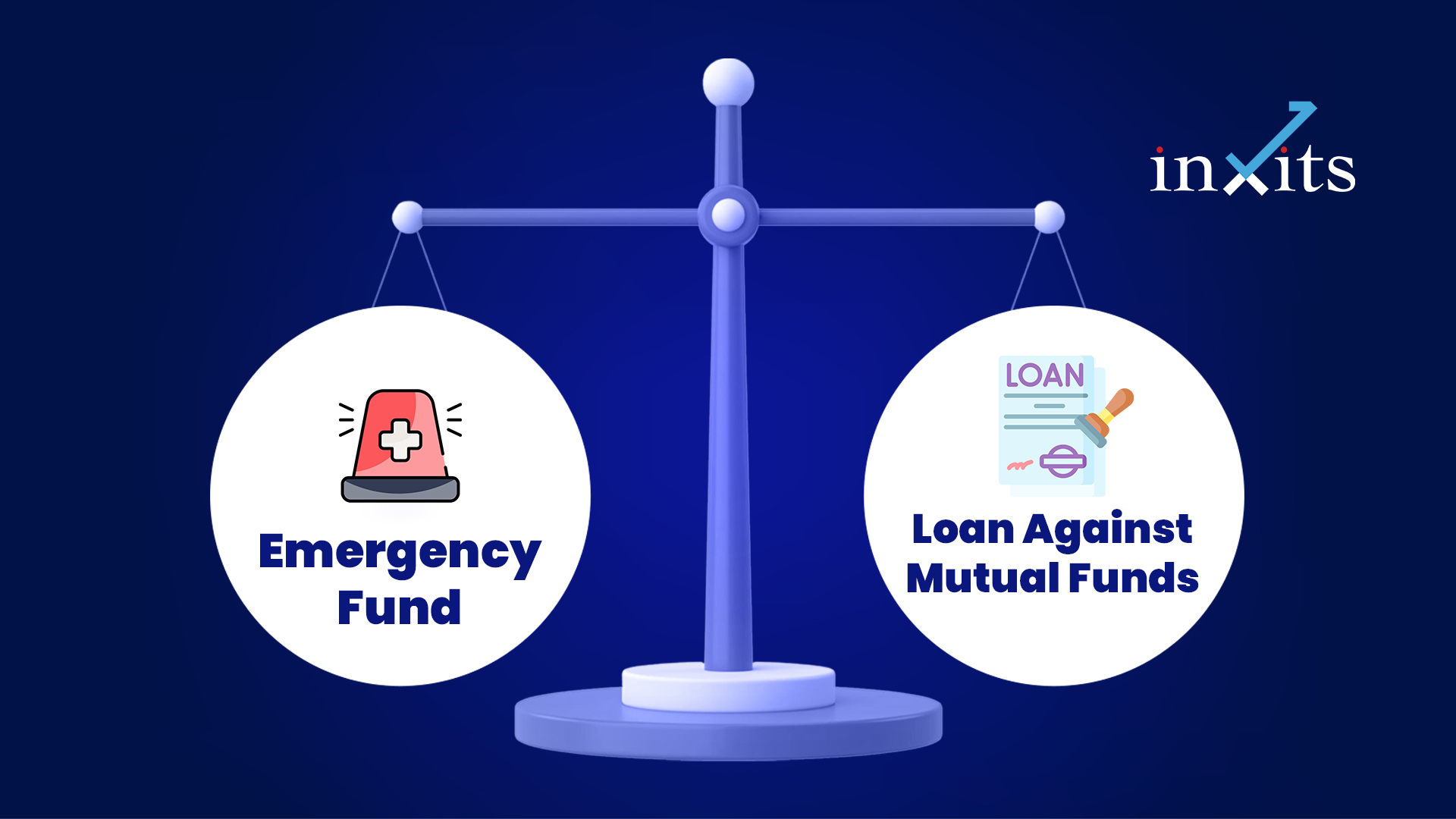
Some investors rely on an emergency fund. Others look at options like a loan against mutual funds. And many find themselves stuck between the two, unsure which approach is actually more practical.
If you’ve ever wondered whether you should build a buffer or depend on liquidity through investments, you’re not alone. This is less about choosing one option and more about understanding how each fits into your financial life.
Before you read on
- Emergency fund and mutual fund loan solve different problems
- Liquidity vs loan is not a direct replacement decision
- Emergency funds offer certainty, loans offer flexibility
- Costs, risks, and timing differ significantly
- A balanced approach often works better than choosing one
What is an emergency fund and why does it matter?
An emergency fund is simply money set aside for situations you cannot predict.
This is not investment capital. It is not meant to grow aggressively. It exists for one purpose: immediate access without consequences.
Typically, investors aim to keep:
- 3 to 6 months of expenses
- In liquid instruments like savings accounts or liquid funds
The emotional side most people relate to
Many investors delay building an emergency fund because it feels unproductive. The money just sits there.
That hesitation is understandable.
But the value of an emergency fund is not in returns. It is in removing pressure during uncertain moments.
What is a loan against mutual funds in an emergency context?
A loan against mutual funds allows you to borrow by pledging your investments instead of selling them.
In an emergency, this can feel like a convenient fallback:
- You retain ownership of your investments
- You avoid redeeming during unfavorable market conditions
- You get access to funds relatively quickly
However, unlike an emergency fund, this is still a loan.
Which means:
- Interest cost applies
- Repayment is required
- Market value of investments matters
This difference becomes important when comparing emergency fund or mutual fund loan decisions.
Emergency fund or mutual fund loan: what do investors usually assume?
Assumption vs Reality
What most investors assume:
“I don’t need to keep idle cash. I can always take a loan against my investments if needed.”
What actually happens:
Emergencies often come with uncertainty. Relying only on a mutual fund loan introduces dependence on market value, approval timelines, and repayment pressure.
Why this matters:
During stress, simplicity matters more than optimization. An emergency fund provides certainty. A loan provides access, but with conditions
A real-life scenario: How this decision plays out
Consider Neha, 34, a software professional in Delhi.
She has built a ₹12 lakh mutual fund portfolio but has no dedicated emergency fund. She believes her investments are sufficient backup.
Suddenly, she faces a medical expense of ₹3 lakh.
Her options:
- Take a loan against mutual funds
- Redeem investments
- Arrange funds through other sources
She chooses a mutual fund loan.
It works. But she notices something:
- She now has repayment pressure
- Market fluctuations make her slightly uneasy
- The situation feels more complex than expected
Now imagine the same situation with a 6-month emergency fund. The decision becomes simpler. No loan, no stress, no conditions. This is the difference between prepared liquidity and reactive liquidity.
Liquidity vs loan: what actually matters in emergencies?
This is where the comparison becomes clearer.
| Factor | Emergency Fund | Mutual Fund Loan |
| Access speed | Immediate | Depends on process |
| Cost | No interest | Interest applies |
| Stress level | Lower | Higher due to repayment |
| Market dependency | None | Yes |
| Discipline required | Before emergency | After borrowing |
The idea of liquidity vs loan is not just about access to money. It is about the experience during an already stressful situation.
When can a mutual fund loan still make sense?
A loan against mutual funds can still be useful in certain cases:
- When the emergency fund is partially insufficient
- When redeeming investments would trigger significant tax or loss
- When the requirement is temporary and repayment is clear
In this sense, it works better as a secondary layer, not a replacement.
Have a specific question about how to balance emergency funds and borrowing options? You can speak with an investment advisor about your liquidity planning — a conversation with a qualified advisor, no forms, no wait.
Should you keep an emergency fund even if you have investments?
This is one of the most common questions.
The short answer: yes, most investors should.
Not because investments are ineffective, but because they serve a different purpose.
An emergency fund:
- Protects your investments from forced decisions
- Reduces emotional pressure during uncertain times
- Acts as a buffer before you consider borrowing
From an emergency planning mutual fund perspective, your investments and your emergency fund are not substitutes. They are complementary tools.
How inXits helps you think about liquidity planning
Deciding between an emergency fund and a loan against mutual funds is not always straightforward. At inXits, advisors work with investors to structure liquidity in a way that balances immediate access, long-term investments, and risk comfort. If this feels like a trade-off, a structured conversation can help clarify what combination works best for your situation.
You can explore loan against mutual funds with an advisor to see how it fits into your overall financial plan.
Conclusion
The choice between an emergency fund or mutual fund loan is not about which is better in isolation. It is about what role each plays in your financial life.
An emergency fund offers certainty, simplicity, and immediate access. A loan against mutual funds offers flexibility, but with conditions like interest and repayment.
Most investors benefit from using both, not as alternatives, but as layers.
Taking the time to structure your liquidity thoughtfully can reduce stress during uncertain moments and protect your long-term investments. If you are reviewing your approach, you can also evaluate your loan against mutual funds options with an advisor to align it with your broader financial plan.
Disclaimer
Investments in securities markets are subject to market risks. Read all related documents carefully before investing.
inXits is a SEBI-registered investment adviser (Registration No. INA000020369). This article is for educational purposes only and does not constitute personalised investment advice.
Registration granted by SEBI, membership of BSE, and certification from NISM in no way guarantee performance of the intermediary or provide any assurance of returns to investors.