

How Mutual Fund Purchase Works: A Step-by-Step View

You might have clicked “invest” on a mutual fund app and assumed the process is instant. Money goes in, units get allocated, and that is it.

But behind that simple action, there is a structured process that determines when your investment actually gets executed and at what price.

This is where many investors feel confused. Why does the NAV sometimes differ from what they expected? Why does timing matter for a purchase?

Understanding how mutual fund purchase works helps remove this uncertainty. It gives you clarity on what happens between placing an order and actually owning units.

Before you read on, here is what this covers:

  • What happens after you place a mutual fund purchase order
  • How NAV and cut-off timing affect your investment
  • The difference between SIP and lump sum purchase
  • When units actually get allocated

What Happens When You Buy a Mutual Fund?

When you invest in a mutual fund, you are buying units of the fund, not individual stocks.

Here is what happens at a high level:

  • You place a purchase request through an app, website, or advisor
  • Your money is transferred to the mutual fund
  • Units are allocated based on the applicable NAV
  • The transaction is recorded and reflected in your account

While this sounds simple, the key detail lies in which NAV is applied.

What Is NAV and Why Does It Matter?

NAV, or Net Asset Value, is the price per unit of a mutual fund.

It is calculated at the end of each market day based on the value of the fund’s underlying assets.

When you invest:

  • You do not get the NAV at the time you click “buy”
  • You get the NAV based on cut-off timing rules

This is why two investors placing orders on the same day may get different NAVs depending on timing and payment realisation.

How Do Cut-Off Timings Work in India?

SEBI has defined cut-off timings that determine which day’s NAV you receive.

For most equity mutual funds:

  • Orders placed before 3:00 PM, with funds credited, get the same day’s NAV
  • Orders placed after 3:00 PM get the next business day’s NAV

However, the important detail is fund realisation, not just order time.

If your payment reaches the fund after the cut-off, the applicable NAV shifts accordingly.

What Most Investors Assume vs What Actually Happens

Let’s address a common misunderstanding.

What most investors assume:
If I place an order before 3:00 PM, I will get that day’s NAV.

What actually happens:
The NAV depends on when the funds are actually received by the mutual fund, not just when the order is placed.

Why this matters:
Delays in payment processing can result in a different NAV than expected, especially during volatile markets.

Understanding this helps avoid confusion around price differences.

Why Your NAV Is Different Than Expected

This is one of the most common points of confusion for investors.

Even if you invest “on time,” the NAV you receive may differ due to:

– Payment delay

– Bank cut-off timing

– Weekend or market holiday

AMC processing time

Here’s how it typically plays out:

SituationWhat Happens
Order placed before 3 PM but payment delayedNext day NAV applies
Payment processed after banking cut-offTreated as next business day
Investment on weekend/holidayProcessed on next working day
AMC receives funds lateNAV shifts accordingly

Understanding this helps you avoid unnecessary concern about small NAV differences.

Step-by-Step: How Mutual Fund Purchase Works

Let’s break the process into simple steps.

  1. Order Placement
    You select a fund and enter the investment amount.
  2. Payment Initiation
    Money is transferred via net banking, UPI, or other modes.
  3. Fund Realisation
    The AMC receives the money.
  4. NAV Application
    Applicable NAV is determined based on cut-off timing and fund receipt.
  5. Unit Allocation
    Units are credited to your account.
  6. Confirmation
    You receive a transaction confirmation and account statement.

Most equity fund units are allotted on T+1 basis after NAV application, while some debt/liquid funds may be processed faster.

SIP vs Lump Sum: Does the Process Differ?

The underlying process is similar, but the execution differs slightly.

Lump Sum Investment

  • One-time purchase
  • NAV depends on timing of that specific transaction

SIP (Systematic Investment Plan)

  • Automated recurring investments
  • Each installment follows the same NAV and cut-off rules

So in SIPs, each installment is treated as a separate purchase.

SIPs also help reduce timing-related stress since investments are spread over time.

In contrast, lump sum investments are more sensitive to timing, as the entire amount is exposed to a single NAV.

Also read: SIP vs Lump Sum: Understanding the Key Differences

When Do You Actually Receive Units?

Unit allocation does not happen instantly.

Typically:

  • For equity funds: units are allotted within 1 working day after NAV application
  • For debt funds: timing may vary slightly

The units then reflect in your mutual fund account or demat account.

This delay is part of the standard settlement process.

Does Market Movement Affect Your Purchase Timing?

Yes, and this is where investors often feel uncertain.

If markets move sharply:

  • The NAV at the end of the day may differ from expectations
  • Timing of fund realisation becomes more noticeable

However, trying to time purchases based on daily movements can lead to inconsistent decisions.

A structured approach often helps reduce this anxiety.

What Role Do AMCs and SEBI Play in This Process?

The purchase process is governed by regulatory guidelines.

SEBI ensures:

  • Standardised cut-off timings
  • Transparency in NAV calculation
  • Fair allocation of units

Asset Management Companies (AMCs) execute transactions based on these rules.

This framework ensures consistency across all mutual funds in India.

Common Situations That Cause Confusion

Some scenarios where investors feel unsure:

  • Order placed before 3:00 PM but NAV applied is next day
  • Payment delay due to banking issues
  • Weekend or holiday transactions
  • SIP date falling on a non-business day

In such cases, understanding the process helps clarify why the NAV differs.

Have a specific question about how your mutual fund purchase timing affects your investment? Avoid confusion around NAV and timing. Get complete clarity on your investments with inXits. — a conversation with a qualified advisor, no forms, no wait.

Also read: Types of SIP in Mutual Funds Explained (7 SIP Strategies)

Should You Worry About Getting the Exact NAV?

This is a practical concern.

For long-term investors:

  • Small differences in NAV due to timing usually have limited impact
  • Consistency and discipline matter more than exact entry timing

For short-term decisions, timing may feel more important, but it also increases complexity.

Understanding the process helps you stay focused on the bigger picture.

How to Think About Mutual Fund Purchases

Instead of focusing only on timing, a more useful approach is:

  • Understand the process
  • Be aware of cut-off rules
  • Focus on long-term consistency

This shift helps reduce uncertainty and improves decision-making clarity.

Navigating how mutual fund purchase works can feel confusing without a clear framework. At inXits, advisors work with investors to understand not just how to invest, but how execution details like timing and NAV affect their decisions. If you have questions about how your investments are processed, speaking with a qualified personal CFO can help bring clarity tailored to your situation.

Understanding how mutual fund purchase works is one part. Knowing how it fits into your broader investment plan is what actually moves things forward. At inXits, a financial advisor works with you to connect execution details to your overall portfolio strategy, not a generic explanation. connect with an investment advisor

Conclusion

Mutual fund purchase involves a structured process that determines when your investment is executed and at what NAV.

While the process may seem simple on the surface, details like cut-off timing and fund realisation play an important role.

For investors, clarity around this process helps reduce confusion and set the right expectations.

Over time, understanding how mutual fund purchase works supports more disciplined and informed investment decisions. If you want to better align your investment process with your goals, Avoid confusion around NAV and timing. Get complete clarity on your investments with inXits.

In Summary

Mutual fund purchase involves placing an order, transferring funds, applying NAV based on cut-off timing, and allocating units. The key factor is when the money reaches the fund, not just when the order is placed. While timing can affect NAV, long-term investors benefit more from consistency than precision. Understanding this process helps reduce confusion and supports better investment decisions.

FAQ

How does mutual fund purchase work in India?

It involves placing an order, transferring funds, applying NAV based on cut-off timing, and allocating units accordingly.

What is the cut-off time for mutual fund purchase?

For most equity funds, it is 3:00 PM, subject to fund realisation.

Do I get the NAV at the time of purchase?

No, you get the NAV based on when the funds are received by the AMC.

How long does it take to get mutual fund units?

Usually 1 to 2 working days after the transaction is processed.

What happens if I invest after 3:00 PM?

You typically receive the next business day’s NAV.

Does SIP follow the same purchase process?

Yes, each SIP installment follows the same NAV and cut-off rules.

Can NAV change after I place an order?

Yes, NAV is determined at the end of the day and may differ from expectations.

What if my payment is delayed?

Delayed payment can result in the next applicable NAV being applied.

Is mutual fund purchase regulated by SEBI?

Yes, SEBI sets rules for cut-off timing, NAV calculation, and transparency.

Should I time my mutual fund purchases?

Timing has limited impact for long-term investors. Consistency is usually more important.

Disclaimer
Investment in securities market are subject to market risks. Read all the related documents carefully before investing.
Registration granted by SEBI, membership of BSE and certification from NISM in no way guarantee performance of the intermediary or provide any assurance of returns to investors.
What Is Beta in Mutual Funds? (Risk Explained Simply)

You might have seen a number called “beta” in a mutual fund factsheet and wondered what it actually tells you. It sits next to returns and ratios, but it is not immediately obvious how to use it.

For many investors, beta feels abstract. A number like 1.2 or 0.8 does not clearly translate into a real-world impact on their investments.

This is where uncertainty builds. Without understanding beta, it becomes harder to judge how a fund might behave when markets move.

Understanding what beta in mutual funds really means helps you see the risk behind the returns. It gives you a clearer picture of how sensitive your investment is to market changes.

Before you read on, here is what this covers:

  • What beta in mutual funds actually measures
  • How to interpret high and low beta
  • How beta affects risk and volatility
  • How to use beta in your investment decisions

What Is Beta in Mutual Funds?

Beta is a measure of how much a mutual fund’s returns move in relation to its benchmark or the overall market.

In simple terms, it answers this question:

How sensitive is this fund to market movements?

Here is how to read it:

  • Beta = 1 → The fund moves in line with the market
  • Beta > 1 → The fund is more volatile than the market
  • Beta < 1 → The fund is less volatile than the market

For example:

  • A beta of 1.2 suggests the fund is expected to move 20% more than the market. So if the market moves 10%, the fund may move around 12%.
  • A beta of 0.8 means the fund may move 8% when the market moves 10%

This applies to both upward and downward movements.

How Is Beta Calculated?

Beta is calculated by comparing the fund’s returns with its benchmark over a period of time.

It measures the relationship between:

  • Fund returns
  • Market or benchmark returns

You do not need to calculate beta manually. It is available in mutual fund factsheets.

The key takeaway is that beta reflects relative volatility, not absolute returns.

What Does High Beta Mean?

A high beta indicates that the fund is more sensitive to market movements.

This means:

  • It may rise more during bullish markets
  • It may fall more during market declines

For example, a small-cap fund often has higher beta because smaller companies tend to be more volatile.

This does not make high beta good or bad. It simply reflects higher movement relative to the market.

What Does Low Beta Mean?

A low beta indicates that the fund is less sensitive to market fluctuations.

This means:

  • It may fall less during market downturns
  • It may rise less during strong rallies

For example, large-cap or defensive funds often have lower beta due to more stable underlying businesses.

Low beta is often associated with relatively stable performance.

What Is a Good Beta for Mutual Funds?

  • Beta ~1 → Market-like  
  • Beta >1 → Aggressive  
  • Beta <1 → Defensive  

For example:

Large-cap funds often have beta close to 1, while small-cap funds may have higher beta.

What Most Investors Assume vs What Actually Happens

Let’s address a common assumption.

What most investors assume:
Lower beta always means a better or safer investment.

What actually happens:
Lower beta means lower volatility relative to the market, but it may also mean lower participation during market rallies.

Why this matters:
Choosing funds only based on low beta may limit growth potential, especially for long-term goals.

Risk and return are connected, and beta reflects one part of that relationship.

Beta vs Alpha: What Is the Difference?

Beta and alpha are often discussed together but serve different purposes.

FactorBetaAlpha
MeaningMarket sensitivityExcess return over benchmark
FocusRiskPerformance
RoleMeasures volatilityMeasures value added
ExampleBeta 1.2 → higher volatilityAlpha +2% → outperformance

Beta tells you how much the fund moves. Alpha tells you whether those movements add value.

Also read: What Is Alpha in Mutual Funds and How Should You Read It

Does Beta Change Over Time?

Yes, beta is not fixed.

It can change because:

  • Market conditions evolve
  • Portfolio composition changes
  • Sector allocation shifts

For example, if a fund increases exposure to cyclical sectors, its beta may rise.

This is why beta should be reviewed periodically, not just once.

How Should You Interpret Beta as an Investor?

Beta becomes meaningful when you relate it to your comfort with market fluctuations.

A practical way to think about it:

  • Higher beta → more ups and downs
  • Lower beta → relatively smoother movement

Imagine Rahul, 30, a consultant in Ahmedabad, evaluating two equity funds.

One has a beta of 1.3, while the other is around 0.9. Instead of choosing based on returns alone, he considers how much volatility he is comfortable handling over time.

This helps him align his investment with his risk tolerance.

Can a Low Beta Fund Still Be Risky?

Yes, in certain situations.

Beta measures only market-related risk, also called systematic risk.

It does not capture:

  • Company-specific risks
  • Credit risks in debt funds
  • Liquidity risks

So while beta is useful, it is not a complete picture of risk.

Is Higher Beta Always Better for Returns?

Not necessarily.

Higher beta may lead to:

  • Higher gains in strong markets
  • Higher losses in weak markets

Returns depend on multiple factors, not just volatility.

This is why beta should be evaluated alongside other metrics like alpha, consistency, and strategy.

Have a specific question about how beta affects your mutual fund choices? Know how much volatility your portfolio is actually taking. Decode your risk profile with inXits. — a conversation with a qualified advisor, no forms, no wait.

How Does SEBI Influence Risk Disclosure Like Beta?

SEBI does not define beta directly, but it ensures transparency in risk communication.

This includes:

  • Risk-o-meter classification for funds
  • Standardised disclosures in factsheets
  • Benchmark comparison requirements

These measures help investors understand risk more clearly.

How to Think About Beta in Your Portfolio

Beta is a tool for understanding behaviour, not making decisions in isolation. Instead of asking “Which fund has the lowest beta?”, a better question is:

  • Does this fund’s volatility match my investment horizon and comfort level?
  • This shift helps you use beta as insight rather than a filter.

Navigating concepts like beta can feel complex without a clear framework. At inXits, advisors work with investors to interpret risk metrics like beta in the context of their financial goals and portfolio structure. If you have questions about how beta fits into your investment decisions, speaking with a qualified personal CFO can help bring clarity tailored to your situation.

Understanding beta clearly is one part. Knowing how it fits into your financial decisions is what actually moves things forward. At inXits, a financial advisor works with you to connect risk metrics to your actual investment profile, not a generic explanation.

Conclusion

Beta in mutual funds measures how sensitive a fund is to market movements. It helps investors understand the volatility of a fund relative to its benchmark.

While higher beta indicates greater movement, it does not guarantee higher returns. Similarly, lower beta reflects stability but may limit upside in strong markets.

For investors, the goal is to interpret beta within the broader context of goals, risk tolerance, and investment strategy.

Over time, understanding concepts like beta in mutual funds helps build more informed and disciplined investment decisions. If you want to evaluate risk in a way that aligns with your goals, Know how much volatility your portfolio is actually taking. Decode your risk profile with inXits. to explore your options with clarity.

In Summary

Beta measures how much a mutual fund’s returns move relative to the market. It reflects volatility, not performance. High beta funds are more sensitive to market changes, while low beta funds are relatively stable. Interpreting beta alongside other factors like alpha, strategy, and goals helps investors make more balanced decisions.

FAQ

What is beta in mutual funds in simple terms?

Beta measures how much a mutual fund’s returns move in relation to the market or its benchmark.

What does a beta of 1 mean?

A beta of 1 means the fund moves in line with the market.

Is lower beta better in mutual funds?

Not necessarily. Lower beta means less volatility, but it may also limit returns during market rallies.

What is a high beta mutual fund?

A high beta fund has greater sensitivity to market movements, leading to higher volatility.

What is the difference between alpha and beta?

Alpha measures excess return, while beta measures market-related risk.

Can beta be negative?

This is rare in mutual funds and more common in hedging strategies or alternative assets.

Does beta change over time?

Yes, beta can change based on market conditions and portfolio adjustments.

Is beta enough to measure risk?

No, beta measures only market risk and should be used with other risk indicators.

Where can I find beta for a mutual fund?

It is available in mutual fund factsheets and financial platforms.

How should I use beta in investment decisions?

Use beta to understand volatility and align investments with your risk tolerance and goals.

Disclaimer
Investment in securities market are subject to market risks. Read all the related documents carefully before investing.
Registration granted by SEBI, membership of BSE and certification from NISM in no way guarantee performance of the intermediary or provide any assurance of returns to investors.
What Is AUM in Mutual Funds? Meaning, Impact & How to Use It

You might have noticed a number called “AUM” while looking at mutual funds. Sometimes it is in crores, sometimes in thousands of crores. And naturally, the question comes up: does a bigger number mean a better fund?

It feels like it should. Larger AUM can look reassuring, almost like a sign of trust or popularity. But at the same time, it can also raise doubts. Is the fund too big? Does size make it harder to manage?

This confusion is very common. AUM is often seen, rarely understood, and sometimes misinterpreted.

Understanding what AUM in mutual funds actually means helps you move from assumptions to clarity. Instead of reacting to the number, you begin to understand what it represents and how it fits into your decision-making.

Before you read on, here is what this covers:

  • What AUM in mutual funds actually represents
  • How AUM is calculated and why it changes
  • Whether higher AUM is always better
  • How to interpret AUM in your own investment context

What Is AUM in Mutual Funds?

AUM stands for Assets Under Management.

In mutual funds, it refers to the total market value of all the investments that a fund manages on behalf of its investors.

In simple terms, it is the total corpus of the fund.

For example, if a mutual fund has ₹5,000 crore invested across stocks, bonds, and other instruments, its AUM is ₹5,000 crore.

AUM includes:

  • Investments made by all investors in the fund
  • Gains or losses from market movements
  • Cash or liquid holdings within the portfolio

This number is updated regularly because market prices and investor flows change continuously.

How Is AUM Calculated?

AUM is not a fixed number. It changes based on two main factors:

  1. Market performance
    If the value of the underlying investments rises, AUM increases. If markets fall, AUM decreases.
  2. Investor inflows and outflows
    When more investors put money into the fund, AUM grows. When investors redeem their units, AUM reduces.

So even if a fund manager does not change the portfolio, AUM can still fluctuate.

This is why you may see AUM numbers change from month to month.

Does Higher AUM Mean a Better Mutual Fund?

This is where many investors feel unsure.

Let’s break it down clearly.

What most investors assume:
A mutual fund with higher AUM is safer or more reliable.

What actually happens:
AUM reflects the size of the fund, not its quality or future performance.

Why this matters:
Choosing funds only based on size can lead to overlooking important factors like risk, consistency, and suitability.

A high AUM may indicate that many investors trust the fund. But it does not guarantee that the fund will continue to perform well. This often leads to the question: does AUM affect mutual fund returns in a meaningful way.

Large AUM vs Small AUM Funds

FactorLarge AUMSmall AUM
LiquidityHighModerate
FlexibilityLower (in small caps)Higher
StabilityHigherVariable

This comparison helps understand large vs small AUM funds across different dimensions.

What Are the Advantages of a Large AUM?

Large AUM can offer certain structural advantages, depending on the category.

Some of these include:

  • Better liquidity: Easier to buy and sell large positions, especially in large-cap funds
  • Stability: Large AUM may lead to relatively stable behaviour in certain categories, but does not eliminate volatility
  • Operational efficiency: Costs may be spread across a larger investor base

However, these advantages are not universal. They depend on how the fund is managed and the type of assets it holds.

Can a Very Large AUM Become a Challenge?

Yes, especially in certain categories.

For example, in small-cap or mid-cap funds:

  • Large AUM can make it harder to deploy money efficiently
  • Limited availability of suitable stocks may impact flexibility
  • Buying or selling large quantities can influence market prices

This does not mean large AUM is negative. It simply means that size needs to be viewed in context.

A ₹20,000 crore large-cap fund and a ₹20,000 crore small-cap fund face very different challenges.

How Does AUM Affect Expense Ratio?

This is a practical angle many investors find useful.

Generally:

  • Larger AUM can lead to lower expense ratios due to economies of scale
  • Smaller funds may have slightly higher costs relative to their size

However, expense ratios are also regulated and vary by fund category.

So while AUM can influence cost efficiency, it is not the only factor.

AUM vs NAV: What Is the Difference?

Another common confusion is between AUM and NAV.

Here is a simple comparison:

FactorAUMNAV
MeaningTotal fund sizeValue per unit
FocusOverall corpusIndividual investor holding value
Change driversMarket + flowsMarket performance
UsageFund scaleEntry/exit pricing

NAV tells you the price at which you buy or sell units. AUM tells you how large the fund is overall.

Both are important, but they serve different purposes.

How Should You Interpret AUM as an Investor?

AUM becomes useful when you use it as context, not a decision rule.

A practical way to think about it:

  • Use AUM to understand the scale of the fund
  • Compare it within the same category, not across different types
  • Consider whether the fund size aligns with its investment universe

Imagine Arjun, 29, a product manager in Ahmedabad, evaluating a small-cap mutual fund.

He notices one fund has significantly higher AUM than others. Instead of assuming it is better, he checks whether the fund has been able to manage liquidity and maintain consistency over time.

This approach helps him avoid relying on size alone.

What Is AUM in SIP?

When investing through SIP (Systematic Investment Plan), AUM refers to the total corpus of the mutual fund scheme you are investing in, not your individual SIP amount.

Understanding what is AUM in SIP helps clarify that your investment is part of a larger pooled fund whose size changes over time.

Why Does AUM Change Over Time?

AUM is dynamic because markets and investor behaviour are constantly changing.

Some common reasons include:

  • Strong performance attracting new investors
  • Market downturns reducing portfolio value
  • Large institutional investments entering or exiting
  • Changes in investor sentiment

This is why a fund’s AUM today may look very different from what it was a year ago.

Have a specific question about how AUM impacts your mutual fund choices? connect with an investment advisor — a conversation with a qualified advisor, no forms, no wait.

Is There an Ideal AUM for a Mutual Fund?

There is no universal “ideal” AUM.

The suitability of AUM depends on:

  • The fund category (equity, debt, hybrid)
  • Investment strategy (large-cap vs small-cap)
  • Market conditions
  • Fund manager’s ability to handle scale

Instead of looking for a perfect number, it is more useful to ask:

Does the fund’s size support its investment approach?

This question leads to better insights than focusing only on whether AUM is high or low.

Ideal AUM for Mutual Funds in India

There is no fixed ideal AUM for mutual funds India, as suitability depends on fund category and strategy.

  • Large-cap funds may handle higher AUM efficiently
  • Small-cap funds may face constraints with very large AUM
  • Debt funds depend on liquidity and credit quality

The key is to evaluate whether the fund size aligns with its investment universe.

Common Mistakes Investors Make with AUM

Investors may misinterpret AUM while selecting funds. Common mistakes include:

  • Choosing a fund only because AUM is large
  • Avoiding smaller funds assuming they are riskier
  • Ignoring category context while comparing AUM

Understanding these mistakes helps in using AUM more effectively as a supporting metric.

How Does SEBI View AUM in Mutual Funds?

SEBI does not prescribe an ideal AUM size for funds.

However, it ensures:

  • Transparency in AUM disclosures
  • Standardised fund categorisation
  • Risk communication through risk-o-meter

AUM is regularly published by AMCs and industry bodies like AMFI, helping investors stay informed.

This regulatory framework ensures visibility, but interpretation remains the investor’s responsibility.

How to Think About AUM in Your Portfolio

AUM is one piece of the puzzle, not the full picture.

When evaluating a mutual fund, it helps to look at AUM alongside:

  • Investment objective
  • Risk level
  • Performance consistency
  • Portfolio composition

This balanced approach reduces the risk of making decisions based on a single metric.

Navigating what AUM in mutual funds really means can feel confusing without a clear framework. At inXits, advisors work with investors to interpret fund metrics like AUM in the context of their broader financial goals, not in isolation. If you have questions about how fund size affects your portfolio decisions, speaking with a qualified personal CFO can help bring clarity tailored to your situation.

Understanding AUM clearly is one part. Knowing how it fits into your financial decisions is what actually moves things forward. At inXits, a financial advisor works with you to connect fund evaluation to your actual investment profile, not a generic explanation. connect with an investment advisor

Conclusion

AUM in mutual funds represents the total value of assets managed by a fund. It reflects size, not quality or future performance.

While larger AUM can offer certain advantages like liquidity and cost efficiency, it can also present challenges in specific categories. Context matters more than the number itself.

For investors, the key is to use AUM as a supporting metric rather than a deciding factor. When combined with risk, goals, and strategy, it becomes part of a more informed investment approach.

Over time, understanding concepts like AUM in mutual funds helps build clarity and discipline in financial decisions. If you want to interpret fund metrics in a way that aligns with your goals, connect with an investment advisor to explore your options with confidence.

In Summary

AUM in mutual funds refers to the total value of assets managed by a fund. It changes with market movements and investor flows, making it a dynamic metric. While large AUM can indicate scale and operational efficiency, it does not guarantee better performance or suitability. Investors benefit more from using AUM as context alongside risk, strategy, and goals rather than relying on it alone. This perspective helps build more structured and informed investment decisions.

FAQ

What is AUM in mutual funds in simple terms?

AUM stands for Assets Under Management and represents the total value of investments managed by a mutual fund.

How is AUM calculated in mutual funds?

AUM is calculated based on the market value of all investments in the fund plus investor inflows, minus any redemptions.

Does higher AUM mean better mutual fund performance?

No, higher AUM indicates fund size, not performance or future returns.

Why does AUM change daily in mutual funds?

AUM changes due to market price movements and investor inflows or outflows.

What is a good AUM for mutual funds in India?

There is no fixed ideal AUM. Suitability depends on the fund category and investment strategy.

What is the difference between AUM and NAV in mutual funds?

AUM refers to total fund size, while NAV is the price per unit for investors.

Can a fund with low AUM be a good investment?

Yes, smaller funds can perform well depending on strategy, management, and market conditions.

How does AUM affect expense ratio in mutual funds?

Larger AUM can sometimes lead to lower expense ratios due to economies of scale.

Is AUM regulated by SEBI in India?

SEBI mandates disclosure of AUM but does not define ideal fund size.

Should I choose a mutual fund based on AUM?

AUM should be one of several factors considered, alongside risk, goals, and performance consistency.

Does AUM Affect Mutual Fund Returns?

AUM does not directly determine returns. It may influence factors like liquidity, flexibility, and cost efficiency, but performance depends on strategy, market conditions, and fund management.

Disclaimer
Investment in securities market are subject to market risks. Read all the related documents carefully before investing.
Registration granted by SEBI, membership of BSE and certification from NISM in no way guarantee performance of the intermediary or provide any assurance of returns to investors.
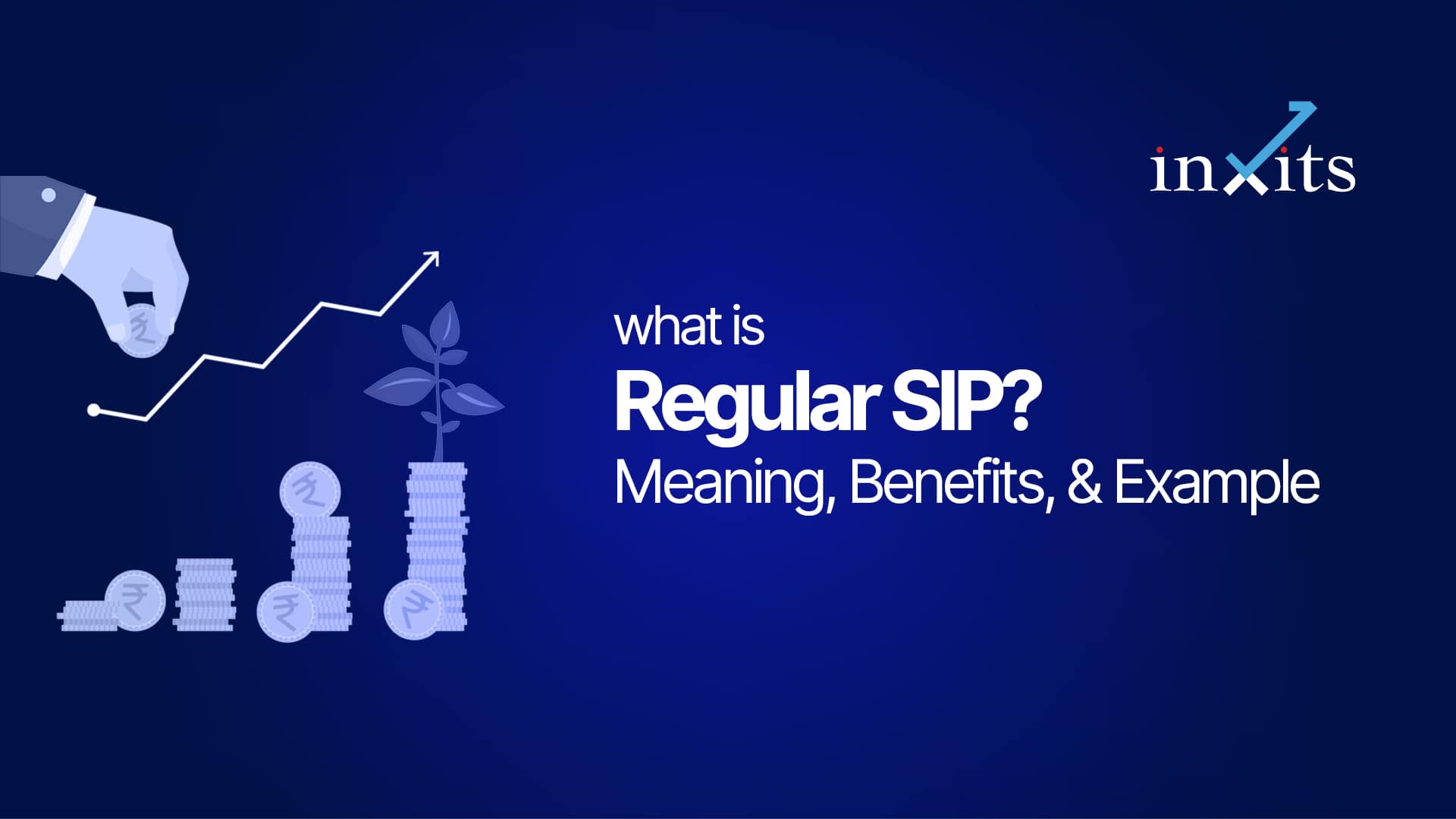
What Is Regular SIP? Meaning, Benefits, Example & Who Should Invest

Many investors reach a point where they know they should start investing, but the question is how to begin without overcomplicating things. A one-time investment feels risky. Waiting for the right market level feels uncertain.

This is where the idea of a regular SIP comes in. Understanding SIP meaning and how SIP works can make this decision much easier. It sounds simple, but many still hesitate because they do not fully understand how it works.

That hesitation is normal. Financial decisions feel heavier without clarity.

Understanding a regular SIP properly can turn that confusion into a structured starting point.

Before you read on

  • A regular SIP is a fixed monthly investment into a mutual fund
  • It removes the need to time the market
  • It builds discipline over time
  • It suits both beginners and long-term investors

What is a regular SIP and how does it work?

A regular SIP is a method where you invest a fixed amount at regular intervals, usually monthly, into a mutual fund.

How it works in simple steps:

  1. Choose a mutual fund
  2. Decide SIP amount (e.g. ₹5,000/month)
  3. Select date (e.g. 5th of every month)
  4. Money auto-invests from your bank

This structure makes SIP a simple and effective monthly SIP investment approach for most investors.

If you are new to investing, it helps to first understand what is a mutual fund before going deeper.

Why do investors prefer regular SIP?

Regular SIP is not just about convenience. It solves real behavioural problems.

Key benefits:

  • Removes timing stress
    You do not need to guess market highs or lows
  • Builds discipline automatically
    Once set, investing becomes routine
  • Works with monthly income
    Perfect for salaried individuals
  • Helps reduce emotional decision-making by automating investments
    You continue investing even during volatility

If you are comparing approaches, reading SIP vs lump sum helps clarify when SIP makes more sense.

Why SIP Works

Regular SIP is effective because it is built on three core concepts:

Rupee Cost Averaging

You invest at different market levels, which helps average out the purchase cost over time.

Power of Compounding

Returns generated over time get reinvested, helping your investment grow exponentially in the long run.

Discipline

SIP creates a habit of investing regularly, regardless of market conditions or emotions.

Assumption vs Reality: Is regular SIP only for beginners?

AspectAssumptionReality
Who uses SIPOnly beginnersEven experienced investors
PurposeSmall investmentsLong-term disciplined investing
StrategyBasic methodCore portfolio strategy

Why this matters

If you think SIP is only for beginners, you might ignore a structure that helps manage long-term investing more effectively.

To understand behaviour in real markets, it helps to explore how SIP works across different conditions.

Real-life example of regular SIP

Imagine Rohan, a 30-year-old professional in Ahmedabad.

He earns a steady salary but delays investing because he is unsure about market timing.

Instead of waiting, he starts a SIP of ₹10,000 monthly.

What happens over time:

  • Some months → markets are high
  • Some months → markets fall
  • Overall → investment spreads across levels

This reduces the pressure of perfect timing.

For better clarity on long-term impact, you can explore SIP of 10000 per month for 10 years.

Who should consider a regular SIP?

A regular SIP is more about behaviour than income.

It suits:

  • Salaried individuals
    Monthly income matches SIP cycle
  • First-time investors
    Simple and structured entry
  • Long-term planners
    Useful for retirement, education, wealth building
  • Busy professionals
    No need to track markets daily

If you’re unsure about how much to start, check choose the right SIP amount based on income.

Limitations of a regular SIP

A regular SIP is simple, but not perfect.

Key limitations:

  • Fixed amount does not grow automatically
  • Not ideal if income is variable
  • Requires patience during market dips

Because of this, some investors later explore what is SIP step up.

Regular SIP vs Other SIP Types

SIP TypeHow it WorksBest For
Regular SIPFixed monthly amountBeginners, steady income
Step-up SIPAmount increases over timeGrowing income
Flexible SIPAmount changesIrregular income
Trigger SIPBased on conditionsAdvanced investors

To understand all formats clearly, explore types of SIP in detail.

How inXits helps you structure SIP decisions

Understanding SIP is one step. Structuring it correctly is another.

At inXits, advisors help investors align SIP with:

  • Income patterns
  • Risk comfort
  • Long-term goals

If SIP decisions feel confusing, structured guidance can simplify things.

Conclusion

A regular SIP is a simple but powerful investing method. It removes the stress of timing, builds discipline, and aligns with real-life income patterns.

It is not just for beginners. It is a structured approach used by many long-term investors.

Understanding how a regular SIP works helps you move from hesitation to clarity.

Still unsure how much SIP is right for you? Get a personalized SIP plan based on your income, risk behaviour, and goals, speak with a mutual fund advisor

In Summary

A regular SIP is a fixed monthly investment method in mutual funds that focuses on consistency rather than timing. It suits salaried individuals, beginners, and long-term planners who want a structured approach. While it has limitations, it forms a strong foundation for disciplined investing. Understanding its role clearly helps investors make better long-term decisions.

FAQ

What is regular SIP in simple terms?

A regular SIP is a fixed monthly investment into a mutual fund.

Is regular SIP good for beginners?

Yes, it is one of the simplest ways to start investing.

What are the benefits of regular SIP?

It builds discipline, reduces timing stress, and aligns with income.

Can I increase SIP later?

Yes, you can modify or upgrade to step-up SIP.

Is SIP risk-free?

No, it depends on the mutual fund selected.

How long should I continue SIP?

It depends on goals, but long-term investing is generally preferred.

Disclaimer

Investment in securities market are subject to market risks. Read all the related documents carefully before investing.
Registration granted by SEBI, membership of BSE and certification from NISM in no way guarantee performance of the intermediary or provide any assurance of returns to investors.
Who Is a Fund Manager? What Do They Actually Do?

You may have looked at a mutual fund’s past performance and wondered, “Who is actually making these decisions?”

It is a natural question. After all, when you invest in a mutual fund, you are not picking individual stocks yourself. Someone else is deciding where your money goes, when to buy, and when to exit.

Many investors also wonder who manages mutual funds in India when evaluating performance. For many investors, this part remains unclear. The fund name, returns, and rankings are visible. But the person behind those decisions often stays in the background.

Understanding who a fund manager is helps bring clarity to how mutual funds really work. It shifts the focus from just numbers to the process and thinking behind them.

Before you read on, here is what this covers:

  • What a fund manager actually does day to day
  • How fund managers influence mutual fund performance
  • The difference between skill, process, and market conditions
  • How investors can evaluate a fund manager without overcomplicating it

Who Is a Fund Manager in a Mutual Fund?

A fund manager is a professional who manages mutual fund investments by selecting securities and maintaining portfolio strategy within a defined mandate.

In simple terms, they decide where the pooled money from investors should be invested. This includes selecting stocks, bonds, or other securities based on the fund’s objective.

Fund managers work within an Asset Management Company (AMC) and follow a defined investment mandate. For example, a large-cap equity fund must primarily invest in large-cap stocks as per SEBI categorisation.

Also read: Role of AMC, Fund Manager, and SEBI in Mutual Funds

They are not working in isolation. A fund manager typically collaborates with:

  • Research analysts who study companies and sectors
  • Risk teams that monitor exposure and compliance
  • Economists who track macroeconomic trends

So while the fund manager typically makes final portfolio decisions within the AMC’s investment framework, those decisions are supported by structured research and internal processes.

What Does a Fund Manager Actually Do Day to Day?

The role of a fund manager goes far beyond buying and selling investments.

On a typical day, their responsibilities include:

  • Analysing companies, sectors, and economic data
  • Reviewing existing portfolio holdings
  • Deciding whether to increase, reduce, or exit positions
  • Managing risk through diversification and allocation
  • Ensuring the portfolio stays aligned with the fund’s objective

For example, if interest rates are expected to change, a debt fund manager may adjust the portfolio’s duration accordingly. Similarly, an equity fund manager may rebalance sector exposure based on earnings outlook.

This process is continuous. Markets evolve daily, and fund managers constantly reassess their decisions.

Equity vs Debt Fund Manager: Key Difference

TypeFocus
EquityStock selection, growth, valuation
DebtInterest rates, duration, credit risk

This highlights the equity vs debt fund manager difference in how decisions are made.

How Much Does a Fund Manager Influence Returns?

This is one of the most important questions investors ask.

Let’s break it down clearly.

What most investors assume:
A skilled fund manager alone determines the returns of a mutual fund.

What actually happens:
Returns are influenced by multiple factors, including market conditions, fund category, investment strategy, and time horizon. The fund manager plays a role, but not in isolation.

Why this matters:
Focusing only on the fund manager’s reputation or past success can lead to unrealistic expectations. It is more useful to evaluate the overall process and consistency.

For instance, during a broad market rally, many funds may perform well regardless of individual decisions. In contrast, during volatile periods, risk management becomes more visible. This helps clarify the role of fund manager in mutual fund returns beyond just reputation.

Role of Fund Manager in Mutual Fund Returns

The role of fund manager in mutual fund returns is important, but it works alongside market conditions, fund category, and investment strategy.

A fund manager influences:

  • Security selection
  • Portfolio allocation
  • Risk management decisions

However, returns are not solely dependent on the fund manager, which is why outcomes may vary across market cycles.

What Skills Does a Fund Manager Need?

Fund management requires a combination of analytical ability, discipline, and decision-making under uncertainty.

Some key skills include:

  • Financial analysis and valuation
  • Understanding of macroeconomic trends
  • Risk assessment and portfolio construction
  • Behavioural discipline during market extremes
  • Ability to stick to a defined investment strategy

Many fund managers in India also hold qualifications such as CFA (Chartered Financial Analyst) and are required to comply with SEBI regulations.

However, qualifications alone do not define effectiveness. Consistency in applying a process over time matters just as much.

Can a Good Fund Manager Underperform?

Yes, and this often surprises investors.

Even experienced fund managers may underperform during certain periods.

This can happen because:

  • Their investment style is out of favour in current market conditions
  • The sectors they prefer are not performing well
  • Short-term volatility impacts their holdings

For example, a value-oriented fund manager may lag during a growth-driven market phase.

This does not necessarily mean poor decision-making. It may simply reflect a difference in investment style relative to the market cycle.

Understanding this helps reduce the urge to switch funds based on short-term performance.

How Can You Evaluate a Fund Manager as an Investor?

You do not need to analyse every stock decision to evaluate a fund manager effectively.

Instead, focus on a few practical aspects:

  • Consistency: Has the fund performed reasonably well across different market cycles?
  • Risk management: How has the fund behaved during market downturns?
  • Investment style: Does the manager follow a clear and consistent approach?
  • Tenure: How long has the manager been handling the fund?

Imagine Neha, 34, a chartered accountant in Ahmedabad, reviewing her equity mutual funds.

She notices that one fund has slightly lower recent returns than its peers. Instead of exiting immediately, she checks how it performed during previous market corrections and whether its strategy aligns with her long-term goals.

This approach shifts the focus from short-term rankings to long-term consistency.

How to Evaluate Fund Manager in India

Investors evaluating how to evaluate fund manager India may consider the following:

What to Look ForWhy It Matters
Manager TenureStability; have they seen a full market cycle (5–7 years)?
Performance vs. BenchmarkDid they beat the Nifty/Sensex, or just ride the wave?
Upside/Downside CaptureHow much do they gain in booms vs. lose in crashes?

Common Mistakes Investors Make

Investors may unintentionally make mistakes when evaluating fund managers. Common mistakes include:

  • Choosing a fund only because of a famous fund manager
  • Ignoring the investment process behind the fund
  • Exiting when a manager underperforms in the short term

Understanding these mistakes helps investors take a more structured and long-term approach to fund selection.

Do Fund Managers Change? And Does It Matter?

Yes, fund managers can change over time, and it can have an impact.

When a new manager takes over:

  • The investment strategy may evolve
  • Portfolio composition may change gradually
  • Risk approach may differ

However, in many AMCs, the investment philosophy is institutional rather than individual. This means the process remains relatively stable even if the manager changes.

Still, it is useful for investors to stay aware of such changes and review whether the fund continues to align with their expectations.

Have a specific question about how a fund manager’s decisions affect your investments? connect with an investment advisor — a conversation with a qualified advisor, no forms, no wait.

Are Fund Managers Regulated in India?

Yes, fund managers operate within a regulated framework in India.

SEBI sets guidelines to ensure:

  • Transparency in portfolio disclosures
  • Adherence to investment mandates
  • Risk management practices
  • Investor protection

Fund managers must also comply with internal AMC policies and industry standards.

This regulatory structure helps create a level of accountability, though it does not eliminate market risks.

How Should You Think About a Fund Manager in Your Portfolio?

A fund manager is an important part of the investment process, but not the only factor.

Instead of asking “Is this fund manager the best?”, a more useful approach is:

  • Does this fund’s strategy align with my goals?
  • Am I comfortable with the level of risk?
  • Does the fund fit into my overall portfolio allocation?

When viewed this way, the fund manager becomes one piece of a larger framework.

Navigating who a fund manager is and how they influence outcomes can feel complex without a clear structure. At inXits, advisors work with investors to evaluate funds not just by who manages them, but by how those decisions fit into a broader financial plan. If you have questions about fund selection or portfolio alignment, speaking with a qualified personal CFO can help bring clarity tailored to your situation.

Understanding who a fund manager is clearly is one part. Knowing how their decisions align with your financial goals is what actually moves things forward. At inXits, a financial advisor works with you to connect fund evaluation to your actual investment profile, not a generic explanation. connect with an investment advisor

Conclusion

A fund manager is responsible for making investment decisions within a mutual fund, but those decisions are guided by research, process, and market conditions.

Their role influences outcomes, yet it is not the sole driver of returns. Factors like asset allocation, market cycles, and risk management all play a part.

For investors, the goal is not to find a perfect fund manager, but to understand how a fund fits within their overall financial plan.

Over time, clarity around roles like fund managers helps build more informed and disciplined investment decisions. If you want to go beyond surface-level metrics and understand what works for your situation, connect with an investment advisor to explore your options with greater confidence.

In Summary

A fund manager is the professional responsible for managing a mutual fund’s investments, including selecting securities and maintaining portfolio balance. While their decisions matter, they operate within a broader framework of research, regulation, and market conditions. Evaluating a fund manager requires looking at consistency, risk management, and alignment with investment goals rather than short-term performance. Understanding this role helps investors make more structured and thoughtful decisions.

FAQ

Who is a fund manager in simple terms?

A fund manager is a professional who manages the investments of a mutual fund by deciding where and how the money is allocated.

What does a fund manager do in mutual funds?

They select securities, manage portfolio allocation, monitor risk, and ensure the fund follows its investment objective.

Does a fund manager guarantee returns?

No, fund managers cannot guarantee returns. Market conditions and multiple factors influence outcomes.

How important is a fund manager in mutual fund performance?

A fund manager plays an important role, but performance also depends on market trends, fund category, and investment strategy.

How can I check who the fund manager is?

You can find fund manager details in the mutual fund factsheet, AMC website, or platforms like AMFI and SEBI disclosures.

Do fund managers change frequently?

Fund managers may change occasionally. Investors should review such changes to understand any potential impact on the fund.

Are fund managers regulated in India?

Yes, fund managers operate under SEBI regulations and must follow strict compliance and disclosure guidelines.

Should I choose a fund based on the fund manager?

The fund manager is one factor, but decisions should also consider risk, goals, time horizon, and portfolio fit.

What qualifications do fund managers have in India?

Many fund managers hold qualifications like CFA or MBA in finance and have experience in research and portfolio management.

Can a good fund manager still underperform?

Yes, underperformance can occur due to market cycles or investment style, even if the manager follows a disciplined process.

Disclaimer
Investment in securities market are subject to market risks. Read all the related documents carefully before investing.
Registration granted by SEBI, membership of BSE and certification from NISM in no way guarantee performance of the intermediary or provide any assurance of returns to investors.
How to Diversify Mutual Fund Portfolio: Strategy, Example & Allocation

Many investors begin their mutual fund journey with enthusiasm. However, as investments grow over time, portfolios sometimes become concentrated in a few schemes or asset categories without investors realizing it. This often happens because funds are added gradually without reviewing the overall structure.

At the same time, financial markets move through different cycles. Some sectors expand rapidly, while others experience slower growth. If a portfolio remains concentrated in a single category, these shifts may create uneven risk exposure.

Therefore, understanding how to diversify mutual fund portfolio becomes an important part of structured financial planning. Diversification does not eliminate market risks, but it helps distribute exposure across different assets, sectors, and investment styles.

This article explains diversification strategies in mutual fund portfolios, common frameworks investors study, and how diversification supports long-term financial planning.

What Does Diversification Mean in Mutual Funds?

Diversification refers to spreading investments across different assets or strategies rather than concentrating capital in a single investment.

In the context of mutual funds, diversification may involve distributing investments across:

For example, a portfolio that invests only in technology sector funds may behave very differently from a portfolio spread across multiple sectors.

Also read: Types of Mutual Funds in India and Their Risk-Return Profiles

Why Diversification Matters in Mutual Fund Investing

Markets rarely move in a straight line. Different asset classes and sectors respond differently to economic changes, interest rates, and global developments.

For example:

Market SituationPossible Impact
Rising interest ratesDebt funds may behave differently than equity funds
Economic expansionEquity markets may perform differently across sectors
Inflation changesSome sectors may react differently

Because of these differences, diversification aims to distribute exposure across multiple investment categories.

Key benefits of diversification include:

  • Reduced concentration risk
  • Exposure to different market segments
  • Better portfolio balance during market cycles
  • Improved risk management

Diversifying Across Asset Classes

One of the primary diversification strategies involves allocating investments across different asset classes.

The three major categories often considered include:

Equity Mutual Funds

Equity funds invest primarily in shares of companies. These funds are typically associated with long-term wealth creation potential, although they also involve market volatility.

Examples include:

The securities quoted are for illustration only and are not recommendatory.

Debt Mutual Funds

Debt funds invest in fixed-income instruments such as bonds, treasury bills, and corporate debt.

These funds may focus on:

  • Short-term instruments
  • Corporate bonds
  • Government securities
  • Liquid funds

Debt funds are often studied for their role in income stability and liquidity management.

Hybrid Funds

Hybrid funds combine both equity and debt instruments.

Common hybrid categories include:

  • Balanced advantage funds
  • Aggressive hybrid funds
  • Conservative hybrid funds

Hybrid funds aim to balance equity growth exposure with fixed-income stability.

By distributing investments across these asset classes, investors begin implementing the first step in how to diversify mutual fund portfolio.

Beginner Allocation Model 

A simple way to understand diversification is through a model allocation.

Example: Age 30 investor

  • 60% equity
  • 25% debt
  • 15% hybrid

This structure reflects a growth-oriented approach while maintaining some stability through debt and hybrid exposure. The allocation may vary depending on individual financial goals and risk tolerance.

Diversification Across Market Capitalization

Another dimension of diversification involves investing across companies of different sizes.

Mutual funds often categorize equity investments into:

CategoryCompany Type
Large CapEstablished companies
Mid CapGrowing businesses
Small CapEmerging companies

Each category may behave differently during market cycles.

For instance:

  • Large-cap stocks may demonstrate relative stability during volatile periods.
  • Mid-cap companies may experience expansion during economic growth phases.
  • Small-cap firms may display higher volatility but also growth potential.

Combining different market capitalization segments can help create a more balanced portfolio structure.

Diversification Across Investment Styles

Mutual funds follow different investment approaches depending on their strategy and philosophy.

Common investment styles include:

Growth-Oriented Funds

Growth funds focus on companies expected to expand earnings over time.

These funds may invest in:

  • Technology companies
  • Consumer growth businesses
  • Expanding industries

Value-Oriented Funds

Value funds focus on companies that appear undervalued based on financial metrics.

These strategies examine:

  • Price-to-earnings ratios
  • Balance sheet strength
  • Long-term business potential

Flexi-Cap Strategies

Flexi-cap funds allow fund managers to allocate investments across large, mid, and small-cap companies based on market conditions.

Diversifying across investment styles allows portfolios to participate in different market environments.

Sector Diversification

Sector concentration can significantly affect portfolio behavior.

For example, portfolios heavily invested in one sector may experience sharp movements if that sector undergoes rapid change.

Common sectors in equity markets include:

  • Information technology
  • Banking and financial services
  • Pharmaceuticals
  • Energy
  • Consumer goods
  • Infrastructure

Diversifying across sectors spreads exposure to different parts of the economy.

Hypothetical illustration:

SectorPortfolio Allocation Example
Banking20%
Technology15%
Consumer15%
Healthcare10%
OthersRemaining allocation

The securities quoted are for illustration only and are not recommendatory.

Diversification Across Investment Time Horizons

Investment time horizon also influences diversification strategies.

Different mutual funds suit different time frames.

For example:

Investment HorizonPossible Fund Category
Short-termLiquid funds
Medium-termShort duration debt funds
Long-termEquity-oriented funds

By aligning investments with time horizons, investors may manage liquidity needs and risk exposure more effectively.

Ideal Diversification Percentage:

Diversification is often evaluated through asset allocation.

A commonly observed diversification structure may include:

  • 50–70% equity exposure
  • 20–40% debt exposure
  • 10–20% hybrid or alternative exposure

The appropriate allocation depends on factors such as age, financial goals, investment horizon, and risk tolerance.

Avoiding Over-Diversification

While diversification spreads risk, excessive diversification may also create complexity.

For example, holding too many mutual funds may lead to:

  • Overlapping portfolios
  • Difficulty tracking performance
  • Similar underlying securities

A portfolio containing multiple funds that invest in the same companies may not achieve true diversification.

Therefore, investors often review:

  • Fund overlap
  • Asset allocation balance
  • Sector exposure

This may also lead to increased mutual fund overlap, reducing effective diversification.

Diversification Mistakes

Investors may unintentionally make mistakes while attempting diversification. Common mistakes include:

  • Holding too many mutual funds
  • Investing in multiple funds from the same category
  • Ignoring overlap between fund holdings
  • Not aligning investments with risk capacity

These factors may reduce the effectiveness of diversification.

Ideal Number of Mutual Funds

A common question investors ask is: how many mutual funds should one hold?

There is no fixed number, but many portfolio frameworks suggest:

  • 4–6 funds for a simple portfolio
  • 6–10 funds for a moderately diversified portfolio

Holding too few funds may lead to concentration risk, while holding too many may create overlap and complexity. Therefore, the focus is often on quality and diversification of holdings rather than quantity of funds.

Example Portfolio (India)

A hypothetical diversified portfolio in the Indian context may look like:

  • Large-cap fund (core stability)
  • Mid-cap fund (growth exposure)
  • Flexi-cap fund (dynamic allocation)
  • Short-duration debt fund (stability and liquidity)
  • Hybrid fund (balanced exposure)

Such a structure distributes investments across asset classes and market segments.

The securities quoted are for illustration only and are not recommendatory.

Importance of Periodic Portfolio Reviews

Diversification is not a one-time activity. As markets move and new investments are added, portfolios may gradually become imbalanced.

Regular portfolio reviews help investors examine:

  • Asset allocation changes
  • Sector concentration
  • Risk exposure
  • Alignment with financial goals

Many financial frameworks recommend periodic portfolio assessments to maintain diversification and balance.

Also read: ETF vs Mutual Fund: What’s the Difference?

How Structured Financial Planning Supports Diversification

Mutual fund diversification often works best when integrated into a broader financial planning framework.

Investors sometimes adopt a structured approach similar to how a personal CFO organizes financial decision-making.

Such frameworks may involve:

  • Assessing financial goals
  • Evaluating risk tolerance
  • Designing asset allocation strategies
  • Monitoring portfolio diversification
  • Conducting periodic portfolio reviews

Platforms such as inXits combine technology and research-driven frameworks to help investors better understand portfolio structures, diversification strategies, and financial planning considerations.

Behavioural Finance Angle

Diversification decisions are often influenced by investor behavior.

Some common behavioural factors include:

  • Herd behaviour: Investing in popular funds without evaluating portfolio fit
  • Recency bias: Choosing funds based on recent performance trends
  • Advisor dependency: Relying entirely on recommendations without understanding allocation

Understanding these behavioural aspects helps investors make more structured diversification decisions.

Conclusion

Mutual fund investing offers access to diversified portfolios managed by professional fund managers. However, investors still benefit from understanding how different funds interact within a broader investment strategy.

Learning how to diversify mutual fund portfolio involves spreading investments across asset classes, market capitalizations, sectors, and investment styles. This approach helps reduce concentration risk and improves the structural balance of a portfolio.

At the same time, diversification works best when combined with clear financial goals, appropriate time horizons, and periodic portfolio reviews.

Building financial awareness and reviewing portfolio structures regularly can help investors approach mutual fund investing with greater clarity and discipline.

Connect with inXits for a 24×7 consultation focused on financial planning and portfolio review processes.

FAQ

What does it mean to diversify a mutual fund portfolio?

Diversifying a mutual fund portfolio means spreading investments across different asset classes, sectors, and investment styles to reduce concentration risk.

Why is diversification important in mutual funds?

Diversification helps distribute risk across multiple investments so that the portfolio does not rely heavily on a single sector or asset category.

How can investors diversify mutual fund portfolios?

Investors may diversify mutual fund portfolios by allocating funds across equity, debt, and hybrid categories, as well as different market capitalizations and sectors.

Can holding multiple mutual funds create diversification?

Holding multiple mutual funds can support diversification if the funds follow different strategies or asset allocations.

What is asset allocation in mutual fund diversification?

Asset allocation refers to distributing investments across different asset classes such as equity, debt, and hybrid instruments.

Should investors review mutual fund portfolios regularly?

Periodic reviews help investors understand whether the portfolio remains aligned with financial goals and diversification objectives.

What is sector diversification in mutual funds?

Sector diversification refers to spreading investments across different industries such as banking, technology, healthcare, and consumer goods.

How does time horizon affect mutual fund diversification?

Different mutual fund categories may suit different investment time horizons, which influences portfolio allocation.

Can diversification eliminate investment risk?

Diversification may help distribute risk, but it does not eliminate market risks entirely.

How can investors understand mutual fund diversification strategies?

Investors often study financial planning frameworks, asset allocation strategies, and portfolio review processes to understand diversification.

📘 Disclaimer
Investment in securities market are subject to market risks. Read all the related documents carefully before investing.
Registration granted by SEBI, membership of BSE and certification from NISM in no way guarantee performance of the intermediary or provide any assurance of returns to investors.
The securities quoted are for illustration only and are not recommendatory.

How to Choose a Mutual Fund Advisor: 10 Questions to Ask Before You Decide

You may have savings. You may even have investments. Yet when markets move sharply or financial goals feel distant, one question often surfaces: Am I making decisions with clarity or just reacting?

Many investors start mutual fund investing based on tips, online lists, or peer suggestions. Over time, portfolios become scattered. Goals remain loosely defined. Risk exposure becomes unclear. Eventually, the need for structured guidance emerges.

That is where the conversation around how to choose a mutual fund advisor becomes important. However, choosing an advisor should not be based on brand visibility or confidence in conversation. Instead, it requires structured evaluation, regulatory awareness, and clarity about your own expectations.

This guide explains 10 essential questions investors in India can ask before selecting a mutual fund advisor. The objective is not to promote any service but to help you make informed, disciplined decisions.

Why Choosing the Right Mutual Fund Advisor Matters

Mutual funds offer diversification, professional management, and accessibility. However, the outcome of investing often depends on:

  • Asset allocation discipline
  • Risk alignment
  • Portfolio review consistency
  • Behaviour during volatility

An advisor may influence how these elements are structured. Therefore, understanding how to choose a mutual fund advisor becomes part of long-term financial planning.

1. Are You Registered with SEBI as an Investment Advisor?

In India, mutual fund advisory services may fall under regulatory oversight.

Ask clearly:

  • Are you a SEBI-registered Investment Advisor (RIA)?
  • What is your registration number?
  • Do you follow SEBI (Investment Advisers) Regulations?

Why this matters:

SEBI-registered advisors operate under defined compliance standards, including suitability assessment and fee transparency. Registration does not guarantee performance, but it establishes regulatory accountability.

Investors should independently verify registration details on SEBI’s official website.

2. What Is Your Compensation Structure?

Understanding compensation reduces conflicts of interest.

You may ask:

  • Do you charge a fixed fee, percentage-based fee, or commission?
  • Do you receive trail commissions from mutual fund companies?
  • How are fees disclosed?

Broadly, advisors in India may operate as:

  • Fee-only RIAs
  • Commission-based distributors
  • Hybrid models

Each structure has implications. Transparency in compensation allows investors to evaluate alignment objectively.

3. How Do You Assess Risk Profile?

Risk profiling is foundational to mutual fund selection.

Ask:

  • Do you conduct a formal risk assessment?
  • Is it questionnaire-based, discussion-based, or both?
  • How often is risk profile reviewed?

A structured risk profiling process typically considers:

  • Income stability
  • Financial goals
  • Time horizon
  • Existing liabilities
  • Emotional tolerance for volatility

Without this step, fund selection may not align with investor capacity or comfort.

4. How Do You Decide Asset Allocation?

Asset allocation often influences portfolio behavior more than individual fund selection.

You may ask:

  • How do you determine equity-debt allocation?
  • Do you adjust allocation based on age or goals?
  • How frequently do you rebalance?

For example, a long-term retirement goal may have a different allocation approach compared to a short-term purchase plan. The methodology should be explained clearly and logically.

5. What Is Your Fund Selection Framework?

Instead of asking which funds are “best,” ask about process.

Questions can include:

  • What parameters do you review before selecting a mutual fund?
  • Do you evaluate expense ratios, portfolio turnover, or fund manager tenure?
  • How do you monitor scheme changes?

A structured approach may involve reviewing:

  • Investment mandate consistency
  • Portfolio diversification
  • Risk-adjusted metrics
  • Fund house governance

The focus should remain on process transparency rather than performance claims.

6. How Do You Handle Portfolio Reviews?

Markets evolve. Goals change. Income levels shift.

Therefore, ask:

  • How often do you conduct portfolio reviews?
  • Are reviews calendar-based or event-based?
  • Do you provide written summaries?

Periodic reviews help assess:

  • Drift in asset allocation
  • Overconcentration in specific sectors
  • Alignment with updated goals

Without review discipline, portfolios may gradually move away from intended structure.

7. How Do You Manage Behavioural Bias During Volatility?

Investor behaviour often impacts outcomes more than fund selection.

Consider asking:

  • How do you guide investors during market corrections?
  • Do you provide structured communication during volatility?
  • How do you prevent emotional decision-making?

Advisors who discuss behaviour management openly often emphasize long-term discipline rather than short-term reactions.

8. What Reporting and Transparency Do You Provide?

Clarity builds trust.

Ask about:

  • Portfolio reporting frequency
  • Access to consolidated statements
  • Tax reporting assistance
  • Capital gains summaries

Structured reporting enables investors to understand:

  • Portfolio performance trends
  • Risk exposure
  • Tax implications

Transparency reduces ambiguity and improves financial awareness.

9. Do You Provide Goal-Based Planning or Only Fund Execution?

There is a difference between transaction facilitation and financial planning.

You may ask:

  • Do you map investments to specific goals?
  • Do you calculate inflation-adjusted target amounts?
  • Do you integrate insurance and emergency fund planning?

Goal-based investing typically includes:

  1. Defining financial milestones
  2. Estimating required corpus
  3. Aligning time horizon
  4. Assigning appropriate asset mix

This structured approach differs from selecting funds without context.

10. What Happens If Regulations or Market Conditions Change?

Regulatory frameworks and tax rules evolve.

Therefore, consider asking:

  • How do you stay updated with SEBI and AMFI regulations?
  • How do you communicate regulatory changes?
  • How do you adapt strategy when tax laws change?

For example, changes in capital gains taxation may alter holding strategies. An advisor’s ability to interpret regulatory updates responsibly is important.

Common Mistakes Investors Make While Choosing an Advisor

While evaluating how to choose a mutual fund advisor, investors sometimes:

  • Select based on past returns discussion
  • Choose based on peer recommendation alone
  • Ignore fee clarity
  • Skip regulatory verification
  • Focus only on short-term gains

Instead, structured due diligence can improve clarity.

A Practical Checklist for Investors

Before finalizing, ensure you have clarity on:

  • SEBI registration status
  • Fee structure transparency
  • Risk profiling process
  • Asset allocation methodology
  • Review frequency
  • Reporting systems
  • Behavioural guidance approach
  • Regulatory update awareness

Documenting these responses can help compare advisors objectively.

The Role of Structured Advisory Platforms

Today, advisory services may combine technology and human oversight. Structured platforms typically focus on:

  • Risk-based profiling
  • Goal mapping
  • Portfolio tracking dashboards
  • Compliance-aligned processes

At inXits, the emphasis remains on disciplined financial planning, portfolio review frameworks, and structured mutual fund evaluation processes rather than product promotion.

Connect with inXits for a 24×7 consultation focused on mutual fund advisory frameworks, financial planning alignment, and portfolio review processes.

Conclusion: Clarity Before Commitment

Understanding how to choose a mutual fund advisor is not about finding someone confident or persuasive. Instead, it involves assessing structure, transparency, regulatory compliance, and alignment with your financial goals.

If you’re specifically looking for a mutual fund advisor in Ahmedabad, prioritize professionals or firms registered with Securities and Exchange Board of India (SEBI) as Registered Investment Advisors (RIAs). This ensures they follow strict guidelines around fee transparency and conflict of interest.

An advisor should help you build discipline, maintain allocation balance, and make informed decisions—especially during uncertain times. However, responsibility ultimately remains with the investor.

Therefore, take time to ask structured questions, review disclosures carefully, and ensure alignment with your long-term financial objectives.

Connect with inXits for a 24×7 consultation focused on financial planning and portfolio review processes.

Frequently Asked Questions (FAQs)

1. How to choose a mutual fund advisor in India?

Investors should verify SEBI registration, understand fee structure, review risk profiling methods, and assess portfolio review processes before selecting an advisor.

2. Is SEBI registration mandatory for mutual fund advisors?

SEBI registration is required for individuals offering investment advisory services under SEBI regulations. Distributors operate under a different framework.

3. What is the difference between an RIA and a mutual fund distributor?

An RIA provides advice under SEBI Investment Adviser Regulations, while a distributor facilitates mutual fund transactions and may earn commissions.

4. Why is risk profiling important before investing in mutual funds?

Risk profiling helps align investment choices with financial capacity, time horizon, and volatility tolerance.

5. How often should a mutual fund portfolio be reviewed?

Many advisors conduct reviews quarterly, semi-annually, or annually depending on portfolio complexity and market conditions.

6. Should investors choose advisors based on past returns shown?

Past returns do not guarantee future outcomes. Process transparency and risk alignment are generally more important factors.

7. What questions should I ask a mutual fund advisor about fees?

Investors should ask whether fees are fixed, percentage-based, or commission-linked and how they are disclosed.

8. Do mutual fund advisors help with tax planning?

Some advisors provide capital gains summaries and tax impact explanations as part of portfolio review.

9. Can I change my advisor later?

Yes, investors can review and modify advisory relationships subject to contractual and regulatory conditions.

10. Does an advisor guarantee returns?

No. Investment outcomes depend on market performance and various external factors.

📘 Disclaimer
Investment in securities market are subject to market risks. Read all the related documents carefully before investing.
Registration granted by SEBI, membership of BSE and certification from NISM in no way guarantee performance of the intermediary or provide any assurance of returns to investors.
What Does an Account Aggregator Do? Explained

Managing personal finances today often involves multiple accounts across banks, investments, insurance policies, and loan providers. As financial lives become more complex, individuals frequently find it difficult to view their financial information in one place.

Because financial data is scattered across institutions, investors sometimes spend considerable time collecting statements, tracking balances, and understanding their overall financial position. This fragmented view can make financial planning and portfolio reviews more challenging.

At the same time, digital financial systems in India continue to evolve rapidly. Therefore, systems that allow secure and consent-based data sharing are becoming an important part of the financial ecosystem.

This is where the concept of an account aggregator becomes relevant. Understanding what an account aggregator does helps investors and individuals learn how financial data can be shared securely between institutions while maintaining user control and privacy.

What Is an Account Aggregator?

An Account Aggregator (AA) is a type of financial infrastructure entity that enables individuals to share financial information securely between institutions with their consent.

Account aggregators operate under a regulatory framework introduced by the Reserve Bank of India (RBI) as part of India’s digital financial architecture.

In simple terms, an account aggregator acts as a secure bridge for financial data sharing.

It does not store money or provide financial advice. Instead, it helps individuals share their financial data across institutions through a standardized digital system.

Key participants in the account aggregator ecosystem include:

ParticipantRole
Financial Information Provider (FIP)Institution holding financial data
Financial Information User (FIU)Institution requesting financial data
Account Aggregator (AA)Secure data-sharing intermediary
Individual UserOwner of financial data

This structure ensures that financial data moves only when the individual provides explicit consent.

Understanding this framework helps answer the question: what does an account aggregator do in the financial system?

How the Account Aggregator Framework Works

The account aggregator system works through a consent-based digital data sharing process.

Here is a simplified step-by-step explanation.

Step 1: User Registration
An individual registers with an account aggregator platform.

Step 2: Linking Financial Accounts
The user links financial accounts such as bank accounts, loans, or investment accounts.

Step 3: Consent Request
A financial institution (FIU) requests access to specific financial information.

Step 4: User Approval
The individual reviews the request and provides consent for sharing the selected data.

Step 5: Secure Data Transfer
The account aggregator transfers the requested information securely from the Financial Information Provider (FIP) to the Financial Information User (FIU).

Important point:
The account aggregator does not store or analyze financial data. It simply facilitates secure transmission based on user consent.

Therefore, when discussing what does an account aggregator do, the primary function is enabling controlled financial data sharing.

Types of Financial Data That Can Be Shared

The account aggregator framework allows multiple categories of financial data to be shared.

Examples include:

Bank account data

  • Savings account transactions and balances.

Loan information

  • Outstanding loan balances or repayment history.

Investment information

  • Mutual fund holdings and transaction records.

Insurance policy data

  • Policy details and premium history.

Pension or retirement accounts

  • Relevant financial statements.

Each type of information can be shared only if the user grants permission through the consent system.

This structured approach helps individuals maintain control over their financial information.

Account Aggregator Example

Consider a simple example:

An individual applies for a loan through a lending platform. Instead of uploading multiple bank statements and documents, the platform requests financial data via an Account Aggregator.

The user provides consent, and the required data is securely shared with the lender—reducing paperwork and speeding up the process.

Benefits of the Account Aggregator System

Understanding what an Account Aggregator does becomes easier when examining the practical advantages of this framework.

1. Improved Financial Visibility

Many individuals maintain financial relationships with multiple institutions. Account Aggregators consolidate this data, enabling users to gain a clearer and more comprehensive view of their financial position.

2. Simplified Data Sharing

Instead of manually collecting financial documents from different institutions, individuals can share their data digitally through a secure, consent-based system.

3. Time Efficiency

Automated data sharing significantly reduces the time spent retrieving statements and documents from various sources.

4. Better Financial Planning Insights

Financial institutions that receive authorized data can analyze it to better understand users’ financial profiles, leading to more informed decision-making and personalized services.

5. Enhanced Security Framework

The system operates under regulated security protocols established by the Reserve Bank of India (RBI), ensuring safe and secure data handling.

Because of these features, account aggregators have become an important part of India’s evolving fintech infrastructure.

Also read: How Account Aggregator Protects Your Financial Data

AA Benefits for Loans

Account Aggregators support lending by:

  • Enabling faster access to verified financial data
  • Reducing manual documentation
  • Improving accuracy of credit assessment
  • Supporting quicker loan approvals

AA vs UPI: Key Difference

Account Aggregators and UPI are both part of India’s digital ecosystem but serve different purposes:

  • UPI → Moves money
  • AA → Moves financial data (with consent)

They complement each other—UPI enables payments, while AA enables data sharing.

Security and Privacy in the Account Aggregator Framework

One of the most critical aspects of the Account Aggregator ecosystem is data security. The system operates under strict guidelines designed to protect user information and ensure privacy.

Key Security Features

1. User Consent

Financial data is shared only after explicit authorization from the individual. Users have full control over when and with whom their data is shared.

2. Data Encryption

All information is encrypted during transfer, ensuring that sensitive financial data remains secure and protected from unauthorized access.

3. Limited Data Access

Institutions receive only the specific information that the user has approved, preventing unnecessary exposure of financial details.

4. No Permanent Data Storage

Account Aggregators do not store financial information. They act only as intermediaries that facilitate secure data transfer.

5. Consent Revocation

Users can revoke their consent at any time if they choose to stop sharing their data.

These safeguards help maintain trust in the system while ensuring the safety and privacy of users’ financial data.

Is Account Aggregator Safe in India?

Yes, the AA framework is regulated by the RBI and follows strict safeguards:

  • Data shared only with user consent
  • End-to-end encryption
  • No data storage by AA
  • User can revoke access anytime

Is Data Sold by Account Aggregators?

No. Account Aggregators do not sell or store user data. They only transfer data securely between institutions after receiving user consent.

Entities Regulated Under the Account Aggregator System

Account aggregators operate as Non-Banking Financial Companies – Account Aggregators (NBFC-AA) regulated by the Reserve Bank of India.

Several entities participate in the system.

Examples include organizations such as:

  • CAMS Finserv
  • Finvu
  • OneMoney
  • NESL Asset Data

The entities listed are for illustration of participants in the ecosystem and are not recommendatory.

Each account aggregator functions under the same regulatory framework defined by the RBI.

Which Banks Support Account Aggregator?

Many institutions are part of the AA ecosystem, including:

  • Public sector banks
  • Private banks
  • NBFCs and lenders
  • Mutual fund houses
  • Insurance companies

The network continues to expand as adoption increases.

Role of Account Aggregators in India’s Digital Financial Infrastructure

India’s financial ecosystem has steadily evolved to include multiple layers of digital infrastructure that support seamless and efficient services.

Key Components of Digital Financial Infrastructure

  • UPI (Unified Payments Interface) for digital payments
  • Aadhaar for identity verification
  • GSTN (Goods and Services Tax Network) for tax administration
  • Account Aggregator Framework for financial data sharing

How the Account Aggregator Framework Fits In

The Account Aggregator (AA) framework introduces a consent-driven data sharing layer within this ecosystem. It enables secure and efficient transfer of financial information between institutions, based entirely on user approval.

Importance in Financial Services

Since many financial services require access to verified financial data, the Account Aggregator system helps streamline the flow of information. This reduces friction, improves accuracy, and enhances the overall efficiency of financial processes.

How Account Aggregators Support Financial Planning

Financial planning often requires access to multiple financial records such as bank statements, investment accounts, and loan information.

When these records exist across multiple institutions, consolidating them can become time-consuming.

Account aggregators simplify this process by enabling authorized data sharing.

As a result, financial platforms can obtain a structured overview of financial data when users provide consent.

This process can support activities such as:

  • Financial analysis
  • Portfolio review processes
  • Loan eligibility assessment
  • Income verification

However, the account aggregator itself does not provide financial advice or investment recommendations.

Instead, it acts as the infrastructure layer enabling data flow between institutions.

Real Life Use Cases of Account Aggregator

1. Instant Loan Approval

With AA, lenders can access verified financial data quickly.
This reduces paperwork and can significantly speed up loan approvals.

2. Wealth Dashboard Integration

Users can view all financial accounts—bank balances, investments, and liabilities—in one place.

This creates a consolidated financial dashboard, helping better decision-making.

Understanding Financial Data Through a Personal CFO Approach

Financial decision-making becomes more effective when individuals can view their financial data in a structured and organized manner. A consolidated overview of income, investments, liabilities, and savings provides a clearer understanding of one’s overall financial position.

The Personal CFO Approach

Many investors find it beneficial to evaluate their finances using a structured method similar to how a Personal CFO manages financial decisions and conducts portfolio reviews. This approach emphasizes clarity, organization, and strategic analysis.

Key Elements of This Approach

  • Reviewing Financial Assets Across Institutions
    Gaining a complete view of investments and holdings spread across different platforms.
  • Understanding Cash Flow Patterns
    Tracking income and expenses to identify spending habits and savings potential.
  • Analyzing Portfolio Diversification
    Ensuring investments are balanced across asset classes to manage risk effectively.
  • Evaluating Liabilities and Repayment Schedules
    Monitoring debts and planning repayments efficiently.
  • Monitoring Long-Term Financial Goals
    Aligning financial decisions with future objectives such as retirement or wealth creation.

Role of Technology-Driven Platforms

Platforms like inXits integrate research-driven frameworks with technology to help individuals better understand financial structures and organize their portfolios in a systematic way.

Conclusion

India’s financial system continues to evolve with digital infrastructure that supports secure, efficient financial services. Within this ecosystem, understanding what does an account aggregator do helps individuals recognize how financial data sharing works in a regulated environment.

An account aggregator functions as a secure intermediary that enables consent-based sharing of financial data between institutions. It does not store funds, provide financial advice, or permanently retain financial information.

Instead, it creates a standardized framework that allows individuals to control how their financial data moves across financial institutions.

As financial ecosystems grow more complex, structured financial information becomes increasingly important. Learning about systems such as the account aggregator framework can help individuals better understand how financial data supports financial planning, credit evaluation, and portfolio analysis.

Connect with inXits for a 24×7 consultation focused on financial planning and portfolio review processes.

FAQ

What does an account aggregator do?

An account aggregator enables secure, consent-based sharing of financial data between financial institutions under the RBI’s regulated framework.

Is an account aggregator a bank?

No, an account aggregator is not a bank. It does not hold deposits or provide loans. It acts as a data-sharing intermediary.

Who regulates account aggregators in India?

Account aggregators operate as NBFC-AA entities regulated by the Reserve Bank of India.

Does an account aggregator store financial data?

Account aggregators typically do not store financial information. They facilitate encrypted transfer of data between institutions after receiving user consent.

What is the role of consent in the AA framework?

User consent is central to the system. Financial data can only be shared when the individual approves the request.

What types of financial information can be shared?

Data may include bank statements, loan records, mutual fund information, insurance details, and pension records.

Who are Financial Information Providers (FIPs)?

Financial Information Providers are institutions that hold financial data, such as banks, mutual fund companies, or insurance providers.

Who are Financial Information Users (FIUs)?

Financial Information Users are institutions that request financial data to provide services, such as lenders or financial platforms.

Can users revoke consent in the AA framework?

Yes, individuals can revoke consent at any time to stop further sharing of financial information.

Why are account aggregators important for financial systems?

They help streamline secure data sharing, reduce manual documentation processes, and support digital financial services.

Is using an Account Aggregator free for individuals?

Most Account Aggregator apps are currently free for retail users, as the cost is typically borne by banks or financial institutions.

📘 Disclaimer
Investment in securities market are subject to market risks. Read all the related documents carefully before investing.
Registration granted by SEBI, membership of BSE and certification from NISM in no way guarantee performance of the intermediary or provide any assurance of returns to investors.

FD vs Mutual Fund: Understanding the Difference

“Should I put my money in an FD or mutual fund?”

This question usually comes at a very practical moment. You have some savings, and you want to place them somewhere that feels right.

Some people lean toward fixed deposits because they feel familiar. Others hear about mutual funds and feel they might offer something different.

But the confusion starts when comparisons become too simplified. One side talks about stability, the other about market participation.

Instead of asking which is better, it helps to understand FD vs mutual fund as two different tools designed for different situations.

What is a Fixed Deposit (FD)?

A fixed deposit is one of the most familiar financial instruments in India. You deposit a fixed amount for a fixed period, and the bank provides interest based on predefined rates.

Simple example

  • Deposit: ₹1,00,000
  • Tenure: 3 years
  • Outcome: Principal + fixed interest

Why investors feel comfortable

  • Clear structure
  • Known maturity value
  • No daily market fluctuations

This is why many investors associate FDs with stability.

What is a Mutual Fund?

A mutual fund works differently.

Instead of depositing money, you invest in a portfolio of assets such as:

  • Equity shares
  • Bonds
  • Government securities

The value of your investment changes based on the market value of these assets.

Simple view

  • Your money is part of a larger pool
  • A fund manager allocates investments
  • Value changes through NAV

This is the core difference in mutual fund vs FD India comparison.

Also read: Mutual Fund Categories in India

Myth vs Reality: FD vs Mutual Fund

Myth

FD is safe and mutual funds are risky.

Reality

Both have different types of risk and serve different purposes.

  • FD → Interest rate and inflation impact
  • Mutual fund → Market-linked fluctuations

So the comparison is not about safe vs unsafe, but about structure and use case.

FD vs Mutual Fund: Key Differences

FeatureFixed DepositMutual Fund
NatureDepositMarket-linked investment
ReturnsFixedVariable
Risk TypeInterest + inflationMarket-linked
LiquidityLimited by tenureDepends on fund
RegulationBanking systemSEBI

This table simplifies the FD vs MF difference.

Liquidity: When Can You Access Your Money?

Liquidity often matters more than returns in real life.

Fixed Deposit

  • Locked for a specific tenure
  • Early withdrawal may reduce interest

Mutual Funds

  • Open-ended funds → redeem anytime
  • Exit load may apply in some schemes
  • ELSS funds → 3-year lock-in

What is the exit load?

  • A small charge if you withdraw early
  • Applicable in certain mutual fund schemes

This makes liquidity planning important in fixed deposit vs mutual fund decisions.

Also read: What Is the 80% Rule for Mutual Funds?

Taxation: What Happens After Returns?

Taxation is where many investors feel confused.

Fixed Deposit Taxation

  • Interest is taxed as per your income slab

Mutual Fund Taxation (Post April 2023)

Equity Mutual Funds

  • Short Term Capital Gains (STCG): If held < 1 year
  • Long Term Capital Gains (LTCG): If held > 1 year

Debt Mutual Funds

  • Taxed as per income slab (no indexation benefit for newer investments)

Why this matters

The tax treatment can influence actual outcomes, especially over longer periods.

Risk: Understanding It Practically

Risk is not just about losing money. It is about how the instrument behaves.

Fixed Deposit Risk

  • Returns remain fixed
  • Inflation may affect purchasing power

Mutual Fund Risk

  • Value fluctuates
  • Depends on underlying assets

Different funds behave differently:

Understanding this helps in evaluating FD vs mutual fund beyond surface-level comparisons.

Real-Life Case Study: Choosing Based on Timeline

Scenario 1

‘X’ has ₹1 lakh for his sister’s wedding in 6 months

  • Priority: Capital stability + short duration
  • Instruments often considered: FD or liquid-type structures

Scenario 2

‘X’ has ₹1 lakh for retirement in 20 years

  • Priority: Long-term growth and participation
  • Instruments often considered: Equity-oriented mutual funds

This shows the real difference:

It is not about “which is better,” but “what fits the timeline.”

Inflation: The Silent Factor

Many investors overlook inflation.

Example:

  • Today: ₹1 lakh value
  • After years: Purchasing power changes

FD perspective

  • Fixed returns
  • Real value depends on inflation

Mutual fund perspective

  • Market-linked
  • May behave differently depending on asset type

This adds another layer to mutual fund vs FD India comparison.

Emotional Side of the Decision

Financial decisions are not only logical.

Common feelings include:

  • Comfort with guaranteed returns
  • Fear of market fluctuations
  • Confusion due to too many options

Understanding how each instrument behaves helps reduce uncertainty.

How a Structured Approach Helps

Instead of choosing between FD or mutual fund directly, a structured approach may help:

  • Define financial goals
  • Identify time horizon
  • Understand liquidity needs
  • Evaluate risk exposure

This is similar to how a personal CFO would approach financial decisions.

Connect with inXits for a 24×7 consultation focused on financial planning and portfolio review processes.

Conclusion

The FD vs mutual fund discussion often starts with a simple question but leads to a deeper understanding of how financial instruments work.

Fixed deposits provide a predefined structure with known outcomes, while mutual funds offer market-linked participation across different assets.

Understanding the FD vs MF difference helps investors evaluate how each option fits within their financial plan.

Instead of focusing only on returns, considering factors such as time horizon, liquidity, taxation, and financial goals can bring more clarity to financial decisions.

Connect with inXits for a 24×7 consultation focused on financial planning and portfolio review processes.

FAQ

FD vs mutual fund: which is better?
The answer depends on financial goals, time horizon, and risk considerations.

What is the main FD vs MF difference?
FD offers fixed returns, while mutual funds are market-linked.

Is mutual fund riskier than FD?
Mutual funds involve market-related fluctuations, while FDs have fixed structures.

What is exit load in mutual funds?
It is a charge applied when units are redeemed within a specific period.

Are mutual funds taxable?
Yes, taxation depends on fund type and holding period.

Is FD interest taxable?
Yes, FD interest is taxed as per income slab.

Can I withdraw mutual funds anytime?
Open-ended funds allow redemption, subject to exit conditions.

What is ELSS lock-in?
ELSS funds have a mandatory 3-year lock-in period.

How to choose between FD and mutual fund?
Based on time horizon, liquidity needs, and financial goals.

Can both FD and mutual funds be used together?
Some investors include both as part of diversified financial planning.

📘 Disclaimer
Investment in securities market are subject to market risks. Read all the related documents carefully before investing.
Registration granted by SEBI, membership of BSE and certification from NISM in no way guarantee performance of the intermediary or provide any assurance of returns to investors.
The securities quoted are for illustration only and are not recommendatory.

Om Power Transmission IPO: What Investors Should Know

When a company shows strong profit growth, it naturally attracts attention. The Om Power Transmission IPO is one such case. On the surface, the numbers look encouraging. But like most IPOs, the real picture becomes clearer only when you look beyond the headline figures.

Om Power Transmission is a 14-year-old EPC (Engineering, Procurement, and Construction) company operating in the power transmission space. It builds and maintains high-voltage transmission lines, substations, and underground cables. With infrastructure spending rising in India, businesses like this often see steady demand.

However, the key question investors often face is simple: does strong growth automatically mean a strong business?

What This Covers

  • How Om Power Transmission earns its revenue
  • Key financial trends and what they indicate
  • Strengths that support growth visibility
  • Risks that may impact future performance

What Does the Company Actually Do?

Om Power Transmission operates across the full EPC lifecycle. This includes design, procurement, construction, and maintenance of power infrastructure projects.

Currently, the company has:

  • An order book of ₹74,460 lakhs across 58 projects
  • 124 substations under maintenance

This suggests strong project visibility. For EPC companies, a large order book often provides near-term revenue clarity. However, execution and payment cycles are equally important.

Financial Growth: Strong on Paper

The company’s financial performance shows rapid growth:

  • FY25 profit: ₹22.08 crore
  • Q3 FY26 profit: ₹23.36 crore (already higher than FY25 full year)
  • FY25 revenue: ₹281.64 crore
  • Q3 FY26 revenue: ₹276.50 crore

At first glance, this indicates strong momentum. Profit growth of nearly 3x is significant. Revenue is also tracking closely to the previous full year within just nine months.

What most investors assume:

Strong profit growth means improving business quality.

What actually happens:

Profit growth does not always translate into strong cash generation.

Why this matters:

Cash flow determines whether the company can sustain operations without increasing debt.

The Cash Flow Concern

One of the more important aspects to examine is cash flow from operations.

  • FY25 CFO: +₹12.44 crore
  • Q3 FY26 CFO: –₹37.38 crore

This shift raises questions about earnings quality.

A negative operating cash flow alongside rising profits may indicate:

  • Delayed client payments
  • Increase in trade receivables
  • Higher working capital requirements

The company has also seen rising short-term borrowings, suggesting that growth may be supported by external funding rather than internal cash generation.

Have a specific question about how cash flow impacts IPO decisions? Talk to an Investment Advisor — a conversation with a qualified advisor, no forms, no wait.

IPO Details at a Glance

  • Issue Open: 9–13 April
  • Allotment: 15 April
  • Listing: 17 April
  • Price Band: ₹166–175
  • Lot Size: 85 shares
  • Minimum Investment: ₹14,875
  • Total Issue Size: ₹150 crore
    • Fresh Issue: ₹133 crore
    • Offer for Sale: ₹18 crore

Use of Funds:

  • Working capital requirements
  • Repayment of borrowings

The use of proceeds reflects the company’s current financial needs, particularly around liquidity and debt.

Strengths of the Business

The company has several operational advantages:

  • Large and growing order book
  • Consistent revenue growth over recent years
  • Experience across the full EPC value chain
  • Capability in high-voltage and extra-high voltage projects

These factors indicate that the company has built execution capability over time, which is important in infrastructure projects.

Key Risks to Consider

While the business shows growth, there are notable risks:

1. Dependence on Government Contracts

Around 83.74% of the order book comes from public sector undertakings.

This creates dependency on:

  • Government spending cycles
  • Tender availability

Delays or reduced infrastructure spending can directly affect revenue.

2. Customer Concentration Risk

  • Top customer contributes 71% of revenue

This level of concentration means:

  • Loss of a single client could significantly impact earnings
  • Negotiation power may lie with the client

3. Competitive Industry

The EPC space is highly competitive.

  • Larger, well-funded players operate in the same segment
  • Competitive bidding may reduce margins
  • Pricing pressure is common in infrastructure contracts

4. Working Capital Pressure

As discussed earlier:

  • Rising receivables
  • Increasing borrowings
  • Negative operating cash flow

These factors together suggest the company may be stretching its balance sheet to maintain growth.

How Should Investors Think About This IPO?

The Om Power Transmission IPO presents a mixed picture.

On one hand:

  • Strong order book
  • Rapid profit growth
  • Established execution capability

On the other:

  • Cash flow concerns
  • High dependency on government contracts
  • Customer concentration risk

For many investors, the confusion often comes from focusing only on profit growth. However, evaluating IPOs requires a broader view, including cash flow, balance sheet strength, and business dependency risks.

Conclusion

Om Power Transmission operates in a sector with long-term infrastructure relevance and shows strong recent financial growth. Its order book provides visibility, and its execution track record supports credibility.

However, the gap between reported profits and cash flow highlights an important area to watch. Dependency on government contracts and a concentrated customer base also add layers of risk.

Understanding these aspects helps investors evaluate the IPO beyond surface-level numbers. The Om Power Transmission IPO is a reminder that growth and sustainability are not always the same, and both need to be assessed together before making any investment decision.

In Summary

Om Power Transmission is a growing EPC player in the power transmission sector with strong order visibility and improving profitability. However, its negative cash flow, rising receivables, and dependence on government projects introduce financial and operational risks. The IPO proceeds are largely aimed at supporting working capital and reducing debt, which reflects current business needs. Investors may consider both growth potential and underlying risks before evaluating this opportunity.

FAQ

What does Om Power Transmission do?
It is an EPC company that builds and maintains power transmission infrastructure like substations and high-voltage lines.

When is the Om Power Transmission IPO open?
The IPO opens on April 9 and closes on April 13.

What is the price band of the IPO?
The price band is ₹166 to ₹175 per share.

What are the main risks in this IPO?
Key risks include negative cash flow, dependence on government tenders, and high customer concentration.

How is the company’s financial performance?
The company has shown strong profit growth, but cash flow has been volatile.

What will the IPO funds be used for?
Funds will mainly be used for working capital and repayment of borrowings.

Is this a government-focused business?
Yes, a large portion of its revenue comes from public sector undertakings.

Why is cash flow important in IPO analysis?
Cash flow shows actual liquidity, which is critical for sustaining operations and growth.

Disclaimer

Investment in securities market are subject to market risks. Read all the related documents carefully before investing.
Registration granted by SEBI, membership of BSE and certification from NISM in no way guarantee performance of the intermediary or provide any assurance of returns to investors.

Chat on WhatsApp