
Buying Direct Mutual Funds Without an Advisor: Pros and Cons

Direct mutual funds allow investors to invest directly with the fund house without involving a distributor or advisor. Over the years, many investors in India have shown interest in buying direct mutual funds on their own, mainly because of lower costs.

While investing without an advisor can work well for some investors, it may not suit everyone. Understanding the advantages and drawbacks of buying direct mutual funds without professional guidance is important before making this choice.

This blog explains the pros and cons clearly so investors can decide whether managing direct mutual funds independently matches their comfort level and experience.

What Does Buying Direct Mutual Funds Without an Advisor Mean

Buying direct mutual funds without an advisor means:

  • You choose the mutual fund schemes yourself
  • You invest directly through the AMC website or an online platform
  • You do not receive ongoing advisory or distributor support
  • You are fully responsible for fund selection, monitoring, and review

The underlying investments remain the same as regular plans. The difference lies in who makes decisions and manages the process.

Why Investors Choose Direct Mutual Funds Without an Advisor

Many investors prefer this approach because:

  • Expense ratios are lower
  • There is no distributor commission
  • They want full control over investment decisions
  • They are comfortable researching mutual funds on their own

However, lower cost should not be the only reason for choosing this route.

Also read: Direct vs Regular Mutual Funds

Pros of Buying Direct Mutual Funds Without an Advisor

Lower Expense Ratio

Direct mutual funds do not include distributor commissions, which reduces overall costs. Over long periods, this cost difference can slightly improve net returns.

Full Control Over Decisions

Investors make all decisions related to fund selection, SIP amounts, switches, and redemptions.

Transparency

You know exactly where your money is invested and why each fund is part of your portfolio.

Flexibility

Investors can change funds or allocation without depending on an intermediary.

Cons of Buying Direct Mutual Funds Without an Advisor

No Professional Guidance

Without an advisor, investors must understand:

  • Fund categories
  • Risk levels
  • Asset allocation
  • Time horizon

Lack of clarity can lead to poor fund selection.

Higher Behavioural Risk

During market volatility, investors may panic and make emotional decisions such as stopping SIPs or exiting at the wrong time.

Portfolio Imbalance

Without guidance, investors may:

  • Overinvest in equity during market highs
  • Ignore debt or hybrid funds
  • Build overlapping portfolios

Time and Effort Required

Managing direct mutual funds independently requires regular learning, tracking, and reviewing.

Common Mistakes Investors Make Without an Advisor

  • Choosing funds based only on recent returns
  • Ignoring risk comfort
  • Overtracking NAV daily
  • Failing to rebalance portfolios
  • Treating direct plans as “set and forget”

These mistakes are more common when investors invest without structured guidance.

Who Can Consider Buying Direct Mutual Funds Without an Advisor

This approach may suit investors who:

  • Understand mutual fund basics
  • Are comfortable assessing risk
  • Have long-term investing discipline
  • Can review portfolios periodically
  • Do not react emotionally to market movement

It may not suit beginners or investors who feel uncertain during market ups and downs.

Direct Mutual Funds Without Advisor vs With Guidance

AspectWithout AdvisorWith Guidance
Expense ratioLowerSlightly higher
Decision makingSelf-managedSupported
Behavioural supportNot availableAvailable
Time involvementHigherLower
SuitabilityExperienced investorsBeginners and long-term planners

This comparison highlights that the choice is about comfort and discipline, not just cost.

When Limited Guidance Can Be Helpful

Some investors want to invest through direct plans but still seek clarity on:

  • Asset allocation
  • Fund selection
  • Portfolio review
  • Risk alignment

In such cases, educational guidance can help bridge the gap between full self-management and distributor-led investing.

This is where platforms like inXits can be useful, as they focus on helping investors understand mutual fund choices and portfolio structure, while allowing them to stay informed and in control of their decisions.

How to Decide If This Approach Is Right for You

Ask yourself:

  • Can I choose funds without relying on recommendations
  • Am I comfortable during market corrections
  • Do I review my portfolio calmly
  • Do I understand risk and time horizon clearly

If the answer to most of these is yes, buying direct mutual funds without an advisor may suit you.

If not, some level of guidance can help avoid long-term mistakes.

Conclusion

Buying direct mutual funds without an advisor offers cost benefits and control, but it also places full responsibility on the investor. The success of this approach depends more on discipline, understanding, and behaviour than on expense ratios.

There is no single right choice for everyone. Some investors do well managing investments independently, while others benefit from structured guidance. Investors who want clarity while managing their own investments may consider educational support from platforms such as inXits, which focus on decision clarity rather than product pushing.

Choosing the right approach helps ensure you stay invested with confidence over the long term.

FAQs

1. Is it safe to buy direct mutual funds without an advisor

It can be suitable for informed and disciplined investors, but it requires understanding and regular review.

2. Do direct mutual funds give guaranteed higher returns

No. Returns are market-linked. Lower costs may slightly improve net returns over time.

3. Are direct mutual funds risky without an advisor

Market risk remains the same. The main risk is poor decision-making.

4. Can beginners buy direct mutual funds without guidance

Beginners can, but guidance is often helpful until confidence and understanding improve.

5. Can I take advice even if I invest in direct plans

Yes. Many investors seek educational guidance while managing direct investments themselves.

Mandatory SEBI Warning & Disclaimer

Investment in securities market are subject to market risks. Read all the related documents carefully before investing.

Registration granted by SEBI, membership of BSE and certification from NISM in no way guarantee performance of the intermediary or provide any assurance of returns to investors.

The securities quoted above are for illustration only and are not recommendatory.
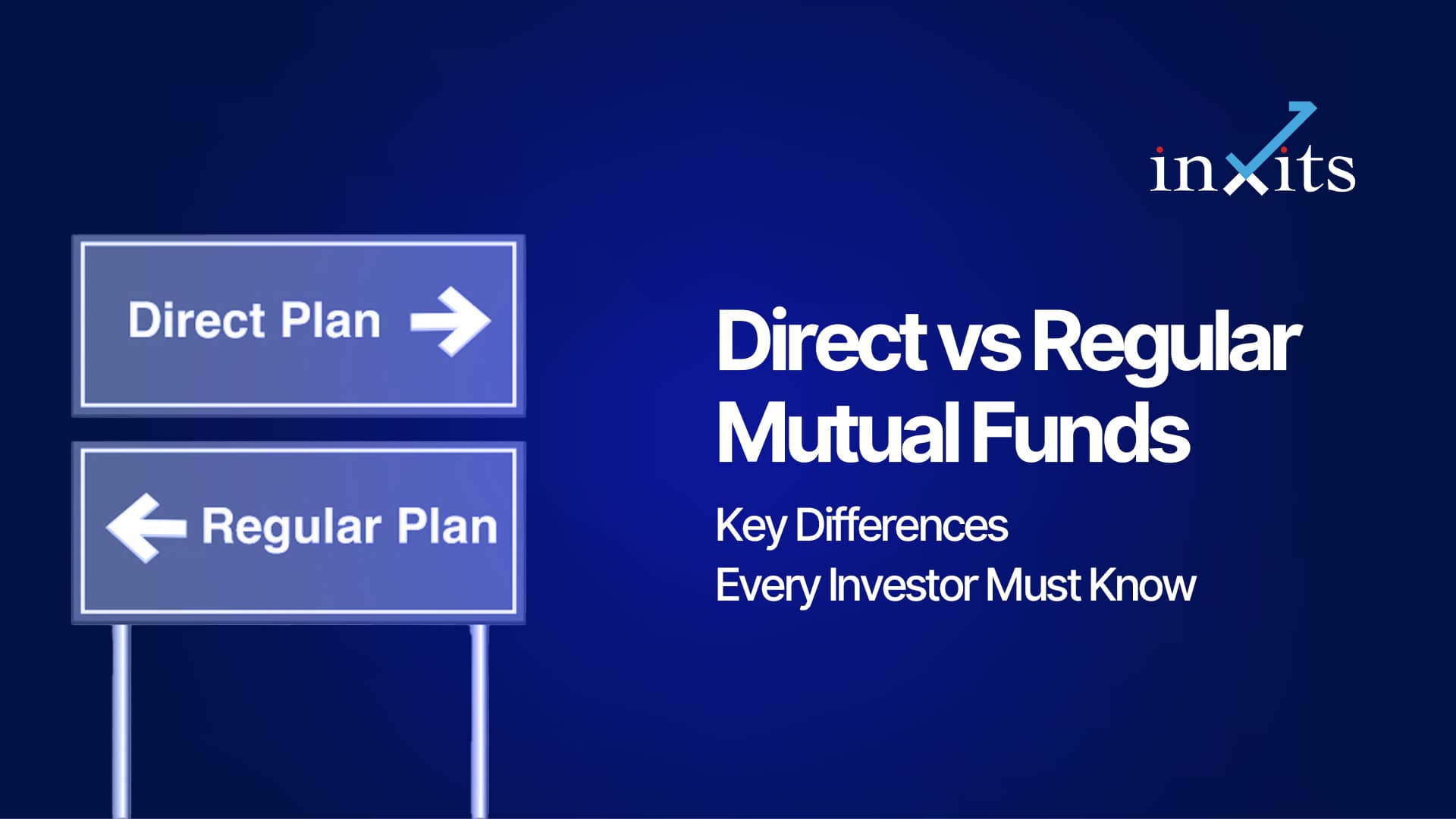
Direct vs Regular Mutual Funds: Key Differences Every Investor Must Know

When investing in mutual funds, investors must choose between Direct mutual funds and Regular mutual funds. Both options invest in the same underlying portfolio, yet they differ in how investors access them, the costs involved, and the level of support provided.

This comparison-focused guide explains the key differences between direct and regular mutual funds, so investors can decide which option fits their investing style, comfort level, and long-term approach.

Why the Choice Between Direct and Regular Matters

The decision between direct and regular mutual funds is not about which is better in general. It is about how involved you want to be in managing your investments.

Some investors prefer lower costs and full control, while others value guidance and ongoing support. Understanding these differences helps avoid confusion and mismatched expectations later.

Core Difference in How You Invest

Direct Mutual Funds

  • Investment is made directly with the fund house
  • No distributor or intermediary involved
  • Investor handles fund selection, monitoring, and review

Regular Mutual Funds

  • Investment is made through a distributor or advisor
  • Distributor assists with selection and transactions
  • Ongoing support is part of the investment experience

The underlying investments remain the same. The difference lies in process and support.

Cost Difference Between Direct and Regular Plans

One of the most discussed differences is cost.

Expense Ratio Explained

  • Direct plans have lower expense ratios
  • Regular plans include distributor commission, making costs slightly higher

This cost difference can affect long-term outcomes, but cost alone should not drive the decision.

NAV Difference Over Time

Because direct plans have lower expenses:

  • Their NAV is usually slightly higher over time
  • Regular plans may show marginally lower NAV due to higher costs

This difference builds gradually and becomes noticeable mainly over long investment periods.

Support and Guidance Comparison

Direct Mutual Funds

  • No built-in advisory support
  • Suitable for investors who understand fund categories
  • Requires self-discipline and regular reviews

Regular Mutual Funds

  • Guidance available through distributor or advisor
  • Helpful during market volatility
  • Suitable for investors who prefer assistance

The real difference is decision-making responsibility.

Behavioural Impact During Market Volatility

Market ups and downs affect all investors, but how they react differs.

  • Investors in direct plans must manage emotions independently
  • Regular plan investors often receive guidance during uncertain periods

This behavioural support can help investors avoid panic decisions such as stopping SIPs or exiting too early.

Taxation: No Difference

Tax treatment is exactly the same for both plans.

Tax depends on:

  • Type of mutual fund
  • Holding period
  • Applicable tax laws at the time of redemption

Choosing direct or regular does not change tax rules.

Who May Prefer Direct Mutual Funds

Direct plans may suit investors who:

  • Understand mutual fund basics
  • Are comfortable selecting and reviewing funds
  • Prefer lower costs
  • Do not need ongoing guidance

They may know what they want and prefer a self-managed approach.

Who May Prefer Regular Mutual Funds

Regular plans may suit investors who:

  • Are new to mutual fund investing
  • Prefer guidance and explanations
  • Want help with portfolio reviews
  • Value behavioural support

Regular plans are about convenience and clarity, not just transactions.

Common Mistakes Investors Make When Choosing

  • Choosing direct plans only for lower cost without understanding funds
  • Choosing regular plans without understanding expense impact
  • Switching frequently between plans
  • Comparing only returns instead of suitability

The right choice depends on how involved you want to be, not on short-term numbers.

How to Decide What Is Right for You

Ask yourself:

  • Do I understand mutual fund categories and risk levels
  • Can I review my portfolio calmly during market volatility
  • Do I want guidance or prefer independence
  • Am I comfortable making long-term decisions on my own

Clear answers help guide the choice.

If you want help understanding whether direct or regular mutual funds suit your investing style, speaking with a qualified mutual fund advisor can help. Platforms like inXits focus on explaining options clearly so investors can make informed choices based on comfort and goals, not pressure.

Quick Comparison Table

AspectDirect Mutual FundsRegular Mutual Funds
Distributor involvementNoYes
Expense ratioLowerHigher
NAV over timeSlightly higherSlightly lower
Guidance supportNot includedAvailable
Suitable forSelf-directed investorsGuided investors

Conclusion

Direct and regular mutual funds invest in the same assets, but the experience of investing in them is different. Direct plans focus on cost efficiency and self-management, while regular plans focus on guidance and support.

There is no universal answer to which is better. The right option depends on your knowledge, comfort level, and preference for guidance. Making a thoughtful choice helps ensure you stay invested with confidence over the long term.

FAQs

1. Are direct mutual funds always better than regular funds

No. Suitability depends on the investor’s ability to manage investments independently.

2. Do regular mutual funds give lower returns

Both direct and regular plans invest in the same portfolio and are affected by the same market performance. However, direct plans have a lower expense ratio, so the net return received by the investor will always be higher in a direct plan compared to the regular plan of the same fund.

3. Can I invest in both direct and regular plans

Yes. Some investors use both based on comfort and complexity of investments.

4. Is switching between direct and regular funds advisable

Switching from a regular plan to a direct plan is treated as a redemption and fresh investment. This may result in capital gains tax and can also attract an exit load if the switch is done within the exit load period (often one year). Therefore, switching should be considered carefully.

5. Do beginners need regular mutual funds

Beginners often find regular funds helpful due to available guidance.

Mandatory SEBI Warning & Disclaimer

Investment in securities market are subject to market risks. Read all the related documents carefully before investing.

Registration granted by SEBI, membership of BSE and certification from NISM in no way guarantee performance of the intermediary or provide any assurance of returns to investors.

The securities quoted above are for illustration only and are not recommendatory.
What Are Regular Mutual Funds? Features, Costs and Advantages

When investing in mutual funds, investors usually choose between regular mutual funds and direct mutual funds. While both invest in the same underlying portfolio, the way investors access and manage them is different.

Regular mutual funds are commonly chosen by investors who prefer guidance, support, and assistance throughout their investment journey. Understanding what regular mutual funds are, how they work, their costs, and their advantages helps investors decide whether this option suits their needs.

What Are Regular Mutual Funds

Regular mutual funds are mutual fund schemes purchased through a mutual fund advisor. These schemes include distributor commissions as part of their expense ratio.

Regular plans are clearly labelled as “Regular” in the scheme name and are offered alongside direct plans of the same fund.

For example:

  • ABC Equity Fund – Regular Plan
  • ABC Equity Fund – Direct Plan

Both plans invest in the same stocks or bonds. The difference lies in cost structure and investor support.

Also read: Direct vs Regular Mutual Funds

How Regular Mutual Funds Work

When you invest in a regular mutual fund:

  1. You invest through a distributor, advisor, or platform
  2. The distributor assists in fund selection based on suitability and investor requirements.
  3. Distributor commission is paid by the fund house
  4. This commission is included in the fund’s expense ratio
  5. You receive units based on the applicable NAV

Regular mutual funds are designed for investors who want professional support while investing.

Key Features of Regular Mutual Funds

Access to Guidance

Regular mutual funds come with distributor or advisor support, which helps investors understand fund categories, risk levels, and suitability.

Assistance with Transactions

Distributors help with SIP setup, redemptions, switches, and documentation.

Same Portfolio as Direct Plans

Regular and direct plans invest in the same underlying assets. Only the expense structure differs.

Ease for Beginners

Investors new to mutual funds often find regular plans easier to manage due to available support.

Costs Involved in Regular Mutual Funds

The main cost difference between regular and direct mutual funds is the expense ratio.

Expense Ratio Explained

The expense ratio includes:

  • Fund management fees
  • Administrative expenses
  • Distributor commission

Because distributor commission is included, regular mutual funds have a slightly higher expense ratio than direct plans.

This higher cost does not mean poor performance. It reflects the cost of guidance and service provided.

Regular Mutual Funds vs Direct Mutual Funds

AspectRegular Mutual FundsDirect Mutual Funds
Distributor involvedYesNo
Expense ratioHigherLower
Advisory supportAvailableNot included
Investor responsibilitySharedFully self-managed
Suitable forGuided investorsSelf-directed investors

Choosing between the two depends on how much guidance you want, not just cost.

Advantages of Regular Mutual Funds

Professional Guidance

Regular mutual funds provide access to experienced distributors or advisors who help investors make informed choices.

Behavioural Support

During market volatility, guidance helps investors stay disciplined and avoid emotional decisions.

Convenience

Regular plans simplify investing by handling operational and documentation-related tasks.

Suitable for Long-Term Planning

For investors who want ongoing support, regular mutual funds offer comfort and structure.

Limitations of Regular Mutual Funds

Higher Expense Ratio

Costs are slightly higher compared to direct plans.

Dependence on Advisor Quality

The quality of guidance depends on the distributor or advisor you choose.

Understanding both advantages and limitations helps set realistic expectations.

Who Should Consider Regular Mutual Funds

Regular mutual funds may suit:

  • First-time investors
  • Investors who prefer guidance
  • Those uncomfortable making independent fund choices
  • Long-term investors seeking support and discipline

They may not suit investors who want to manage everything on their own and minimise costs.

Taxation of Regular Mutual Funds

Taxation rules for regular mutual funds are the same as direct mutual funds. Tax depends on:

  • Fund type (equity or debt)
  • Holding period
  • Applicable tax laws at the time of redemption

There is no separate tax treatment based on plan type.

Common Mistakes Investors Make with Regular Mutual Funds

  • Choosing plans without understanding costs
  • Depending fully on advice without learning basics
  • Ignoring periodic portfolio reviews
  • Comparing only returns without considering support value

Awareness helps investors get the best from regular plans.

When Guidance Makes Sense

Not all investors want to track markets, study fund categories, or rebalance portfolios on their own. For such investors, regular mutual funds offer structured support.

If you prefer learning while investing and want clarity without handling everything independently, speaking with a qualified mutual fund advisor can help. The inXits team also provides educational support and 24×7 free consulting for investors who want clarity before choosing between regular and direct mutual funds.

Conclusion

Regular mutual funds offer a guided way to invest, combining professional support with structured investing. While they come at a slightly higher cost than direct plans, many investors find value in the assistance and discipline they provide.

The choice between regular and direct mutual funds should depend on your comfort with managing investments, not only on expense ratios. Understanding your needs helps you choose the option that aligns best with your long-term goals.

FAQs

1. What is a regular mutual fund

A regular mutual fund is a scheme purchased through a distributor or advisor, with commissions included in the expense ratio.

2. Are regular mutual funds more expensive than direct funds

Yes, they usually have a higher expense ratio due to distributor commissions.

3. Do regular mutual funds give lower returns

Returns depend on market performance. The difference comes from higher costs, not portfolio quality.

4. Are regular mutual funds suitable for beginners

Yes, especially for beginners who want guidance and support.

5. Can I switch from regular to direct mutual funds

Yes, switching is possible but may involve tax implications depending on holding period.

Mandatory SEBI Warning & Disclaimer

Investment in securities market are subject to market risks. Read all the related documents carefully before investing.

Registration granted by SEBI, membership of BSE and certification from NISM in no way guarantee performance of the intermediary or provide any assurance of returns to investors.

The securities quoted above are for illustration only and are not recommendatory

What Are Direct Mutual Funds? Meaning, Benefits & Risks

When investing in mutual funds, investors often come across two options: Direct mutual funds and Regular mutual funds. While both invest in the same underlying portfolio, they differ in cost structure and how they are accessed.

Direct mutual funds are becoming more popular among informed investors because of their lower expense ratio. However, they are not suitable for everyone. Understanding how direct mutual funds work, their benefits, and their risks is important before choosing them.

This blog explains direct mutual funds in simple terms so you can decide whether they suit your investment approach.

What Are Direct Mutual Funds

Direct mutual funds are mutual fund schemes where investors invest directly with the fund house, without involving any distributor or intermediary.

These schemes are labelled as “Direct” in the scheme name and have the same portfolio as their regular counterparts.

For example:

  • XYZ Equity Fund – Direct Plan
  • XYZ Equity Fund – Regular Plan

Both invest in the same stocks, but the cost structure is different.

Also read: Direct vs Regular Mutual Funds

How Direct Mutual Funds Work

When you invest in a direct mutual fund:

  1. You invest directly through the AMC website or an online platform
  2. No distributor commission is paid
  3. The expense ratio is lower
  4. NAV of the direct plan is slightly higher over time compared to the regular plan

The difference in returns comes purely from lower costs, not from different investments.

Direct vs Regular Mutual Funds

AspectDirect Mutual FundsRegular Mutual Funds
Distributor involvedNoYes
Expense ratioLowerHigher
NAVSlightly higher over timeSlightly lower
Advisory supportInvestor-managedDistributor support
Suitable forInformed investorsInvestors seeking guidance

Also read: Types of Mutual Funds in India

Benefits of Direct Mutual Funds

Lower Expense Ratio

Direct plans do not include distributor commissions, which reduces the overall cost of investing.

Higher Long-Term Value

Over long periods, even small cost differences can create a noticeable impact on portfolio value.

Full Control

Investors manage their own fund selection, monitoring, and rebalancing.

Risks and Limitations of Direct Mutual Funds

No Built-In Guidance

Direct plans do not include advisory support. Investors must choose funds, track performance, and rebalance on their own.

Risk of Wrong Fund Selection

Without proper understanding, investors may choose unsuitable funds based on recent performance or market noise.

Behavioural Risk

During market volatility, lack of guidance may lead to panic decisions such as stopping SIPs or selling at the wrong time.

Direct plans are not riskier in terms of market exposure, but the decision-making risk is higher.

Who Should Consider Direct Mutual Funds

Direct mutual funds may suit investors who:

  • Understand mutual fund basics
  • Are comfortable selecting funds independently
  • Can stay disciplined during market ups and downs
  • Review their portfolio periodically

They may not suit beginners who need regular guidance or reassurance.

Time Horizon and Risk Considerations

Direct mutual funds follow the same risk profile as regular mutual funds based on their category:

  • Equity funds carry higher market risk
  • Debt funds carry lower risk
  • Hybrid funds fall in between

The choice between direct and regular should be based on your ability to manage investments, not on risk appetite alone.

Do Direct Mutual Funds Give Better Returns

Direct mutual funds do not generate higher returns because of better stock selection. The return difference comes from lower expenses, which slightly improves net returns over time.

Returns are still market-linked and not guaranteed.

Common Mistakes Investors Make with Direct Plans

  • Choosing direct plans without understanding fund categories
  • Ignoring asset allocation
  • Overtracking NAV and reacting emotionally
  • Assuming direct plans need no review

Direct investing requires discipline and basic knowledge.

Direct Mutual Funds and Taxation

Tax treatment of direct mutual funds is the same as regular mutual funds. Tax depends on:

  • Type of fund
  • Holding period
  • Applicable tax laws at the time of redemption

There is no tax difference between direct and regular plans.

When Professional Guidance Can Help

Even when investing through direct plans, some investors prefer periodic guidance for:

  • Fund selection
  • Asset allocation
  • Portfolio review
  • Behavioural discipline

If you want educational clarity while managing your own investments, speaking with a qualified mutual fund advisor can help. The inXits team also provides mutual fund investment advisory support along with educational guidance and 24×7 free consulting for investors who want clarity before investing, without pushing product choices.

Conclusion

Direct mutual funds offer a cost-efficient way to invest by removing distributor commissions. They can be suitable for investors who understand mutual funds and are comfortable managing their own portfolios.

However, lower cost should not be the only reason to choose direct plans. The ability to make informed decisions, stay disciplined, and review investments regularly matters more in the long run.

Choosing between direct and regular mutual funds should always align with your knowledge level, comfort, and investment behaviour.

FAQs

1. Are direct mutual funds better than regular mutual funds

They are cheaper, but suitability depends on your ability to manage investments independently.

2. Do direct mutual funds carry more risk

No. Market risk is the same. Decision-making risk may be higher.

3. Can beginners invest in direct mutual funds

Beginners can invest, but guidance is recommended until they gain confidence.

4. Is NAV always higher in direct mutual funds

Over time, direct plans usually have slightly higher NAV due to lower expenses.

5. Can I switch from regular to direct mutual funds

Yes, but it may involve tax implications depending on the fund type and holding period.

Mandatory SEBI Warning & Disclaimer

Investment in securities market are subject to market risks. Read all the related documents carefully before investing.

Registration granted by SEBI, membership of BSE and certification from NISM in no way guarantee performance of the intermediary or provide any assurance of returns to investors.

The securities quoted above are for illustration only and are not recommendatory.
Index Funds vs Actively Managed Funds: What’s the Difference & Which One Should You Choose

When investing in mutual funds, one of the most common questions investors face is whether to choose index funds or actively managed funds. These are two major types of mutual fund options available to investors. Both invest in the stock market, but they follow very different approaches.

Understanding how these two fund types work, their costs, risks, and suitability can help investors make better decisions based on their goals and comfort level. This guide explains the difference between index funds and actively managed funds in a clear and practical way.

What Are Index Funds

Index funds are passive mutual funds. They aim to replicate the performance of a specific market index such as the Nifty 50 or Sensex.

Instead of trying to select winning stocks, index funds invest in the same stocks that make up the chosen index, in the same proportion.

How Index Funds Work

  • Track a market index
  • No active stock selection
  • Portfolio changes only when the index changes
  • Performance closely follows the index

What Are Actively Managed Funds

Actively managed funds are mutual funds where a fund manager actively selects stocks with the aim of outperforming the market or a benchmark index.

The fund manager and research team continuously analyse companies, market trends, and economic factors to decide which stocks to buy or sell.

How Actively Managed Funds Work

  • Fund manager selects stocks
  • Portfolio changes based on research and market views
  • Aim is to beat the benchmark
  • Requires frequent decision making

Key Differences Between Index Funds and Actively Managed Funds

1. Investment Approach

  • Index Funds: Follow a passive approach by tracking an index
  • Actively Managed Funds: Follow an active approach to outperform the market

2. Cost and Expense Ratio

One of the biggest differences is cost.

  • Index Funds:
    • Lower expense ratio
    • Minimal fund management activity
  • Actively Managed Funds:
    • Higher expense ratio
    • Costs include research, analysis, and frequent trading

Lower costs are a key reason many beginners prefer index funds for long-term investing.

3. Risk Profile

  • Index Funds:
    • Market-linked risk
    • Move in line with the index
  • Actively Managed Funds:
    • Market risk along with fund manager decision risk, as performance depends on stock selection and timing.
    • Performance depends on investment decisions

4. Return Behaviour

  • Index Funds:
    • Returns mirror the index over time
    • Do not aim to beat the market
  • Actively Managed Funds:
    • Returns may be higher or lower than the index
    • Depend on fund manager strategy and timing

It is important to remember that higher return potential also comes with higher uncertainty.

5. Transparency

  • Index Funds:
    • Portfolio composition is predictable and transparent
  • Actively Managed Funds:
    • Portfolio changes frequently
    • Requires regular monitoring

Risk-O-Meter Comparison

Fund TypeRisk Level
Index FundsMarket-linked Risk
Actively Managed Equity FundsVery High Risk

Both fund types are affected by market movements, but active funds also depend on the quality of fund management decisions.

Time Horizon for Index vs Active Funds

Both index funds and actively managed equity funds are suitable for long-term investing.

Recommended time horizon: 5 years or more, with longer horizons preferred for consistent outcomes.

Longer holding periods help manage market volatility and improve consistency of outcomes.

Who Should Consider Index Funds

Index funds may suit investors who:

  • Prefer a simple investment approach
  • Want lower costs
  • Are comfortable matching market performance
  • Do not want to track fund manager decisions frequently
  • Have a long-term investment horizon

They are often used as a core holding in long-term portfolios.

Who Should Consider Actively Managed Funds

Actively managed funds may suit investors who:

  • Are comfortable with higher risk
  • Want the possibility of outperforming the market
  • Trust professional fund management
  • Are willing to monitor performance periodically

These funds may perform differently across market cycles.

Who Should NOT Choose This

Index funds may not suit investors who:

  • Seek tactical or short-term market opportunities
  • Want to actively time the market or switch stocks frequently
  • Expect returns significantly higher than the market average

Actively managed funds may not suit investors who:

  • Are highly cost-sensitive and prefer lower expense ratios
  • Want a completely hands-off investment approach
  • Do not wish to monitor fund performance or fund manager decisions periodically

Choosing the wrong fund type for your investment style may lead to discomfort and poor decision-making during market volatility.

Index Funds vs Active Funds: Quick Comparison Table

AspectIndex FundsActively Managed Funds
Investment StylePassiveActive
Expense RatioLowerHigher
GoalMatch the indexBeat the index
Fund Manager RoleLimitedSignificant
Portfolio ChangesLowHigh
Risk LevelMarket-linkedVery High
Time Horizon5+ years5+ years

Common Mistakes Investors Make

  • Choosing based only on short-term performance
  • Ignoring expense ratios
  • Expecting active funds to always beat the market
  • Switching frequently between fund types

Understanding your own goals matters more than choosing between index or active funds.

Can You Use Both in One Portfolio

Yes. Many investors use:

  • Index funds for stability and cost efficiency
  • Actively managed funds for selective growth opportunities

This combination can help balance cost, risk, and return expectations.

If you ever feel unsure how to structure this balance, speaking with a qualified mutual fund advisor can help. The certified financial advisor also provides educational support for investors who want clarity before investing.

Conclusion

Index funds and actively managed funds serve different purposes. Index funds offer simplicity, lower costs, and market-linked returns, while actively managed funds offer the potential to outperform the market with higher involvement and higher costs.

The right choice depends on your investment goals, risk comfort, time horizon, and preference for simplicity or active decision making. Understanding these differences helps investors stay confident and disciplined over the long term.

FAQs

1. Are index funds better than actively managed funds

Neither is universally better. The choice depends on investor goals and preferences.

2. Do index funds guarantee returns

No. Returns are market-linked and not guaranteed.

3. Are actively managed funds risky

They carry higher risk due to market movement and fund manager decisions.

4. Can beginners invest in index funds

Yes. Index funds are often suitable for beginners with long-term goals.

5. Can I switch between index and active funds

Yes, but frequent switching is usually not recommended.

Mandatory SEBI Warning & Disclaimer

Investment in securities market are subject to market risks. Read all the related documents carefully before investing.

Registration granted by SEBI, membership of BSE and certification from NISM in no way guarantee performance of the intermediary or provide any assurance of returns to investors.

The securities quoted above are for illustration only and are not recommendatory.
What Are Index Funds and How Do They Work?

Index funds have become a popular choice among investors who prefer a simple and transparent way to invest in the stock market. They are one of the most well-known types of mutual fund, designed to track the performance of a specific market index such as the Nifty 50 or Sensex instead of trying to beat the market.

For beginners, index funds are often easier to understand compared to actively managed funds. This blog explains what index funds are, how they work, their risks, returns, and who they are suitable for.

What Is an Index Fund

An index fund is a type of mutual fund that invests in the same stocks and in the same proportion as a market index.

For example:

  • A Nifty 50 index fund invests in the 50 companies that make up the Nifty 50 index
  • A Sensex index fund invests in the 30 companies included in the Sensex

The goal of an index fund is not to outperform the market but to replicate the returns of the index it tracks.

How Index Funds Work

Index funds follow a simple investment approach:

  1. The fund tracks a specific market index
  2. It invests in all the stocks of that index
  3. The weight of each stock in the fund is the same as in the index
  4. When the index changes, the fund portfolio is adjusted accordingly

There is no active stock selection or frequent buying and selling. This makes index funds predictable and easy to understand.

Types of Index Funds in India

Index funds in India are available across different market segments.

Broad Market Index Funds

  • Nifty 50 Index Funds
  • Sensex Index Funds

These track large, well-established companies.

Market Capitalisation Index Funds

  • Nifty Next 50
  • Nifty Midcap 150

These provide exposure beyond large-cap stocks.

Sector and Theme Index Funds

  • Banking index funds
  • IT index funds

These focus on specific sectors and carry higher risk due to concentration.

Risk Profile of Index Funds

Risk-O-Meter

Market-Linked Risk

Index funds carry market risk because they move with the stock market. If the market falls, the value of the index fund also falls.

However, index funds do not carry:

  • Fund manager risk
  • Stock selection bias

Their risk comes purely from market movement.

Time Horizon for Index Funds

Index funds are suitable for long-term investing.

Recommended time horizon:
5 years or more

This time frame allows investors to ride out short-term volatility and benefit from long-term market growth.

Returns from Index Funds

Returns from index funds depend on:

  • Performance of the underlying index
  • Time horizon
  • Market conditions

Index funds do not provide fixed or guaranteed returns. Over long periods, they tend to reflect overall market growth.

The objective is steady, market-linked growth rather than short-term gains.

Advantages of Index Funds

  • Simple structure
  • Transparent holdings
  • Lower expense ratios
  • Lower portfolio turnover
  • Easy to track performance

Because of these features, index funds are often considered suitable for beginners and long-term investors.

Limitations of Index Funds

  • They cannot outperform the market
  • They fall when the market falls
  • No downside protection during market corrections

Understanding these limitations helps set realistic expectations.

Who Should Consider Index Funds

Index funds may suit:

  • Beginners starting their investment journey
  • Long-term investors
  • Investors who prefer low-cost investing
  • Investors who do not want to track markets daily

They may not suit investors looking for short-term gains or active trading opportunities.

Common Mistakes Investors Make with Index Funds

  • Expecting quick returns
  • Investing for short-term goals
  • Panicking during market falls
  • Ignoring asset allocation

Index funds work best when held with patience and discipline.

How Index Funds Fit into a Portfolio

Index funds can act as:

  • A core equity holding
  • A base for long-term wealth building
  • A stable alternative to multiple active funds

Many investors combine index funds with debt or hybrid funds to balance risk.

If you ever need help understanding how index funds fit into your overall plan, speaking with a qualified mutual fund advisor can help. The inXits team also provides educational guidance and 24×7 free consulting for investors seeking clarity before investing.

Conclusion

Index funds offer a simple and cost-effective way to participate in stock market growth. By tracking a market index, they remove the complexity of active stock selection and focus on long-term performance.

For investors who value simplicity, transparency, and discipline, index funds can play an important role in long-term investing. The key is to invest with the right time horizon and realistic expectations.

FAQs

1. Are index funds safe

Index funds carry market risk and are suitable for long-term investors.

2. Do index funds guarantee returns

No. Returns are market-linked and not guaranteed.

3. Are index funds better than active funds

Both have different purposes. Index funds focus on matching market returns at lower cost.

4. How long should I stay invested in index funds

Ideally 5 years or more.

5. Can beginners invest in index funds

Yes. Index funds are often suitable for beginners due to their simple structure.

Mandatory SEBI Warning & Disclaimer

Investment in securities market are subject to market risks. Read all the related documents carefully before investing.

Registration granted by SEBI, membership of BSE and certification from NISM in no way guarantee performance of the intermediary or provide any assurance of returns to investors.

The securities quoted above are for illustration only and are not recommendatory.
Hybrid Mutual Funds in India: Types and Who Should Invest

Hybrid mutual funds are designed for investors who want a balance between growth and stability. These funds invest in a mix of equity and debt instruments, making them suitable for people who do not want to take the full risk of equity funds but still want some exposure to market-linked growth. 

In India, hybrid mutual funds are often chosen by beginners and moderate investors because they sit between equity and debt funds in terms of risk and return. Understanding how they work, how they compare with other types of mutual fund, and the different options available can help investors decide whether they fit their financial goals.

What Are Hybrid Mutual Funds

Hybrid mutual funds invest in both:

  • Equity instruments such as company shares
  • Debt instruments such as bonds and money market securities

The proportion of equity and debt varies depending on the type of hybrid fund. This mix helps reduce overall portfolio volatility while still allowing participation in market growth.

Must Read: What Is a Mutual Fund and How Does It Work?

How Hybrid Mutual Funds Work

When you invest in a hybrid mutual fund:

  1. Your money is split between equity and debt assets
  2. Equity aims to provide growth over time
  3. Debt aims to provide stability and reduce sharp fluctuations
  4. The fund manager rebalances the allocation as per the scheme rules

Because of this structure, hybrid funds tend to be less volatile than pure equity funds but more growth-oriented than pure debt funds.

Risk Profile and Time Horizon

Risk Profile (Risk-O-Meter)

Moderately High Risk

Hybrid funds carry moderate to moderately high risk depending on their equity allocation.

Recommended Time Horizon

3 to 5 years

This time period allows the equity portion to work through market cycles while the debt portion provides stability.

Types of Hybrid Mutual Funds in India

Hybrid mutual funds are classified based on how much they invest in equity and debt.

Aggressive Hybrid Funds

Equity allocation: Around 65 to 80 percent
Debt allocation: Around 20 to 35 percent

Risk level: Moderately High Risk

Who should consider them:

  • Investors seeking higher growth with some stability
  • Investors with a medium-term horizon
  • Those transitioning from debt to equity

Conservative Hybrid Funds

Equity allocation: Around 10 to 25 percent
Debt allocation: Around 75 to 90 percent

Risk level: Low to Moderate Risk

Who should consider them:

  • Conservative investors
  • Investors closer to short-term goals
  • Those prioritising capital stability

Balanced Hybrid Funds

Equity allocation: Around 40 to 60 percent
Debt allocation: Around 40 to 60 percent

Risk level: Moderate Risk

Who should consider them:

  • Investors seeking balance between growth and stability
  • Beginners with moderate risk comfort

Balanced Advantage Funds (Dynamic Asset Allocation Funds)

These funds actively change equity and debt allocation based on market conditions.

Risk level: Moderate to Moderately High

Who should consider them:

  • Investors who prefer dynamic allocation
  • Those who do not want to adjust portfolios themselves

Understanding how these funds rebalance can be complex. If allocation logic feels confusing, a mutual fund investment planner can help explain how these funds behave across market conditions.

Multi Asset Allocation Funds

These funds invest in at least three asset classes, usually equity, debt, and gold or commodities.

Risk level: Moderate

Who should consider them:

  • Investors looking for wider diversification
  • Investors with medium-term goals

Equity Savings Funds

These funds combine equity, debt, and arbitrage strategies.

Risk level: Low to Moderate

Who should consider them:

  • Investors seeking lower volatility
  • Those looking for tax-efficient options with relatively stable returns

Returns from Hybrid Mutual Funds

Returns from hybrid funds are market-linked and depend on:

  • Equity market performance
  • Interest rate movement
  • Asset allocation strategy
  • Time horizon

Hybrid funds do not offer guaranteed returns. Their aim is to deliver smoother returns compared to pure equity funds over medium-term periods.

Hybrid Fund Categories – Equity Exposure & Best Use Case

Who Should Invest in Hybrid Mutual Funds

Hybrid mutual funds may suit:

  • Beginners who want equity exposure with controlled risk
  • Investors with 3–5 year goals
  • Conservative investors moving gradually into equity
  • Investors who prefer balanced portfolios

They may not suit investors with very short-term needs or those seeking aggressive long-term growth.

Hybrid Mutual Funds vs Equity and Debt Funds

AspectHybrid FundsEquity FundsDebt Funds
Risk LevelModerate to Moderately HighVery HighLow to Moderate
VolatilityMediumHighLow
Growth PotentialMediumHighLow
StabilityMediumLowHigh
Time Horizon3–5 years5+ years1–3 years

Taxation of Hybrid Mutual Funds in India

Taxation of hybrid mutual funds depends mainly on their equity exposure.

Equity-Oriented Hybrid Funds (≥65% Equity Exposure)

These are taxed like equity mutual funds:

  • STCG (holding period ≤ 1 year): 15%
  • LTCG (holding period > 1 year): 10% on gains above ₹1 lakh per year 

Examples: Aggressive Hybrid Funds, Equity Savings Funds (typically), some Balanced Advantage Funds depending on equity level.

Debt-Oriented Hybrid Funds (<65% Equity Exposure)

For investments made on or after 1 April 2023, these funds are taxed as per income tax slab, irrespective of holding period:

  • Gains are added to income and taxed as per the investor’s slab rate
  • Indexation benefit is not available

 Examples: Conservative Hybrid Funds (usually), some Balanced Hybrid Funds, and certain Multi-Asset funds depending on allocation.

Common Mistakes Investors Make with Hybrid Funds

  • Treating them as risk-free
  • Ignoring equity allocation percentage
  • Investing without matching time horizon
  • Expecting equity-like returns in the short term

Understanding the structure of hybrid funds helps avoid these mistakes.

When Guidance Can Be Helpful

Hybrid funds look simple but differ widely in structure. Understanding equity percentage, rebalancing rules, and tax treatment matters.

If you feel unsure while comparing hybrid fund categories or aligning them with your goals, speaking with a qualified mutual fund advisor can help. The inXits also offers educational support and 24×7 free consulting for investors who want clarity before investing.

Conclusion

Hybrid mutual funds offer a middle path between equity and debt by combining growth potential with relative stability. With multiple types available in India, investors can choose funds that match their risk comfort and time horizon.

The right hybrid fund depends on understanding asset allocation, risk level, and investment duration. Taking time to learn these basics helps investors make better decisions and stay invested with confidence.

FAQs

1. Are hybrid mutual funds safe

They carry moderate risk and are generally less volatile than pure equity funds.

2. How long should I stay invested in hybrid funds

Ideally 3 to 5 years.

3. Do hybrid funds guarantee returns

No. Returns are market-linked and not guaranteed.

4. Are hybrid funds suitable for beginners

Suitable for beginners with moderate risk comfort and a minimum 3-year horizon.

5. Can hybrid funds replace equity or debt funds

They complement equity and debt funds but do not fully replace either.

Mandatory SEBI Warning & Disclaimer

Investment in securities market are subject to market risks. Read all the related documents carefully before investing.

Registration granted by SEBI, membership of BSE and certification from NISM in no way guarantee performance of the intermediary or provide any assurance of returns to investors.

The securities quoted above are for illustration only and are not recommendatory.
Debt Mutual Funds in India: Risk Profile, Types, and Returns

Debt mutual funds are often chosen by investors who want relatively stable returns and lower volatility compared to equity mutual funds. These funds invest in fixed-income instruments such as bonds and money market securities, making them suitable for short to medium-term financial goals. 

While debt funds are considered less volatile than equity funds, they are not risk-free. Understanding how debt mutual funds work, how they compare with other types of mutual fund, along with their risk profile and return behaviour, is important before investing. 

This guide explains debt mutual funds in a clear and practical way for Indian investors.

What Are Debt Mutual Funds

Debt mutual funds invest primarily in fixed-income instruments issued by governments, banks, and companies. These instruments pay interest at regular intervals or return a fixed amount at maturity.

Common instruments held by debt mutual funds include:

  • Government securities
  • Corporate bonds
  • Treasury bills
  • Certificates of deposit
  • Commercial papers

The fund manager selects these instruments based on maturity period, credit quality, and interest rate outlook.

Also Read: What Is a Mutual Fund and How Does It Work?

How Debt Mutual Funds Generate Returns

Debt mutual funds generate returns in two main ways:

1. Interest Income

The fund earns interest from the bonds and securities it holds.

2. Price Movement

Bond prices change when interest rates move. When interest rates fall, bond prices usually rise, and vice versa.

Returns from debt funds are not fixed and depend on market conditions, interest rate changes, and credit quality of the underlying instruments.

Risk Profile of Debt Mutual Funds

Debt mutual funds carry lower risk compared to equity funds, but they still involve certain risks that investors should understand.

Interest Rate Risk

When interest rates rise, bond prices fall. Funds with longer maturity are more affected by rate changes.

Credit Risk

This risk arises when the issuer of a bond fails to pay interest or principal on time. Funds investing in lower-rated bonds carry higher credit risk.

Liquidity Risk

In stressed market conditions, selling certain debt instruments may become difficult.

Inflation Risk

Returns from debt funds may not always beat inflation, especially over longer periods.

According to SEBI’s Risk-O-Meter, most debt mutual funds fall under Low to Moderate Risk, depending on the type of instruments they hold.

Time Horizon for Debt Mutual Funds

Debt mutual funds are generally suitable for short to medium-term goals.

Typical time horizon:
1 to 3 years, depending on the fund category.

Choosing a debt fund that matches your time horizon helps reduce the impact of interest rate and market fluctuations.

Types of Debt Mutual Funds in India

Debt mutual funds are classified based on the maturity period and type of securities they invest in.

Liquid Funds

What they invest in
Very short-term money market instruments.

Risk level
Low Risk.

Time horizon
1 day to 3 months.

Who may consider them
Investors parking surplus money or maintaining emergency funds.

Overnight Funds

What they invest in
Securities with maturity of one day.

Risk level
Very Low Risk.

Time horizon
1 day.

Who may consider them
Investors seeking very short-term parking with minimal risk.

Ultra Short Duration Funds

What they invest in
Debt instruments with short maturity periods.

Risk level
Low Risk.

Time horizon
3 to 6 months.

Who may consider them
Investors with short-term goals and moderate return expectations.

Low Duration Funds

What they invest in
Debt securities with slightly longer maturity than ultra-short funds.

Risk level
Low to Moderate Risk.

Time horizon
6 to 12 months.

Short Duration Funds

What they invest in
Debt instruments with a medium-short maturity profile.

Risk level
Low to Moderate Risk.

Time horizon
1 to 3 years.

Corporate Bond Funds

What they invest in
High-quality corporate bonds.

Risk level
Moderate Risk.

Time horizon
2 to 4 years.

Who may consider them
Investors looking for better yield with controlled credit risk.

Credit Risk Funds

What they invest in
Lower-rated corporate bonds.

Risk level
Higher within the debt category.

Time horizon
3 years or more.

Note
These funds carry higher credit risk and may not suit conservative investors.

Gilt Funds

What they invest in
Government securities only.

Risk level
Low credit risk but high interest rate risk.

Time horizon
3 to 5 years or more.

Dynamic Bond Funds

What they invest in
Debt instruments across varying maturities.

Risk level
Moderate.

Time horizon
Medium to long term.

The fund manager actively adjusts maturity based on interest rate outlook.

Return Expectations from Debt Mutual Funds

Returns from debt mutual funds are generally:

  • More stable than equity funds
  • Lower than long-term equity returns
  • Influenced by interest rates and credit quality

Debt funds aim to provide predictable income and capital preservation rather than aggressive growth.

Taxation of Debt Mutual Funds in India

Taxation rules for debt mutual funds have changed in India.

  • For investments made on or after 1 April 2023, gains from debt mutual funds are taxed as per the investor’s income tax slab rate, irrespective of the holding period.
  • Indexation benefit is no longer available for such investments.
  • This means the returns from debt mutual funds are added to your total income and taxed accordingly.

 Note: Debt funds purchased before 1 April 2023 may follow different taxation rules depending on the type of fund and applicable provisions.

Debt Mutual Funds vs Fixed Deposits

Debt funds may offer better post-tax efficiency for some investors, depending on tax rules at the time of investment.

Who Should Consider Debt Mutual Funds

Debt mutual funds may suit investors who:

  • Have short to medium-term goals
  • Prefer lower volatility
  • Need regular income
  • Want better liquidity than traditional deposits

They may not suit investors looking for high long-term growth.

Common Mistakes to Avoid in Debt Fund Investing

  • Ignoring credit quality
  • Choosing funds only for higher yield
  • Mismatching fund maturity with time horizon
  • Treating debt funds as risk-free

Understanding these aspects helps investors avoid unpleasant surprises.

Conclusion

Debt mutual funds play an important role in balanced investing by offering stability and predictable income. While they carry lower risk than equity funds, they still require careful selection based on time horizon and risk comfort.

Choosing the right type of debt fund depends on your financial goals and how long you plan to stay invested. If you ever need help understanding debt mutual fund categories or aligning them with your goals, you may consider speaking with a qualified mutual fund advisor. The inXits team also provides educational support and 24×7 free consulting for investors who want clarity before investing.

FAQs

1. Are debt mutual funds safe

They carry lower risk than equity funds but are not risk-free.

2. How long should I stay invested in debt mutual funds

Usually 1 to 3 years, depending on the fund type.

3. Do debt mutual funds give fixed returns

No. Returns are market-linked and depend on interest rates and credit quality.

4. Can beginners invest in debt mutual funds

Yes, especially for short-term goals and lower risk needs.

5. Are debt funds better than fixed deposits

They serve different purposes and should be chosen based on goals and tax considerations.

Mandatory SEBI Warning & Disclaimer

Investment in securities market are subject to market risks. Read all the related documents carefully before investing.

Registration granted by SEBI, membership of BSE and certification from NISM in no way guarantee performance of the intermediary or provide any assurance of returns to investors.

The securities quoted above are for illustration only and are not recommendatory.
Small Cap Funds: Meaning, Features, and How They Work

Small cap funds are a type of Equity Mutual Funds that focus on smaller companies with high growth potential. Among the various types of mutual fund, these funds can offer significant long-term growth, but they also come with higher risk and more pronounced market fluctuations compared to large cap and mid cap funds.

Knowing how small cap funds operate, their key features, and who they are best suited for is essential before investing. This guide breaks down small cap funds in simple terms to help investors make informed decisions.

What Are Small Cap Funds

Small cap funds are equity mutual funds that invest mainly in small-cap companies. As per SEBI classification, small-cap companies are those ranked beyond the top 250 companies by market capitalisation.

A small cap fund must invest at least 65 percent of its assets in small-cap stocks. These companies are usually in the early or expansion stages of their business lifecycle.

How Small Cap Funds Work

When you invest in a small cap fund:

  1. Money from multiple investors is pooled together
  2. The fund manager invests primarily in small-cap companies
  3. You receive units based on the fund’s NAV
  4. NAV changes daily based on market movement and stock prices

Returns depend on how well these smaller companies grow over time and how markets behave.

Key Features of Small Cap Funds

1. High Growth Potential

Small companies often have more room to grow compared to established large companies.

2. Higher Volatility

Small-cap stocks can fluctuate sharply due to lower market liquidity and business uncertainty.

3. Long-Term Focus

These funds are suitable only for investors who can stay invested for long periods.

4. Active Fund Management

Fund managers actively research and select stocks to manage risk and identify growth opportunities.

Risk Profile of Small Cap Funds

Risk-O-Meter

Very High Risk

Small cap funds carry higher risk because:

  • Smaller companies are more sensitive to economic changes
  • Stock prices can be volatile
  • Liquidity may be lower during market stress

Investors should be mentally prepared for sharp short-term fluctuations.

Time Horizon for Small Cap Funds

Small cap funds are suitable for long-term investing.

Recommended time horizon:
7 to 10 years or more

This time frame helps investors ride out market volatility and benefit from long-term business growth.

SIP vs Lump Sum in Small Cap Funds

Small cap funds can be highly volatile, and it’s not uncommon for small-cap stocks to fall 20–30% quickly during market corrections.

Because of this, many investors prefer investing through a Systematic Investment Plan (SIP) instead of a lump sum.

Why SIP may be better suited for small caps

  • SIP spreads your investment across different market levels.
  • When markets fall, your SIP buys more units at lower NAV, and when markets rise, it buys fewer units.
  • This helps reduce the average cost of purchase over time — a benefit known as Rupee Cost Averaging.

For long-term investors, SIPs can make small-cap investing more disciplined and emotionally manageable, especially during sharp market ups and downs.

Returns from Small Cap Funds

Returns from small cap funds are:

  • Market-linked
  • Potentially higher over long periods
  • Uneven in the short term

Small cap funds do not offer guaranteed returns. Their performance depends on company growth, market cycles, and economic conditions.

Taxation of Small Cap Funds (Equity-Oriented Mutual Funds)

Small cap funds are treated as equity mutual funds for taxation purposes.

Short-Term Capital Gains (STCG)

  • If units are redeemed within 1 year, gains are treated as short-term capital gains.
  • STCG is taxed at 20%.

Long-Term Capital Gains (LTCG)

  • If units are redeemed after 1 year, gains are treated as long-term capital gains.
  • LTCG above ₹1.25 lakh in a financial year is taxed at 12.5%.

Tax rules can change over time, so it’s best to check the latest budget updates or consult a financial advisor before redeeming.

Small Cap Funds vs Large and Mid Cap Funds

Who Should Consider Small Cap Funds

Small cap funds may suit investors who:

  • Have a high risk tolerance
  • Can stay invested for long periods
  • Already have stable equity exposure
  • Are comfortable with market volatility

They may not suit conservative investors or those with short-term goals.

Common Mistakes Investors Make with Small Cap Funds

  • Investing without understanding volatility
  • Expecting quick gains
  • Exiting during market corrections
  • Allocating too much of the portfolio to small caps

Small cap funds should form only a portion of an overall investment portfolio.

How Small Cap Funds Fit into a Portfolio

Small cap funds are usually used to:

  • Add growth potential to a portfolio
  • Complement large and mid cap holdings
  • Increase long-term return potential with higher risk

They should be balanced with more stable investments.

If you ever feel unsure about how much exposure to small-cap funds is suitable for your goals, speaking with a mutual fund advisor can help. 

The inXits team also provides educational support, mutual fund investment services, and 24×7 free consulting for investors who want clarity before investing.

Conclusion

Small cap funds offer the potential for strong long-term growth but come with higher risk and volatility. They are best suited for experienced or patient investors who can stay invested through market cycles.

Understanding the risk, maintaining discipline, and having a long-term view are essential when investing in small cap funds. These funds should always be chosen as part of a balanced investment strategy.

FAQs

1. Are small cap funds risky

Yes. Small cap funds carry very high risk and high volatility.

2. How long should I stay invested in small cap funds

Ideally 7 to 10 years or more.

3. Do small cap funds guarantee returns

No. Returns are market-linked and not guaranteed.

4. Are small cap funds suitable for beginners

Generally, no. Beginners should start with Large Cap or Index funds to understand market behavior and build investing discipline. Small cap funds are better suited for investors who have already built a foundation of stable investments and have a high-risk appetite along with a long-term horizon.

5. Can small cap funds give high returns

They can deliver strong returns over long periods, but performance can vary widely in the short term.

Mandatory SEBI Warning & Disclaimer

Investment in securities market are subject to market risks. Read all the related documents carefully before investing.

Registration granted by SEBI, membership of BSE and certification from NISM in no way guarantee performance of the intermediary or provide any assurance of returns to investors.

The securities quoted above are for illustration only and are not recommendatory.
Mid Cap Funds: Meaning, Features, and How They Work

Mid cap funds are a popular type of mutual fund under Equity Mutual Funds that invest in companies which are neither very large nor very small in size. These companies are often in a growth phase, expanding their business and market reach — and are sometimes seen as the blue chips of tomorrow. 

Because of this, mid cap funds can offer higher growth potential than large cap funds, but they also carry higher risk.

What Are Mid Cap Funds

Mid cap funds are equity mutual funds that invest primarily in mid-cap companies. As per SEBI classification, mid-cap companies are those ranked from 101 to 250 by market capitalisation.

A mid cap fund must invest at least 65 percent of its assets in mid-cap stocks. These companies are usually established businesses with scope to grow faster than large companies over time.

How Mid Cap Funds Work

When you invest in a mid cap fund:

  1. Money from multiple investors is pooled together
  2. The fund manager selects stocks of mid-cap companies
  3. Investors are allotted units based on the fund’s NAV
  4. NAV changes daily based on stock market movement

Many mid cap funds are benchmarked against indices like the Nifty Midcap 150 TRI, and aim to deliver returns that beat the benchmark over the long term through active stock selection.

Returns depend on how these mid-sized companies perform and how market conditions affect them.

Key Features of Mid Cap Funds

1. Higher Growth Potential

Mid-cap companies often have more room to expand compared to large companies, which can lead to higher growth over time.

2. Higher Volatility

Mid cap funds can show sharper ups and downs in the short term due to market sensitivity.

3. Equity-Oriented Returns

Returns are market-linked and depend on business performance and market conditions.

4. Active Fund Management

Many mid cap funds rely on active stock selection to identify promising companies.

Risk Profile of Mid Cap Funds

Risk-O-Meter

High to Very High Risk

Mid cap funds carry higher risk than large cap funds because mid-sized companies are more affected by economic changes and market sentiment.

Types of Risks Involved

  • Market risk
  • Business risk
  • Liquidity risk
  • Volatility risk

Understanding these risks helps investors prepare for short-term fluctuations.

Time Horizon for Mid Cap Funds

Mid cap funds are suitable for long-term investing.

Recommended time horizon:
7 years or more

A longer holding period helps manage volatility and allows companies time to grow.

Returns from Mid Cap Funds

Returns from mid cap funds are:

  • Market-linked
  • Potentially higher than large cap funds over long periods
  • Uneven in the short term

Mid cap funds do not offer guaranteed returns. Performance can vary significantly across market cycles.

Taxation of Mid Cap Funds (Equity-Oriented Mutual Funds)

Mid cap funds are treated as equity mutual funds for taxation purposes.

Short-Term Capital Gains (STCG)

  • If units are redeemed within 1 year, gains are treated as short-term capital gains.
  • STCG is taxed at 20%.

Long-Term Capital Gains (LTCG)

  • If units are redeemed after 1 year, gains are treated as long-term capital gains.
  • LTCG above ₹1.25 lakh in a financial year is taxed at 12.5%.

📌 Tax rules may change over time, so it is advisable to check the latest budget updates or consult an advisor before redeeming.

Mid Cap Funds vs Other Equity Funds

Who Should Consider Mid Cap Funds

Mid cap funds may suit investors who:

  • Have long-term financial goals
  • Can stay invested for several years
  • Are comfortable with market ups and downs
  • Want higher growth than large cap funds

They may not suit conservative investors or those with short-term goals.

Common Mistakes Investors Make with Mid Cap Funds

  • Expecting steady short-term returns
  • Panic selling during market corrections
  • Investing without proper diversification
  • Allocating too much of the portfolio to mid caps

Balancing mid cap exposure with other fund categories is important.

How Mid Cap Funds Fit into a Portfolio

Mid cap funds are often used as:

  • A growth-focused component of equity allocation
  • A complement to large cap funds
  • A way to enhance long-term return potential

They should usually form a portion of the equity allocation, not the entire portfolio.

If you ever feel unsure about how much exposure to mid-cap funds is suitable for your goals, speaking with a mutual fund advisor can help. 

The inXits team also provides educational support, mutual fund investment services, and 24×7 free consulting for investors who want clarity before investing.

Conclusion

Mid cap funds invest in companies that are in a growth phase and can deliver strong long-term returns if held with patience. However, they also come with higher volatility and risk compared to large cap funds.

Understanding the nature of mid cap funds, staying invested for the long term, and avoiding emotional decisions are key to using them effectively. Mid cap funds work best when they are part of a well-balanced portfolio aligned with your goals and risk comfort.

FAQs

1. Are mid cap funds risky

Yes, mid cap funds carry higher risk and volatility compared to large cap funds.

2. How long should I stay invested in mid cap funds

Ideally 7 years or more.

3. Do mid cap funds guarantee returns

No. Returns are market-linked and not guaranteed.

4. Are mid cap funds suitable for beginners

They can be part of a beginner’s portfolio, but usually as a secondary holding. Most experts suggest beginners start with Index Funds or Large Cap funds and add mid cap funds once they understand market volatility and have built long-term investing discipline.

5. Can mid cap funds give better returns than large cap funds

They have higher growth potential over long periods but also higher risk.

Mandatory SEBI Warning & Disclaimer

Investment in securities market are subject to market risks. Read all the related documents carefully before investing.

Registration granted by SEBI, membership of BSE and certification from NISM in no way guarantee performance of the intermediary or provide any assurance of returns to investors.

The securities quoted above are for illustration only and are not recommendatory.
Chat on WhatsApp