
What Is Paperless MF Investment and How It Works

For many first-time investors, the biggest delay is not choosing a mutual fund. It is the process around it.

Forms, signatures, cancelled cheques, KYC verification, and branch visits often make investing feel more complicated than it should be. Many people postpone starting simply because the process feels heavier than the decision itself.

This is where paperless MF investment becomes useful.

Paperless MF investment means investing in mutual funds entirely online – completing KYC, linking your bank account, setting up SIPs, and redeeming funds – without physical forms, branch visits, or a cancelled cheque. The entire process happens digitally through registered platforms.

For most investors, the delay in starting isn’t picking the right fund. It’s the paperwork around it.

It allows investors to start mutual fund investments online without physical paperwork. From KYC verification to SIP setup and redemption requests, most of the process can now happen digitally.

For a salaried professional managing work, EMIs, and monthly expenses, that convenience matters. But convenience should still come with clarity.

Understanding how paperless MF investment works helps investors use the system confidently instead of treating it like just another app feature.

Key Points About Paperless MF Investment

A few quick points will make the rest easier to follow.

  • Paperless MF investment allows mutual fund investing without physical forms
  • KYC, bank linking, and SIP setup can usually happen online
  • Investors should still check platform quality, plan type, and compliance
  • Convenience matters, but structure matters more

What Is Paperless MF Investment?

Paperless MF investment means investing in mutual funds through a fully digital process without submitting physical application forms or visiting a branch.

The investor completes registration, Know Your Customer (KYC), bank verification, nominee updates, and investment transactions online using approved platforms.

This can happen through:

  • AMC websites
  • Mutual fund transaction platforms
  • Registrar platforms like CAMS and KFin Technologies
  • Bank investment portals
  • Fintech investment apps

Does Paperless MF Investment Mean Direct Plans Only?

No.

Many investors assume paperless investing always means direct plans, but that is not true.

Both direct and regular plans can be accessed digitally depending on the platform. The difference is not paperless versus offline. The real difference is whether distributor commissions are included in the investment structure.

That is why investors should check plan type carefully before starting.

How Paperless MF Investment Works in Practice

The process is usually straightforward.

Most platforms follow these steps:

  1. Register using PAN and mobile number
  2. Complete KYC verification through eKYC or video KYC
  3. Link bank account details
  4. Add nominee information
  5. Select mutual fund scheme
  6. Start SIP or lump sum investment
  7. Track, switch, or redeem through the same platform

This process becomes easier to understand when investors also know how a mutual fund transaction platform works, because paperless investing happens through that operating system.

Priyansh, a salaried employee in Chennai, delayed starting his SIP for almost eight months because he assumed branch visits were mandatory. Once he completed eKYC online and linked his bank account, the actual investment process took less than an hour.

That hesitation is common.

Is eKYC Enough for Mutual Fund Investing?

In most cases, yes.

Electronic Know Your Customer verification allows investors to complete identity checks digitally using PAN, Aadhaar-linked verification, and video confirmation where required.

However, platform rules and regulatory requirements may vary depending on transaction limits and account type.

This is why using a compliant platform matters more than simply choosing the fastest app.

What to Check Before Starting Paperless MF Investment

Paperless does not always mean better.

Before choosing a platform, investors should check:

FactorWhy It Matters
Direct vs Regular PlanAffects long-term cost
KYC and Compliance ProcessProtects investor security
Redemption ProcessImportant during emergencies
Statement and Tax ReportsUseful during filing season
Nominee and Update SupportReduces future operational issues

Many first-time investors focus only on app design and forget operational details. But during redemption, nomination changes, or tax filing, proper structure matters far more than interface design.

Understanding direct vs regular mutual funds also helps avoid confusion before the first investment itself.

Is Paperless MF Investment Safe?

Yes, if the platform follows proper regulatory and compliance standards.

Mutual fund investing in India operates under the framework of the Securities and Exchange Board of India. Investors should use registered platforms with proper KYC verification, secure transaction flow, and transparent documentation.

Convenience should never replace due diligence.

Not sure whether your current mutual fund setup is efficient or just convenient? A financial advisor at inXits can help review your platform choice, fund structure, and investment strategy so your investing process supports your actual long-term goals.

Paperless Investing vs Traditional Offline Investing

Both methods lead to the same mutual fund investment. The difference is how the process is handled.

FactorPaperless MF InvestmentTraditional Offline Process
KYCOnlinePhysical submission
SIP SetupDigital mandatePaper forms
RedemptionOnline requestBranch or form-based
TrackingApp or dashboardManual statements
Time RequiredFasterUsually slower

For investors comfortable with digital processes, paperless investing often improves consistency because the barrier to action becomes smaller.

But convenience should not replace planning.

How Structured Guidance Helps Beyond Just Online Investing

Paperless MF investment makes transactions easier, but easy transactions do not automatically create a strong portfolio.

Buying mutual funds online is simple. Building them around your life goals is where clarity matters.

At inXits, advisors help investors review fund selection, SIP structure, risk profile, and long-term allocation instead of focusing only on execution. A retirement-focused SIP should not follow the same logic as a short-term wealth parking strategy.

If your question after reading this is whether your investments are organised around actual goals or just easy transactions, that is where structured guidance helps. Connect with a SEBI registered financial advisor at inXits for clarity that goes beyond simply choosing the right app.

Conclusion

Paperless MF investment allows investors to start, manage, and redeem mutual funds without physical paperwork. It reduces friction and makes regular investing easier, especially for first-time investors and salaried professionals.

But the real decision is not just online versus offline. It is whether your investment process supports clarity, discipline, and long-term financial planning.

A good platform helps with execution. A good structure helps with outcomes.

Understanding paperless MF investment helps investors avoid unnecessary delays and makes disciplined investing easier to maintain over time.

If you are unsure whether your current setup is helping you build wealth or simply making transactions faster, working with an investment advisor can help create a stronger long-term framework.

Disclaimer

Investments in securities markets are subject to market risks. Read all related documents carefully before investing.

inXits is a SEBI-registered investment adviser (Registration No. INA000020369). This article is for educational purposes only and does not constitute personalised investment advice.

Registration granted by SEBI, membership of BSE, and certification from NISM in no way guarantee performance of the intermediary or provide any assurance of returns to investors.


What Is a Mutual Fund Transaction Platform?

Many investors are comfortable choosing a mutual fund, but confusion starts when they ask a simple question: where exactly should I invest?

Should you invest through the AMC website, a bank app, a broker, or a separate mutual fund transaction platform?

The options look similar at first. All of them allow you to buy funds, start SIPs, and redeem investments. But the experience, cost structure, and level of control can feel very different.

Most investors understand what a mutual fund is and whether to invest via SIP or lump sum. The platform question comes next – and it matters more than it looks. Whether you use an AMC website, a bank app, a fintech platform, or a registrar like CAMS or KFin affects your access to direct plans, portfolio visibility, redemption ease, and long-term cost.

This is where understanding a mutual fund transaction platform becomes useful.

It is not just about convenience. The platform you use affects how you track investments, manage redemptions, update nominations, and review your overall portfolio. A good decision here reduces friction for years.

Before You Read On

A few quick points will make the rest easier to follow.

  • A mutual fund transaction platform helps investors buy, redeem, and manage mutual funds
  • It can be offered by AMCs, brokers, fintech apps, or registrar systems
  • Some platforms support direct plans, while others may offer regular plans
  • Convenience matters, but cost and visibility matter too

What Is a Mutual Fund Transaction Platform?

A mutual fund transaction platform is a system that allows investors to complete mutual fund activities such as purchasing units, starting SIPs, redeeming funds, switching schemes, and tracking holdings.

Instead of visiting multiple fund house websites separately, investors can often manage everything from one place.

These platforms may be offered by:

  • Asset Management Companies (AMCs)
  • Banks
  • Brokers
  • Fintech investment apps
  • Registrar and Transfer Agents like CAMS or KFin Technologies

Is a Transaction Platform the Same as a Mutual Fund Distributor?

Not always.

A distributor may recommend and sell mutual funds, often under regular plans. A transaction platform may simply provide execution and portfolio management without investment advice.

Some platforms do both. That is why investors should check whether they are using a direct plan or a regular plan before investing.

This affects long-term cost.

How a Mutual Fund Transaction Platform Works

The process is usually simple.

Most platforms allow investors to:

  1. Complete KYC and account setup
  2. Link PAN, bank account, and nominee details
  3. Select mutual fund schemes
  4. Start SIP or lump sum investments
  5. Track portfolio value and statements
  6. Redeem or switch investments when needed

The platform acts as the operational layer between the investor and the mutual fund ecosystem.

Understanding how mutual fund purchase works makes this flow much easier to follow because purchase and redemption are both handled through the same structure.

A first-time investor in Hyderabad, Sneha, started investing through her salary account bank app because it felt familiar. Later, she realised she could not clearly compare direct plans and regular plans there, which affected her long-term cost understanding.

This is a common gap between platform convenience and platform transparency.

Can You Use More Than One Platform?

Yes.

Many investors use one platform for SIPs and another for tracking or redemptions. But managing too many platforms can create confusion around statements, nominations, and portfolio visibility.

A cleaner structure usually helps more than having too many apps.

Direct Plan vs Regular Plan on These Platforms

This is one of the most important checks.

Some transaction platforms offer direct plans, where investors invest directly without distributor commissions. Others may offer regular plans, where commissions are built into the structure.

The fund itself may look identical, but the expense ratio can differ.

This affects long-term compounding.

Investors comparing cost structures often benefit from understanding direct vs regular mutual funds before choosing where to invest.

Should First-Time Investors Always Choose Direct Plans?

Not automatically.

Direct plans reduce cost, but some investors still prefer professional guidance for fund selection, risk profiling, and long-term planning.

The better question is not “direct or regular?” but rather “do I need advice, execution support, or both?”

That depends on your goals, confidence, and financial complexity.

What Should You Check Before Choosing a Platform?

Not every platform fits every investor.

Before selecting one, check:

FactorWhy It Matters
Direct vs Regular PlansImpacts long-term cost
Ease of RedemptionImportant during emergencies
Portfolio VisibilityHelps review all holdings together
Support for Nominee/KYC UpdatesReduces operational problems
Statement and Tax ReportsUseful during filing season

Many investors focus only on the interface and ignore the reporting structure. But during tax-saving season or redemption planning, clean records matter more than design.

Not sure whether your current platform is helping your long-term investing or simply making transactions easier? A financial advisor at inXits can help review whether your mutual fund structure, platform choice, and fund selection actually support your financial goals.

Does the Platform Affect Returns?

Not directly.

Returns come from the mutual fund itself, not the app you use.

But platform choice affects cost, discipline, visibility, and decision quality. Over long periods, that can influence outcomes far more than investors expect.

A poor platform does not reduce fund performance, but it can make poor decisions easier.

How Structured Guidance Helps Beyond Just Transactions

A mutual fund transaction platform helps you execute investments, but execution is only one part of the process. The larger question is whether those transactions are helping your actual financial goals.

Buying funds is easy. Building a portfolio with purpose is harder.

At inXits, advisors help investors review fund selection, asset allocation, and investment structure based on income, goals, and risk profile rather than only transaction convenience. A retirement SIP and a short-term house purchase goal should not sit on the same decision framework.

If your main question after reading this is whether your current platform and portfolio setup are actually working together, that is where structured review matters. Connect with a SEBI registered financial advisor at inXits for clarity that goes beyond simply choosing an app.

Conclusion

A mutual fund transaction platform is the system that helps investors buy, redeem, switch, and manage mutual funds efficiently. It simplifies execution, but the right choice depends on more than convenience.

Direct plans, reporting clarity, redemption ease, and long-term visibility all matter. A good platform should make investing easier without creating hidden costs or unnecessary confusion.

The platform itself does not create returns, but it shapes how consistently and clearly investors manage their money.

Understanding how a mutual fund transaction platform works helps investors make better operational decisions, which often improve long-term financial discipline.

If you are unsure whether your current setup supports your goals or only handles transactions, working with an investment advisor can help bring structure before small inefficiencies become larger problems.

Disclaimer

Investments in securities markets are subject to market risks. Read all related documents carefully before investing.

inXits is a SEBI-registered investment adviser (Registration No. INA000020369). This article is for educational purposes only and does not constitute personalised investment advice.

Registration granted by SEBI, membership of BSE, and certification from NISM in no way guarantee performance of the intermediary or provide any assurance of returns to investors.

Exit Load in Mutual Funds: What It Means for Your Returns

Exit load in mutual funds is a redemption charge applied when you withdraw your investment before completing a specified holding period – typically 1% for equity funds if redeemed within 12 months. Most investors focus on entry – which type of mutual fund to pick, whether to invest via SIP or lump sum, and how SIP works — investors check returns carefully before investing in a mutual fund, but far fewer check what happens when they withdraw. That is where confusion begins.

You may open your app, see your fund value, and assume that exact amount will come to your bank account after redemption. In many cases, it does not.

One common reason is exit load in mutual funds.

This creates hesitation, especially when money is needed for something important like school fees, a home down payment, or an emergency expense. Investors often ask whether they are being charged a penalty for taking out their own money.

The answer depends on the scheme and the timing. Once you understand how exit load works, redemption decisions become far more practical and far less frustrating.

Key Points About Exit Load

A few quick points will make the rest easier to follow.

  • Exit load is a charge for redeeming mutual fund units before a specific period
  • Not every mutual fund applies exit load
  • Equity and debt funds may have different exit load rules
  • Checking exit load before redemption helps avoid surprises

What Is an Exit Load in Mutual Funds?

Exit load in mutual funds is a fee charged by the Asset Management Company when an investor redeems units before a specified holding period.

It is designed to discourage very short-term withdrawals and help fund managers maintain stability in the portfolio.

For example, if an equity mutual fund has a 1% exit load for redemption within 12 months, and you withdraw Rs. 1 lakh before completing that period, Rs. 1,000 may be deducted as exit load.

This is different from expense ratio. Expense ratio applies during the investment period, while exit load applies when you redeem.

If you are still building the basics, understanding what a mutual fund is will make exit load easier to understand. 

Is Exit Load in Mutual Funds the Same as a Penalty?

Not exactly.

Many investors describe it as a penalty, but technically it is a predefined charge mentioned in the scheme document before you invest.

It is not hidden. The Scheme Information Document clearly states whether exit load applies, how much it is, and for how long.

That is why reading fund details matters as much as checking past returns.

How Exit Load Works in Practice

Exit load is usually calculated as a percentage of the redemption amount.

Here is a simple example:

  • Investment amount: Rs. 2 lakh
  • Exit load: 1%
  • Redemption within exit load period

Applicable deduction: Rs. 2,000

The final amount credited will be reduced by that charge, along with any applicable taxes depending on capital gains rules.

Some funds apply exit load only on units redeemed before a specific date. Others may allow a certain percentage of withdrawal without exit load.

Understanding the full redemption process becomes easier when you also know how mutual fund redemption works in practice.

What Most Investors Assume

“If my fund is showing profit, exit load will not matter much.”

What Actually Happens

Exit load is calculated based on redemption conditions, not investor emotions. Even if returns are positive, early redemption can still reduce the final payout.

Why This Matters for You

Small percentage deductions look minor, but frequent early withdrawals can affect long-term compounding more than expected.

Which Mutual Funds Usually Have an Exit Load?

Not all funds apply the same rules.

Many equity funds commonly charge exit load if redeemed within one year. Debt funds may have shorter periods or, in some cases, no exit load depending on the category.

ELSS funds are different because they come with a mandatory three-year lock-in period. Since redemption before that is not permitted, the question of exit load does not arise during the lock-in.

Investors comparing categories often benefit from understanding types of mutual funds in India before making redemption decisions.

Does SIP Redemption Also Have Exit Load?

Yes, and this creates confusion.

Each SIP instalment is treated separately for exit load calculation. That means units purchased this month and units purchased eight months ago may be treated differently during redemption.

A salaried professional in Bengaluru, Neha, started a monthly SIP for long-term wealth creation. After ten months, she needed funds for a family medical expense. She assumed her entire investment would be free to withdraw, but some recent SIP installments still fell within the exit load period.

This is why timing matters.

Exit Load vs Tax: What Is the Difference?

Investors often mix these two together, but they are separate.

FactorMeaning
Exit LoadA fund-level charge for early redemption
Capital Gains TaxTax paid on profit made from investment
Expense RatioOngoing annual cost of managing the fund

Exit load is credited back to the fund as per scheme rules – it does not go to the AMC as revenue. Tax goes to the government based on capital gains regulations.

Both affect the final amount received.

Many investors reviewing long-term returns also compare XIRR in mutual funds to understand actual investment performance after multiple transactions.

Not sure if frequent switching or early withdrawals are reducing your long-term returns? An investment advisor at inXits can help review whether your current fund strategy matches your financial goals and holding period.

Can You Avoid Exit Load Completely?

Sometimes, yes.

The simplest way is to stay invested beyond the exit load period mentioned in the scheme.

Another approach is partial redemption, especially when only a limited amount is needed. This avoids unnecessary full withdrawal and may reduce avoidable charges.

But the right choice depends on your goals, risk tolerance, and time horizon.

When Should You Still Redeem Despite Exit Load?

Sometimes paying exit load is still reasonable.

For example:

  • A major emergency needs immediate liquidity
  • Your financial goal deadline has arrived
  • The fund no longer fits your risk profile
  • Portfolio rebalancing is necessary

The key question is not “Can I avoid exit load?” but “Does redemption still make sense after considering the cost?”

Many investors redeem during market corrections out of fear. That reaction is understandable, but emotional redemption often creates more damage than planned financial decisions.

A structured withdrawal usually works better than a rushed one.

How Structured Guidance Helps When Exit Load Feels Confusing

Exit load is a small percentage on paper. But combined with capital gains tax and the opportunity cost of interrupted compounding, it can change the financial case for redemption significantly. Should you wait? Should you redeem partially? Is the charge small enough to ignore compared to the actual need?

This is where structure matters. At inXits, advisors help investors review fund selection, holding period, and redemption timing against actual financial goals rather than reacting only to short-term market movement. The focus stays on your financial plan, not just the deduction percentage.

If your main question after reading this is whether redeeming now makes financial sense, that answer depends on your income needs, tax position, and portfolio balance. Connect with a SEBI registered financial advisor at inXits for a goal-based review of your mutual fund decisions.

Conclusion

Exit load in mutual funds is a redemption charge that applies when investors withdraw before completing the required holding period. It is not hidden, but many people overlook it until the moment they need money.

Understanding exit load helps you avoid surprises, especially when redeeming from SIPs, equity funds, or short-term investments. In some cases, waiting a little longer may improve the final outcome. In others, immediate redemption may still be the right choice.

The goal is not to avoid exit load at any cost. The goal is to make sure your withdrawal decision supports your larger financial plan.

If you are unsure whether your current investments are aligned with your goals and redemption timeline, working with an investment advisor can help bring clarity before you make that decision.

Disclaimer

Investments in securities markets are subject to market risks. Read all related documents carefully before investing.

inXits is a SEBI-registered investment adviser (Registration No. INA000020369). This article is for educational purposes only and does not constitute personalised investment advice.

Registration granted by SEBI, membership of BSE, and certification from NISM in no way guarantee performance of the intermediary or provide any assurance of returns to investors.

SIP for Buying a House: Is It Enough to Reach Your Goal?

Buying a house is one of the biggest financial decisions most people make. For some, it is about stability. For others, it is about independence. And for many, it is a long-term goal that sits quietly in the background for years.

The challenge is not just wanting to buy a house — it is knowing how to financially prepare for it without disrupting everything else in your life.It is figuring out how to prepare for it financially without putting pressure on your present lifestyle.This is where SIP enters the conversation. But an important question comes up. 

Is SIP alone enough to help you buy a house? Not sure how much you need to save for your dream home? Talk to an inXits advisor.

What this covers

  • How SIP fits into home buying planning
  • Whether SIP alone is enough
  • How much you may need to invest
  • Practical limitations and better approach

What Role Does SIP Play in Buying a House?

SIP is not a home-buying solution by itself.

It is a tool.

Specifically, it helps you:

  • Build a down payment fund
  • Grow savings gradually over time
  • Avoid last-minute financial pressure

Most home purchases involve:

  • Down payment (10%–25%)
  • Home loan for the rest

SIP typically helps with the first part.

To understand how SIP builds over time, it helps to revisit how SIP works in long-term investing.

The Real Question: Is SIP Enough?

The answer depends on three factors:

1. Timeline

  • 3–5 years → Limited compounding window; equity SIP may be too risky; consider debt or hybrid funds
  • 7–10 years → Good growth potential; equity SIP suitable with gradual shift to safer funds near goal
  • 10+ years → Maximum flexibility; equity-oriented SIP recommended for higher long-term returns

2. Property Cost

Property PriceApprox Down Payment (20%)Approx Monthly SIP Needed (8-yr horizon)
₹50 lakh₹10 lakh~₹7,000/month
₹1 crore₹20 lakh~₹14,000/month
₹2 crore₹40 lakh~₹28,000/month

Note: Assumes 12% CAGR. Actual returns may vary.

3. SIP Amount

Your SIP needs to match your goal timeline and amount.

If you are unsure how much to invest, understanding how much SIP to invest based on salary gives a starting point.

Real-Life Scenario: Can SIP Build a Down Payment?

Let’s take a practical example.

Meet Arjun, 30, working in Ahmedabad

  • Goal: Buy house in 8 years
  • Target down payment: ₹20 lakh
  • SIP: ₹10,000/month

What happens?

  • Consistent investing over time
  • Gradual accumulation
  • Potential market-linked growth

👉 SIP helps build a significant portion, but may not always cover full requirement alone

Where SIP Works Well in Home Planning

SIP works best when:

  • You start early
  • You have at least 7–10 years
  • You increase SIP over time

For example, starting a ₹10,000/month SIP at age 28 gives you roughly 10 years before a typical first-home purchase at 38 — enough time for equity SIPs to potentially double or triple your investment.

Starting the same SIP at age 33 gives you only 5 years, significantly reducing the impact of compounding.

This is why starting early matters far more than simply increasing the amount later.

For long-term goals like this, structured increases matter.

That is where step-up SIP becomes useful.

Where SIP Alone May Fall Short

SIP may not be enough in some situations.

Common limitations:

  • Short timeline (3–5 years)
  • High property cost
  • Low SIP contribution
  • No increase over time

Result:

  • Gap between savings and requirement

A Better Approach: Combine SIP with Strategy

Instead of relying only on SIP, consider a combination.

Practical approach:

  • Equity SIP (primary) → Core down payment accumulation over 7–10 years
  • Recurring Deposit or Debt Fund (secondary) → Stable backup for the final 1–2 years before purchase
  • Annual bonus or increments → Top-up the SIP or make lump-sum investments to close any gap
  • Emergency fund → Keep separate; do not dip into your home SIP for other expenses

This reduces pressure.

Goal-Based Planning Makes a Big Difference

A house is not just another investment goal.

It requires structure.

Instead of a general SIP with no defined target, a goal-based approach assigns a specific corpus, timeline, and fund type to your home purchase.

This means you know exactly whether you are on track — not just that you are “saving something.

You can explore goal-based SIP planning to align investments with your home-buying timeline.

Should You Use One SIP or Multiple SIPs?

A single SIP may not always be enough.

Better structure:

  • Growth-oriented SIP → Long-term accumulation
  • Balanced allocation → Stability

This is where a multi SIP strategy can help diversify and manage risk.

Common Mistakes in Home Planning with SIP

Avoid these:

  • Starting too late
  • Underestimating property cost
  • Not increasing SIP
  • Relying only on SIP

A Quick Reality Check

Before depending on SIP, ask:

  • Do I know my target property budget?
  • Is my SIP aligned with the timeline?
  • Am I increasing SIP over time?
  • Do I have backup savings?

If not, the plan may need adjustment.

How inXits Helps You Plan for Home Buying

Buying a house is not just about saving money. It is about aligning your investments with a clear timeline.

At inXits, advisors help investors:

  • Estimate realistic down payment targets
  • Structure SIP based on income and timeline
  • Balance growth and stability

This helps avoid surprises when the goal approaches.

Conclusion

SIP can play a strong role in planning for a house, but it is rarely the complete solution on its own.

It works best as a structured way to build your down payment over time. The key is to start early, stay consistent, and increase contributions as your income grows.

Most importantly, SIP should be part of a broader plan, not the entire plan.

If your home goal feels uncertain or the numbers don’t seem to align, it may be worth stepping back and evaluating your approach more clearly. A structured discussion with a mutual fund advisor can help you understand whether your current SIP is sufficient or needs adjustment for your timeline.

Disclaimer

Investments in securities markets are subject to market risks. Read all related documents carefully before investing.

inXits is a SEBI-registered investment adviser (Registration No. INA000020369). This article is for educational purposes only and does not constitute personalised investment advice.

Registration granted by SEBI, membership of BSE, and certification from NISM in no way guarantee performance of the intermediary or provide any assurance of returns to investors.
What Happens to My Mutual Funds If I Die? Nomination Guide

Most people spend time choosing the right mutual funds, but very few spend time asking a quieter question: what happens to these investments if I am no longer here?

It is not an easy topic to think about. Many families delay it because it feels uncomfortable. But avoiding it creates far more difficulty later, especially when loved ones are already dealing with emotional stress.

Without proper mutual fund nomination, even simple investments can turn into a lengthy legal and administrative burden.

A spouse may know you invested regularly. Children may know there is a SIP running somewhere. But if account details, nomination status, and ownership records are unclear, claiming those investments becomes unnecessarily difficult.

This is where mutual fund nomination matters.

It is not just paperwork. It is part of responsible financial planning and helps your family access your investments without confusion when they need clarity the most.

Before You Read On

A few quick points will make the rest easier to follow.

  • Mutual fund nomination helps transfer investments after the investor’s death
  • A nominee helps with claim processing, but legal ownership rules still matter
  • Updating nomination reduces delays for family members
  • Joint holding and proper records also improve smooth transmission

Key Facts on Mutual Fund Nomination in India

  • SEBI mandated nomination or opt-out for all existing folios via a June 2022 circular, with the final compliance deadline set at September 30, 2023.
  • Transmission with a valid nomination typically takes 10–30 days; without one, families may face a process stretching from several weeks to several months, especially if legal documentation like succession certificates is required.
  • Only 3 fields are required mandatorily for updating nomination details. If no percentage split is specified, units are divided equally among nominees.

Sources: SEBI circulars, Business Today reporting on nomination deadlines, AMC transmission process guidelines.

What Is Mutual Fund Nomination?

Mutual fund nomination is the process of officially naming a person who can claim your mutual fund investments if you pass away.

This helps the Asset Management Company process transmission requests more smoothly instead of leaving the family to start from zero.

A nominee is usually a spouse, child, parent, or another trusted person. Investors can nominate one or more individuals depending on the platform and folio structure.

If you are still building your investment basics, understanding what is a mutual fund helps first because nomination applies to the ownership of those investments.

Is a Nominee the Same as the Final Owner?

Not always.

This creates major confusion.

A nominee helps receive and process the assets, but final legal ownership may still depend on succession laws, a will, or legal heir claims. The nominee is often the custodian for smoother transfer, not always the final beneficiary.

That is why nomination and estate planning should work together.

What Happens to Mutual Funds After Death?

When an investor passes away, the mutual fund units do not disappear. They remain linked to the folio until a transmission request is completed.

The nominee or legal heir must submit documents such as:

  1. Death certificate
  2. KYC documents
  3. PAN details
  4. Bank proof
  5. Transmission request form
  6. Additional legal documents if no nomination exists

Once verified, the units are either transferred to the nominee or redeemed based on the applicable process — typically within 7–30 working days when valid nomination records exist.

This process becomes easier when investment records are clear and centralised through a proper mutual fund structure. Understanding how mutual fund purchase works also helps families identify where investments are actually held.

A family in Mumbai often discovers this problem late. Rajesh handled all investments himself and never discussed folio details. Ultimately, the family had to obtain a succession certificate — a process that took over three months. After his sudden passing, his wife knew mutual funds existed but had no idea where they were held or whether nomination was updated. The emotional burden became an operational one.

That situation is more common than most people think.

Why You Should Update Your Mutual Fund Nominee After Marriage or Childbirth

Many investors assume nomination is a one-time task completed during account opening.

Often, it is not.

Marriage, divorce, children, relocation, and family responsibilities all change who should be nominated. But investors rarely revisit these details.

A nomination made ten years ago may no longer reflect today’s reality.

This is why regular portfolio reviews should include nomination checks, not just performance discussions. Investors already reviewing portfolio rebalancing often forget that ownership structure also needs review.

Can You Add or Change a Nominee Later?

Yes.

Most mutual fund platforms allow investors to update or change nominees online or through a physical form, depending on the folio and platform.

This should be treated like updating insurance beneficiaries or bank records. It is part of financial hygiene, not a one-time administrative step.

Nominee vs Legal Heir: Why Families Get Confused

This is where many disputes begin.

A nominee helps with access and claim processing. A legal heir may have the final right based on inheritance law or a valid will.

FactorNomineeLegal Heir
PurposeClaim processing and temporary holdingFinal ownership rights
Identified ByInvestor through nomination formSuccession law or will
RoleAdministrative easeLegal entitlement

This distinction becomes especially important in larger families or where succession planning is unclear.

Not sure whether your current nominations match your family’s long-term financial structure? A financial advisor at inXits can help review your investment ownership, nominees, and financial planning documents so your portfolio supports your family, not just your returns.

What Happens If There Is No Nominee?

The process usually becomes slower.

Family members may need succession certificates, probate documents, indemnity forms, or other legal documentation depending on the investment value and AMC process.

This creates delay at the exact time when clarity is most needed. That is why nomination is one of the simplest but most ignored parts of financial planning.

Industry transmission timelines vary across AMCs, but nominee-based claims are generally processed much faster than cases requiring succession certificates or legal heir verification. 

How Structured Guidance Helps Beyond Just Nomination Forms

Mutual fund nomination is not only about filling one form. It is about making sure your investments, family responsibilities, and ownership structure work together.

A retirement corpus, children’s education fund, and emergency reserve should not all depend on incomplete paperwork.

At inXits, advisors help investors review not only fund selection and asset allocation, but also nominee structure, family financial continuity, and practical ownership clarity. A financial plan should work for your family even when you are not there to explain it.

If your biggest concern after reading this is whether your family could actually access your investments smoothly, that is the right question to ask. Connect with a SEBI registered financial advisor at inXits for a structured review of your portfolio and family financial planning.

Conclusion

Mutual fund nomination helps ensure your investments can be accessed more smoothly by your family after your death. It reduces delays, paperwork stress, and unnecessary confusion during an already difficult time.

A nominee helps with the claim process, but legal ownership may still depend on succession laws and estate planning. That is why nomination should be reviewed alongside wills, joint holdings, and long-term financial goals.

Keeping your nomination up to date is a small step that can make a significant difference for your family.

Most investors spend years building wealth. Taking a small step to protect access to that wealth matters just as much.

If you are unsure whether your current nominee structure reflects your family’s real needs, working with an investment advisor can help create clarity before that decision becomes urgent.

Disclaimer

Investments in securities markets are subject to market risks. Read all related documents carefully before investing.

inXits is a SEBI-registered investment adviser (Registration No. INA000020369). This article is for educational purposes only and does not constitute personalised investment advice.

Registration granted by SEBI, membership of BSE, and certification from NISM in no way guarantee performance of the intermediary or provide any assurance of returns to investors.
SIP Returns Negative? 5 Smart Moves Every Investor Should Know

You check your mutual fund app after months of disciplined investing, expecting steady growth. Instead, you see SIP Returns Negative on your portfolio statement.

That moment can feel unsettling. It often raises questions about whether you made the right decision or if you should stop investing altogether.

Feeling unsettled about negative returns is more common than it seems. Many investors experience doubt when markets move against them, especially early in their SIP journey.

Understanding what to do when your SIP Returns Negative can help you move from reacting emotionally to making informed, structured decisions.

Before you read on

  • Negative SIP returns are often linked to market cycles, not necessarily poor decisions
  • SIPs are designed for long-term investing, not short-term outcomes
  • Stopping or changing strategy requires careful evaluation
  • Structured thinking helps reduce emotional decision-making

Why Are Your SIP Returns Negative Right Now?

Negative SIP returns usually happen when markets decline or remain volatile for a period. Since SIPs invest at regular intervals, you buy some units at higher prices and others at lower prices.

This is part of how SIPs work. During downturns, the average purchase cost may still be higher than current market value, resulting in temporary losses.

Many investors feel anxious in this phase. That reaction is understandable, especially when expectations were built around steady growth.

To understand this better, it helps to revisit how SIP works and explains the role of market cycles in long-term investing.

Assumption vs Reality: Are Negative SIP Returns a Sign of Failure?

What most investors assume:
If SIP returns are negative, the investment is not working.

What actually happens:
Short-term negative returns are a normal part of market-linked investments, especially during corrections or bear markets.

Why this matters:
Reacting to temporary declines can interrupt long-term compounding, which SIPs are designed to capture.

This kind of misconception is similar to broader beliefs covered in common SIP myths, where expectations often do not match how markets behave in reality.

Should You Stop Your SIP When Returns Are Negative?

This is one of the most common reactions. However, stopping a SIP during a market downturn may not always align with long-term investing principles.

When markets fall, SIPs continue to buy units at lower prices. Over time, this can reduce the average cost per unit.

This concept is often easier to understand when comparing approaches like SIP vs lump sum, where timing risk plays a significant role.

That said, decisions should always depend on your financial situation, goals, and time horizon.

5 Smart Moves When SIP Returns Are Negative

1. Revisit Your Investment Horizon

SIPs are typically aligned with long-term goals like retirement, education, or wealth building.

If your time horizon is short, market volatility may feel more impactful. However, longer horizons often provide more time for recovery and growth.

2. Check If the Fund Still Matches Your Goal

Sometimes the issue is not the market but the fund selection.

Ask yourself:

  • Does this fund align with your risk tolerance?
  • Is it suitable for your financial goal?

Understanding fund categories can help here, especially when reviewing options within equity mutual funds types returns risks.

3. Avoid Panic Decisions

Selling investments during a downturn locks in losses.

Many investors exit during market declines and re-enter after recovery, which affects long-term outcomes.

This behavioural pattern is similar to mistakes discussed in mistakes beginners make in mutual fund investing, where emotional decisions often impact results.

4. Consider Step-Up or Continue Investing

If your income allows, increasing SIP contributions during market corrections may help accumulate more units at lower prices.

This approach is often explored through strategies like what is SIP step-up, which gradually increases investment amounts over time.

5. Review, Don’t React

Instead of reacting immediately, take time to review your portfolio.

Look at performance relative to benchmarks, consistency, and fund management quality.

Diversification also plays a role here, similar to how investors approach how to diversify mutual fund portfolios for better balance.

Have a specific question about why your SIP is showing negative returns? Talk to a personal CFO — a conversation with a qualified advisor, no forms, no wait.

How Long Does It Take for SIPs to Recover?

Recovery timelines depend on market conditions and the type of fund.

Historically, equity markets have gone through cycles of decline and recovery. For instance, after the 2020 COVID crash, Indian equity markets recovered within 6–8 months. While timelines vary, long-term investing has often smoothed out short-term volatility.

However, this does not guarantee outcomes. It highlights the importance of patience and disciplined investing.

Understanding how returns are measured over time, such as through XIRR in mutual funds, can also provide a clearer picture of performance across different market phases.

According to AMFI and historical market data, long-term SIP investors in diversified equity funds have historically seen stronger recovery patterns over 7–10 year periods despite temporary market corrections. 

When Negative SIP Returns Become a Real Problem

Not all negative returns require concern. However, certain situations may need attention:

  • The fund consistently underperforms its benchmark
  • The fund no longer aligns with your goals
  • There are changes in fund management or strategy

How inXits Helps You Stay Disciplined During Market Phases

Navigating periods of negative SIP returns can feel challenging without a clear framework. At inXits, advisors work with investors to evaluate whether portfolio performance aligns with long-term goals and risk tolerance. If you have questions about SIP performance or strategy adjustments, speaking with a qualified personal CFO can provide clarity tailored to your situation.

Understanding SIP behaviour is one part. Knowing how it fits your financial goals is what moves things forward. At inXits, a personal CFO connects your SIP strategy to your overall financial plan, not just short-term returns.

Conclusion

Negative SIP returns can feel uncomfortable, but they are often part of how market-linked investments behave in the short term. What matters more is how you respond during these phases.

Revisiting your goals, staying consistent, and avoiding emotional decisions can help maintain a structured approach to investing. Over time, this discipline becomes more important than reacting to temporary fluctuations.

If you are unsure how your SIP strategy fits your broader financial plan, you can connect with a personal CFO to review your approach in a more structured way.

Disclaimer

Investments in securities markets are subject to market risks. Read all related documents carefully before investing.

inXits is a SEBI-registered investment adviser (Registration No. INA000020369). This article is for educational purposes only and does not constitute personalised investment advice.

Registration granted by SEBI, membership of BSE, and certification from NISM in no way guarantee performance of the intermediary or provide any assurance of returns to investors.
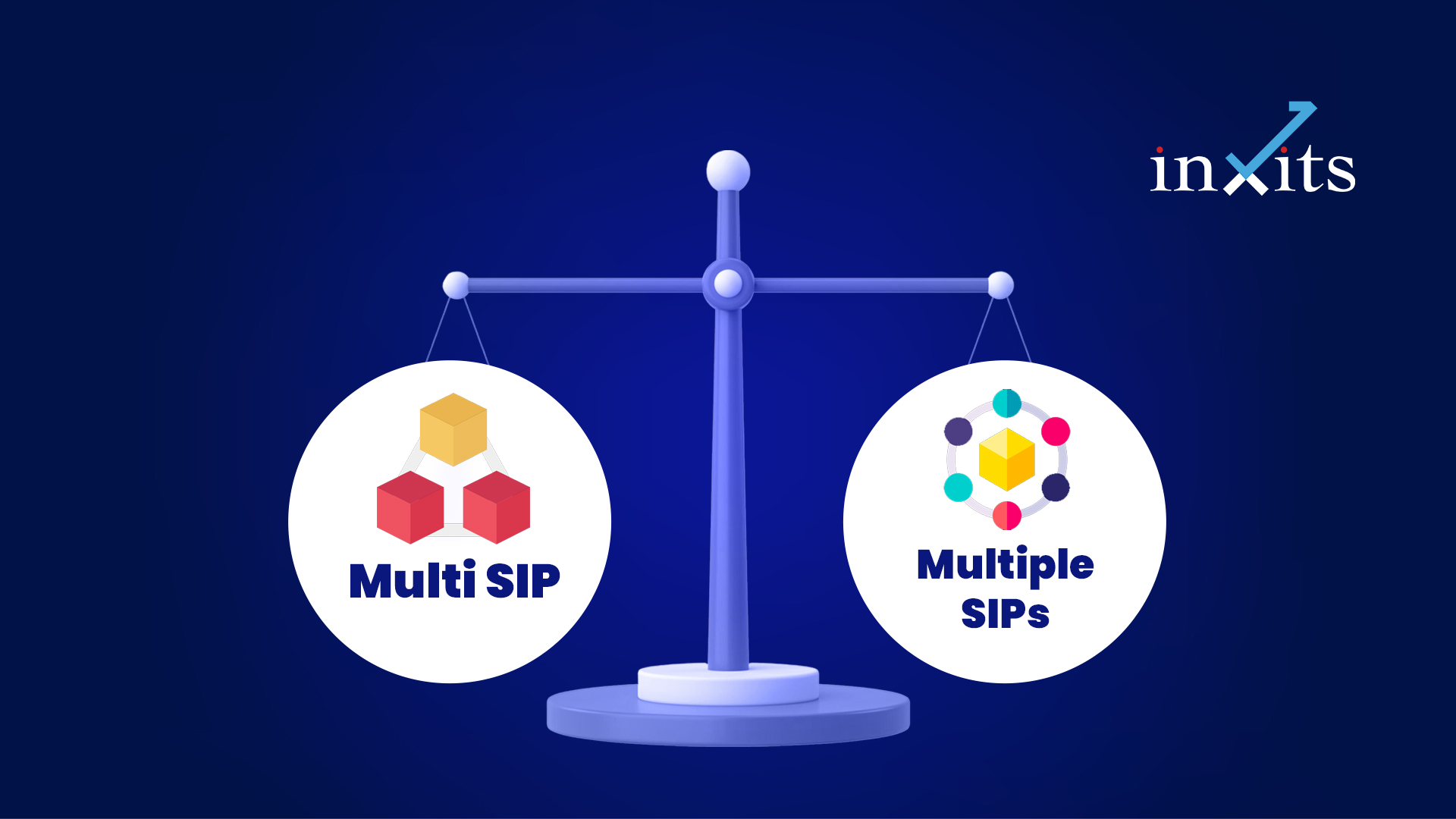
Multi SIP vs Multiple SIPs: What’s the Real Difference?

The confusion between multi SIP vs multiple SIPs is more common than you’d think.

At first glance, both terms suggest investing in more than one SIP — but the structural difference between the two can quietly shape your portfolio’s long-term behaviour.

Many investors assume they mean the same thing because both involve multiple investments. But the real difference is not in the number of SIPs — it is in the strategy behind them.

One is intentional. The other is often accidental.

And that difference can significantly impact diversification, risk management, and long-term returns.

What you’ll understand here

  • The actual difference between multi SIP and multiple SIPs
  • Why many investors confuse the two
  • How structure impacts diversification
  • A simple way to organise your SIPs better

What Are Multiple SIPs? (And Why They’re Not a Strategy)

Multiple SIPs simply mean having more than one SIP.

There is no strategy implied.

Example:

  • ₹5,000 in Fund A
  • ₹3,000 in Fund B
  • ₹2,000 in Fund C

That’s it.

How it usually happens:

  • Someone recommends a fund
  • You add another SIP
  • Then another

Over time, you end up with several SIPs without a clear plan.

What Is a Multi SIP Strategy?

A multi SIP strategy is structured.

Each SIP has a role.

Example:

  • ₹8,000 → Equity (growth)
  • ₹5,000 → Hybrid (balance)
  • ₹3,000 → Debt (stability)

Here, the allocation is intentional.

If you want to understand how structured diversification works, exploring multi SIP strategy gives a clearer framework.

Core Difference: Random vs Structured

AspectMultiple SIPsMulti SIP Strategy
ApproachUnplannedStructured
PurposeOften unclearDefined roles
DiversificationAccidentalIntentional
Portfolio clarityLowHigh

Why Investors End Up With Multiple SIPs

This usually happens without realising it.

Common triggers:

  • Following recommendations
  • Chasing past performance
  • Adding SIPs without reviewing old ones

Result:

  • Overlapping funds
  • Confusion
  • Difficult tracking

To avoid such issues, it helps to understand SIP mistakes that reduce returns.

According to investor behaviour studies across the mutual fund industry, many retail investors continue adding new SIPs based on fund recommendations or recent performance without reviewing existing holdings.

This often leads to portfolio overlap, where multiple funds hold similar stocks, reducing the actual benefit of diversification.

As highlighted by AMFI and industry advisors, diversification works best when allocation is intentional—not simply when the number of funds increases.

This is why a multi SIP strategy often performs better than just holding multiple SIPs without structure.

How Multi SIP Strategy Improves Clarity

A structured approach answers three key questions:

1. Why am I investing?

Each SIP is linked to a purpose.

2. Where is my money going?

Allocation is clearly defined.

3. How is risk distributed?

Exposure is balanced across categories.

To connect this with planning, exploring goal-based SIP planning helps align SIPs with life goals.

Real-Life Scenario: Same Number of SIPs, Different Outcomes

Let’s compare two investors.

Raj (Multiple SIPs)

  • 5 SIPs across random funds
  • No clear allocation
  • Overlapping investments

Feels diversified but actually not structured

Neha (Multi SIP Strategy)

  • 5 SIPs with defined roles
  • Equity + hybrid + debt allocation
  • Linked to goals

Clear structure and better control

What changed?

Not the number of SIPs.

The intent behind them.

When Multiple SIPs Become a Problem

Having multiple SIPs is not wrong.

It becomes a problem when:

  • You don’t know why each SIP exists
  • Funds overlap in strategy
  • You cannot track performance meaningfully

How to Convert Multiple SIPs into a Multi SIP Strategy

Instead of removing SIPs, restructure them.

Step-by-step approach:

  1. List all your SIPs
  2. Identify fund categories
  3. Remove overlaps
  4. Assign purpose to each SIP
  5. Align with goals

If you are unsure how to allocate, understanding how much SIP to invest based on salary can help define total investment capacity.

Where Different SIP Types Fit

A multi SIP strategy can also include different SIP formats.

Example:

  • Long-term SIP → Growth (step-up SIP)
  • Short-term SIP → Stability (regular SIP)

Understanding types of SIP helps you combine structure with flexibility.

A Quick Reality Check

Ask yourself:

  • Do I know why each SIP exists?
  • Are my SIPs overlapping?
  • Can I explain my portfolio in simple terms?

If not, you may have multiple SIPs, not a strategy.

How inXits Helps Structure SIP Portfolios

The difference between confusion and clarity often comes from structure.

At inXits, advisors help investors:

  • Convert multiple SIPs into structured portfolios
  • Avoid duplication across funds
  • Align SIPs with goals and timelines

This helps turn investing into a clear system rather than a collection of decisions.

Conclusion

Multiple SIPs and multi SIP strategies may look similar on the surface, but they are fundamentally different.

One is about having many SIPs.

The other is about knowing why each SIP exists.

That difference affects clarity, confidence, and long-term outcomes.

If your current SIP setup feels scattered, the solution may not be adding or removing funds. It may be structuring what you already have.

A well-organised portfolio often performs better simply because decisions become clearer. If you want to bring structure to your existing SIPs, organise your SIP portfolio more effectively with the right approach.

Disclaimer

Investments in securities markets are subject to market risks. Read all related documents carefully before investing.

inXits is a SEBI-registered investment adviser (Registration No. INA000020369). This article is for educational purposes only and does not constitute personalised investment advice.

Registration granted by SEBI, membership of BSE, and certification from NISM in no way guarantee performance of the intermediary or provide any assurance of returns to investors.
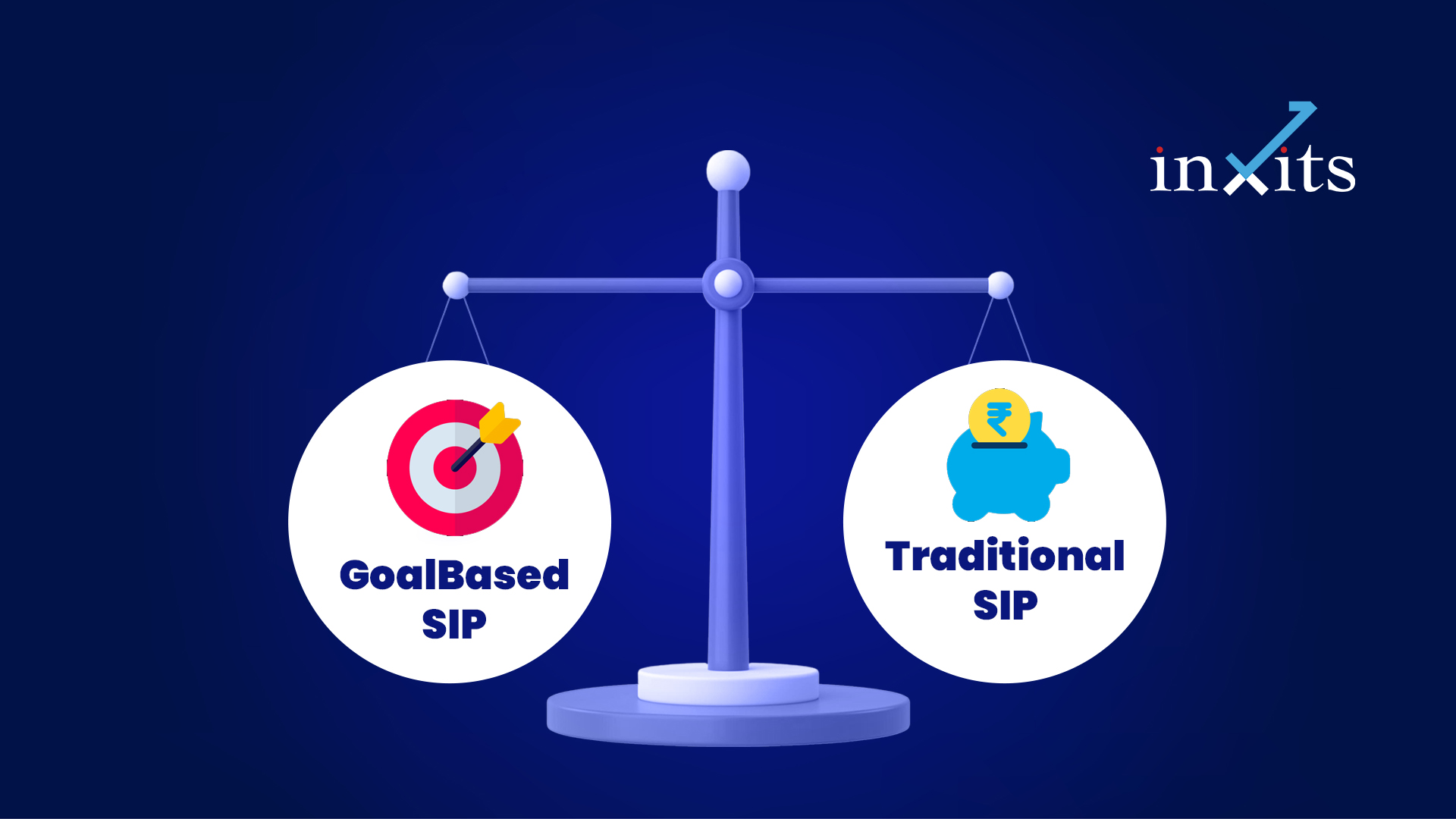
Goal-Based SIP vs Traditional SIP: What’s the Real Difference?

Understanding goal-based SIP vs traditional SIP can transform how you invest. Most investors start with good intentions but never define the “why” behind each rupee — and that gap costs them consistency over time.

You pick an amount, choose a fund, and begin investing. But after a while, something feels off.

There is no clear connection between the money you are investing and the life you are trying to build.

That is the real difference between traditional SIP and goal-based SIP. One focuses on doing SIP. The other focuses on why you are doing it. But after a while, something feels off.

There is no clear connection between the money you are investing and the life you are trying to build.

That is the difference between traditional SIP and goal-based SIP. One focuses on doing SIP. The other focuses on why you are doing it.

What this will help you understand

  • The real difference between traditional and goal-based SIP
  • Why many investors lose direction over time
  • Which approach suits different types of investors
  • How to shift from random investing to structured planning

What is a Traditional SIP?

A traditional SIP is the most common way people invest.

  • Fixed amount every month
  • Usually invested in one or two funds
  • No specific goal attached

Example:

  • ₹10,000 monthly SIP in a mutual fund

That’s it.

If you are new, understanding what is SIP helps build the base.

The problem?

It lacks context.

You are investing, but you may not know for what.

What is a Goal-Based SIP?

A goal-based SIP connects each investment to a specific life objective.

Instead of one SIP, you break it down.

Example:

  • ₹5,000 → Retirement
  • ₹3,000 → Child education
  • ₹2,000 → Short-term goals

This adds purpose to investing.

If you want a deeper breakdown, exploring goal-based SIP planning helps understand how this structure works.

Core Difference: Activity vs Purpose

AspectTraditional SIPGoal-Based SIP
ApproachInvest regularlyInvest with purpose
ClarityLowHigh
MotivationCan dropUsually stronger
Decision-makingReactiveStructured

Why Traditional SIP Often Feels Incomplete

Many investors start with a traditional SIP.

But over time:

  • SIP continues without direction
  • Market fluctuations create doubt
  • Motivation weakens

The hidden issue:

There is no emotional connection to the investment.

When there is no goal, it is easier to stop.

To understand consistency better, it helps to revisit how SIP works over long periods.

How Goal-Based SIP Changes Investor Behaviour

Goal-based investing does something powerful.

It changes how you react to markets.

Example:

If markets fall:

  • Traditional SIP investor → “Should I stop?”
  • Goal-based investor → “My goal is 15 years away”

Result:

  • Better discipline
  • Less emotional decision-making
  • More clarity

Real-Life Scenario: Same SIP, Different Mindset

Let’s take two investors.

Ajay (Traditional SIP)

  • ₹10,000 monthly SIP
  • No specific goal

Stops SIP after market fall

Meera (Goal-Based SIP)

  • ₹10,000 split across goals
  • Retirement + education + travel

Continues SIP despite market fluctuation

What changed?

Not the amount.

The mindset.

When Traditional SIP Still Works

Traditional SIP is not wrong.

It works when:

  • You are just starting
  • You want simplicity
  • You are building initial discipline

It acts as a starting point.

When Goal-Based SIP Becomes Important

As your financial life evolves, structure becomes important.

It suits:

  • Long-term planners
  • Investors with multiple goals
  • People seeking clarity and control

How to Convert Your Traditional SIP to Goal-Based in 3 Steps

Step 1: List Your Financial Goals with Timelines

Start by writing down your major financial goals and when you want to achieve them.

Examples:

  • Retirement – 2040
  • Child’s education – 2032
  • Home down payment – 2028

This creates clarity and helps you understand what your investments are actually meant to support.

Step 2: Calculate the Required Monthly SIP for Each Goal

Once goals are defined, estimate how much monthly investment is needed for each one.

Using a SIP calculator helps you avoid guesswork and creates realistic investment planning.

This makes your SIP structure practical instead of random.

Step 3: Match Each SIP to the Right Fund Type

Not every goal should use the same mutual fund strategy.

Choose funds based on timeline and risk profile:

  • Equity funds → 15+ years
  • Balanced funds → 5–10 years
  • Debt funds → Under 3 years

This improves both discipline and suitability.

The goal is not just investing more — it is investing with purpose.

Can You Combine Both?

Yes, and many investors do this naturally.

Example:

  • Start with traditional SIP
  • Gradually convert into goal-based structure

You can also use different SIP formats depending on goals.

For example, scaling long-term goals using step-up SIP can help align with income growth.

Common Mistake to Avoid

Many investors stay in traditional SIP for too long.

Result:

  • Investments lack direction
  • Goals remain unclear
  • SIP becomes mechanical

If you want to avoid behavioural mistakes, exploring SIP mistakes that reduce returns can help identify gaps.

A Simple Self-Test

Ask yourself:

  • Do I know what my SIP is for?
  • Can I link each SIP to a goal?
  • Do I know how much I need for each goal?

If not, your SIP may still be traditional.

Have a question about whether your SIP is aligned with actual life goals or just running on autopilot? Talk to a mutual fund advisor — a conversation with a qualified advisor, no forms, no wait.

How inXits Helps You Move from Random to Structured Investing

Understanding the difference is one step. Implementing it is another.

At inXits, advisors help investors:

  • Convert SIP into goal-based structure
  • Align investments with timelines
  • Avoid scattered allocation

This helps transform investing into a purposeful system.

Conclusion

Traditional SIP helps you start. Goal-based SIP helps you stay on track. The difference is not in the investment method, but in the clarity behind it.

When your investments are linked to real-life outcomes, decisions become easier and consistency improves.

If your SIP feels disconnected from your goals, it may not need replacement. It may need restructuring.

A clear investment framework often brings more confidence than increasing the amount. If you want to align your SIP with actual life goals, start structuring your investments around goals for better clarity and direction.

Disclaimer

Investments in securities markets are subject to market risks. Read all related documents carefully before investing.

inXits is a SEBI-registered investment adviser (Registration No. INA000020369). This article is for educational purposes only and does not constitute personalised investment advice.

Registration granted by SEBI, membership of BSE, and certification from NISM in no way guarantee performance of the intermediary or provide any assurance of returns to investors.

Flexible SIP vs Fixed SIP: Key Differences You Should Know

Not every investor earns the same way — and not every SIP structure fits every investor. The flexible SIP vs fixed SIP debate is really about one thing: does your investment approach match how your income actually works?

For salaried individuals, a fixed SIP brings discipline. For freelancers or business owners with variable income, a flexible SIP brings sustainability.

The right choice is not about which is better in theory — it is about which one you can realistically maintain.

That is where the confusion between flexible SIP and fixed SIP begins.

A fixed SIP works well in stable situations. A flexible SIP works better when life is less predictable. The same SIP approach does not suit everyone.

Choosing the right SIP structure early helps avoid missed payments, SIP discontinuation, and unnecessary financial stress later.

What this will help you understand

  • The core difference between flexible and fixed SIP
  • When each approach makes more sense
  • How income pattern affects SIP choice
  • A simple way to decide between the two

What is a Fixed SIP?

A fixed SIP (also called regular SIP) means investing a fixed amount at regular intervals.

  • ₹5,000 every month
  • Same date, same amount
  • No changes unless manually updated

If you want to understand its base structure, exploring types of SIP helps put it into context.

Where it works best:

  • Stable salary
  • Predictable expenses
  • Preference for automation

What is a Flexible SIP?

A flexible SIP allows you to change your investment amount based on your financial situation.

  • Increase when income is high
  • Decrease when expenses rise
  • Adjust without stopping SIP

To understand this variation better, you can explore flexible SIP and how it works in practice.

Core Difference: Discipline vs Adaptability

At a basic level, the difference is simple.

FactorFixed SIPFlexible SIP
Investment amountFixedVariable
ControlLowHigh
DisciplineAutomaticBehaviour-driven
SuitabilityStable incomeVariable income

Real-Life Scenario: Why This Choice Matters

Let’s compare two investors.

Ramesh (Salaried Professional)

  • Income: ₹60,000/month
  • Chooses fixed SIP of ₹8,000

Works smoothly because income is predictable

Kunal (Freelancer)

  • Income: ₹40,000–₹90,000/month
  • Uses flexible SIP

Adjusts SIP between ₹3,000–₹8,000 depending on income

What we learn:

  • The same SIP approach does not suit everyone
  • Income pattern defines the strategy

The mistake most investors make is copying a SIP structure that works for someone else.

Ramesh’s ₹8,000 fixed SIP would have created problems for Kunal — in months where Kunal earned ₹40,000, that fixed commitment would eat 20% of his income, potentially leading to missed payments or SIP cancellations.

Kunal’s flexible approach let him invest ₹3,000 in lean months and ₹8,000 in good months, keeping the SIP alive without financial stress.

This is why choosing the right SIP structure matters more than simply choosing the “better” SIP type.

When Fixed SIP Makes More Sense

Fixed SIP works best when consistency is the priority.

It suits:

  • Salaried individuals
  • First-time investors
  • People who prefer automation
  • Long-term disciplined investors

If you are starting your journey, understanding what is SIP helps build a strong base.

When Flexible SIP Becomes Useful

Flexible SIP is more about adaptability.

It suits:

  • Freelancers or business owners
  • Individuals with irregular income
  • Investors with variable expenses
  • People needing short-term flexibility

In many cases, investors transition into this after understanding how SIP works in different situations.

Assumption vs Reality

AssumptionReality
Fixed SIP is always betterIt depends on income stability
Flexible SIP lacks disciplineDiscipline depends on behaviour
Variable investing reduces returnsConsistency matters more than format

How to Choose Between Flexible SIP and Fixed SIP

Instead of overthinking, use this simple filter.

Step 1: Look at income pattern

  • Stable → Fixed SIP
  • Variable → Flexible SIP

Step 2: Evaluate discipline

  • Need automation → Fixed SIP
  • Comfortable managing → Flexible SIP

Step 3: Consider future income growth

If income is expected to grow steadily, combining approaches may work better.

For example, some investors use fixed SIP initially and later explore scaling options through step-up SIP.

Can You Combine Both?

Yes, and this is often practical.

Example:

  • Fixed SIP → Long-term goals
  • Flexible SIP → Short-term or variable income goals

This creates a balance between structure and flexibility.

To understand broader strategy building, you can explore multi SIP strategy.

Common Mistake to Avoid

Trying to follow a fixed SIP when your income is not stable.

Result:

  • Missed payments
  • Stopped SIP
  • Inconsistency

Sometimes, flexibility helps maintain continuity better than strict discipline.

If you want to understand behavioural pitfalls, reading SIP mistakes that reduce returns can give more clarity.

Have a question about whether your SIP structure matches your income pattern? Not sure whether a flexible or fixed SIP suits your income pattern? A 15-minute conversation with a SEBI-registered adviser at inXits can give you a clear answer — no forms, no wait.

How inXits Helps You Choose the Right SIP Structure

Choosing between flexible and fixed SIP is not about picking a feature. It is about aligning investing with your life.

At inXits, advisors help investors:

  • Match SIP structure with income pattern
  • Balance discipline and flexibility
  • Align investments with goals

This ensures your SIP works with your financial situation, not against it.

Conclusion

Flexible SIP and fixed SIP are not competing choices. They are tools designed for different situations.

Fixed SIP works when life is predictable. Flexible SIP works when it is not.

The right decision comes from understanding your income pattern, behaviour, and financial goals.

If your SIP feels difficult to maintain or too rigid, it may not be the investment that needs changing. It may be the structure.

A better-aligned SIP structure can improve consistency more than increasing the amount. If you want to rethink how your SIP fits your income and lifestyle, structure your SIP approach more effectively with the right guidance.

Disclaimer

Investments in securities markets are subject to market risks. Read all related documents carefully before investing.

inXits is a SEBI-registered investment adviser (Registration No. INA000020369). This article is for educational purposes only and does not constitute personalised investment advice.

Registration granted by SEBI, membership of BSE, and certification from NISM in no way guarantee performance of the intermediary or provide any assurance of returns to investors.

SIP for Child Education Planning: How to Start and Plan Smartly

Planning for a child’s education is one of the few financial decisions that feels both urgent and long-term at the same time.

You know it is important. You know costs are rising. But the timeline is often 10, 15, or even 20 years away.

That distance creates a strange tension — it feels far enough to delay, but important enough to keep worrying about.

This is where SIP can bring structure. Not as a shortcut, but as a way to build steadily toward a goal that will eventually become very real.

What this covers

  • How SIP fits into education planning
  • How much to invest based on timeline
  • Mistakes parents often make
  • A simple framework to get started

Why SIP Works Well for Child Education Planning

Education is a long-term goal.

And long-term goals benefit from consistency.

Why SIP fits naturally here:

  • Investments happen gradually
  • Time helps smooth market fluctuations
  • Discipline builds over years

Unlike short-term saving, education planning requires patience.

To understand the base structure, it helps to revisit how SIP works over longer periods.

The Real Challenge: Rising Education Costs

Education costs do not stay constant.

They increase every year.

What this means:

  • A course costing ₹10 lakh today
  • May cost significantly more after 15 years

Why this matters:

  • Saving without planning may fall short
  • Delaying investments increases pressure later

This is why starting early matters more than starting big.

Step-by-Step: How to Plan SIP for Child Education

Instead of guessing, it helps to follow a structure.

Step 1: Define the Goal Clearly

Ask:

  • What level of education?
  • India or abroad?
  • Expected timeline?

Clarity reduces uncertainty.

Step 2: Decide the Investment Timeline

Child AgeTime Available
1–5 years15–18 years
6–10 years8–12 years
11–15 years3–7 years

👉 More time = more flexibility

Step 3: Estimate Monthly SIP

This is where many parents feel stuck.

If you are unsure how to calculate, understanding how much SIP to invest based on salary can give a practical starting point

Step 4: Choose Investment Approach

  • Long horizon (10+ years) → Equity mutual funds for growth
  • Medium horizon (5–10 years) → Balanced or hybrid funds
  • Short horizon (under 5 years) → Conservative debt-oriented funds

Real-Life Scenario: Planning Early vs Late

Let’s compare two parents.

Parent A (Starts Early)

  • Child age: 2 years
  • SIP: ₹5,000/month
  • Duration: 15 years

Parent B (Starts Late)

  • Child age: 10 years
  • SIP: ₹12,000/month
  • Duration: 7 years

What changes?

  • Early start → Lower monthly burden
  • Late start → Higher pressure

👉 Starting even 2–3 years earlier can meaningfully reduce your monthly commitment. Time is your biggest asset.

SIP Return Illustration

Monthly SIPDurationAssumed ReturnApprox. Corpus
₹5,00015 yr12% CAGR~₹25 lakh
₹12,0007 yr12% CAGR~₹15 lakh

Note: Returns are illustrative. Actual returns may vary. 

The earlier you start, the lower your monthly burden. Begin your child’s education SIP today — connect with inXits.

Should You Increase SIP Over Time?

Yes, especially for long-term goals.

Why?

  • Income increases
  • Education costs rise
  • Investment needs grow

Instead of manual changes, many parents prefer structured increases.

A step-up SIP automatically increases your contribution by a fixed percentage each year — keeping your investment aligned with both income growth and rising education costs.

Common Mistakes in Education Planning

Even with good intent, mistakes happen.

Watch out for:

  • Starting too late
  • Underestimating future costs
  • Keeping SIP amount fixed for too long
  • Mixing multiple goals in one SIP

One Goal, One SIP: Why It Matters

Education should ideally have a dedicated SIP.

Why?

  • Easier tracking
  • Clear progress visibility
  • Better planning

This is part of a structured approach.

If you want to build this properly, understanding goal-based SIP planning helps connect investments with life goals.

What If Income Is Not Stable?

Not all parents have a fixed income.

In such cases:

  • Keep SIP manageable
  • Increase during surplus months
  • Avoid stopping completely

This is where flexible SIP can offer better adaptability.

A Simple Checklist Before You Start

  • Do you know your goal timeline?
  • Have you estimated future cost?
  • Is your SIP amount realistic?
  • Can you increase SIP over time?

If most answers are yes, you are on the right track.

Have a question about whether your current SIP is enough for your child’s future education? Talk to a mutual fund advisor — a conversation with a qualified advisor, no forms, no wait.

How inXits Helps You Plan Education Goals

Planning for a child’s future is not just about starting SIP. It is about structuring it correctly.

At inXits, advisors help parents:

  • Estimate realistic education costs
  • Align SIP with timelines
  • Adjust strategy as income grows

This helps avoid last-minute financial pressure.

Conclusion

Child education planning is not just a financial task. It is a responsibility that unfolds over time.

SIP provides a way to approach it steadily rather than reactively.

The earlier you start, the more flexibility you have. The clearer your plan, the more confident your decisions become.

Most importantly, it is not about investing perfectly. It is about investing consistently with a clear purpose.

If you are unsure whether your current plan is enough or where to begin, taking a structured view of your education goal can make a meaningful difference. If you want to map your SIP to your child’s future needs, connect with an inXits advisor today for a structured, personalised education investment plan — built around your child’s age, your income, and your goals.

Disclaimer

Investments in securities markets are subject to market risks. Read all related documents carefully before investing.

inXits is a SEBI-registered investment adviser (Registration No. INA000020369). This article is for educational purposes only and does not constitute personalised investment advice.

Registration granted by SEBI, membership of BSE, and certification from NISM in no way guarantee performance of the intermediary or provide any assurance of returns to investors.

📱 Download our App